Time's Wingéd Chariot
"La Source", "Herman Schmerman Pas de Deux", "The Lady with the Little Dog", "The Four Temperaments"
New York City Ballet
David H. Koch Theater
Lincoln Center, New York
June 20, 2010
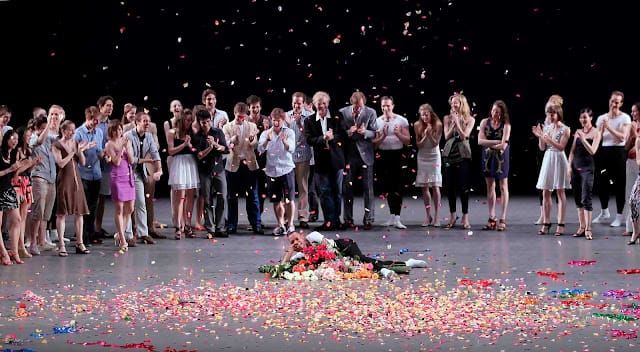
The weekly Sunday afternoon farewell-fest celebrated Albert Evans, a quirky and interesting dancer. His farewell sent me back to my SAB programs, and even though it seems that just a few years have passed since he bounded through "Square Dance", he danced Phlegmatic, from "The Four Temperaments", in the 1987 program. This was his final role, danced with corps members who may very well not have been born when he first danced it, and seemed to tie up his career in a neat circle. The program opened with Balanchine's "La Source", a cheerful, pink-tinged party piece. The luscious Delibes music swirls and flows, and the work has the feel of being part of a larger, more complex story. It opens directly on a pas de deux, with dancers who seem to have a back story, though it remains mysterious. An homage to Paris of the 1860's, it is utterly charming. Megan Fairchild captured much of the French perfume (it was created for Violette Verdy) and floated like she was dancing on pink satin. Joaquin De Luz, her partner, too, danced stylishly, toning down his usually exuberant technique to show off the smooth, light footwork. In the "life just isn't fair" category, though, he is really too short to show off Fairchild in the pas de deux, and some of the partnering was a bit fraught. The final, dramatic leap, however, was perfectly timed, and so seemingly spontaneous that some of the audience gasped.
William Forsythe's "Herman Schmerman" is a pas de deux, danced in Forsythe's recognizable style. Evans, however, seemed to be ad libbing, adding a rhythmic lilt to the usually aggressive approach. Wendy Whelan was his spiky partner, and the contrast between her angular shapes and his softer, more rounded dancing made an intriguing combination. The final scene, where Evans was turning Whelan as the lights went down, was truly touching.
There was a lot of touching in "The Lady with the Little Dog", Alexey Miroshnichenko's 2010 ballet, which claims to be based on the short story by Chekhov. It was my first view of the work, which was thoroughly lambasted by the critics. The first pas de deux was, though, watchable once I stopped thinking about it as ballet and looked at it as if it were ice dancing by the third string couple from one of the more remote Russian provinces. There were some questions, though, such as why would anyone program a ballet where the dancers (the hard working Sterling Hyltin and Andrew Veyette) strip down to their flesh-colored scanties and roll around against a lurid red background at a matinee with many children in the audience. And who are these people on stage, what do they have to do with Chekhov, and why are they so boring?
There are no questions about "The Four Temperaments", a great work of art. It received a fine performance, especially from Jennie Somogyi, with Jared Angle, in Sanguinic. She has the ability to invest significance into her movements, without imposing unnecessary meaning, and her beautifully centered dancing made the quirky, off-center movements seem logical, not exaggerated.
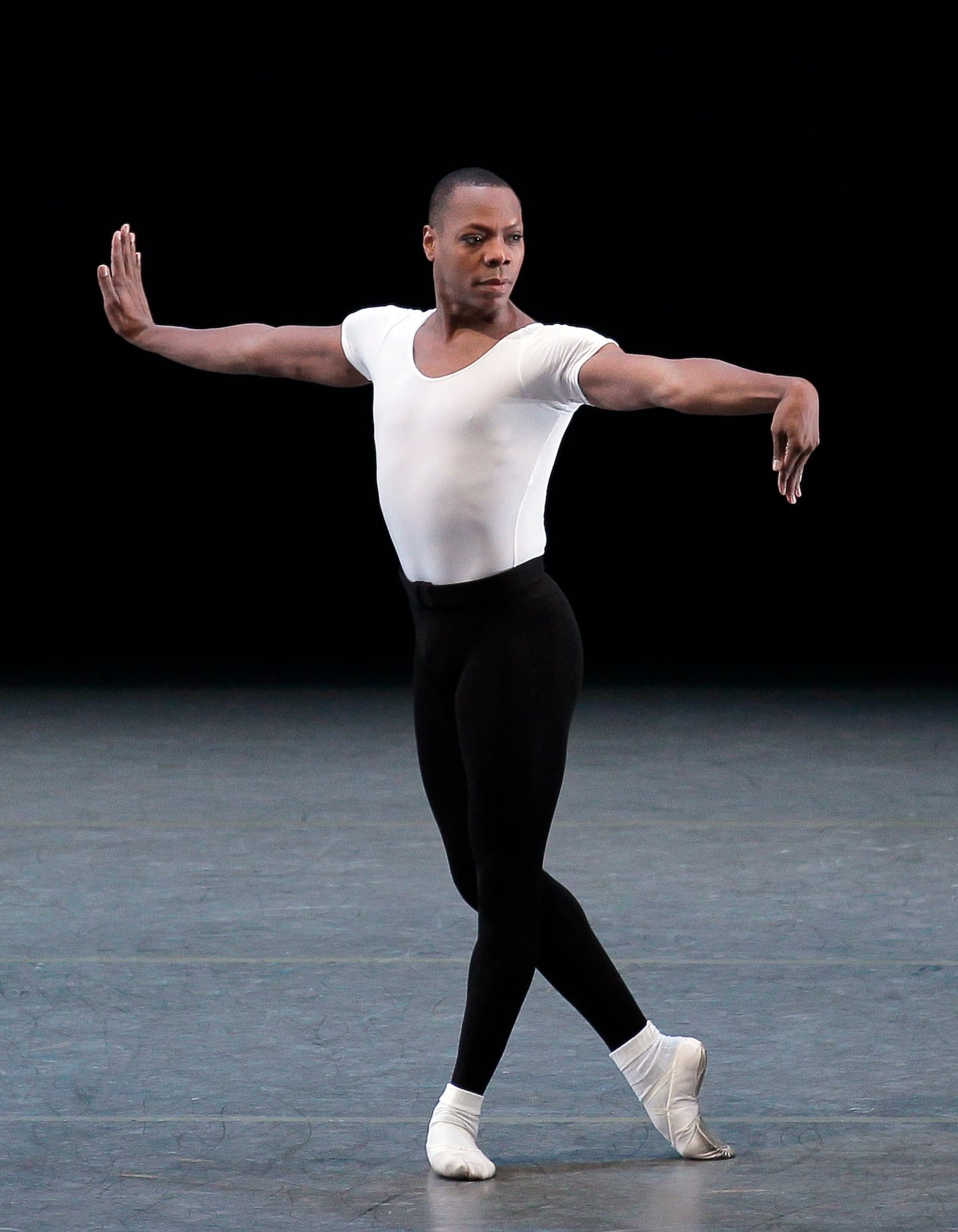
But Phlegmatic was what everyone was waiting for, and Evans entered to a burst of applause and bravos, which he, thoroughly professional, seemed not to hear, and danced with a dead pan aplomb and his usual musical sensitivity. There was, obviously, a tinge of sadness to his performance, and a gentle undercurrent of "farewell" echoed through the theater. The real farewell came with the curtain calls, with hugs, flowers, and his symbolic removal of his dancing shoes. But not until he had done another little spontaneous dance for the audience, giving us one last chance to enjoy this unique dancer.
copyright © 2010 by Mary Cargill



