Through the Years
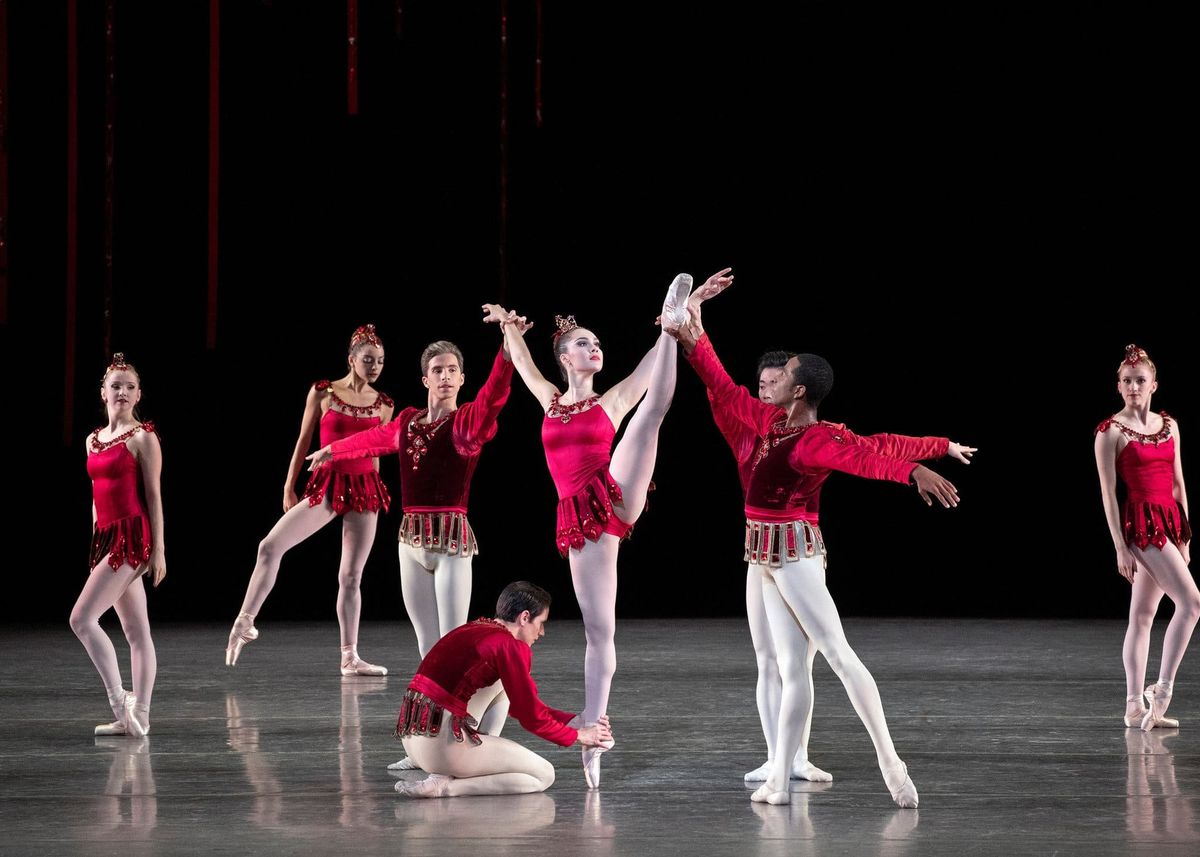
"Mozartiana", "Rubies", "La Valse"
New York City Ballet
David H. Koch Theater
Lincoln Center
New York, New York
February 5, 2022, evening
City Ballet's all Balanchine program spanning 30 years, from the 1951 "La Valse" to the 1981 "Mozartiana" included snapshots of some of Balanchine's most distinctive ballerinas, Tanaquil Le Clercq ("La Valse"), Patricia McBride ("Rubies"), and Suzanne Farrell ("Mozartiana"). The current dancers, so different from the originals, need to both copy the steps and go beyond them to create their unique interpretations. It is a challenge, but fascinating to watch.
Tiler Peck made her debut in "Mozartiana", dancing the opening Preghiera with a powerful stillness, using her face to catch and reflect the light. She moved with a calm deliberation, pushing through the air like a marble statue come to life. It was a serene, unmannered, and moving rendition. She was less successful in the playful, off-centered movements of the Theme and Variations, where her compact, classically proportioned body made the little throwaway twists and turns emphatic rather than witty. The impression of two people having a conversation, variously lighthearted and profound, often disappeared into a series of solos. Nevertheless her musicality and effortless control gave the overall performance a rare beauty.
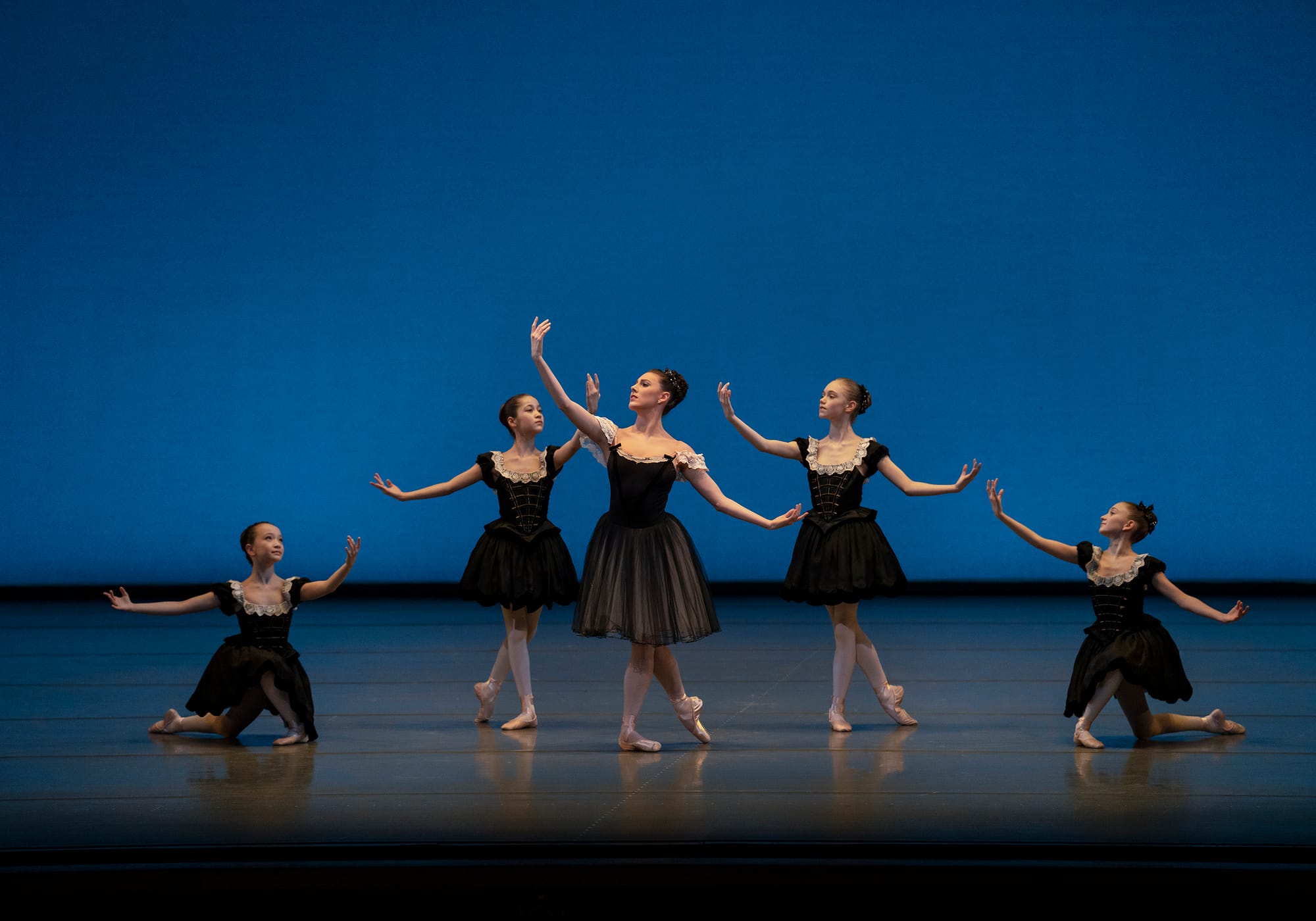
Harrison Ball, in Ib Andersen's role as her partner, looked comfortable doing the exhilarating (and exhausting) petite batterie that saluted Andersen's Danish training. Ball's fast precise footwork and quick low jumps were technically thrilling without bombastic virtuosity but his rather frozen demeanor lacked the sparkle of Andersen's performance, and the pas de deux had a classical hauteur that evoked dignity rather than fun.
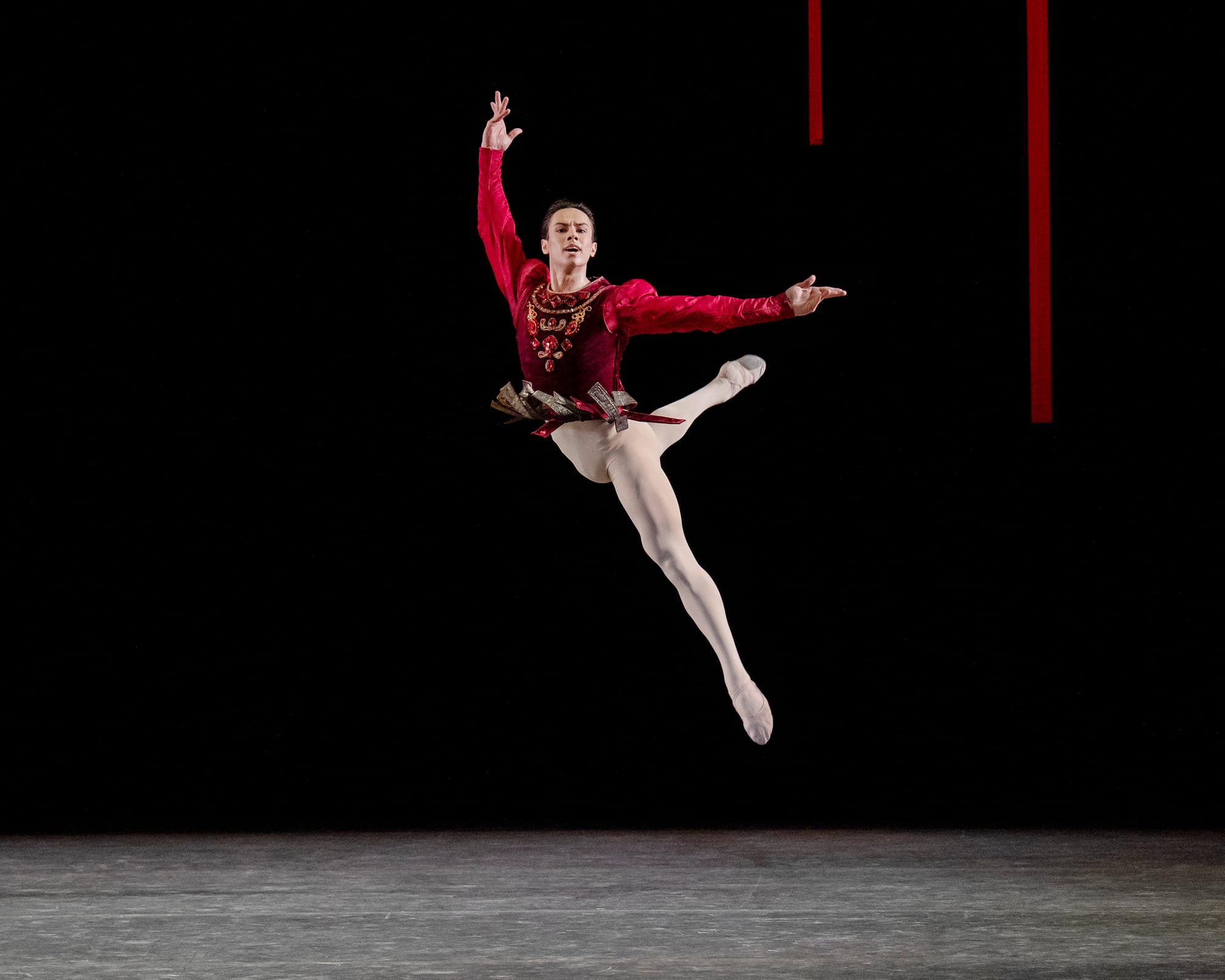
There was plenty of sparkle in "Rubies", with Sterling Hyltin and, in his debut, Roman Mejia. Hyltin's wry, knowing, and playful sophistication combined with her wiry grace created a cocktail of a performance, full of elegant details. Nothing was slammed or over punctuated, it was movement for pure joy. Mejia has a natural star power, with electricity that brightens everyone on stage. He combined a modest courtesy in the way he looked at Hyltin ("Isn't she special--I'm so lucky to be on stage" he seemed to be thinking) with powerful and graceful dancing. His spins were blurringly fast and his jumps were springy, and he well deserved his ovation.
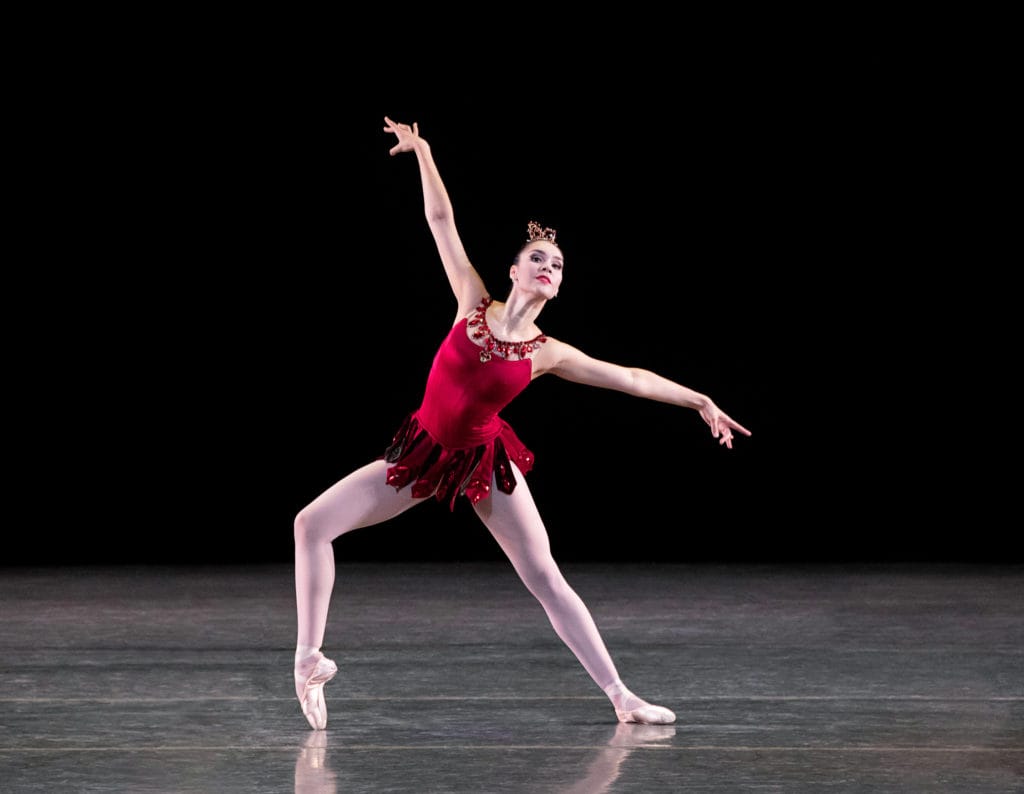
Mira Nadon, a recently promoted soloist, danced the tail girl with a serene and deadpan control. Her unbelievably long legs seemed to move without effort, creating an elongated and beautiful line. She seemed to use her phenomenal physical beauty as a gift to the audience, a present gratefully received.
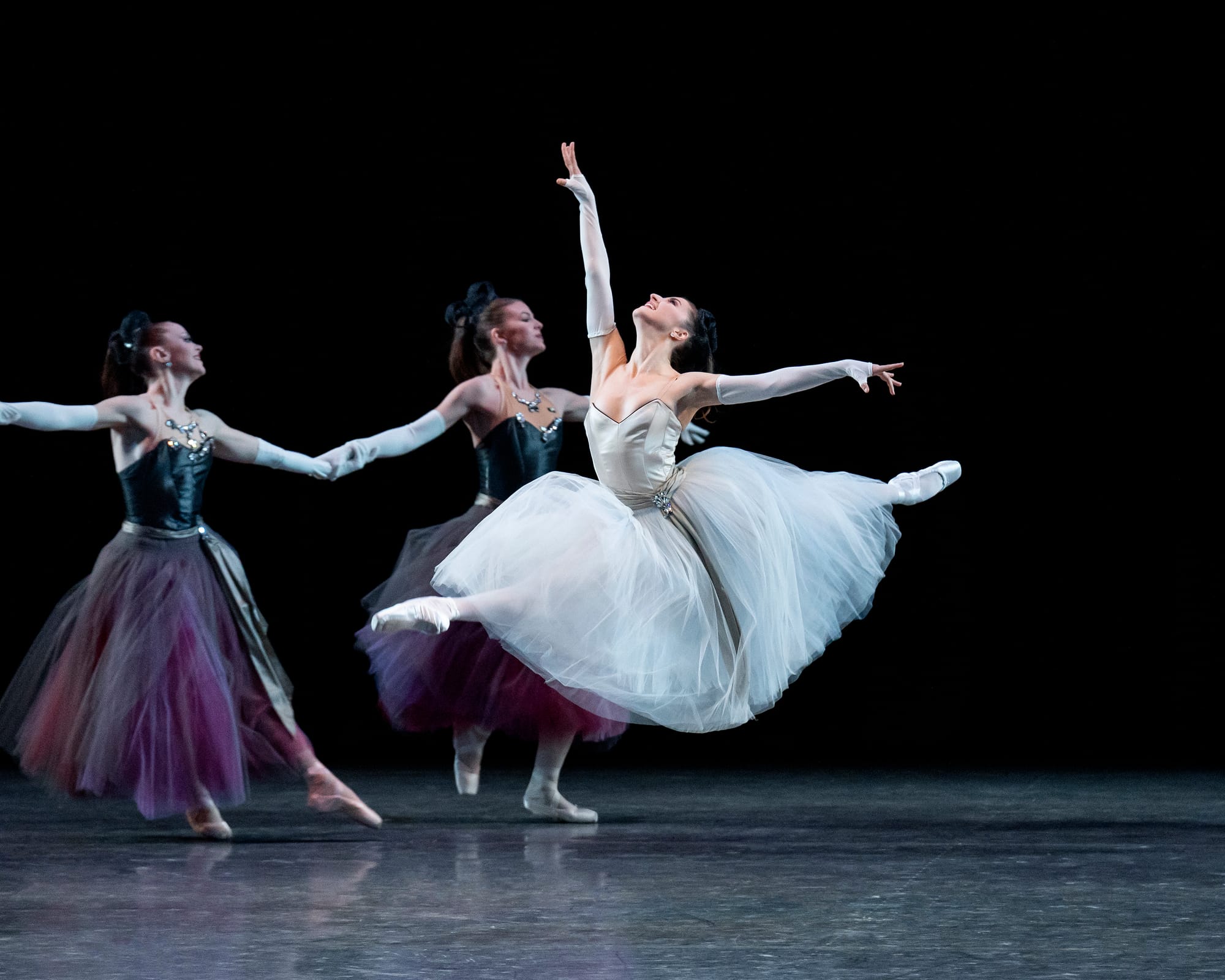
Indiana Woodward, recently promoted to principal, was a new victim in the doom laden "La Valse". In 2016, as a corps dancer, she made an impressive Sylph in Peter Martins' version of "La Sylphide" with her innocence, creamy dancing, and astounding aplomb. Her "La Valse" had all of these and she was a helpless little fly caught in the compelling Chun Wai Chan's net. I missed the undercurrent of decadent desire and of greed, not just for jewels but for all that life (and death) offers, that can make this hauntingly uncomfortable work so memorable. Woodward's dancing was so open and so pure that it didn't seem possible that a new dress and black gloves would corrupt her.
The dangerous undercurrents were stunningly apparent in the opening trio (Meaghan Dutton-O'Hara, Laine Habony, and Emily Kitka), as their arms, in those distinctive white gloves, seemed to be pulling strings, as if manipulating their victims. It was as if MacBeth's witches had been reincarnated into gorgeous models wearing the New Look. Miriam Miller's debut in the third solo was also impressive, with her willowy resistance to Davide Riccardo, soon to be enticed by the three fates, implying that she too would follow Woodward's path downwards.
copyright © 2022 by Mary Cargill



