Three Strong Women
"Mozartiana", "Neo", "Firebird"
American Ballet Theatre
David H. Koch Theater
New York, NY
March 18, 2026, evening
There were three very strong women, supported by three very fine men, in this performance. Chloe Misseldine and Michael de la Nuez made their debuts in Balanchine’s celestial “Mozartiana”, Christine Shevchenko, with James Whiteside, made her debut in Ratmansky’s “Neo”, a witty and physical pas de deux , and Catherine Hurlin and Daniel Camargo made their second appearances in Ratmansky’s updated “Firebird”.
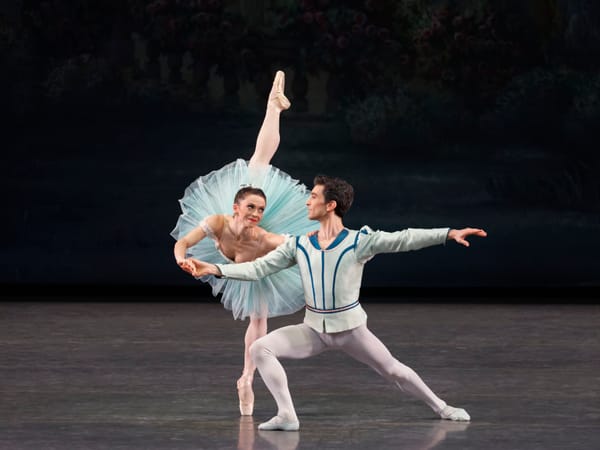
Misseldine’s opening “Preghiera” had a radiant simplicity as she opened her arms to the music. She could have projected bit more—the little prayer moves were a slightly reticent, but her gentle power was much more effective than overacting. Her bourrées were soft and elegant, as if she were being blown by the music, and her pale face and expressive dark eyes were set off by the elegant hairstyle. She seemed to relax during the Thème and Variations section, dancing with a luxurious freedom and joyful wit. Her movements flowed seamlessly, and her dancing showed a wonderful variety, with bouncy, almost skipping moves, effortless jumps, solid turns into arabesques, and quick changes of direction. She carved shapes from the air, dancing as if she were making up the steps as she went along, responding to her partner with a witty repartee alternating with a softer lyricism; her dancing was both scrupulously accurate and spontaneous, a beautiful and moving performance.
De la Nuez, still in the corps, complemented her very well with fast, clean dancing. His long legs weren’t quite controlled (the role was made on the more compact Ib Andersen), but his elegant footwork, endless entrechats, and playful timing were so exciting. They gave the final pas de deux a lyrical romantic feel, different from the original dancers (Suzanne Farrell and Andersen seemed more like comrades), but it worked very well. His gentle concentration as he offered her his hand and the serene and secure final pose as she leant her head back on his shoulder made the air shimmer.
Carlos Gonzalez gave the Gigue the same playful nobility that he showed in his magnificent Eros in the full-length “Sylvia”, anchoring the ballet, it seemed, in Mozart’s world of elegance and wit. His proud and generous gesture to the four demis really did seem to say “I created these”. Usually the finale looks like a cheerful afterthought following the final sublime pas de deux, but he and the other dancers made it a shining summary of all the beauty that preceded it. Gonzalez gathered the four little girls (students from ABT’s JKO school) and swept them forward, the four demis joined in, followed by the lead couple, and the group danced with and for each other in a generous explosion; it was as uplifting as any Petipa Polonaise.
Ratmansky’s “Neo” was a complete change of atmosphere, but it was equally fun. He set the athletic dance to music played on a shamisen, a Japanese stringed instrument sounding somewhat like a choked up banjo, performed live by Sumie Kaneko. The sounds seemed to pull the dancers along as they reacted to the stops and starts with unexpected shapes. It had begun life as a film in 2021 made for James Whiteside and Isabella Boylston during the lockdown, and was reworked in 2024 for the stage; it is a lighthearted, technical tour de force which celebrates both the dancers’ technique and personality.
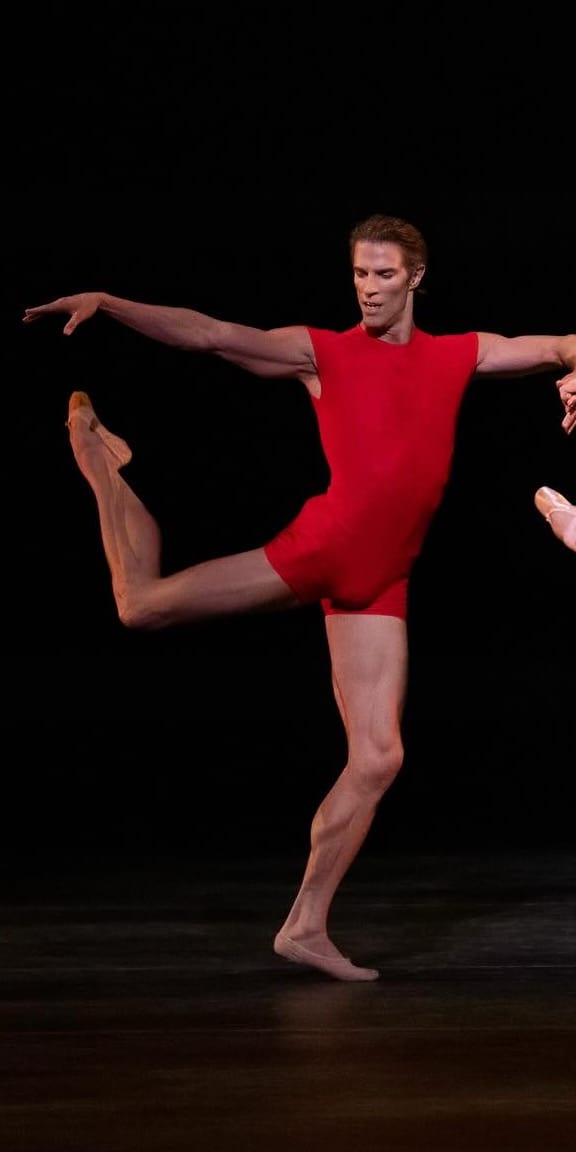
Whiteside, dancing with renewed strength, was astounding; he was vivid and dynamic as he pounded through some incredible shapes, tossing in 120° split jumps with a insouciant ease, daring his partner to match him. Shevchenko, pony tail flying, was sultry, strong, and deadpan as she went toe to toe with his power. It was nine minutes of adrenaline, a friendly but sly competition, like William Forsythe with a wink. When ended when they gave each other high fives, saying in effect “job well done”. The audience agreed with a roar.
Ratmansky tried to use a similar humor in his 2012 version of “Firebird”. It is of course a new ballet, but he used the Stravinsky score and much of the original 1910 libretto of the monumental Fokine version, so comparisons are inevitable. For me the absence of the princes and princesses (Ratmansky calls his hero Ivan and the Maiden and the revived captives are just Maidens and Men), the unidentified location, the general goofiness of the maidens’ choreography, and lack of a truly threatening villain (Kaschei is an ineffectual lecher with a funny walk) don’t match the character of the music, especially in the final triumphant scene where the Fokine’s Prince gets his kingdom to the majestic and uplifting strains of a Russian folk tune.
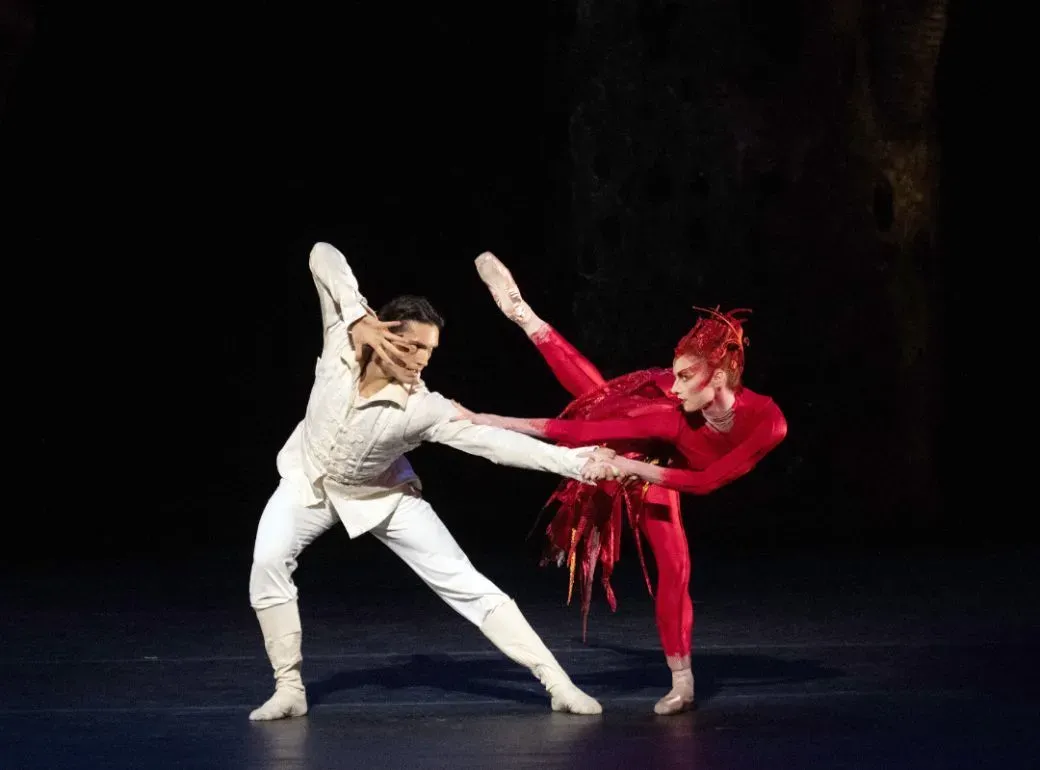
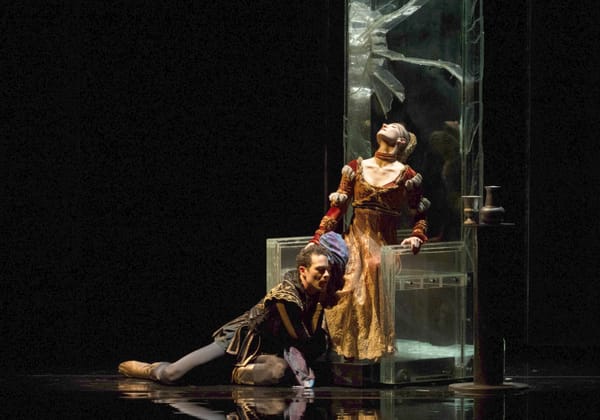
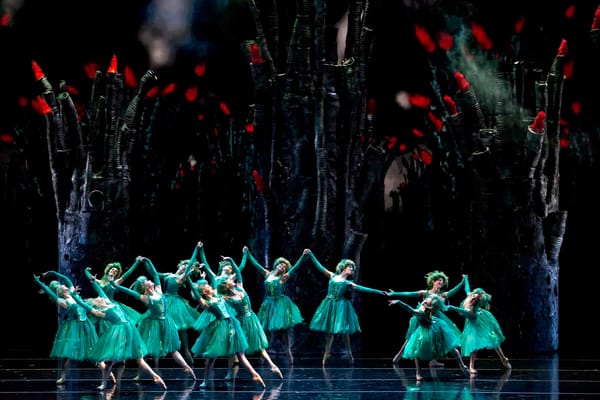
Even though, as a whole, the version is disappointing, there were some fine performances. Camargo, a vibrant and expressive dancer, made Ivan’s thoughts and actions clear—I loved the way he struggled through the forest at the opening. Ratmansky’s Ivan is a bit hyperactive, always eager to jump or move his arms, but Camargo made him as elegant as he could. Hurlin was a womanly, sensuous Firebird, reacting to Ivan as if she were Odette in a red dress, pulling away but intrigued as he pet her feathers. She was gorgeous, but it did skew the story a bit, since it made Ivan seem like he was interested in any female that crossed his path. Her solo though, had a flashing bravura and was a red blur of turns and jumps.
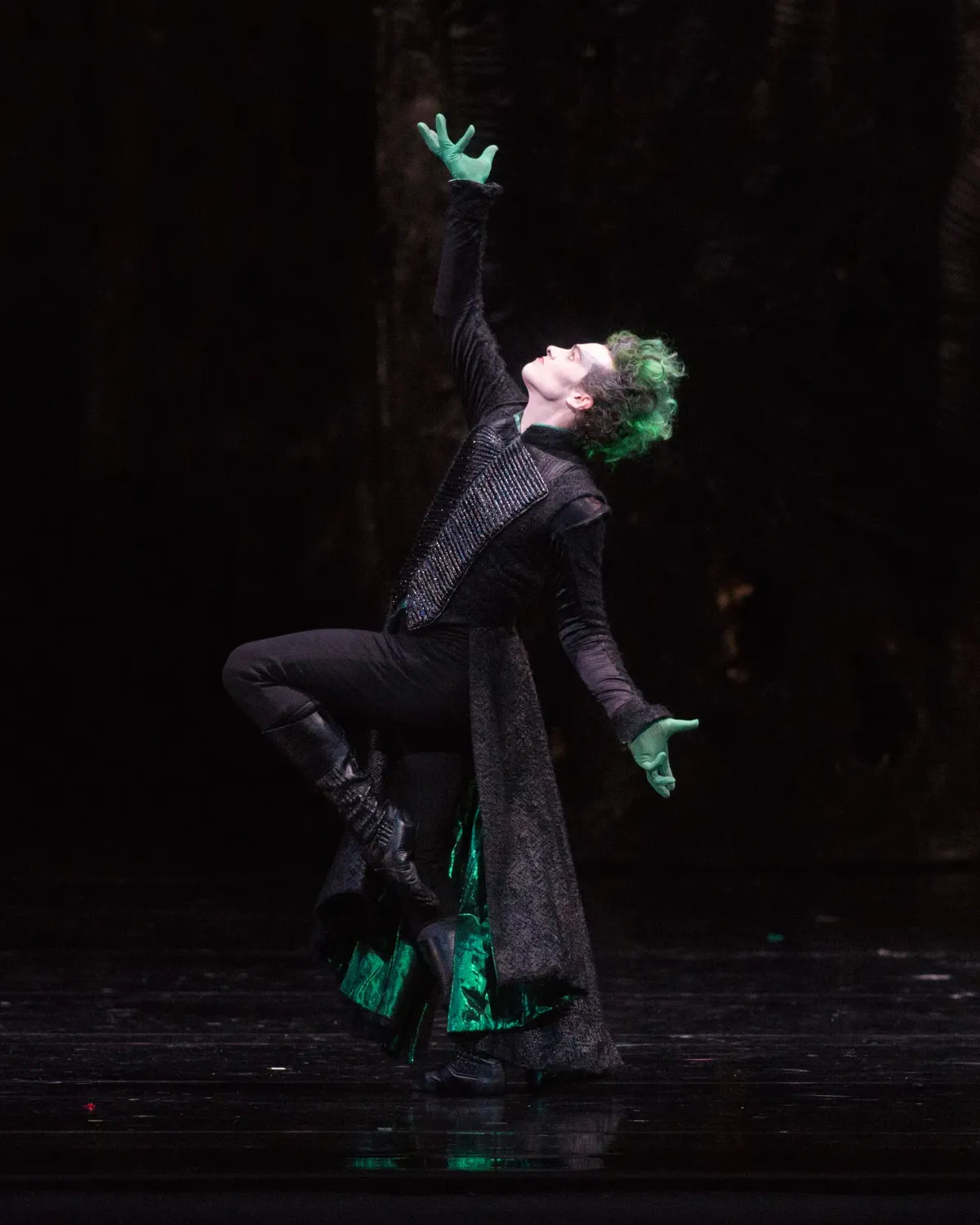
Sunmi Park was a gentle Maiden, downplaying the Lucile Ball interpretation of a silly dingbat who can’t stay awake, and her radiant awe when the enchantment broke was genuinely warm; she even made her childish “I love you” written on the ground moving. Cory Stearns, a powerful weighty presence. was just this side of camp as Kaschei, scooting around with his green hair and twitching hands. He had no chance against Hurlin’s Firebird; he would have been equally at a lot meeting the other strong women in the program.