The Test of Time
"Apollo", "Night", "The Sea Above, The Sky Below", "Paquita"
The National Ballet of Canada
Four Seasons Centre for the Performing Arts
Toronto, Canada
March 1, 2019
The National Ballet of Canada's winter mixed program featured an pleasing blend of old and new works, from the grand classical showpiece "Paquita" to the company premiere of Julia Adam's "Night". Artistic Director Karen Kain has a knack for putting together a well-rounded mixed program that makes for a satisfying evening of dance, giving a wide range of dancers their own moment to shine.
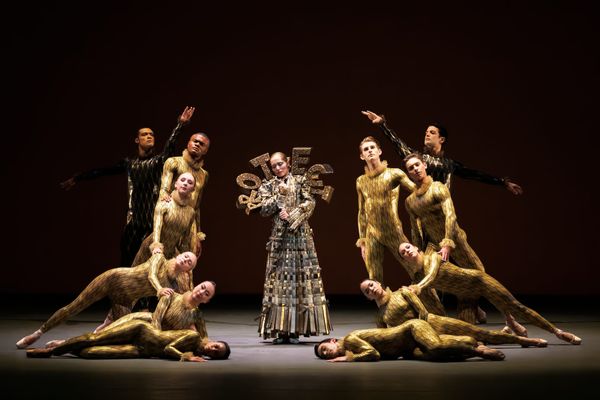
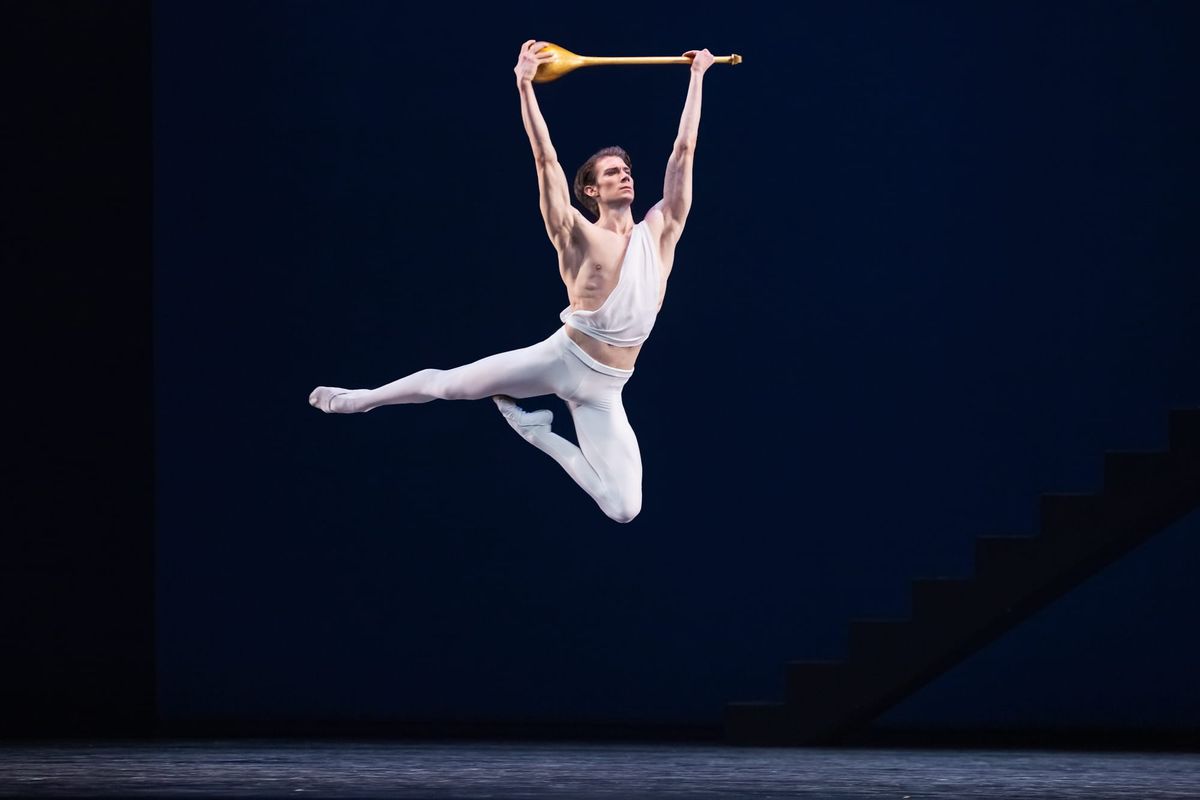
The program opened with George Balanchine's timeless masterpiece "Apollo". The NBoC performs the 1928 Ballets Russes' version that includes the prologue showing the birth of Apollo and the apotheosis showing the god's ascent to Mount Parnassus. Brendan Saye seems born to play Apollo with his long, elegant lines, sensitive musicality and distinguished carriage. While his swaddled entrance has the quality of youthful curiosity and his first variation is playfully exuberant, there are hints of divinity in the purity of his movement that signal his destiny. The first variation's rock star arms with the pandura give way to the intentional, sharp and confident strides of the second. His development is clear and inevitable. Saye entrusts himself to Balanchine's choreography, never afraid of looking odd or maladroit. He purposely creates the impression that his long limbs are hard to wrangle at times. Even Greek gods go through an awkward adolescent phase. But with the teachings of his muses, he gains agility and mastery of his body, his instrument.
Terpsichore, the favored one, was danced by an assured Heather Ogden. She tackled the role with a light touch -- playing with the quick weight changes to accentuate but not exaggerate them. In the joyful coda, she led the way with her jazzy bounces and swift changes in direction, perfectly linked to Stravinsky's syncopated rhythms. Miyoko Koyasu was beautiful but a bit too precious and contained as Calliope, the muse of poetry. She is petite and needs to reach a bit farther in some of the gestures. Jeannine Haller fared well as Polyhymnia with precise placement of finger to lips, representing the art of mime. "Apollo" is so unique and distilled, nothing about it looks dated, even after 90 plus years. There are few ballets with so many iconic snapshots or sequences, from the sunburst image to the swimming lesson and Michaelangelo-like picture of Apollo and Terpsichore's fingers reaching one another.
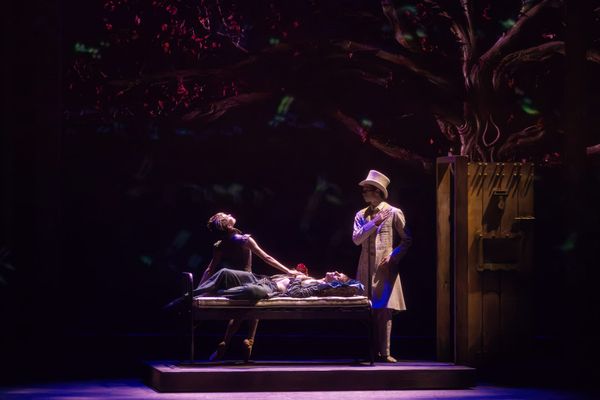
"Apollo" is certainly a tough act to follow. The next piece on the program was "Night", created for the San Francisco Ballet in 2000 by former NBoC member Julie Adam. It is a whirlwind of a ballet, inspired by the fantastic and colorful paintings of Marc Chagall. The work follows a dreamer along a restless night of fantasies and nightmares, set to a score by Matthew Pierce that ranges from mechanical and music box-like to sweeping and cinematic (and occasionally a touch maudlin). Unlike previous performances of "Night" that starred a female dreamer, the protagonist was cast as a male, danced delightfully by the nimble Skylar Campbell. Adam can be forgiven for type-casting here as Campbell (the NBoC's resident Petit Prince) is really perfect for this type of role. He is extremely light on his feet and is genuinely able to depict a sense of child-like wonder. Impressive, too, were sequences of partnering between him and the taller Ben Rudisin. Rudisin can lift Campbell easily, but it was surprising how effortlessly Campbell was able to lift Rudisin. In addition to these leading roles, there is a corps of creature-like men in lilac ruffled pants and a three-headed woman (three dancers bound together in a saran wrap-like material). There is some interesting ensemble work that creates images of common archetypal dreams -- flying, falling, fleeing and the like. The concept of this ballet mostly works, although the unstructured format makes it a bit meandering at times.
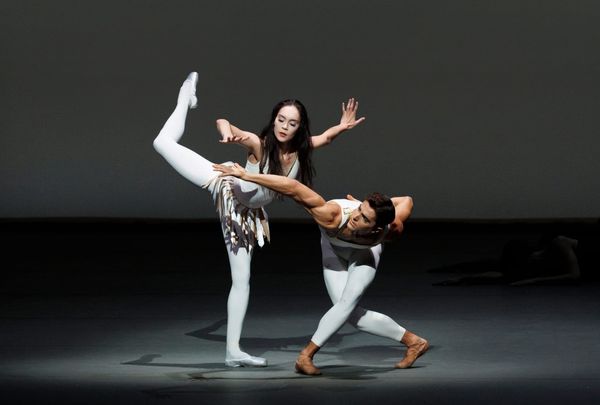
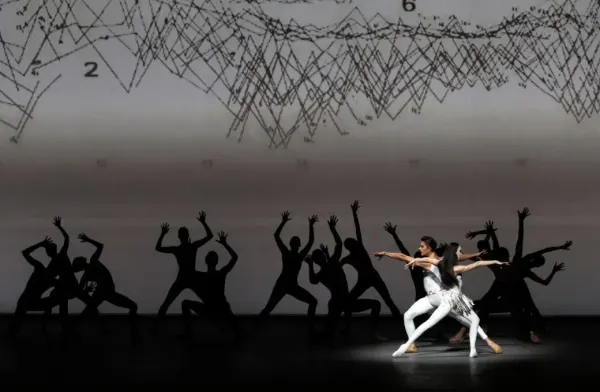
Next was Robert Binet's "The Sea Above, The Sky Below", a 10 minute pas de trois created to mark Xiao Nan Yu's 20th anniversary with the company in 2017. It is typical inoffensive, if somewhat bland and unmemorable, gala fare. Here, it was danced by Ogden, Harrison James, and Félix Paquet. The piece is quite literal, showing an experienced artist as a generous and maternal mentor to two younger men, one more classical in his movements and the other more contemporary. The ballet is set to the 4th movement of Gustav Mahler's Symphony No. 5 with elegant, intricately detailed costumes by Canadian-born fashion designer Erdem Moralioglu. Ogden did her best with the material. She was expressive and expansive stitching one step to the next to create a sense of perpetual motion.
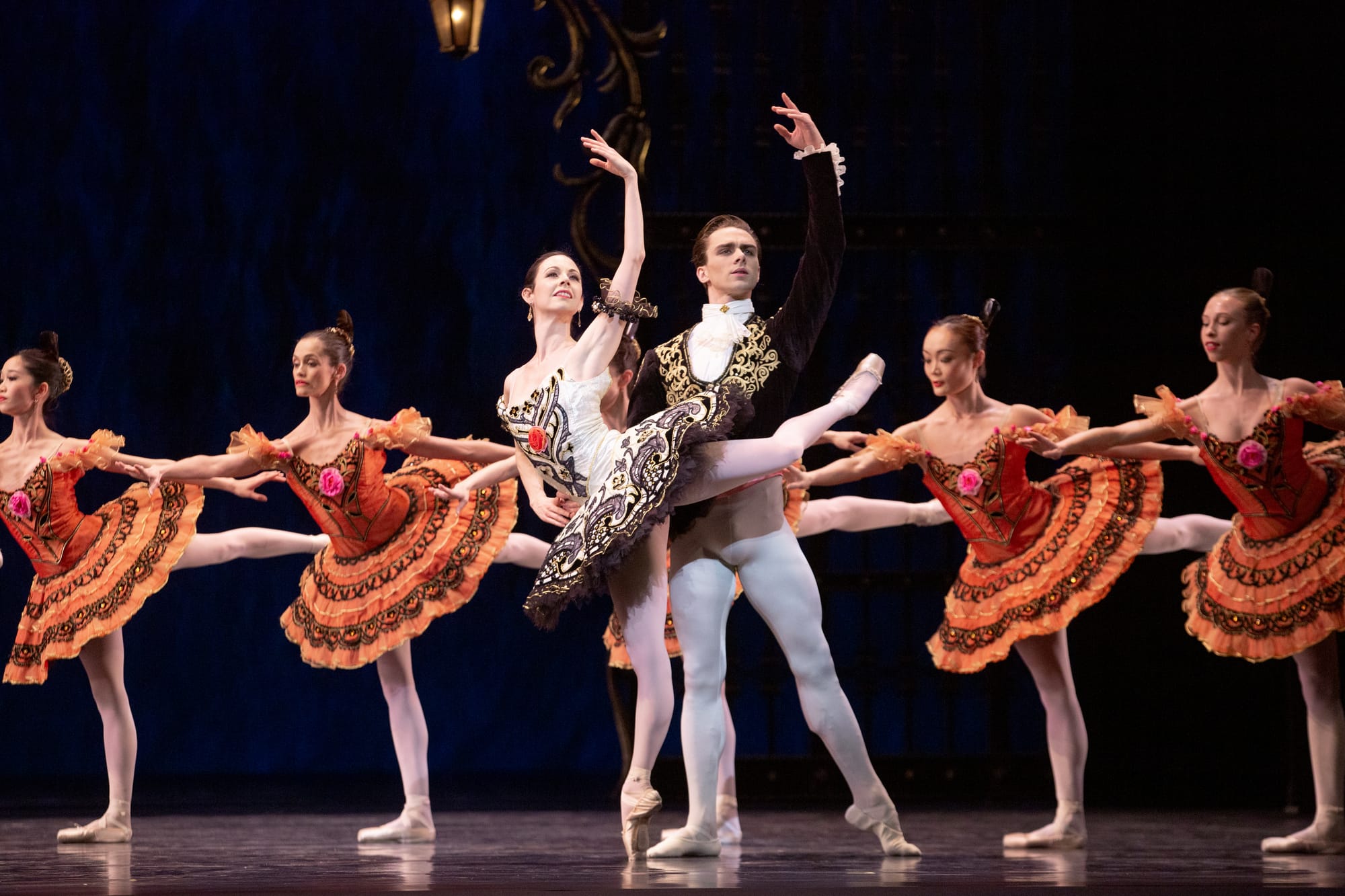
The program ended with Christopher Stowell's crowd-pleasing adaptation of "Paquita". While the corps could have been a bit tighter in some formations, they were mostly in sync with this very challenging and at times speedy choreography. In the leading roles, Jillian Vanstone and Francesco Gabriele Frola were well matched. Their styles, hers quietly confident and his more fiery, compliment each other nicely. Both appeared calm amidst the huge technical feats required of them. Vanstone was clean and found her plumb line quickly on each balance and turn. She only wavered slightly towards the end of the fouettés, travelling upstage and falling out slightly. Frola brought astounding precision and control to his tours en l'air and explosive manèges. He does wind up a bit before large turns but the effect is so brilliant it can almost be forgiven. Ogden appeared for the third time of the evening in the grand jeté variation, showing no sign of fatigue. She sailed through the big jumps and arabesque turns like the seasoned pro that she is.
While the entire evening was enjoyable, the two older works bookending the program were considerably stronger than the middle two. New works are important for growth, but are hit and miss by nature. "Paquita" demonstrated the importance of keeping classical ballet's heritage alive and "Apollo" demonstrated the innovation that current choreographers must continue to strive for.
copyright © 2019 by Denise Sum