The French Connection
“La Source”, “Namouna, A Grand Divertissement”
New York City Ballet
David H. Koch Theater
Lincoln Center
New York, New York
April 29, 2023, evening
“La Source” and “Namouna” were both elaborate 19th century ballets first presented at the Paris Opera choreographed by Frenchman to French music. “La Source” (1866,) with music by Léo Delibes and choreography by Arthur Saint-Léon and “Namouna” (1882), with music by Édouard Lalo and choreography Lucien Petipa (Marius’ older brother), have complicated plots, full of exotic locations, put-upon heroines, and stalwart heroes (both danced originally, coincidentally, by Louis Mérante). The current versions by Balanchine, (“La Source”, 1968) and Ratmansky ("Namouna, A Grand Divertissement, 2010) both have heroes, but very little plot. Balanchine ignored the plot completely, but kept the French elegance; he choreographed the brief, expanded pas de deux for Violette Verdy and John Prinz in 1968. Alexei Ratmansky, on the other hand, mixed in elements of the original “Namouna” for his 2010 celebration/send-up of 19th century balletic conventions but dressed his hero as a Victorian child strutting around in a sailor suit. They may have used different approaches, but both clearly loved the lush, melodic scores.
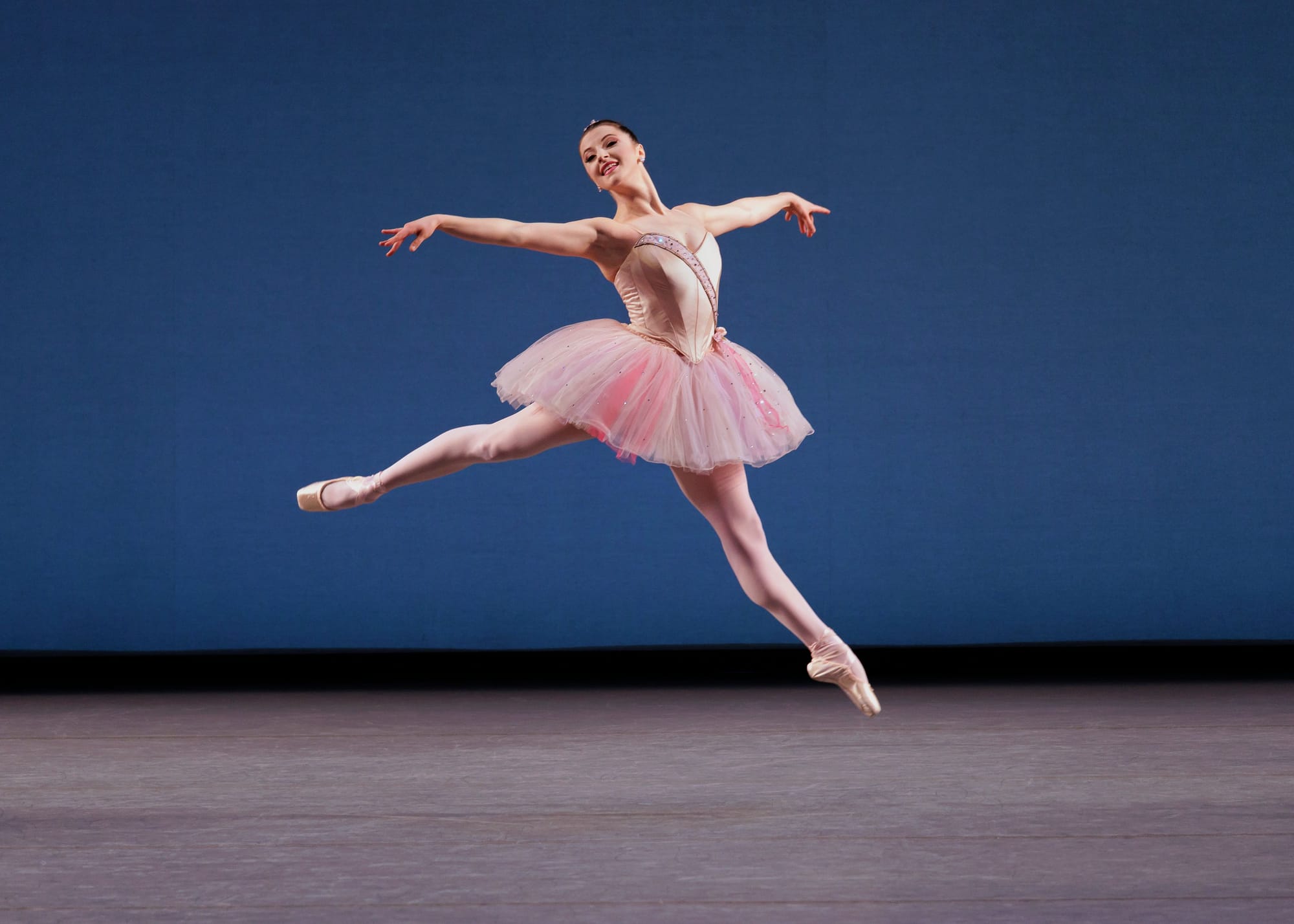
“La Source” opens directly with a creamy pas de deux, cutting right to the heart of the Romantic ballet without any preliminary introductions. Indiana Woodward and Joseph Gordon were the enraptured couple, moving through the unobtrusive partnering with a dreamy, delicate ease that was breathtaking. Woodward’s luxurious upper body, unmannered and straightforward purity, and her deceptive strength combined to create a illusion of floating on the music, Her solos, with the quick changes of direction and bouncy jumps, were playful, musical, and scintillating.
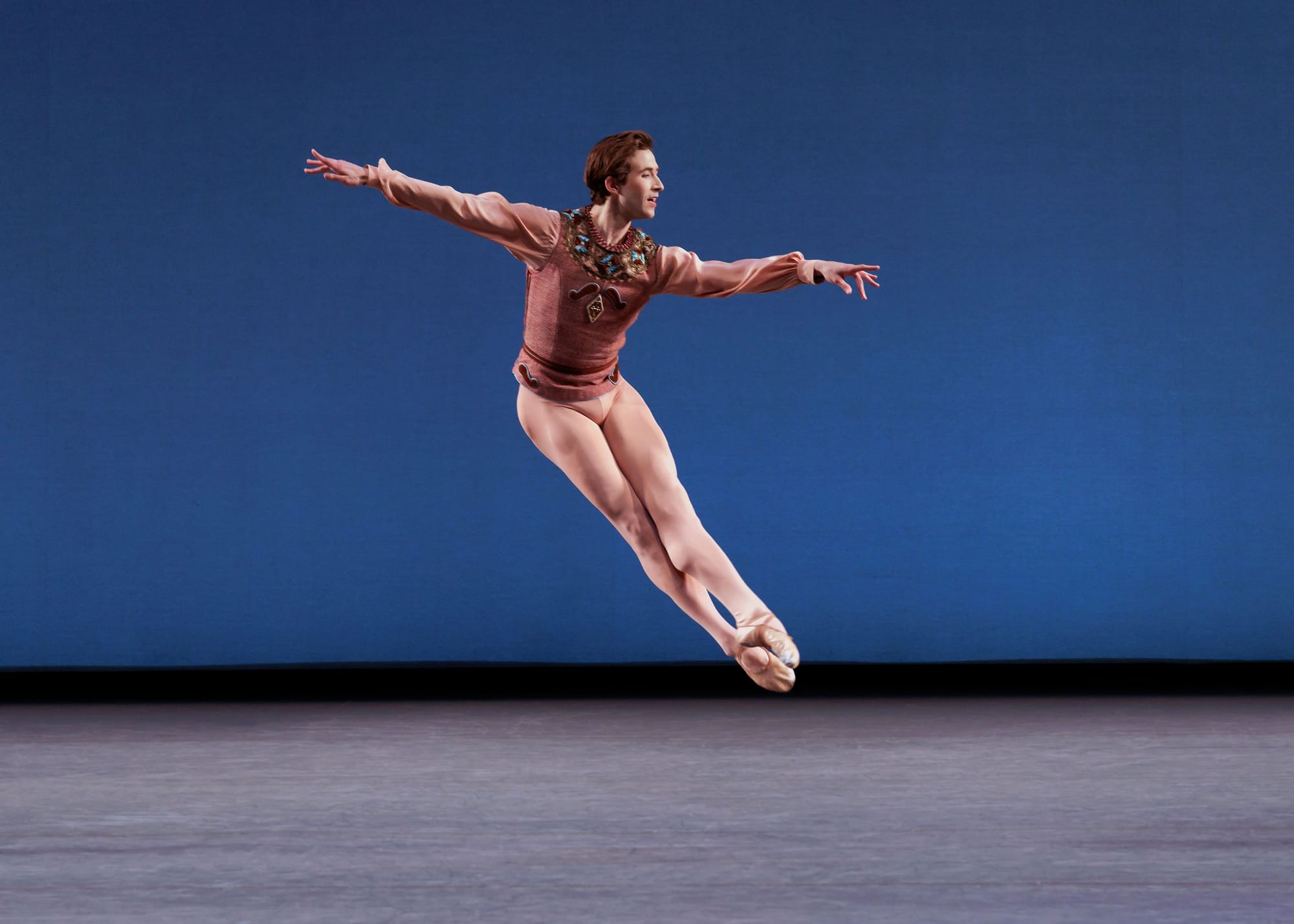
Gordon looked right at home in his two solos with their quick, musical jumps and seamless flow. He seemed to be channelling a pre-Soviet style of male dancing, elegant and unobtrusive, with no pauses for breath, as one phrase melted into another, turns into jumps into cabrioles, until the final, elegant pose. He was light and airy, yet supremely classical; it was a beautiful and warmhearted performance.
The hardworking couple did get a break between solos with the entry of the small corps led by an energetic soloist (Olivia MacKinnon, in her debut). MacKinnon’s opening flurry, with the glorious sideways, head-scraping kicks, was a bit underpowered, as her feel barely made it to her waist, though she showed a fine control and a lighthearted elegance in her later dances. The corps, too, seemed a bit under-rehearsed, with one near miss; they were a bit too neat and careful, tiptoeing through the bouncy emboîtés as if the stage were covered in eggshells.
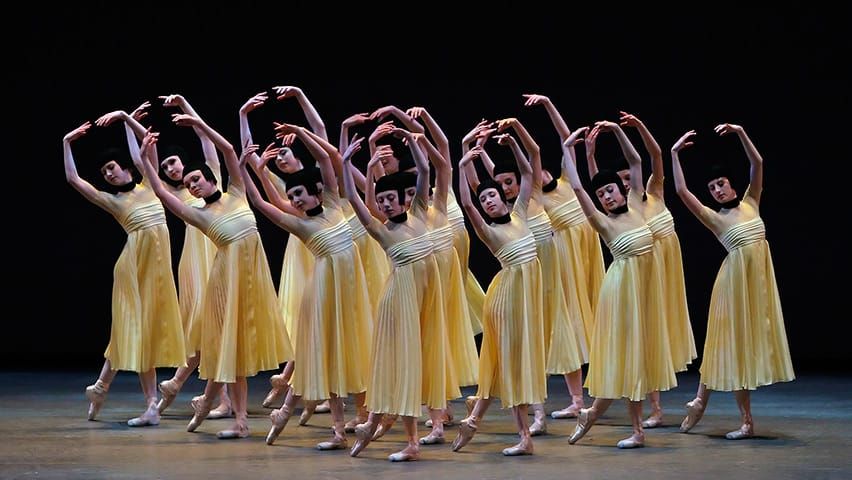
There were no eggshells in “Namouna” as the large cast tore into Ratmansky’s tongue in cheek, somewhat bizarre take on the old-fashioned ballet. Ratmansky’s works, with their complex, multilayered approach often benefit from several viewings, and his “Namouna” works best, I think, if the audience views each of the twelve sections as a separate short stories with a few recurring characters. With the exception of Sara Mearns, one of the original cast members, the leads were all making debuts. Roman Mejia was the high-jumping sailor-boy hero, entranced by the three women, the Spanish spitfire Mearns, Mira Nadon as the cigarette girl (the original Namouna got to entice the hero by lighting up a cigarette), and the eventual winner, the lyrical Ashley Laracey.
Mejia's engaging and dynamic stage presence lit up his role, though for me, Ratmansky does veer a bit too much between the Romantic 19th and the more cynical 20th centuries. Mejia does a straightforward mime scene, clutching his heart with a Siegfried-like intensity as he describes his love, then undercuts it by literally blowing smoke. But concentrating on the dancing and not the logic is certainly rewarding, and the ballet gives the dancers some tremendous opportunities.
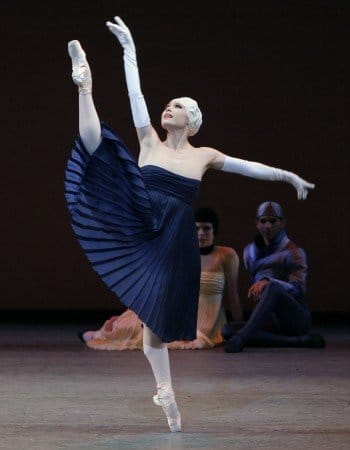
Even with the unflattering swimming caps the women wear (they look a bit like exposed brains—a joke I do not understand) Mearns burned through her Spanish-inflected solo with a predatory power, eating up space. Nadon’s cigarette dance, with her sinuous arms echoing the smoke, showed off her witty elegance and commanding sensuality. Laracey gave her solo (originally danced by Wendy Whelan) her own intense interpretation, less angular than Whelan but with a burning fervor.
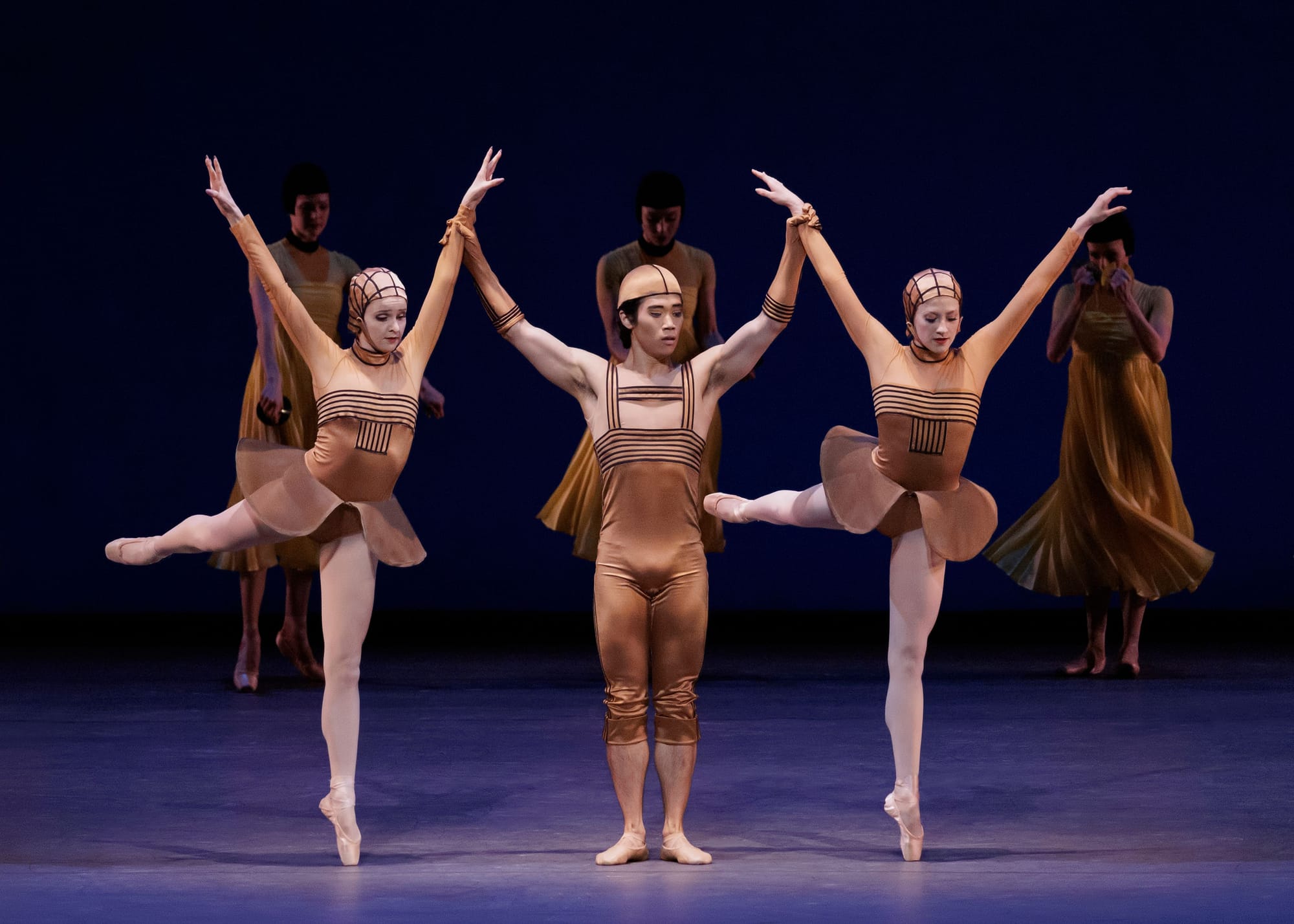
KJ Takahashi, accompanied by Baily Jones and Claire von Enck (all debuts) danced the gold helmeted heavy, possibly representing one of the pirates skulking through so many 19th century ballets, though at times he seemed to be best buddies with the sailor boy (perhaps he was dancing two different stories). His jumps were controlled and powerful, though low to the ground; he is a very charismatic performer and gave his dancing a lighthearted flair. Jones and von Enck flew through their gracious little jumps with impeccable timing and precise coordination, an irresistable combination.
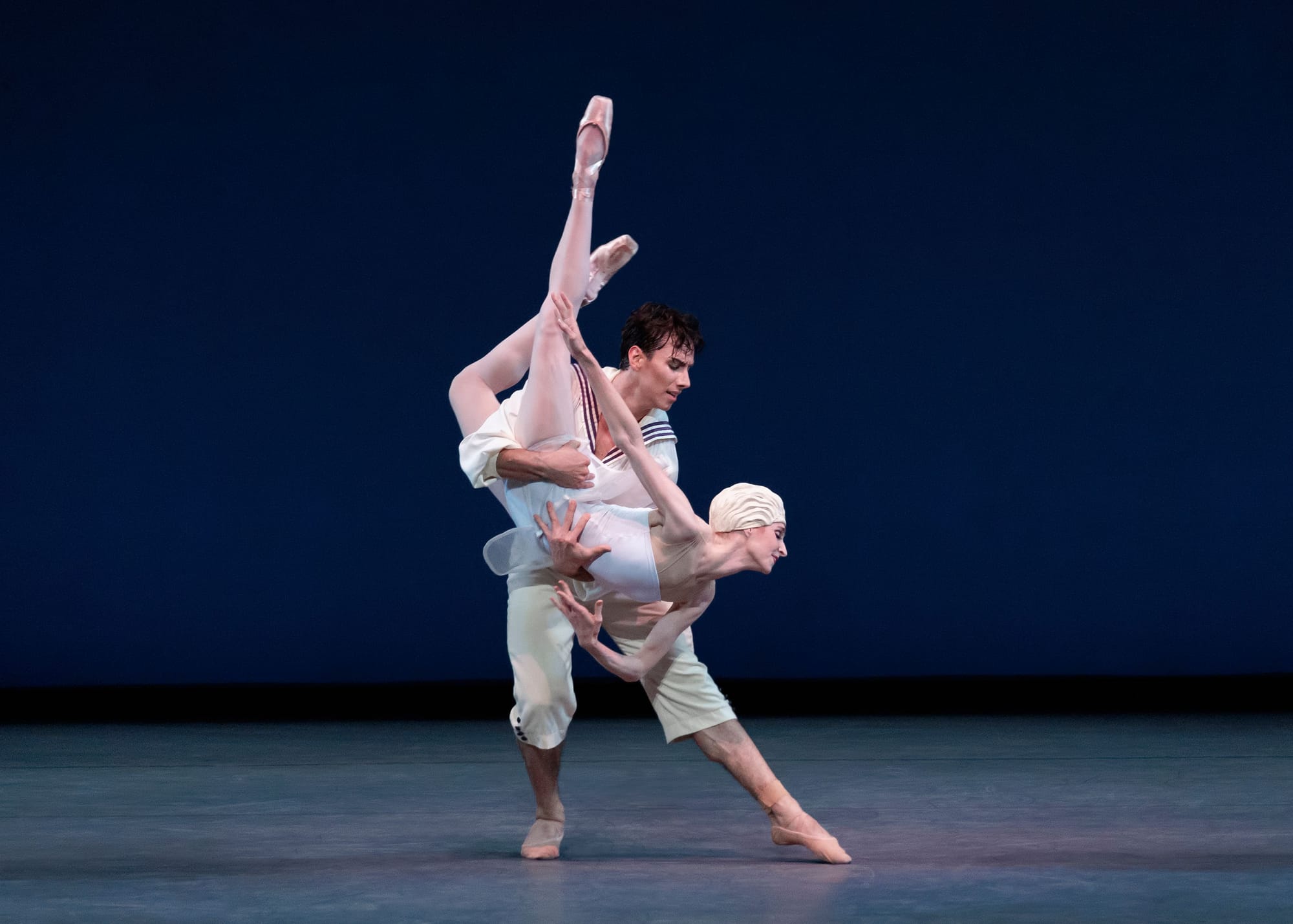
Ratmansky’s corps formations, framing the various vignettes, were often luminous, especially in the underwater scene, where the sailor seems to be rocked by waves, a nod to all those glorious visions of 19th century heroes. He does find his beloved there, and Mejia and Laracey had a celebratory pas de deux, complete with daring lifts and ground scraping fish dives. For me, though, the ballet had more exhilaration than emotion; Balanchine’s salute to those old French ballets, even with no pretense of a story, seemed as if it could have been the climax of one of those complicated scenarios, while Ratmansky seemed to spend his time undermining those conventions. Though “Namouna’s” choreography was ingenious and the dancing was triumphant, it was a physical, not an emotional journey to France.
© 2023 Mary Cargill



