The Familiar and the Strange
“Valse Fantaisie”, “Change”,
“Passage”, “Dougla”
Dance Theatre of Harlem
Ballet Across America
Opera House,
The John F. Kennedy Center for the Performing Arts
Washington, DC
May 28, 2019
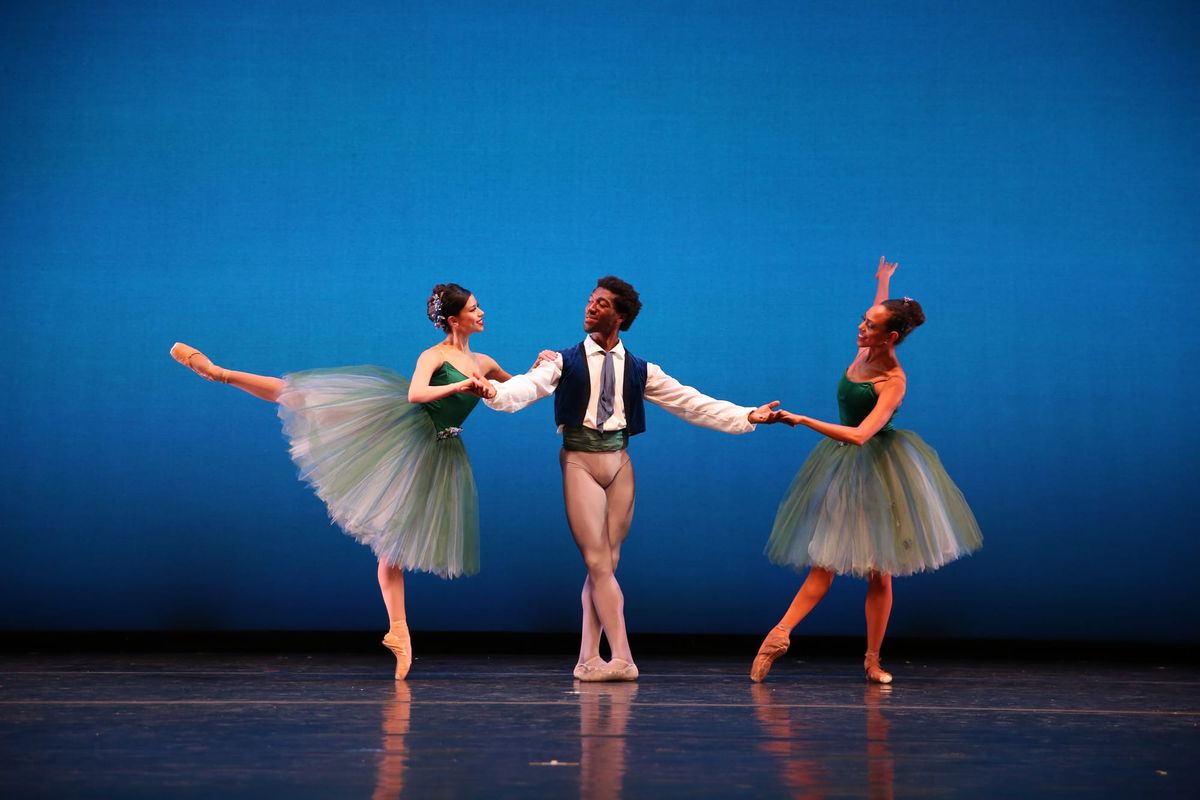
This time Ballet Across America spanned just the nation’s East Coast, but from New York to Florida. Opening night was all Dance Theatre of Harlem’s. It started with company director Virginia Johnson, chic in a sharply cut suit, stepping in front of the curtains and briefly addressing the audience. Johnson had chosen George Balanchine’s neoclassical “Valse Fantaisie” as opener. It is a little piece – a leading couple plus a female corps of four. Mikhail Glinka’s music hasn’t the sweep of a waltz by Johann Strauss 2, nor the surge of one by Richard Strauss, nor the ravishment of Ravel. Rather, the Glinka score is cute and the choreography makes a neat little exercise of it. Dylan Santos as the danseur and Crystal Serrano as the ballerina were amiable, amidst the quartet in its green gauze. After just a brief pause, “Change” followed and it was quite a change of temperament. Photo:
Beheld on a forbiddingly lit stage is one woman. She is a figure anyone would be wary of on a dark night. A second female figure joins her, and then a third. There is a boldness about them but also a reluctance as choreographer Dianne McIntyre displays them. A closer look shows the three women to be quite distinct, although they dressed alike in highly patterned bathing suits. Toe shoes are on their feet, yet they use the pointes not like lark wings skimming the ground but as bludgeons. McIntyre gives each woman a solo. One of the trio is more sensual, another more nervous and the third very deliberate. Each could be good looking but chooses instead to be stern. They reminded me of the three witches in Shakespeare’s “Macbeth”. Perhaps that connection was suggested by shrieks in either the “traditional” music or the “original” Eli Fountain score. The dancers were Lindsey Cooper, Ingrid Silva and Stephanie Rae Williams. The costume design by Oran Bumroongehart was based on leotards worn by former Harlem dancers, and the grotesque lighting was Alex Fabozzi’s design. Supposedly, McIntyre’s inspirations were not Shakespeare’s harsh sisters but “black, brown, beige” women who have managed to change the world.
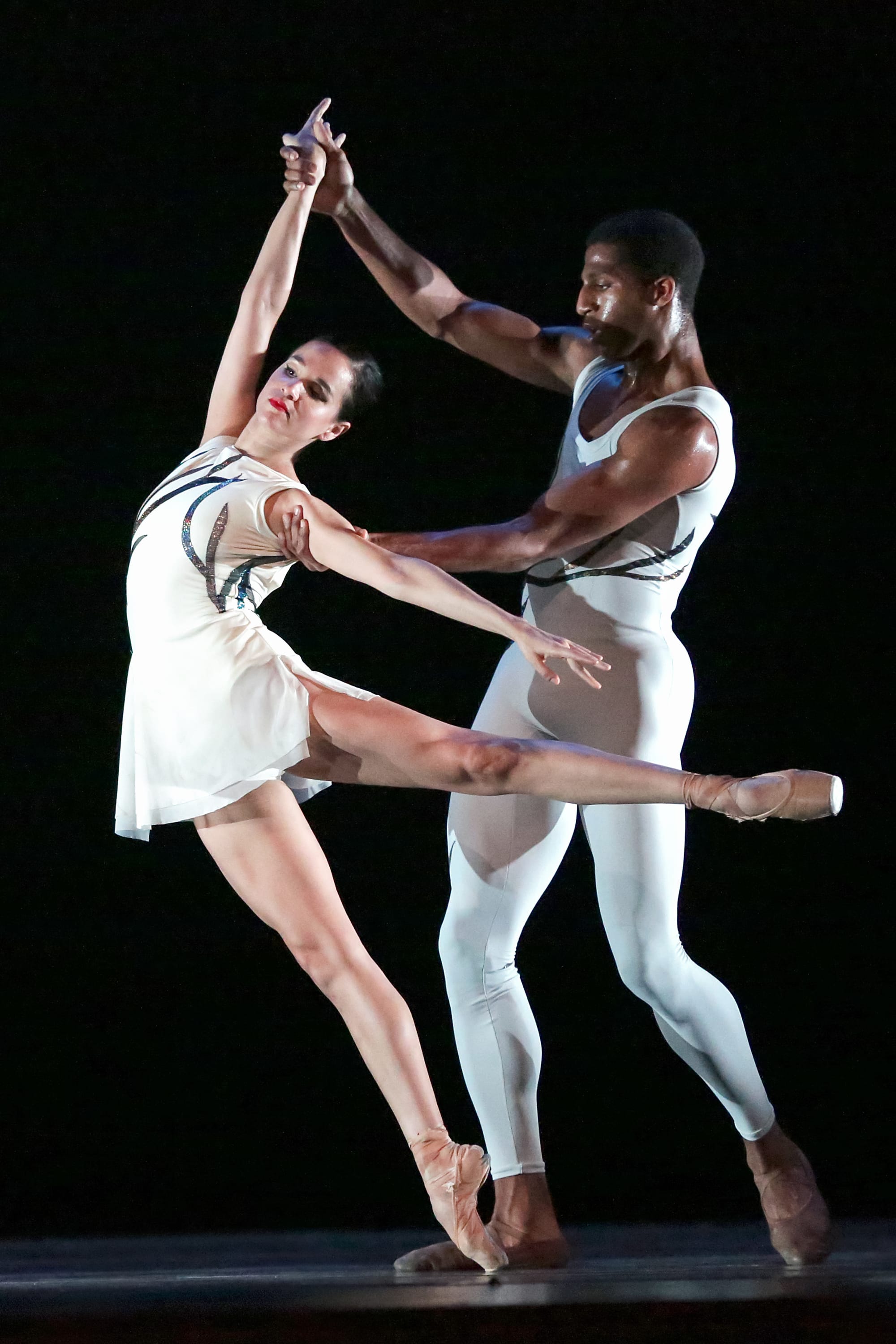
For “Passage”, a dozen dancers are dressed in simple white ballet wear. The choreographer, Claudia Schreier, gives this team samples of neoclassical ballet, of symphonic ballet, of acrobatic encounters and of more. There are group formations – blocks and chains and archways. Duets are sparked and trios are tried. There is balancing, leaping, turning. Nothing, though, is done for very long. All is fragments, shards, splinters. “Impatience” might have been an apt title for Schreier’s choreography, more so than for Jessie Montgomery’s music.
“Dougla”, a tourist view of African tribal dance, concluded the program. It is a colorful parade with lots of cartwheels, almost nude men, nearly topless women and also very veiled women. The conception is Geoffrey Holder’s. Tania Leon, Harlem’s conductor, helped him with the percussive music. Neither this piece nor the opener, Balanchine’s Glinka waltz, truly satisfied my expectations for the familiar in dance. The new pieces at least left me wondering.
copyright 2019 by George Jackson



