Texas Toast
"Pacific", "Twilight", "Solo", "Play"
Houston Ballet
Joyce Theater
New York, NY
October 22, 2013
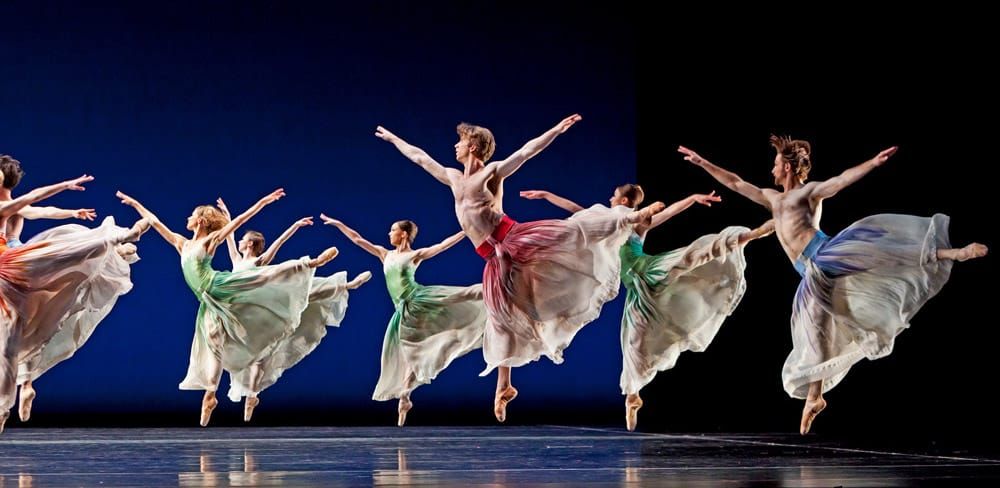
The Houston Ballet, directed by the Australian choreographer Stanton Welch, returned to the Joyce for a week-long season, with four works (two with live music), variable choreography, and strong, confident, and appealing dancers. Mark Morris' "Pacific", to two movements of a Lou Harrison trio, opened the program. It was choreographed in 1995 for the San Francisco Ballet, and combines point shoes with unusual, shifting movements. It is uni-sex; both men and women wear long pastel chiffon shirts that shimmer when they move. It is a ballet of mood, catching the up-beat rhythms of the music with quirky, stylized movements. Three men (Ian Casady, Oliver Halkowich, and Joseph Walsh) open the work, dancing in unison with quick, fast floating jumps. The dancers were terrific, dancing with an open-hearted generosity and flowing, graceful moves. They were replaced by four women dancing with a slightly ominous intensity, but with equal grace. The center of the work, a pas de deux for Melody Mennite and Joseph Walsh, was, in typical Morris fashion, a somewhat oblique examination of missed chances, as the couple rarely connected. No cliches here, just lush, interesting and every-shifting moves.
There were cliches aplenty in Ben Stevenson's pas de deux "Twilight", set to piano music by Rachmaninoff. It was danced with smooth abandon by its original cast, Sara Webb and Ian Casady, but they could not disguise its ice-dancing approach to partnering, where grotesquely difficult lifts turned into attempts to sweep the floor with the girl's hair, and passion was signified by heads flung back and mouths opened. The partnering was seamless and as graceful as possible, and the dancers gave it a reticent dignity despite the overwrought choreography; these two deserved so much better.
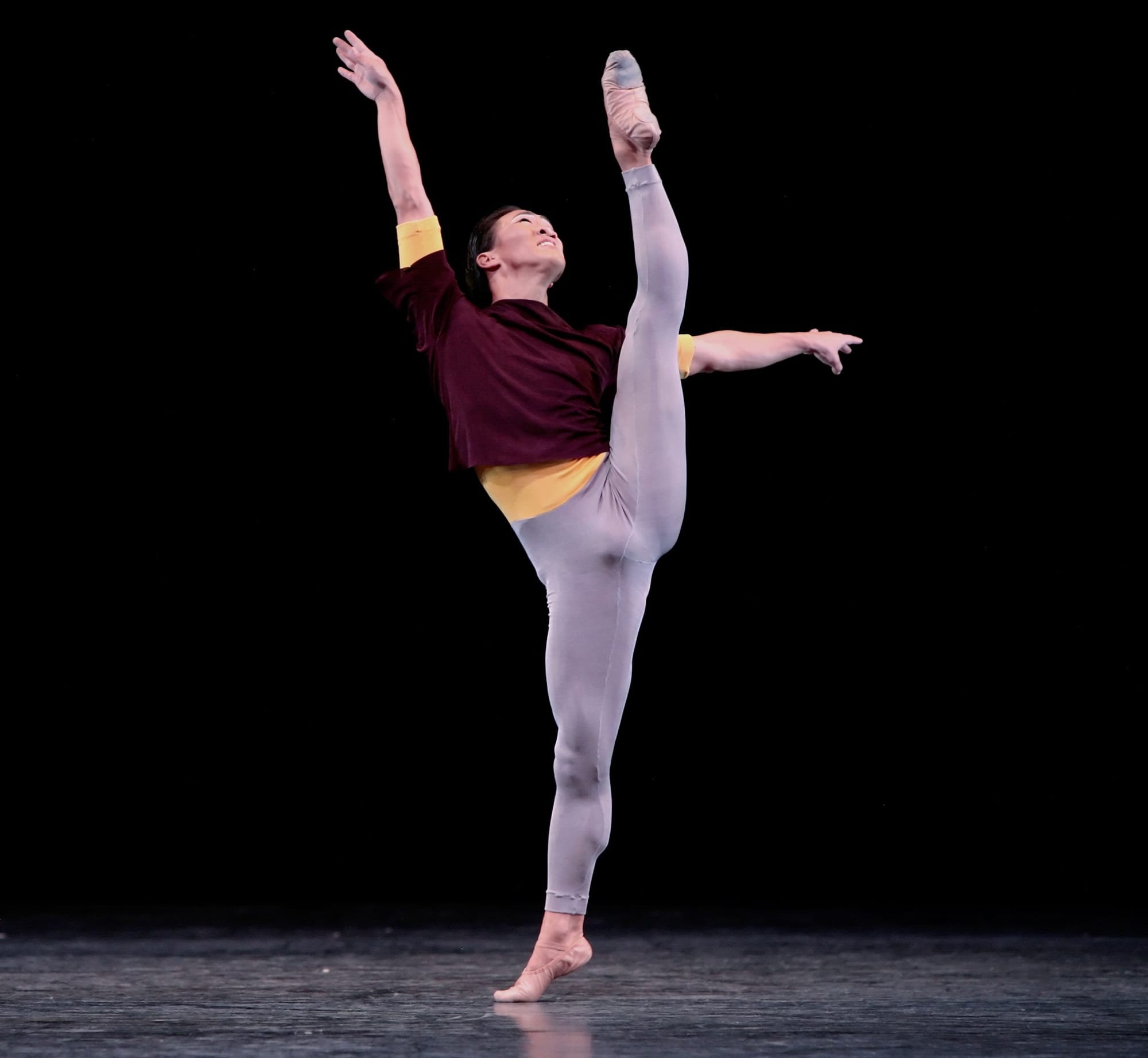
As did the three men (Jim Nowakowski, Connor Walsh, and Oliver Halkowich) in Han van Manen's "Solo", a jokey, aerobic jaunt through a recording of Bach's Violin Partita No. 1. Jokey and aerobic are words that really shouldn't apply to Bach, and it seemed as if the choreographer was grabbing on the the back end of the music to make the piece more important than it was. Though the dancing was impressive, as the dancers spun and jumped at warp speed, making sharp, clear shapes, it seemed a bit hollow, as if they were just wind-up toys.
Stanton Welch's "Play" also brought to mind toys, as many of the movements made the dancers looks they were made of sawdust. Set to recorded songs by Moby, the opening showed the choreographer straining for novelty, and grabbing an old hat. The curtain rose while the auditorium lights were still on, showing the backstage brick wall as stage hands sauntered on and off--the old ignoring the fourth wall trope. A blurry film of children at play began, as the dancers, wearing street clothes (though the women were in point shoes) ambled on. For some reason, an announcer riffed on an airline take-off public address, pointing out the emergency exits and seat flotation devices. This bit of lame humor had nothing to do with mood of the piece, which involved a lot of running and sullen expressions, as if the choreographer had decided to set the finale of "Etudes" in an urban jungle. Once the dancers stopped running, they started fighting, and there was a lot of mimed violence; it was equal opportunity, though, as men slugged women and women slugged men. In the middle of this mayhem, a couple (not identified in the program) danced a touching pas de deux, as they tried to connect. The woman, especially, had a touching vulnerability, and gave her mechanical little moves, after being left behind, a heartbroken sincerity. She was captivating.
The men, after all the fighting, had a group dance of rhythmic complexity, a sort of an urban hoedown, that finally let them move, though they still seemed to be afraid to smile. Despite the dispiriting choreography, Welch's company looks wonderful, dancing with an unaffected stylishness and ease. So the toast is for them, with the hope that they return soon with better works to dance.
copyright © 2013 by Mary Cargill



