Star-Crossed
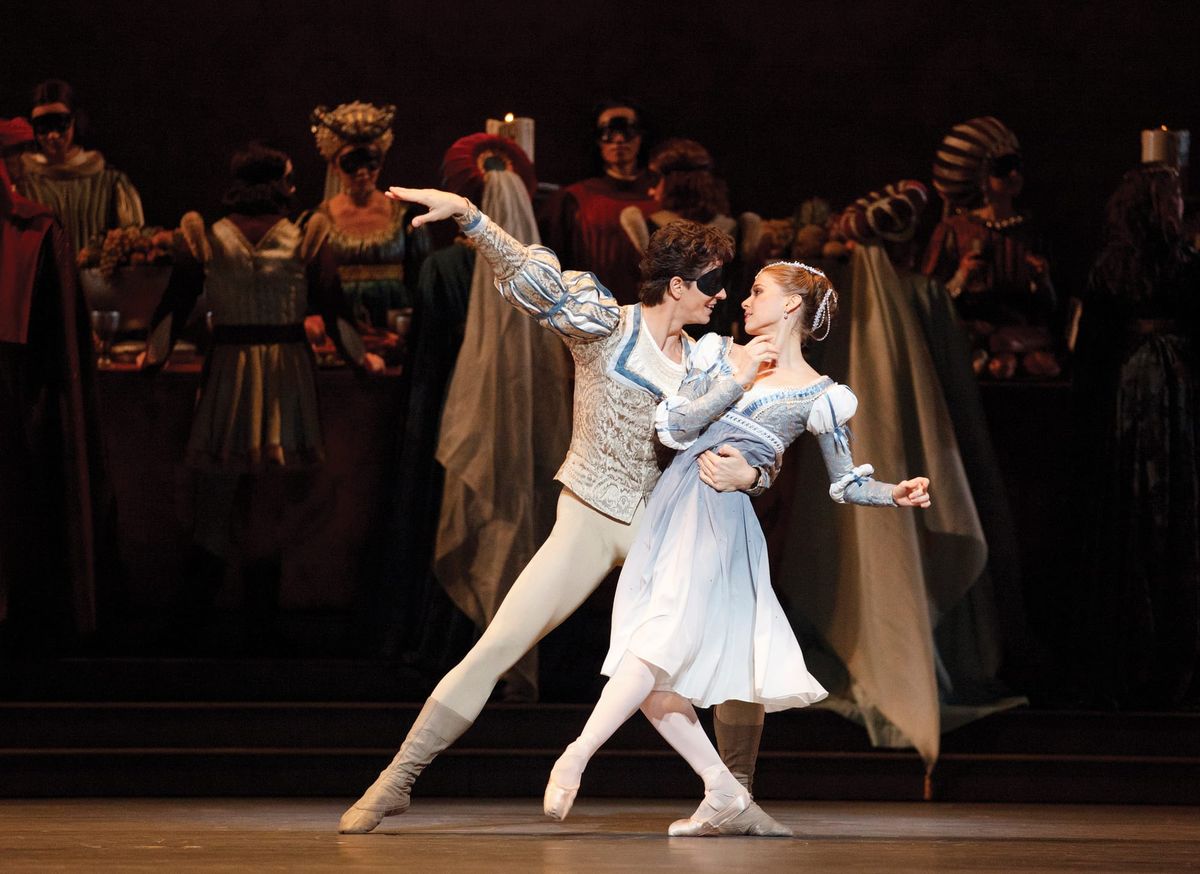
"Romeo and Juliet"
The National Ballet of Canada
Four Seasons Centre for the Performing Arts
Toronto, Canada
March 11, 2020
Before Toronto (and much of the world) went on lockdown, the National Ballet of Canada gave a spirited performance of Alexei Ratmansky's "Romeo and Juliet". The original cast from the world premiere in 2011, Guillaume Côté and Elena Lobsanova, shone as the passionate yet doomed lovers. They were supported by a strong supporting ensemble, as well as by Ratmansky's evocative storytelling and energetic choreography. Two days after opening night, the remainder of the run was cancelled due to COVID-19.
Ratmansky's production moves at a quick clip and distills Shakespeare's tragedy to its key events. Intimate and tender private moments alternate with imposing and ominous crowd scenes. In isolation, the citizens of Verona are peaceful, but once gathered in a large group, tensions form almost immediately. The opening scene illustrates how quickly a calm afternoon can turn violent when the worlds of the Montagues and Capulets collide. The movements in the village scene are grounded and feature a modern dance sensibility with feet in parallel, chug steps and torsos that contract and release. The famous Montagues and Capulets "Dance of the Knights" is less regal than in other versions and more foreboding. Rather than a courtly couples dance, the men wield swords in symbolic battle as the women shuffle along the sidelines.
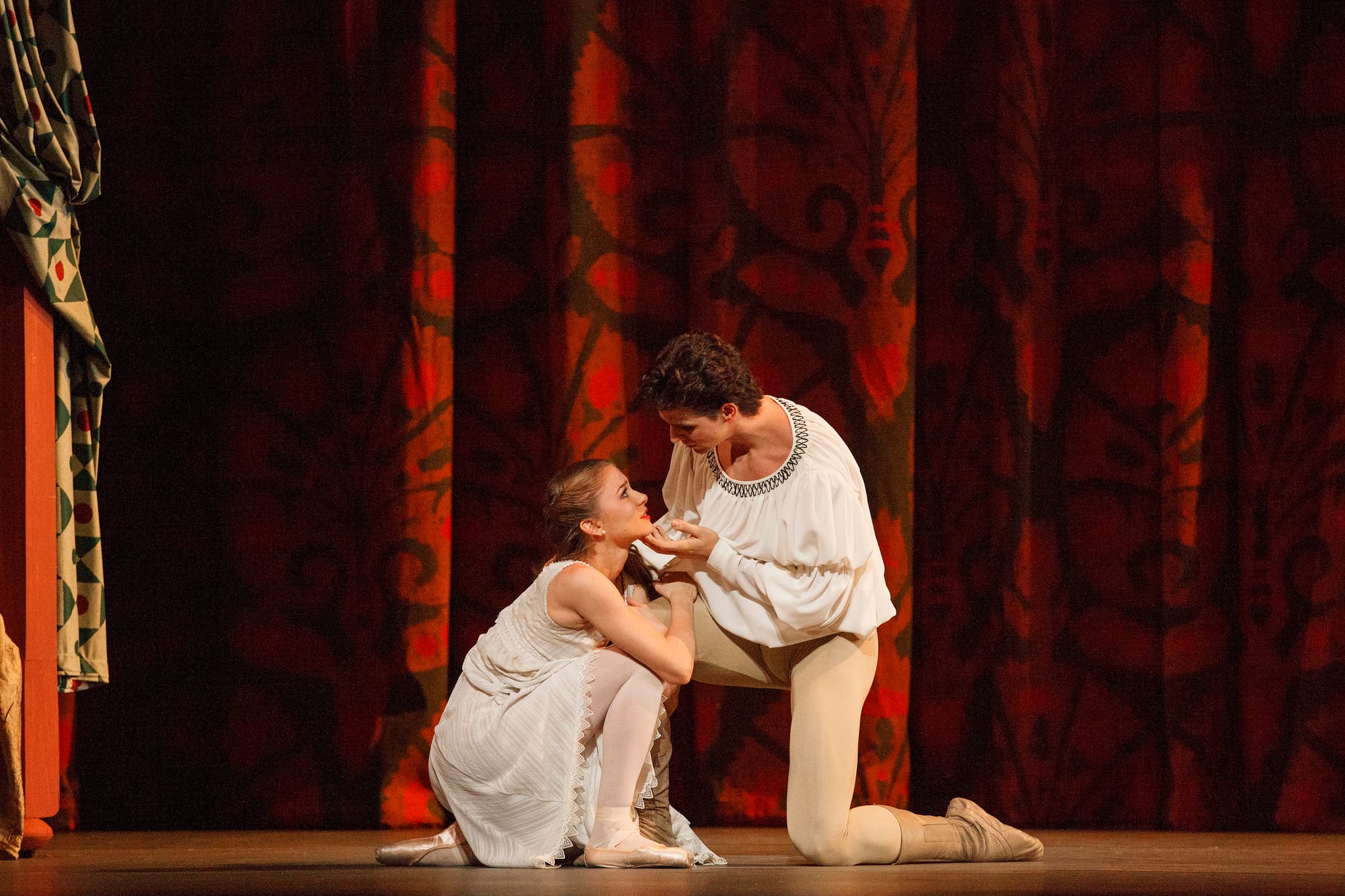
In contrast to the heaviness the pervades much of the ballet, the choreography for Romeo and Juliet is full of breath, expansiveness and joy. When they first meet at the ball, they are literally lifted in the air, as if floating. Their movement phrases come in sudden, ecstatic bursts, pausing just long enough to catch their breaths. Lobsanova's staccato footwork mimics a fluttering heartbeat, while her silent landings are an impressive technical feat. She throws herself into every lift, caution be damned. Côté never took his eyes off her. He was believably smitten and the urgency with which he ran to Friar Laurence to wed Juliet was especially poignant. Together, they made the tomb scene gut-wrenching.
Romeo's friends, Mercutio and Benvolio, were danced by Jack Bertinshaw and Skylar Campbell respectively. Both are excellent technicians that move with both speed and buoyancy. The tricky and jam-packed choreography for them is hidden behind comic gestures and hijinks. While they tease Romeo, the hopeless romantic, the camaraderie between the trio is evident. This makes Mercutio's death scene all the more tragic. For all his showboating and pranks, he is still just a boy. Piotr Stanczyk's Tybalt was a perfect foil -- completely humorless, aggressive and ready to fight. When Stanczyk is stabbed by Côté, he dives at him and tries to strangle him, causing him to audibly gasp.
As Lady Capulet, Stephanie Hutchison gave a credible performance as a woman torn between sympathy for her distraught daughter and the need to stand by her husband's plans for Juliet to marry Paris. Etienne Lavigne was a stern Lord Capulet. Peter Ottmann reprised his role as Friar Laurence, using his brief moments on stage to communicate his conflicted feelings around secretly marrying the young couple and later giving Juliet the vial of potion. Lorna Geddes, as the nurse, played an important role throughout as Juliet's caregiver and closest confidante. Aside from the Friar, she is the only one that sees past clan differences and supports the young lovers.
In the precarious times we find ourselves in, moving performances like this one can sustain and inspire us. Here's to the curtains lifting in the theatre again soon.
copyright © 2020 by Denise Sum



