Speaking in Tongues
“Scotch Symphony,” “Tschaikovsky Pas de Deux,” “Divertissement Pas de Deux from ‘A Midsummer Night’s Dream,’” “The Four Temperaments”
San Francisco Ballet, The Mariinsky Ballet, Paris Opera Ballet, Joffrey Ballet
Balanchine, The City Center Years
New York City Center
November 2, 2018
City Center’s 75th anniversary celebration of Balanchine ballets was a rare example in today’s arts world – routinely long on hype and short on substance – of a festival that focused on a worthy subject and actually delivered. A far cry from the empty gala spectacles at New York City Ballet or American Ballet Theatre that have recently obscured the dance horizon here, it was thought provoking and beautiful to see these Balanchine ballets and pas de deux danced by other companies associated with his opus, on the stage the works were made for, or, in the case of “The Four Temperaments” (which debuted in 1946 at New York’s Central High School for the Needle Trades), the stage at least where it was danced most early and often. Most aesthetically surprising was how, if Balanchine came to City Center in 1948 as it were speaking the language of the Imperial Russian Ballet with an American accent, three of these four performances offered a series of translations: back into contemporary Russian, French, and a Midwestern vernacular heavily inflected with Modern Dance.
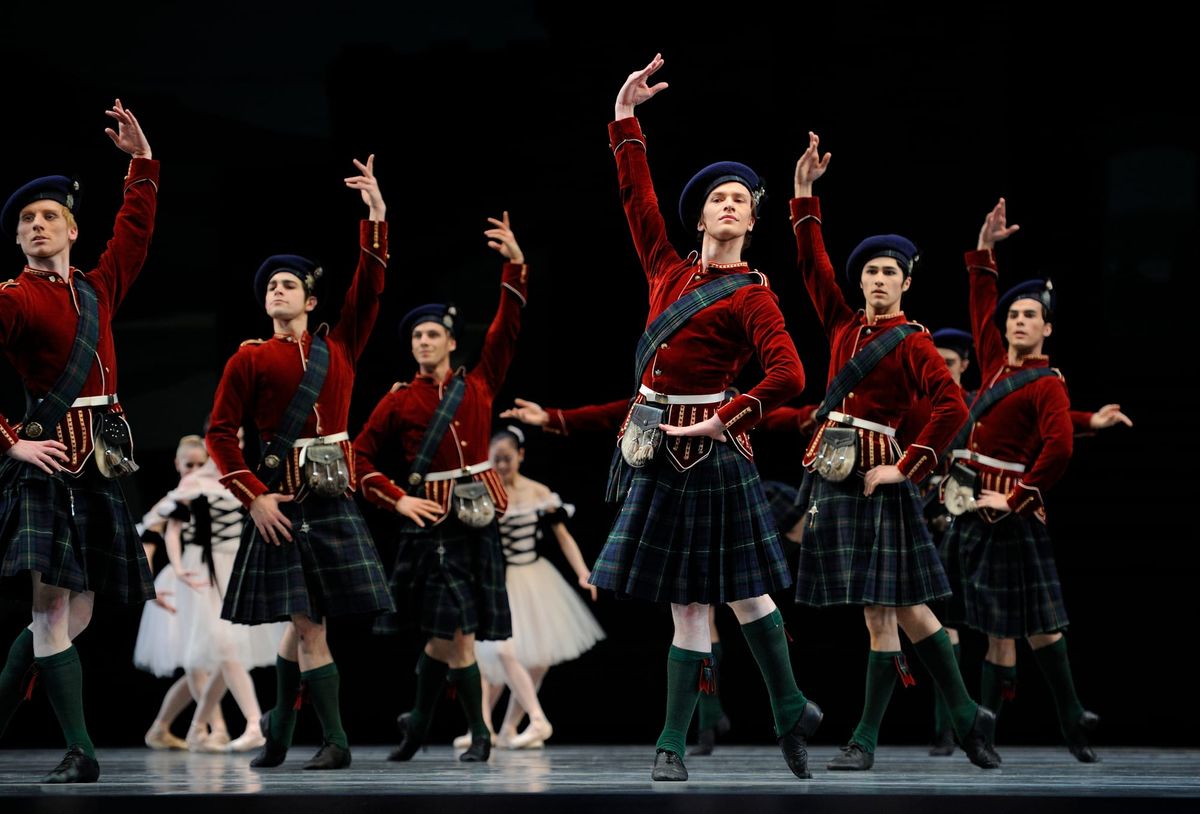
San Francisco Ballet opened the evening in an absolutely splendid performance of “Scotch Symphony” (led by Mathilde Froustey and Joseph Walsh, supported by Dores André in the demi-character role) by dancing Balanchine with the clearest classical attack, but enlivened with jazz and character dance notes. André’s personality, ballon and batterie in the first character dance entrance were sparkling, her sway of her hand on her hip, crossing a Vogue model’s pose with a Scotch reel found just the right sweet spot, while the corps de ballet danced throughout with ebullient energy yet clean technique. Froustey and Walsh likewise understood the ballet’s essential formal quality in employing motifs from romantic works like “La Sylphide.” During the repeated passages where the leading man seems to search for an elusive heroine, who then enters from the wings only to be cut off from him by male demi-soloists who then lift her into his arms, Walsh and Froustey remained dignified and restrained. There was no melodrama here and the work from 1952 correctly showed Balanchine trafficking not in literal romantic characterization, but instead the formal imagery of romantic ballet.
The interpretation also let the soaring music register fully, swelling to its end with the horns coming up and the relatively small cast of 19 achieving grand effects dancing in unison while Walsh promenaded Froustey in arabesque for the stirring conclusion. You also saw how the forces employed to fit this ballet like a jewel in its setting onto the small City Center stage. The company’s straightforward classicism, with bodies pulled up, no one in the corps sitting in her hip, feet uniformly pointed, made one realize once again how crucial a clean classical base is to Balanchine. The jazz and jokes (like André strutting off the stage), the quotations from “La Sylphide,” here were accents appropriately pasted on a classical base where too often these days we see performances of Balanchine where the jazz and the tricks are center stage and the classicism less evident. SFB got the accent right. Gallantry, good manners, self-effacement, unobtrusive and unforced dancing was the rule.
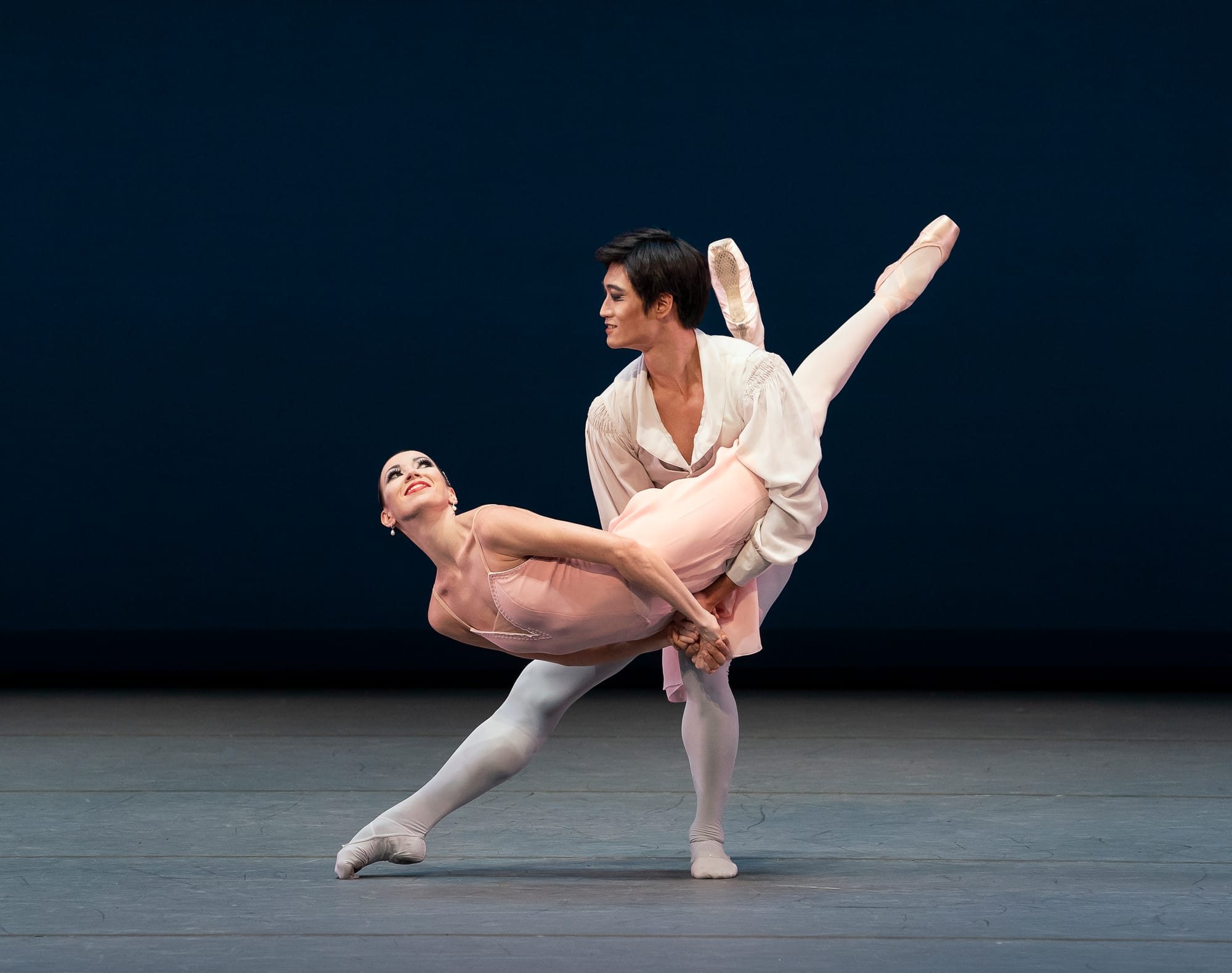
If this performance spoke the Imperial Russian ballet tongue with an appropriately American accent, in the first of two pas de deux in the middle of the program, Viktoria Tereshkina and Kimin Kim danced in a frankly circus like style that heavily Russianized “Tschaikovsky Pas de Deux.” Here there was no American accent at all as Kim astounded the audience with the elevation of his jumps and the speed of his manèges of turns while Tereshkina (contrary to Balanchine practice) spotted her turns to the side instead of the front of the stage and at the same time danced towards the audience more than towards her partner. The technique was contemporary St. Petersburg. But the surprising thing was how well the tidbit survived. It was “Tschai Pas” in translation, but analogous to what a bit of Shakespeare, perhaps the soliloquy from “Hamlet,” would be if recited in Russian: very emotional.
Sae-Eun Park and Hugo Marchand of the Paris Opera Ballet followed by rendering the duet from the second act of “A Midsummer Night’s Dream” into French ballet language, with Park especially dancing very cautiously, upright and correctly in her upper body. Marchand, who has danced a good deal of contemporary material in Paris, made a better go at it, though the man doesn’t do much independently in this pas de deux. The result was the piece looked small and you couldn’t help thinking that perhaps this extremely beautiful passage can’t really be abstracted from its context. Yet even so, as with SFB’s rendition of “Scotch Symphony,” it was extremely provocative to see Balanchine danced with a very marked classical base and the contemporary elements merely laid on top. Once again you were forced to realize how the New York training these days often skewers Balanchine by making the jazzy stuff the point instead of the accent.
If this was the language of classical ballet pronounced in Russian and French, the Joffrey Ballet closed the evening with a surprisingly moving performance of “The Four Temperaments” danced in a contemporary American dialect that pushed the classical idiom very much towards American modern dance. But it did so to tremendous theatrical effect. Cast with dancers of often anti-classical physique whose technique was (with the exception of Jeraldine Mendoza’s exceptional Third Theme) often more expressive than classically correct, the Joffrey’s interpretation of the ballet was nonetheless raw, powerful and extraordinarily spontaneous. Yoshihisa Arai, in Melancholic, twisted and dropped to all fours, looking like a sprinter about to start a hundred yard dash; Christine Rocas as Sanguinic glared into the audience; Greig Matthew’s Phlegmatic was elegantly disengaged; Viktoria Jaiani less animated as Choleric than one is used too. But the surprising thing was how you experienced the ballet again, registering details in it as if for the first time.
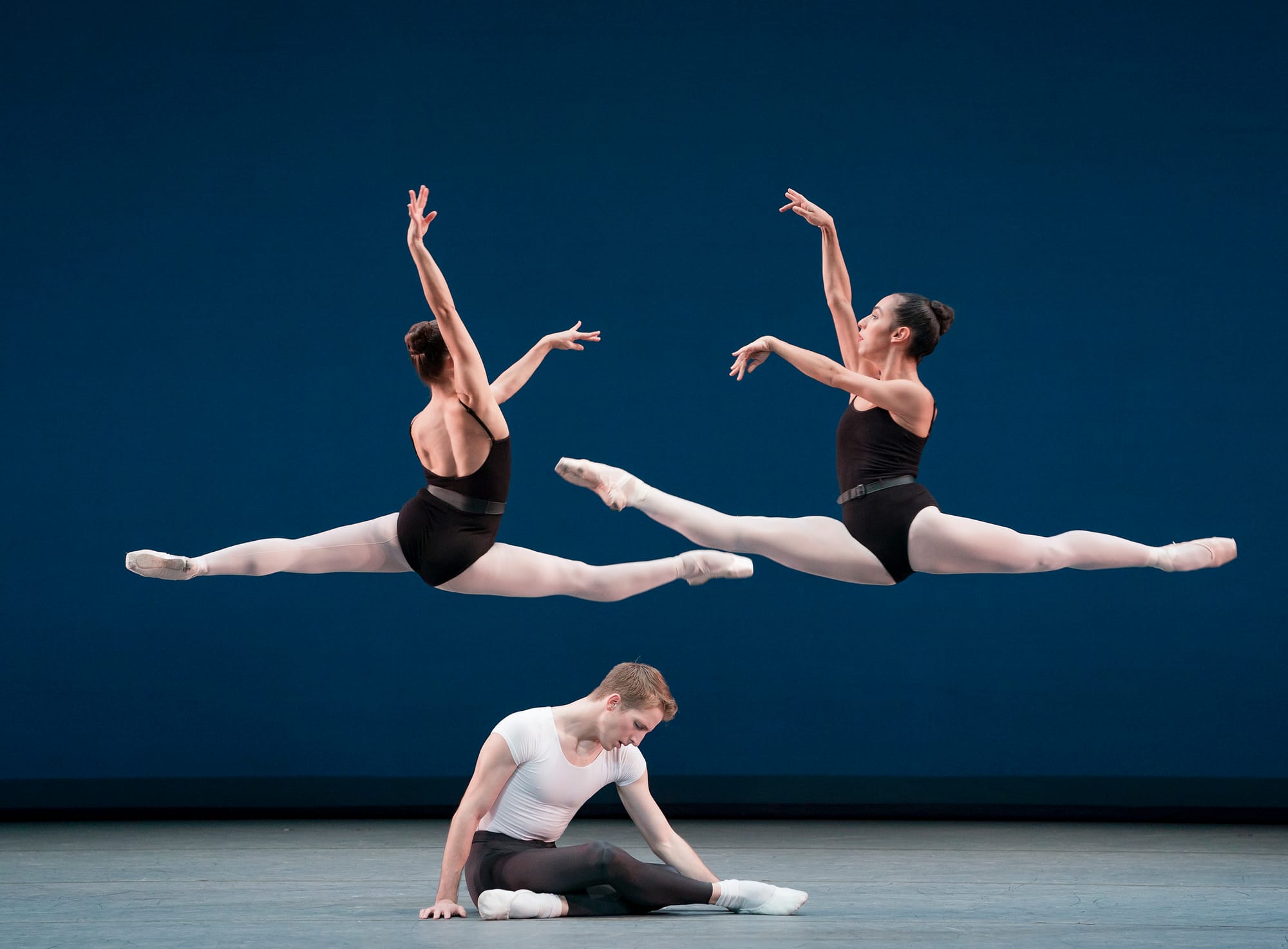
The work was alive. Person after person after the show agreed that this was the most powerful “Four T’s” they’d seen in years despite, or perhaps because of, varying so much from what they were used to. Tightly framed on City Center’s compressed stage, directly in the face of the audience in this intimate and vertically raked theater, released too from the usual NYCB casting and interpretations we’ve become used to, it felt like you saw the ballet anew. It was as if, after driving a commute on automatic pilot through a spectacular landscape for years, you were suddenly able to see the Grand Canyon again.
copyright © 2018 by Michael Popkin



