Something Old, Something New
Something Old, Something New
"Valse Fantaisie", "Confianza", "And So It Goes...", "Tessellations", "Spring Waters", "Suite Saint-Saëns"
Joffrey Ballet Concert Group
New York Live Arts
New York, NY
May 26, 2016
The Joffrey Ballet Concert Group is made up of pre-professional students form the Joffrey School in New York, and the dancing was polished, detailed and stylish. The program ranged from the swirling romanticism of Balanchine's "Valse Fantaisie" to three premieres and the style from classical ballet to modern floor work. The quality of the works did vary, but all were danced with a fearless and joyful attack.
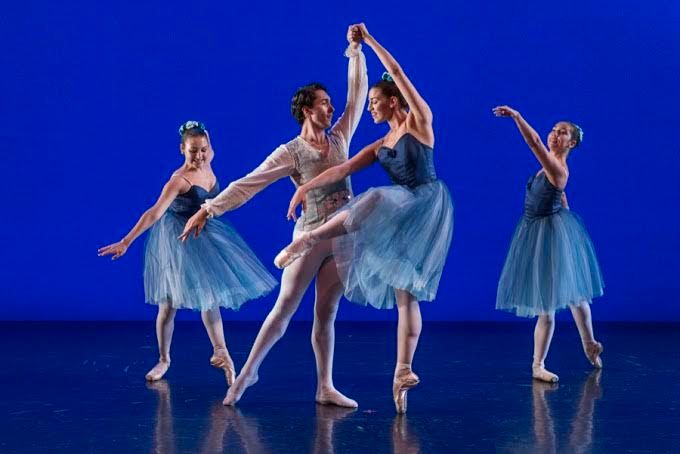
The company danced the 1967 version of "Valse Fantaisie", which was admirably staged by the former NYCB dancer Stacey Caddell. The soaring Glinka music was, understandably but unfortunately, taped, but the four corps members swept through the steps with both freedom and precision, their legs free and their arms forming distinct patterns without looking over-rehearsed; they looked like wood nymphs out on a spree. The lead couple (Shaina Wire and Sergio Arranz) gave the impression of dancing with and for each other. Wire's arms were particularly eloquent and Arranz's dancing was soft and smooth.
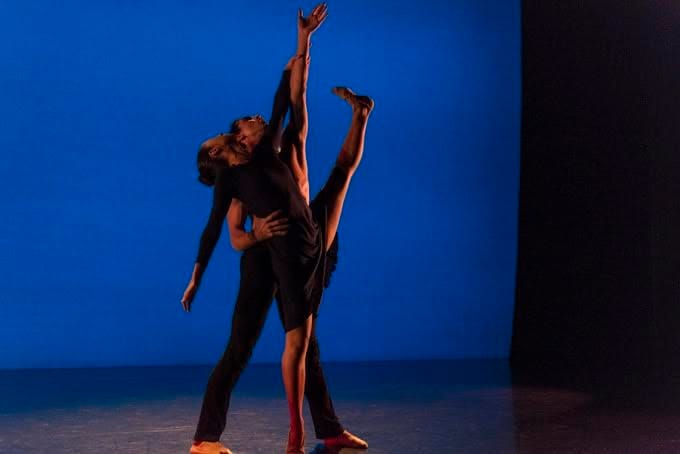
Arranz, with Victoria Santaguida, showed a sharper edge in the next work, "Confianza" a premiere by Roger Jeffrey. The brief pas de deux had music by four composers (Benjamin Brown, Steven Stern, Erik Satie, and Max Richter) but the musical transitions were smooth and the piece had an organic flow. It was a modern work, with the woman in practice shoes, grounded, with a guarded atmosphere of exploration. Santaguida, a charismatic performer, seemed shy and wary as the dancers moved carefully around each other. The emotions seemed raw and the dancing was distinctive.
Unfortunately, those adjectives couldn't be applied to the next work, "And So It Goes...", a premiere by Dwight Rhoden. It was a compendium of cliches, from the smoke filled opening to the stand in a pool of light ending. The seven couples, wearing a little as possible, danced the fidgety, cold choreography with an enthusiastic efficiency but there was no arc, no development, no human contact (the dancers tended to ignore each other and stared at the audience). The constant anonymous movement was striking but hollow.
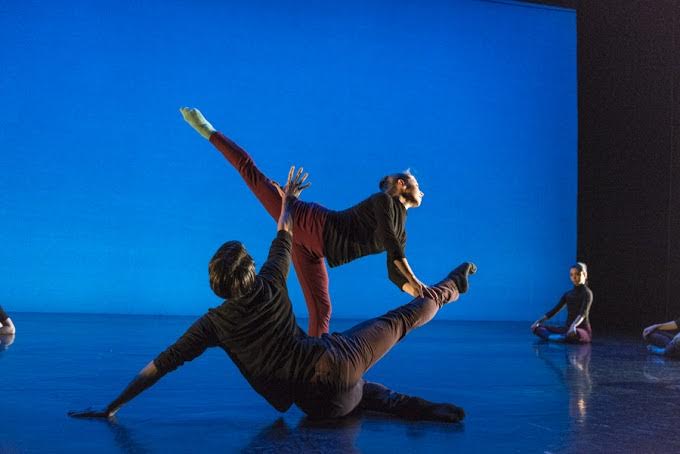
The next premiere, "Tessellations" by Gabrielle Lamb, was much richer. It was set to music by the Amestoy Trio and Cat Power, two musicians unknown to me, which included the twang of an accordion, giving the piece a misty feel, matched by the eerie turquoise haze of the lighting. The choreographer used the nine dancers like a sculptor, creating constantly shifting shapes, as the outsider, Grace Puckett, tried to join the party.
"Spring Waters", danced by Mariana Perez and Jon-Paul Hills, is another kind of party, a bravura Soviet exhibition piece with daring jumps and blind catches. Hill was a solid and gracious partner and Perez, a small dark-eyed beauty, gave the flamboyant romp a distinctive warmth, running towards Hill like she was a woman, not an arrow aiming at a target.
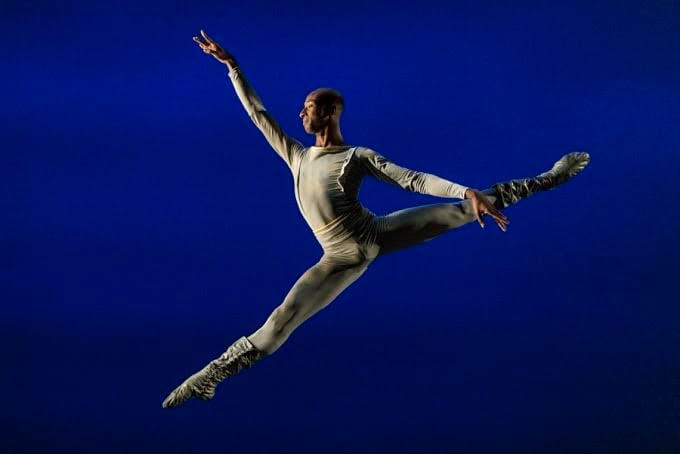
Gerald Arpino's "Suite Saint-Saëns" was the exuberant finale, a suite of dances showing off the company's classical side, led by the leggy, dynamic Sierra French. The dancers ran on and off with an improvisational glee, showing off their big jumps and generous extensions. But they also danced like they were a group of friends having a wonderful time, and this was a performance, not an examination.
copyright © 2016 by Mary Cargill



