Sixty and Counting
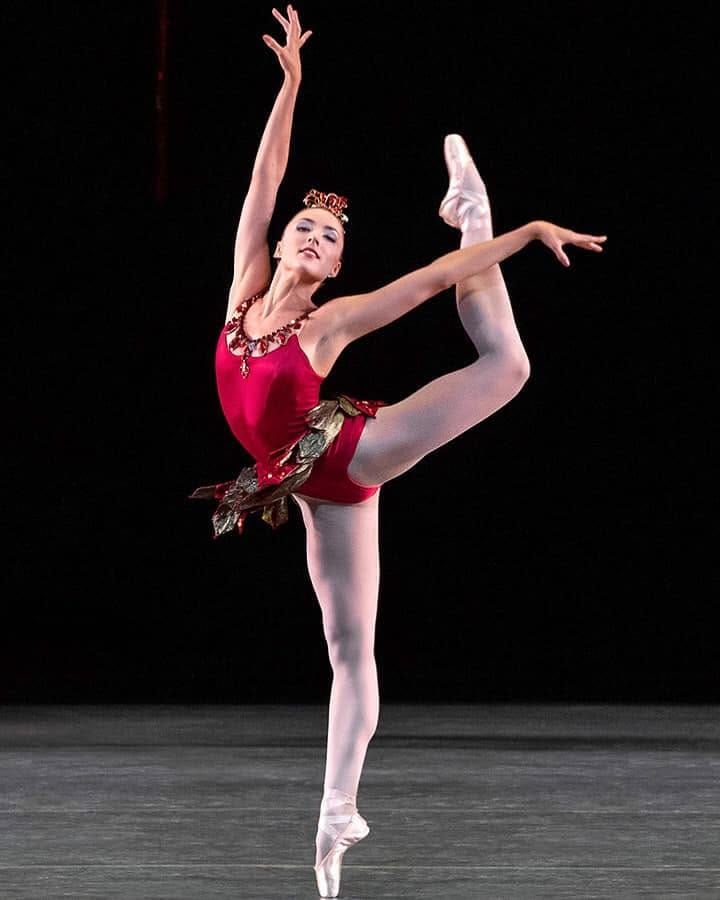
"Jewels"
New York City Ballet
David H. Koch Theater
New York, NY
September 23, 2026
NYCB opened its Fall season with a week of performances celebrating the 60th anniversary of the ever-popular “Jewels”, a nod perhaps to its traditional gift of diamonds. “Jewels” is about more than diamonds, though, it is about mood and atmosphere and in this performance “Emeralds” gleamed the brightest. Its low-key, slightly melancholy nostalgia will probably never evoke the raucous cheers that the scintillating “Rubies” or the grander “Diamonds” get but the memory of those haunted woods and the otherworldly air of a lost world can linger the longest. "Emerald's" perfume, though, does have to work its way through the fussy background, so full of green baubles decorating an overwhelming green background which tends to drown the dancers. The slightly reworked costumes, too, are now sport cheerfully bright Kelly green bodices, more suited to a cheerleading team than a group of iridescent sylphs; the fuller, bouncier skirts, though, floated elegantly through the music.
Mira Nadon, with Gilbert Bolden III in his debut, danced the Verdy role. She was magical, lost in a dream yet vibrant, as if the atmosphere she was inhabiting was more real than the stage. She seemed to dance only for herself and her partner, yet let her presence fill the auditorium. Her dancing was full—so many rich backbends and luxurious arabesques reaching upwards and outwards, yet never pushed or mannered. She made famous solo, with its fascinating arm movements, look like she was miming in an unfamiliar dialect, talking to herself with an unselfconscious lilt.
Bolden was both a devoted and discrete partner and made the gentle lifts look effortless. His unselfish approach to his roles (he can disappear when necessary yet blast off with an infectious exuberance in works like “Western Symphony”) shows a fine theatrical integrity. Aarón Sanz, making his New York debut with Ashley Laracey as the second couple, was equally noble, supporting Laracey as she seemed to float through their hushed pas de deux her long arms curling like an Art Nouveau illustration. Laracey, like Nadon, made the stage vanish, as she walked in serene isolation through the luminous Fauré music.
Baily Jones, KJ Takahashi, and Mia Williams (in her debut) danced the more lighthearted trio with a warm but not flashy air. Takahashi, a brilliantly sparkling jumper, softened his approach and his easy, flowing jumps and soft landings gave his dancing a youthful, eager nobility. Jones was a bubbly sprite, and Williams showed off a very lush upper body as her arms reached forward, propelled by the music. The final scene, after the false ending with its triumphantly symmetrical pose with the couples happily together, had a haunting beauty, as the women slowly vanished and the men, led by the men's powerfully lyrical arm sweeps, knelt down with a haunting sense of loss, yearning for a world that never existed.
There was no loss in “Rubies”, with its electric red (the refreshed costumes worked well here) and its blazing Stravinsky score. Emma Von Enck and Anthony Huxley danced the lively couple. They made a younger and less knowing pair than some; it was a playful, joyful romp. Von Enck’s effortless clarity made the steps glow and her jumps were especially explosive; there was an insouciant backwards kick to her head that would thrill any Kitri and her final turns were a sharp, speedy blur. Huxley, with his light, clear jumps, didn’t have the tough boy weight of some dancers, and he was a bit lost as the leader of the pack. His dancing though had a good humored and easy flow and he seemed to revel in the steps. Though there was plenty of energy, this “Rubies” was not as breathless as some, and the focus was on the quirky, intricate choreography.
Emily Kikta as the tall girl seemed calmer too, forming shapes without slamming her legs around. She was a cool, controlled Amazon, almost ignoring the four boys as if they were servants putting her into position; she managed to combine haughtiness with wit. She moved through her arabesque exit almost indolently, as if it was too easy, but paused briefly at the last deep bend for a proud little smile; it was all a game apparently, a game that the audience loved.
“Diamonds” is not a game, it is a mystery set in an imaginary St. Petersburg evoked by Tchaikovsky’s music and Karinska’s mid-thigh tutus for the corps. (These tutus have been refreshed with what seems to be a entire mine of rhinestones supplemented by LED lights, which is a bit blinding.) The heart of the ballet is the pas de deux, a mysterious encounter between a wary couple which seems to end in tragedy—“Swan Lake” without swans or lakes, just pure emotion. In between the elegiac dance, the very active corps weaves in and out of Tchaikovsky’s melodies with a rather monotonous regularity, like a perfect work of art surrounded by mounds of cotton wool. Balanchine certainly could triumph with after-Petipa corps formations, as works like “Ballet Imperial” and “Theme and Variations” show, but his work here was efficient rather than inspired, though the magnificent pas de deux is worth any amount of efficiency.
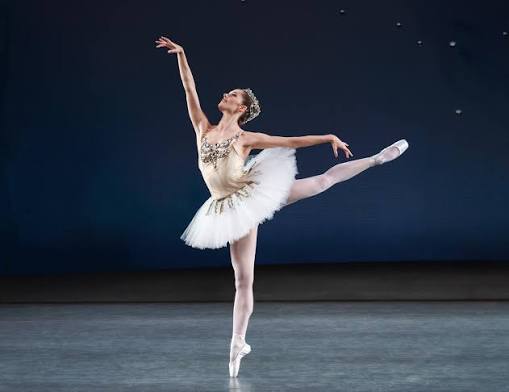
Unity Phelan and Owen Flacke, a debut, danced the pas de deux. It is a fluid work, open to many approaches from the high tragedy of Sara Mearns at her powerfully dramatic best to the radiant classism of Kyra Nichols. Phelan is a beautiful dancer with exquisite feet (her bourreés were particularly pearl-like) but she gave the dance a surface sheen without depth, dancing with a silky but rather placid perfection. "Who exactly is the woman in "Diamonds?" is a question with many answers, including "I don't know but her story is haunting" but "She is a phenominally beautiful dancer" is not the right answer. Flacke supported her gallantly and tore into his solo with applause generating gusto. But though “Diamonds” had the glitter, the evening’s perfume came from “Emeralds”.
© 2026 Mary Cargill



