Shining Lights
"Arden Court", "Banquet of Vultures", "Promethean Fire"
Paul Taylor Dance Company
David H. Koch Theater
Lincoln Center
New York, New York
March 6, 2018
The three dances performed on the Paul Taylor Dance Company's opening night, which thanks to $5 tickets and an outstanding program, was packed, had various views of light. "Arden Court", from 1981, showed Taylor at his sunniest, "Banquet of Vultures" (2006) with its candles piercing the darkness, shown a clear and uncompromising light on despair, and "Promethean Fire" (2002) with its Shakespearean motto, fire "that can thy light relume", promised hope.
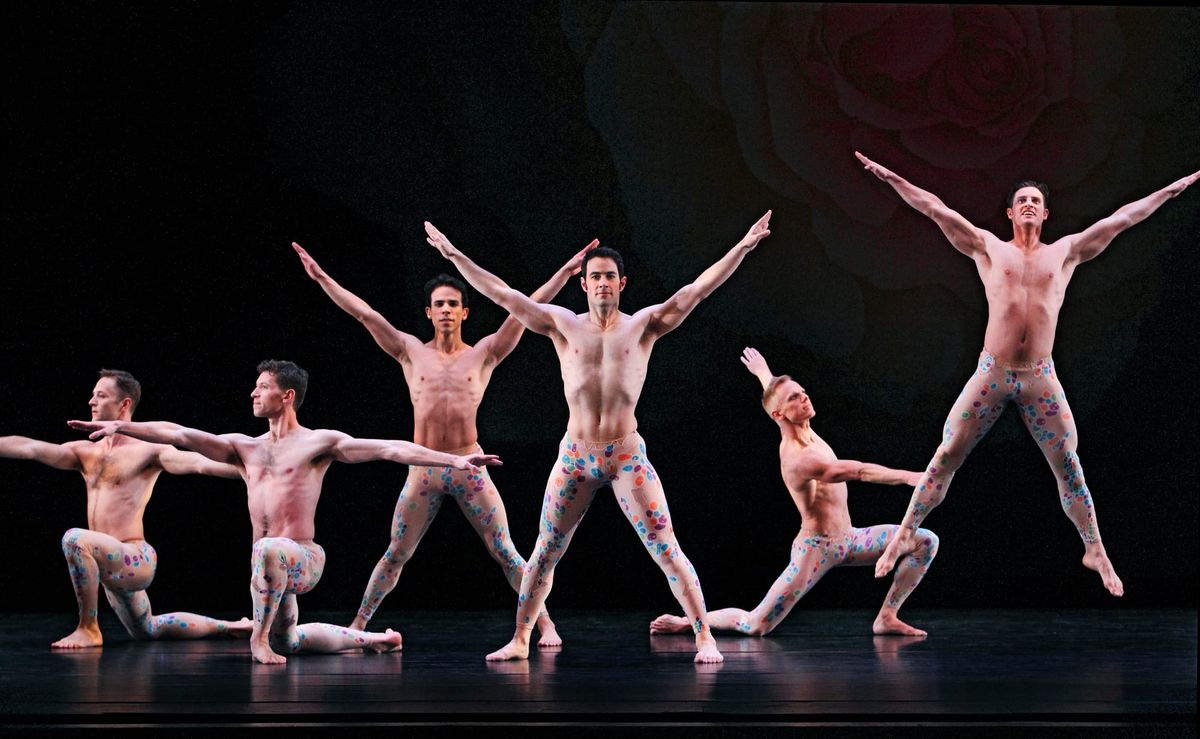
The nine dancers of "Arden Court" skipped, bounded and soared to the Baroque composer William Boyce's bracing music, with witty little classical inflections, as the dancers would strike a formal pose and then melt into a modern one, as if Taylor were providing a continuous thread from Boyce's time to ours. The bright, happy, and energetic dancers wove in and out, creating a fluid but compact community where individuals could have their say. Michael Apuzzo had a fast and boneless solo, a celebration of movement. Sean Mahoney was a dreamer accompanied by the fleet Eran Bugge; the decor (a projection of a single rose) and the dappled turquoise and pink costumes (by Gene Moore) suggested a youthful romanticism, but Taylor avoided the breathless young lover cliche, and Bugge jumped on and off Mahoney like an extension of his thought, and he dreamt alone.
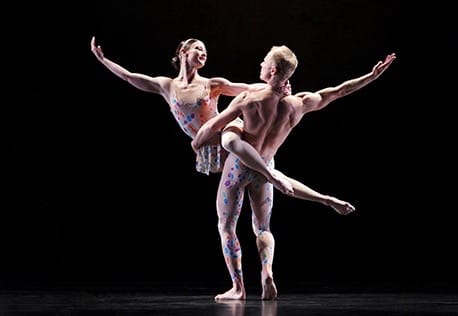
Laura Halzack and Michael Trusnovec were a more romantic couple, though they showed a mature, serene love, long past the giddy stage. They both danced with a smooth and creamy power, secure in each other; it has a hold-your-breath, timeless beauty.
This is Trusnovec's twentieth year with Taylor and he seems to be ageless. His sculptured perfection, clear, articulated dancing, and gracious presence are perfect for Taylor's heroic roles. But Taylor is a master of subverting impressions, and his "Banquet of Vultures", made on Trusnovec, is one of Taylor's harshest portraits of power; there was nothing heroic about Trusnovec as he dominated this work on the cruelty and inevitability of war.
This haunting piece to Morton Feldman's unsettling "Oboe and Orchestra" opened in darkness as the dancers, wearing dimly seen blindfolds and battle fatigues (designed by Santo Loquasto) crawled on the floor holding candles whose beams wove in an out like a giant constellation. Trusnovec, in a business suit and blood-red tie, slunk on, moving with a stiff, robotic, and menacing efficiency. His hollow, bombastic exhortation sent them to war as he struck them down indiscriminately, putting out their lights.
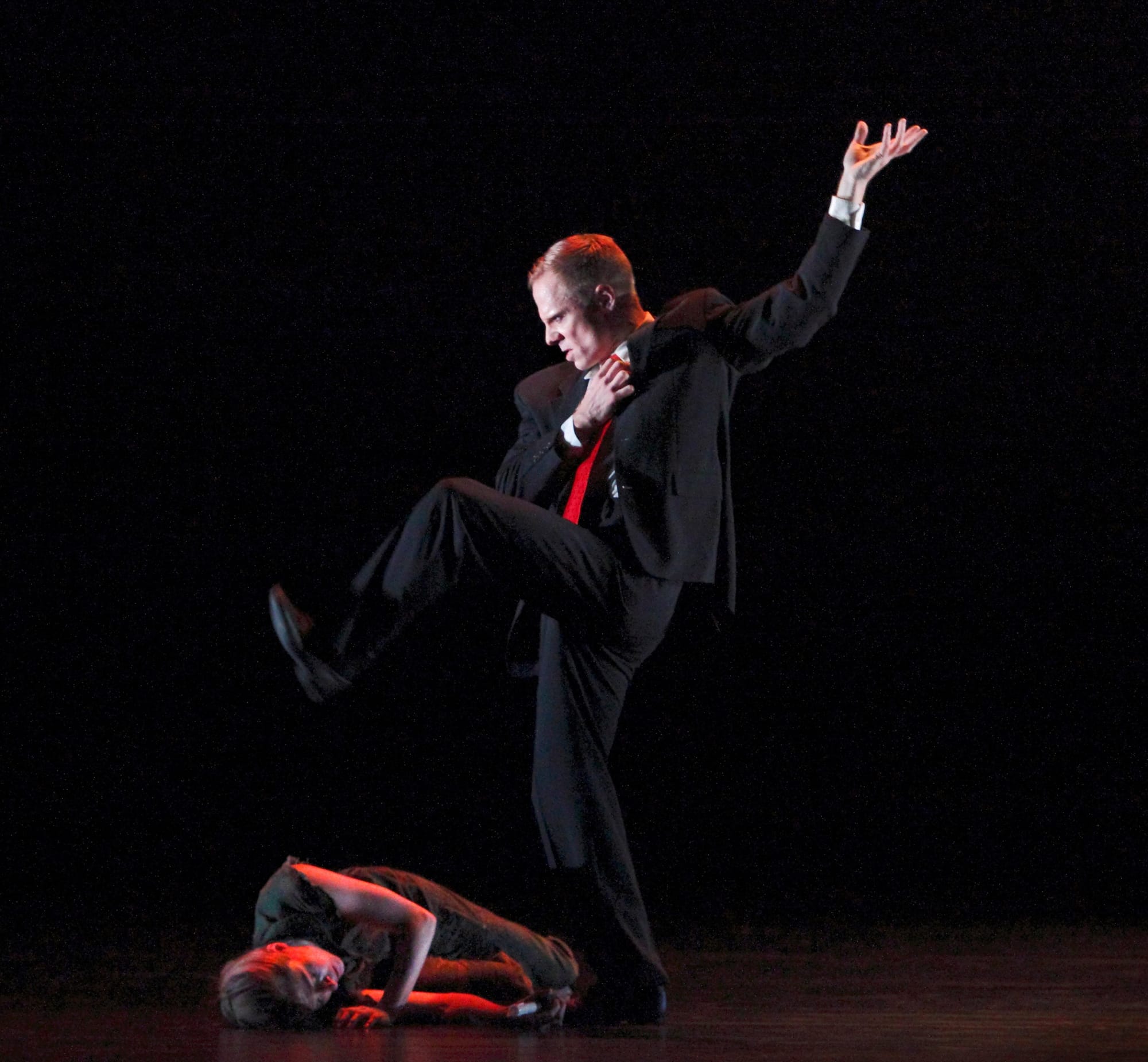
Jamie Rae Walker, with her candle, appeared, searching desperately for someone, only to be met by Trusnovec, who toyed with her, grabbed her candle, and killed her like some modern-day Moloch devouring his sacrifice. It ended with yet another Moloch rising up, as Kleinendorst appeared in his suit and tie – a chain in a hopeless, endless circle of violence; this work has a seat at the green table.
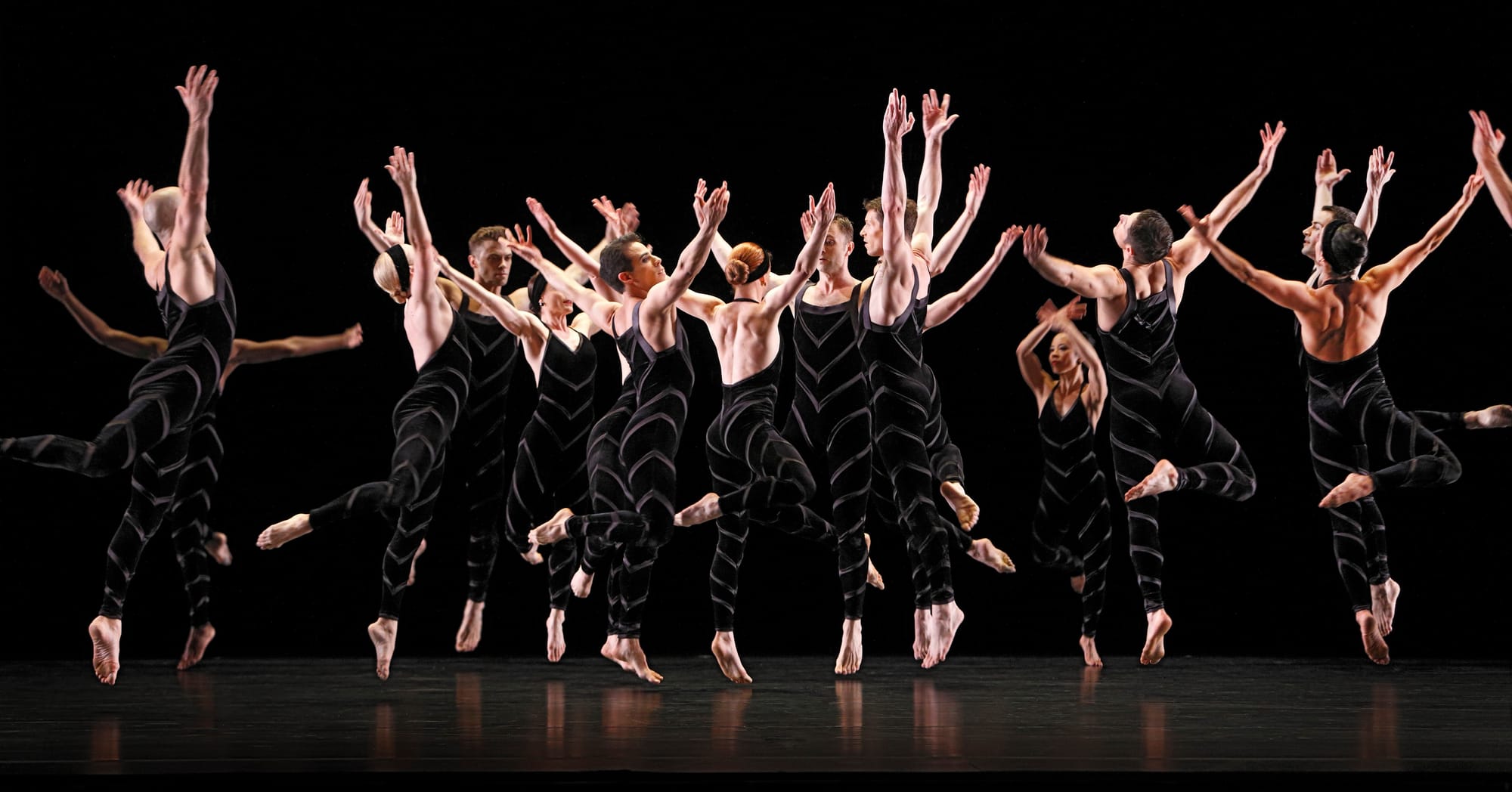
"Promethean Fire" was a hopeful antidote to the despairing banquet, creating order from chaos to Bach (blazingly orchestrated by Leopold Stokowski). Trusnovec has for several years defined the work, originally danced by the Taylor Everyman Patrick Corbin. Trusnovec was given time off, and Michael Novak, with Eran Bugge, danced the lead. Novak had a powerful but gentle presence and he gave the choreography an intriguing flow, which softened the memories of Trusnovec's crystalline clarity.
As they rose from the mass of bodies, Novak and Bugge gave their pas de deux an exploratory softness, spiced by Bugge's moments of fierce determination, and the architectural finale showed them as partners in the group's regeneration, rather than Trusnovec's heroic standard bearer. Taylor's light can come from many sources and Novak's had a soft and steady glow.
Copyright © 2018 by Mary Cargill



