Romance and Redemption
"Giselle"
The National Ballet of Canada
Four Seasons Centre for the Performing Arts
Toronto, Canada
November 6, 2019
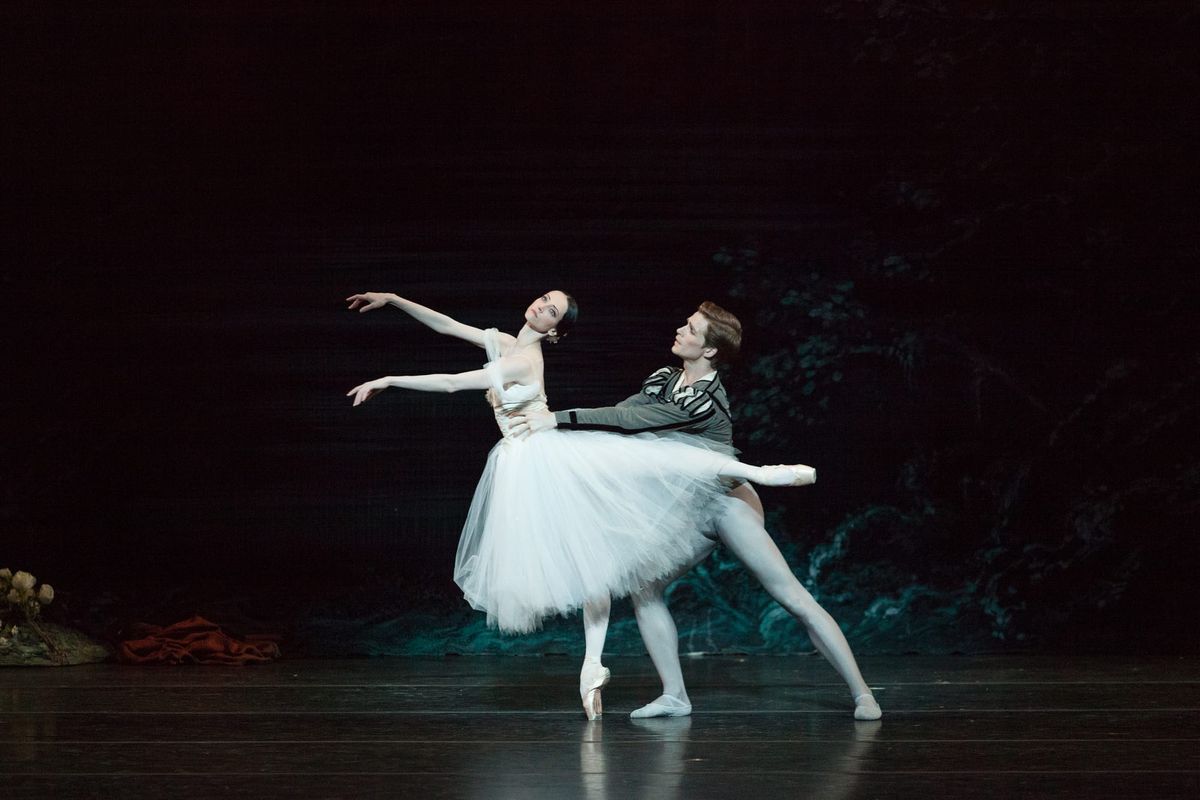
The National Ballet of Canada opened their 2019-2020 season with a respectful look to the past. "Giselle" is an iconic touchstone for any classical company. Sir Peter Wright's production keeps the story of love and forgiveness front and centre, told through unadorned movement and mime. Whether the narrative, involving a nobleman in disguise, forest spirits, and death by dancing, comes across as dated or timeless rests heavily on the shoulders of the leading dancers. On opening night, this romantic era masterpiece was artfully rendered by Svetlana Lunkina and Harrison James as the central couple, supported by strong soloists and corps de ballet. Lunkina and James were first paired as Giselle and Albrecht three years ago. With time, the depth and nuance of their interpretations have continued to flourish.
Lunkina has grown and matured with this role over the years. At 18, she became the youngest Giselle in the history of the Bolshoi Theatre, coached by the legendary Ekaterina Maximova. The romantic heroine has been a signature role for her ever since. Her first act Giselle is a shy, trusting and sensitive soul. Her dancing has a softness that belies its underlying technical mettle. Jumps are light and buoyant, hops en pointe appear weightless, port de bras are delicately curved. Time seems to hang suspended as her phrasing fills the music completely. Her Giselle dances for the pleasure of it, even as it tests her health and strength, as her mother frequently reminds her. Rather than naïve, Lunkina's Giselle consciously chooses to see the best in others and is devastated when Albrecht's identity is exposed. The genuine love he swore to her and his deception of her are two truths she grapples to hold at the same time. When Bathilde first motions towards Albrecht, Lunkina stands in front of him with arms outstretched, not in a possessive manner but in a gesture that foreshadows how she will later protect him. Her crushing mad scene shows a distressed and broken woman. She points off in the distance, as if hallucinating, before turning inwards, such that Albrecht's desperate attempts to reach her cannot register. In turn motionless and frantically running, Lunkina masterfully shows Giselle's cycling through denial, anger, heartbreak and hopelessness as the horrified crowd looks on.
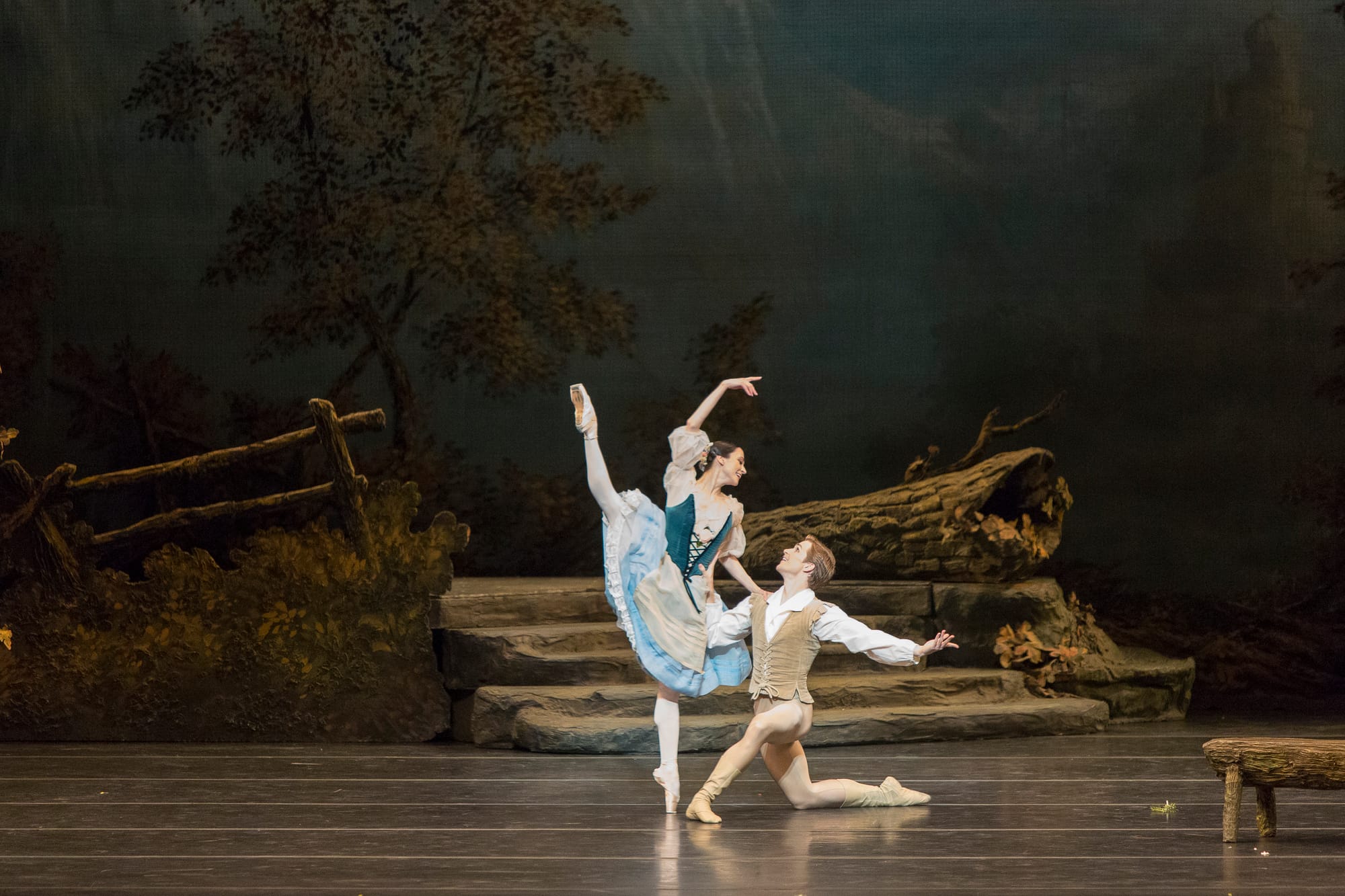
James' Albrecht is a sympathetic one, although this is clearly a man who is used to getting what he wants. When his squire cautions him against pursuing Giselle, he does not hide his irritation as he impatiently sighs and almost rolls his eyes. But what starts as a playful flirtation quickly develops into something deeper. He partners her attentively and looks at her with true affection. When Albrecht's identity is revealed, other dancers portray him as guilty or annoyed. James' Albrecht actually tries to initially deny it, in a feeble attempt to continue the illusion to avoid hurting Giselle, although of course, it is too late. After Giselle's death – by his sword, no less – his initial reaction is to blame Hilarion. He points an accusatory finger at him, only to shrink backwards in despair as he realizes his own mistake.
Hilaron, as played by Piotr Stancyzk, was never going to win Giselle's heart, even if Albrecht were not in the picture. His demeanor is far too brusque. His dancing is earnest, lacking lightness or humor. Tanya Howard was a particularly cold and snobby Bathilde. She did little to hide her disdain for commoners and was repulsed when she turned around to find Giselle caressing the luxurious train of her dress. When she gave Giselle a necklace, it was with pity rather than benevolence. Her characterization elicited even more sympathy for Giselle. The peasant pas de quatre was particularly strong with Jeannine Haller, Miyoko Koyasu, Siphesihle November and Skylar Campbell. All are petite with clean, agile footwork, and they were stylistically well-matched. November's variation stood out and brought to mind his dazzling Bluebird in "The Sleeping Beauty".
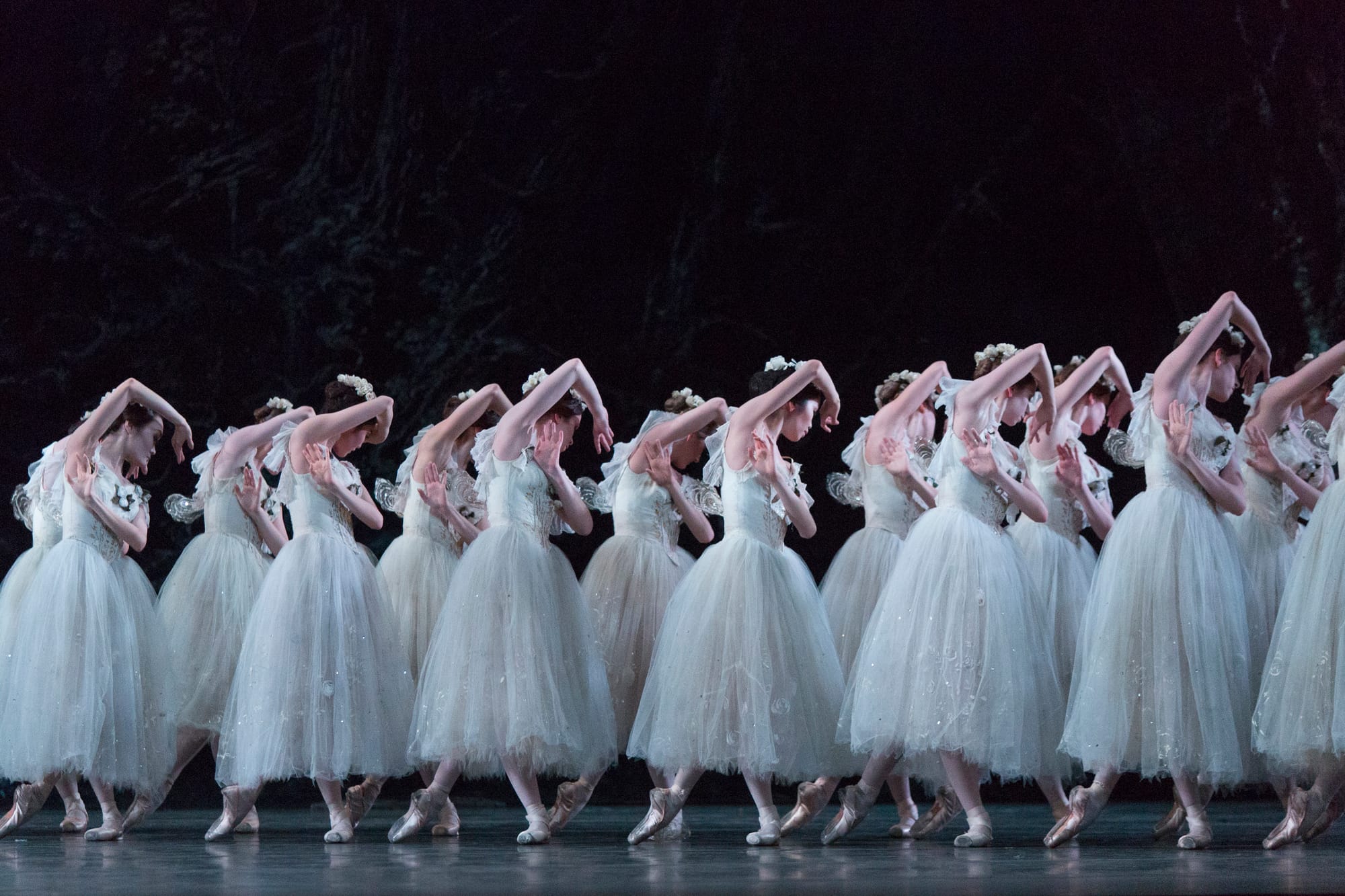
Heather Ogden presided over the second act with authority and precision as Myrtha, Queen of the Wilis. This is an ideal role for her silky smooth bourées and bounding grand allegro. She shows no signs of effort, but moves with clear intention and attack. The strong first act set the groundwork for a transformative second act. All the angst of Giselle's mad scene is swept up in her appearance in the spirit world, where she enters like a spinning top. That energy dissipates creating space for her ghostly form, which is calm, secure in her convictions, and full of grace. Indeed, the only time Myrtha looks thrown off is when Giselle stands defiantly in front of Albrecht in his defence.
Lunkina is simply transcendent as Giselle's spirit. She nails every technical challenge in the choreography from the controlled penchée to the travelling entrechats, but everything is in service to the storytelling. There was a refreshing absence of cranked up extensions or other technical displays that miss the point. Instead, she was steadily sending strength to Albrecht as she floated and soared through the movements without use of force or momentum. In the pas de deux, James supported her securely and lovingly, ever in character as a remorseful and grieving man. He, too, was technically brilliant. During an endless series of entrechats six, it seemed as if he had springs on the pads of his feet. He really gave the impression of someone dancing for his life, pleadingly look back at Myrtha between phrases. When the bells rang, signalling dawn, his expression showed both relief and disbelief at being saved. Lunkina swept him into her arms, cradling his head in a moving moment that said so much through a simple gesture. Their connection was touching and believable. Just like that, the enduring love story lives on in the hearts of today's artists and audiences.
copyright © 2019 by Denise Sum