Play On
"Wild Swans", "Don't Tread on Me or My String Quartet", "SI-8 and SI-9", "Exit Wounds...And Then They Come Home", "Arranged", "Allegro con Brio", "Sur"
Chamber Dance Project
Joyce Theater
New York, NY
August 6, 2015
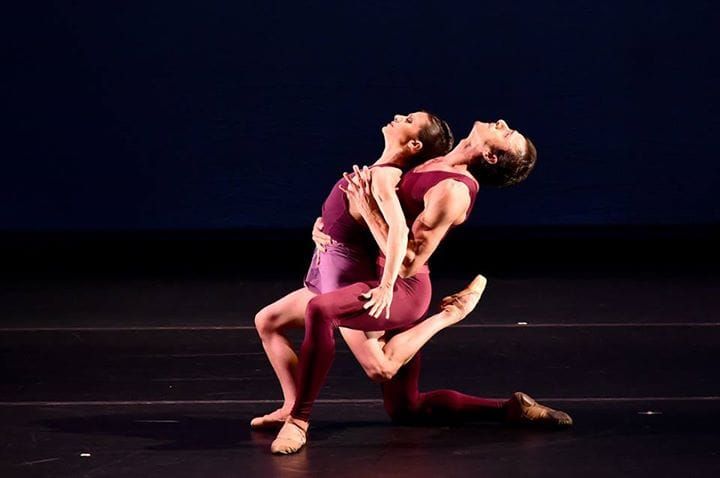
The Chamber Dance Project, directed by Diane Coburn Bruning, iw a small dance company with a strong musical component. "Chamber" refers to the music as well as the dancers, and the four musicians, two violins, a viola and a cello played on stage for each dance and had two musical interludes on their own, "Don't Tread on Me or My String Quartet" by Russell Peck and "Allegro Con Brio", a violin duet by Prokofiev. This emphasis on live music gave the Joyce audience a rare chance to savor dance without tape, but the music, bound by the four stringed instruments playing rather spiky music, lacked variety.
The dances, too, though there were works by three choreographers (Diane Coborn Bruning, Darrell Grand Moultrie and Jorge Amarante) used similar movements (ballet based twitching) and the same grayish atmosphere. The dancers themselves were athletic, energetic and engaged, moving with a full-blooded muscular style. The first ballet, "Wild Swans", by Moultrie, for the whole company, was a moody work, ranging from angst to brief splashes of tenderness as the dancers moved in their own self-contained bubbles with small, finicky movements accented by rolling on the floor. There were hints of emotion from some of the danders with glimpses of a hidden sorrow, but the piece didn't develop and had little structure.
Bruning's "SI-8 and SI-9" had the same meandering feel, though apparently this was deliberate as the program notes explained that the dancers are given "directions for a structured improvisation" and the musicians are handed a score just before the performance to sight read. The improvisation included two photographers who wandered around with their cameras. The dancers, in casual sweats, gave the impression of rehearsing a few steps while interrupting the musicians with occasional shouts. It was an unusual idea, and probably fun to perform, but came across as self-consciously arch.
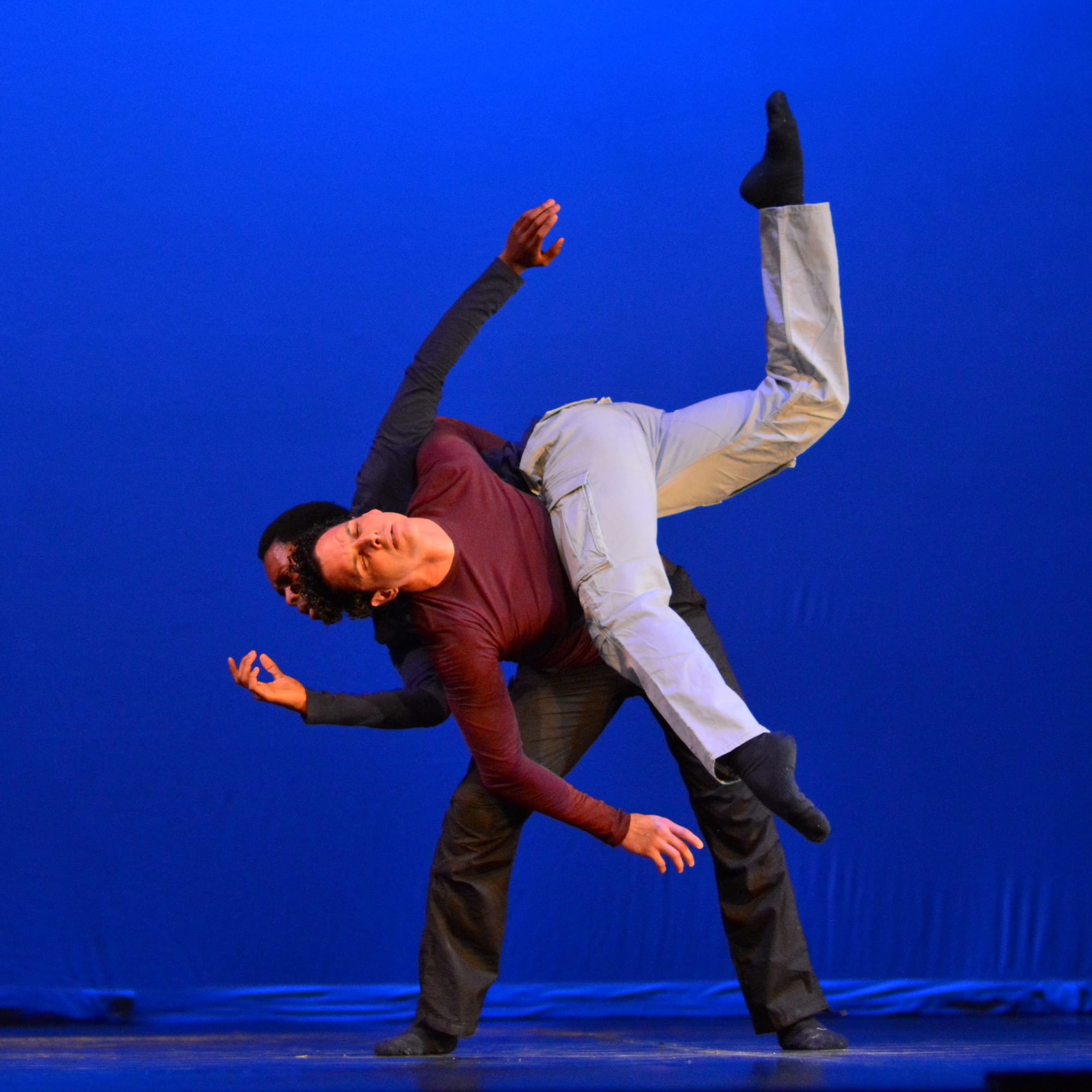
Bruning's "Exit Wounds...And then They Came Home" to a movements from three Philip Glass string quartets, a duet for Jacob Bush and Davit Hovhannisyan, was much more successful, as the dancers flowed into various complicated lifts, alternating stillness with moments of stylized violence. It was a striking and unsettling vision of co-dependance, powerfully danced.
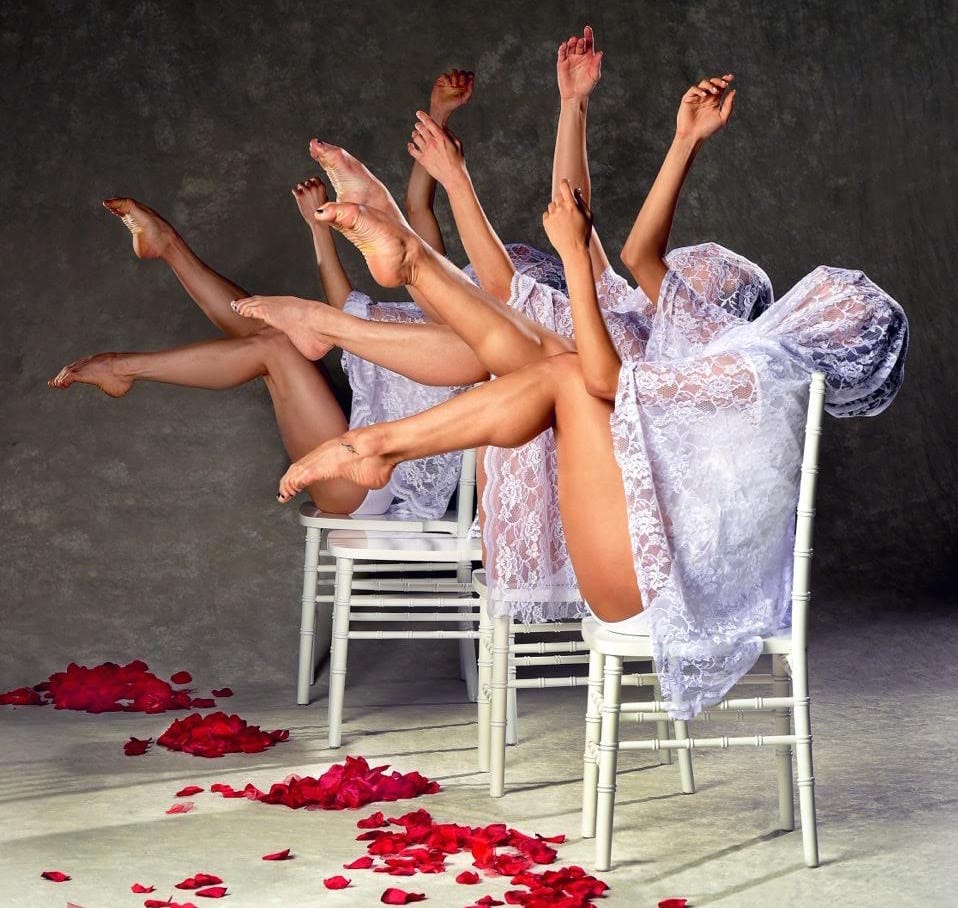
Her "Arranged" (to Arvo Pärt's "Fratres") was to some extent a female counterpoint, with three women (Francesca Dugarte, Morgann Rose and Luz San Miguel) stressing the power of stillness as they sat, covered in white lace, on chairs surrounded by mounds of red flower petals. They seemed to seethe with an inner fire, a fire which could only burn in a pointed foot or a tilted chair, a somewhat limited range of movement. Its symbolism remained opaque (were these bridal veils or shrouds?) and the solemn atmosphere verged on the pretentious.
"Sur" by Jorge Amarante brought the whole company back to tango to Astor Piazzolla. Unfortunately this work too lacked structure and variety. The desperate loneliness and sour sensuality of the music was only given a brief nod, and even a couple in their scanties couldn't raise the temperature. The tango moves seemed like decorative little tics and the enthusiastic dancers were impressive but hollow.
copyright © 2015 by Mary Cargill



