Physical Thinking
"The Vertiginous Thrill of Exactitude", "Approximate Sonata", "The Second Detail"
The National Ballet of Canada
Four Seasons Centre for the Performing Arts
Toronto, Canada
June 1, 2019
The National Ballet of Canada's latest triple bill was a whirlwind tour through William Forsythe's choreographic world. The program was short, clocking in at just over one hour of dance (excluding the intermission), yet dense with a variety of terpsichorean riches. The dancers really sunk their teeth into the three works, using them as opportunities to push the boundaries of movement and speed. The results were stirring and beautiful.
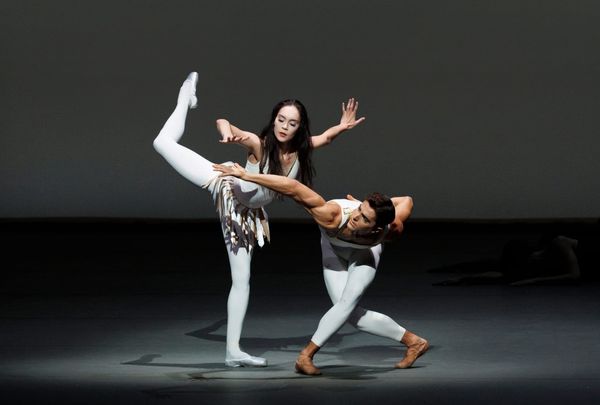
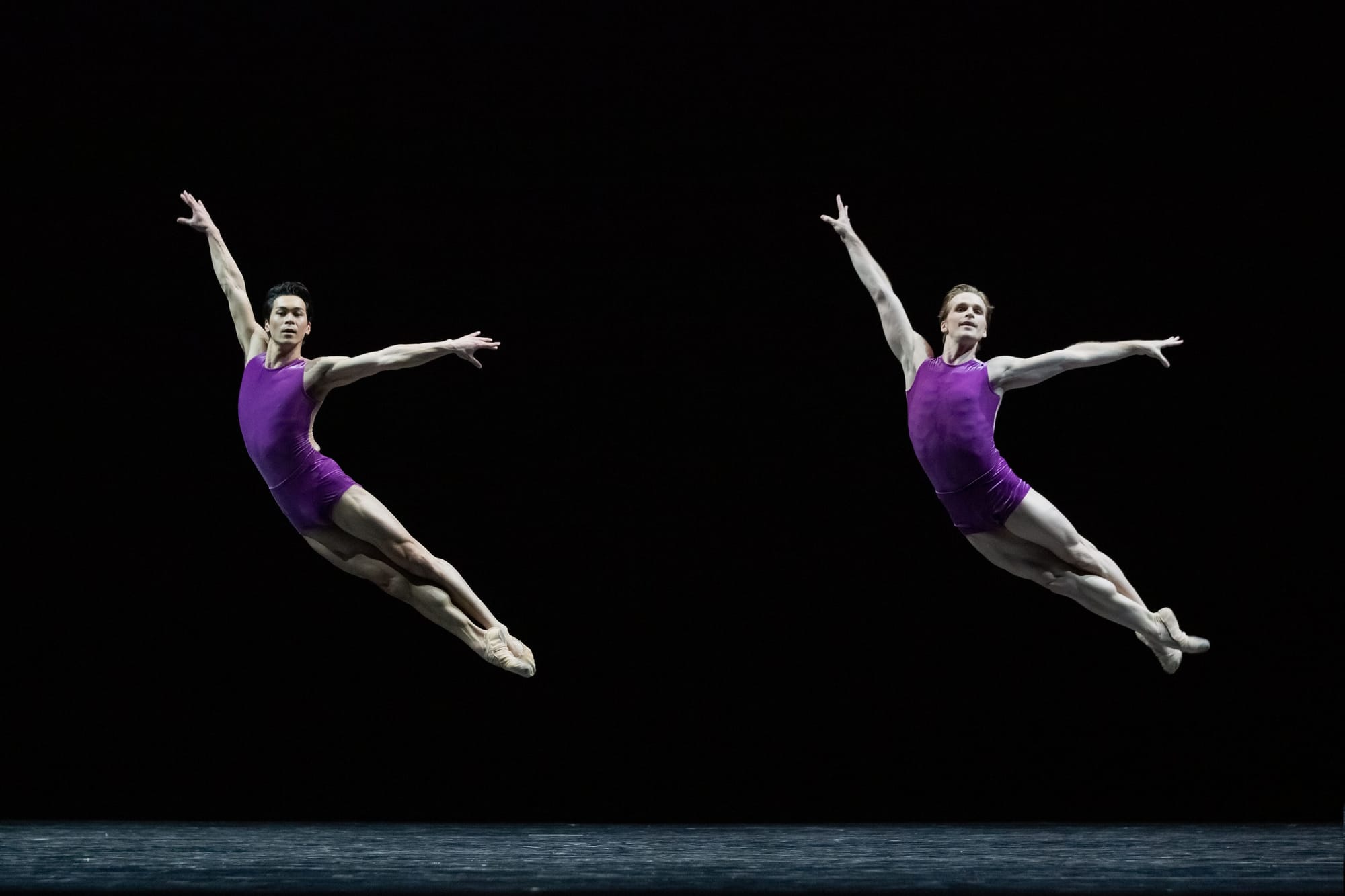
The program opened with Forsythe's well-known "The Vertiginous Thrill of Exactitude", with Stephen Galloway's distinctive saucer-like lime green tutus, set to Franz Schubert's 9th Symphony. Of the three ballets, it is the one most grounded in classical vocabulary and style, with nods to Bournonville and Balanchine alike. Foundational ballet steps are very much present, but taken to new extremes. A lifted leg becomes a split, a jaunty petit allegro turns into rapid fire jumps, and energy extending through the fingertips transforms into flicked wrists. Unusual positions such as pliés en pointe highlight changes in height or levels. Newcomer Hannah Galway, who just joined the corps de ballet last year, filled in for Jillian Vanstone on opening night. She looked confident and brought attack and impressive extensions to her dancing. Calley Skalnik fared well in her variation, playing with tempo and accents to bring out the nuances of the music. Chelsey Meiss kept up with the breakneck speed of the choreography but looked a bit frantic and unwieldy in the process. Naoya Ebe and Harrison James were both stellar in the male roles. Ebe is known for the height of his jumps and he created many virtuoso moments slicing through air. James brought precision and clarity to his movement, which are so important in this ballet, lest it become a muddled blur. "Vertiginous" is a gruelling, pure dance ballet, a sort of "Études" of its time. It is not a bad idea to bring it back into the repertoire every few years as a test and challenge.
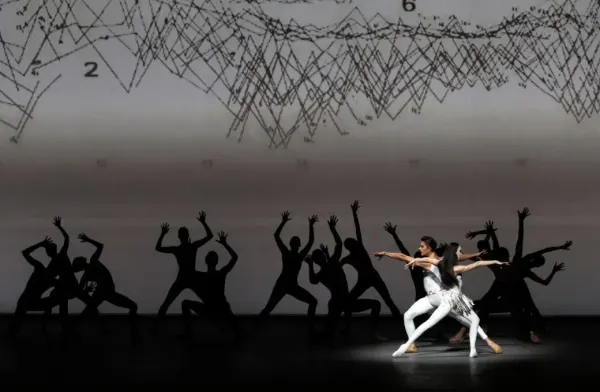
"Approximate Sonata", a series of five pas de deux danced by four pairs of dancers, is mellower in tone. It has been worked and re-worked over the years since its premiere with Ballet Frankfurt in 1996. The version seen here is the 2016 version that Forsythe set on the Paris Opera Ballet. The set is sparse with a sign reading “YES” (“Ja” in other versions) in the background, which fades in and out of view depending on the lighting. The partnering here is reciprocal, departing from the gendered norms of the classical paradigm. The ballerina is hardly passive. Both parties have agency, initiating and reacting in equal parts. The couples dance harmoniously, in opposition and independently alongside Thom Willems textured score. Sonia Rodriguez and Spencer Hack danced the 1st and 5th Sonatas, coming together and apart, tracing the negative space between their bodies with utmost control. The 2nd and 3rd Sonatas, with Hannah Fischer and Christopher Gerty, and Svetlana Lunkina and Félix Paquet respectively, are more confrontational. Tension is manifested in sparring gestures and resistance, as if moving through honey. The women are dressed in simple black leotards and then men in bright pink tops and blue pants, but in the 4th Sonata the woman (Tanya Howard) is set apart with neon green pants. The significance is unclear, but it is beside the point.
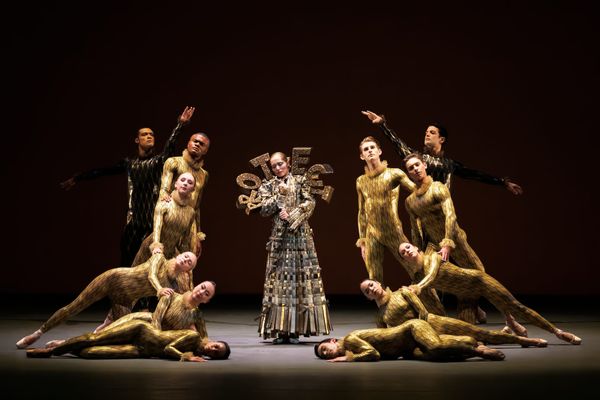
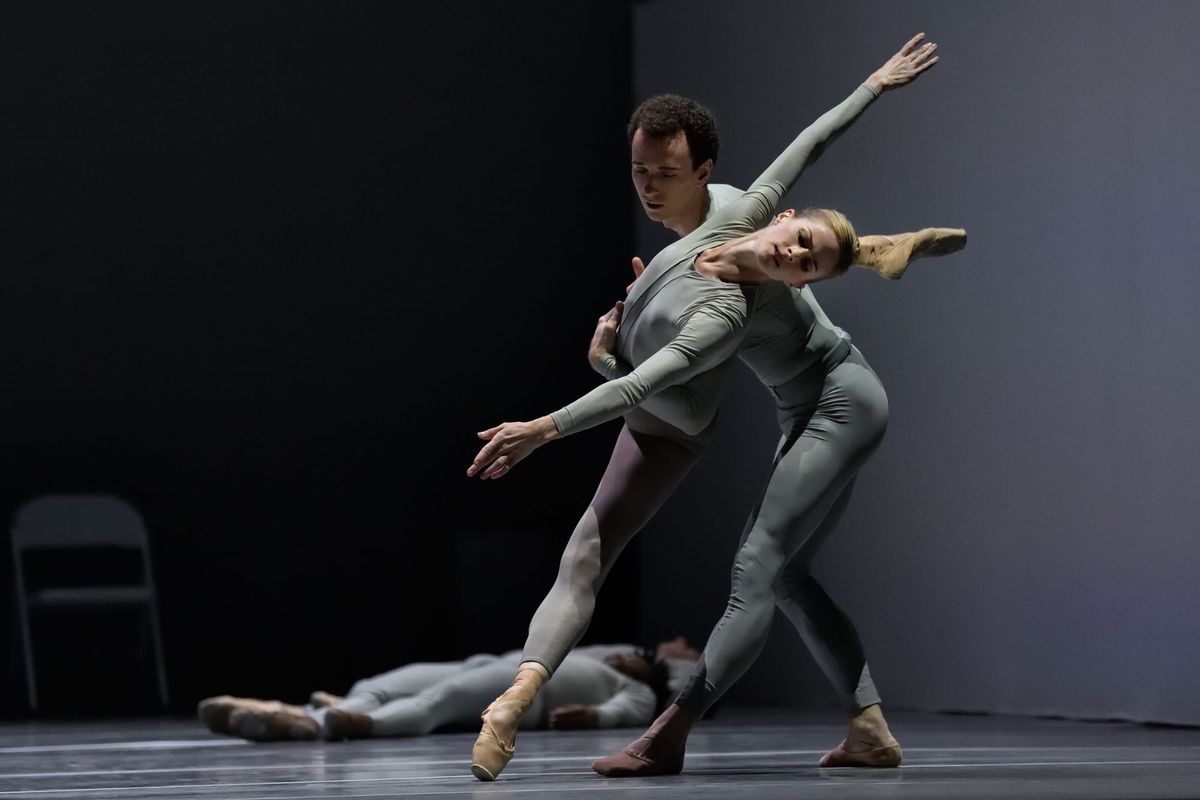
The program closed with “The Second Detail”, created on the company in 1991. It is part of a full-length work, "The Loss of Small Detail", but often stands on its own. The music is a hypnotic piece by Forsythe’s frequent collaborator, Willems. There is a sign in this ballet too, with the word “THE” front and centre. Chairs line the back of the stage and the costumes designed by Forsythe feature sleek minimalist long sleeve grey leotards. A brilliant ensemble work, the ballet is non-stop, with dancers coming in and out of focus in solos, duets and groups without hierarchy. Intricate steps mingle joyously with walking and running. When on the sidelines, the dancers watch each other, mimicking a studio environment. At other times, they sat in the chairs, their port de bras making a quiet commentary like a Greek chorus. Unfortunately, Nan Wang suffered an injury in the middle of the performance, exiting the stage quickly. The dancers looked understandably shaken for some time, before carrying on. Paquet took on some of Wang's part. The energy of the piece is daring yet cheeky and fun. Greta Hodgkinson, the only dancer of this cast who was in the company when Forsythe originally created this work, especially embodied this. In typical postmodern fashion, the work resists interpretation, although the pull to ask questions sometimes persists. When an enigmatic woman (Tanya Howard) enters in a structural white dress (a gorgeous design by Issey Miyake) and the group circles around her, one wonders who she is. The imagery calls to mind the chosen one in “Le Sacre du Printemps”. The choreography becomes wild and erratic, dancers darting across the stage. Before one can make much sense of it, the “THE” sign is kicked over and the show is over.
copyright © 2019 by Denise Sum