Passing it On
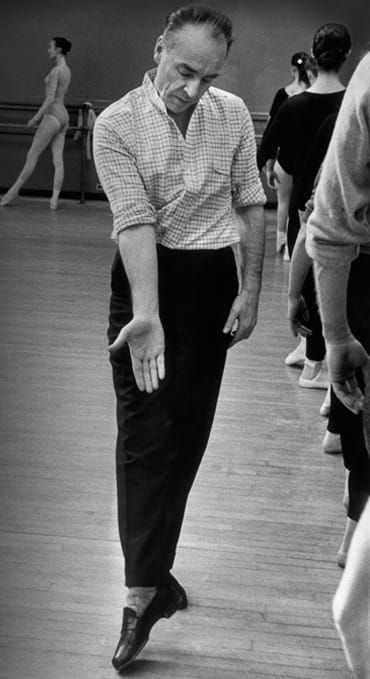
The Balanchine Woman
Studio 5
New York City Center
New York, New York
October 25, 2018
The New York City Center is celebrating its 75th anniversary this year and to salute the Center's crucial role in the development of the New York City Ballet has arranged an impressive array of Balanchine ballets to be performed by several companies, a glorious mini-festival celebrating the choreographer. The intimate, innovative Studio 5 series started the party with a presentation by the former NYCB dancer Heather Watts on "The Balanchine Woman". Since his hundreds of ballets have varied and fascinating roles for women, there was a myriad of choices and it turned out that the ballets discussed had only a glancing relationship to those listed in the program. Thus the evening had a wonderfully impromptu feel, as if the audience were sitting in the large living room of a spontaneous, gracious, and generous hostess.
This was a hostess with an impressive array of guests, as City Ballet dancers Tiler Peck, Jared Angle, and Roman Mejia danced the excerpts accompanied by the NYCB pianist, Cameron Grant. Watts began by introducing Tiler Peck and talking about their relationship. Watts has worked with her for a number of years, coaching and guiding her -- Peck reminisced about the coaching by text she has received. Watt's vibrant enthusiasm for both Peck and the ballets was irresistible as she coached Peck through Dewdrop from Balanchine's "The Nutcracker", saying that she spent hours with Peck looking at old films and talking about the original dancers. Peck, she said, "carries her predecessors with her", explaining that she shared her memories and impressions of the original Dewdrop, Tanaquil Le Clercq, who, though Watts had never seen her dance, seemed to come alive, and of other memorable and very different Dewdrops, especially Karin von Aroldingen (commanding), Gelsey Kirkland (a hummingbird) and Sara Leland (generous).
Peck danced Dewdrop's entrance, absorbing Watts' comments, which stressed contrast. She wanted small movements in the beginning ("like a flower"), pauses to hold an arabesque, and a fast flourish of turns at the end. (Watts said she could spend two hours just talking about Peck's chaîné turns; the audience would certainly have listed, but Watts did have other topics to cover.)
Watts spoke briefly about Balanchine's musicality, saying that if a dancer is exactly on the beat they aren't playing with the music and asked Peck to talk about her approach. Peck said she is more comfortable playing with a role when she has danced it many times (as was the case with Dewdrop) than one which she dances a couple of times a season (which happens with NYCB's current block programming). The first instinct, Peck said, it just to be perfect, but in a role like Dewdrop, which she knows so well, she doesn't have to worry as much, and can relax and experiment.
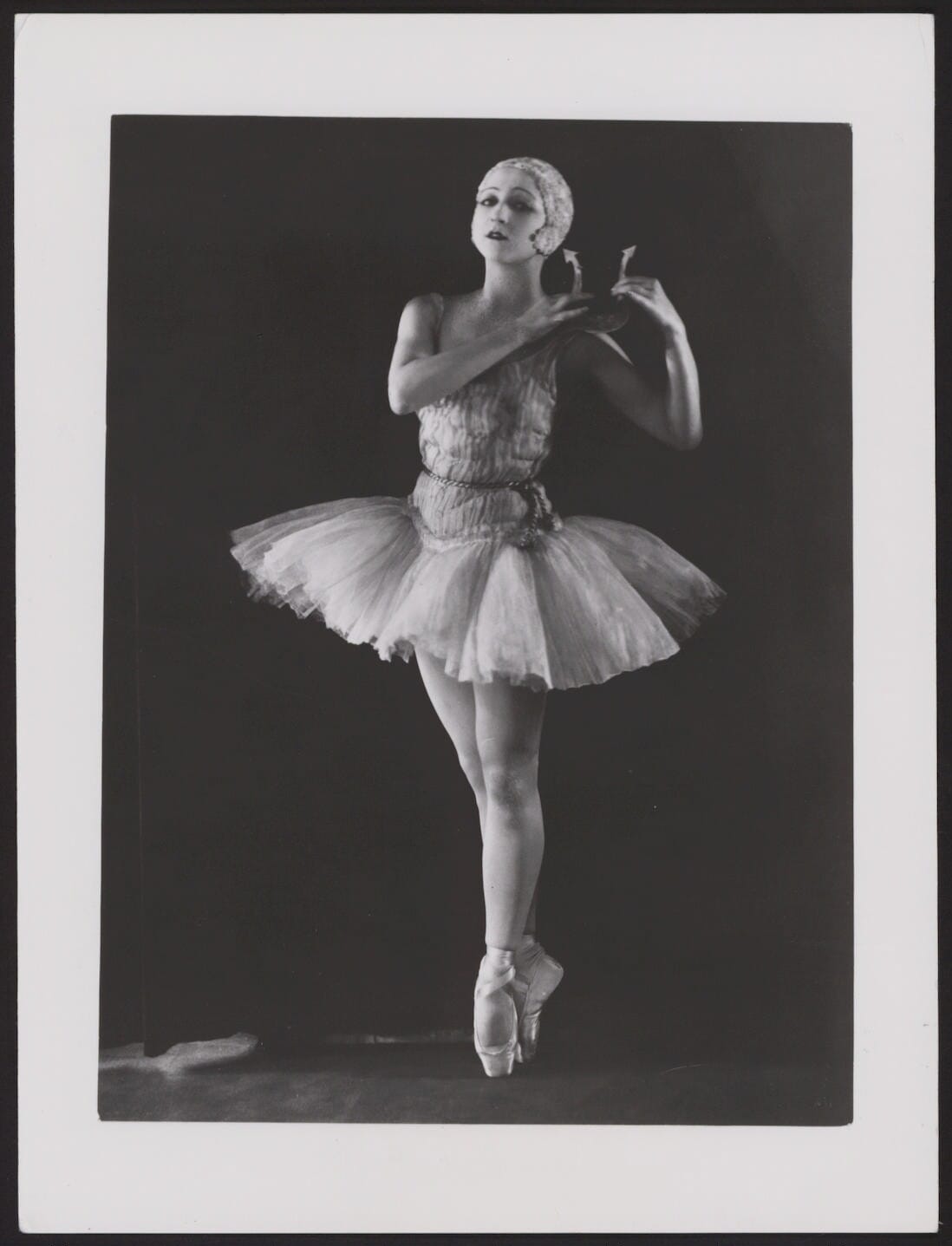
Watts then talked about a few of Balanchine's roles for women, saying there wasn't enough time for a real rehearsal, though she couldn't keep all of her illuminating corrections as bay. She started with Terpsichore, from the 1928 "Apollo", which Balanchine choreographed for Alexandra Danilova who was one of Watts' teachers at SAB, linking Peck so vividly in the chain. Watts' husband Damian Woetzel was pressed into service as Apollo and he and Peck walked through the beginning of the pas de deux. Watts talked especially about the syncopated hips and had Peck show how this same movement reappeared in the ultra-romantic "Serenade".
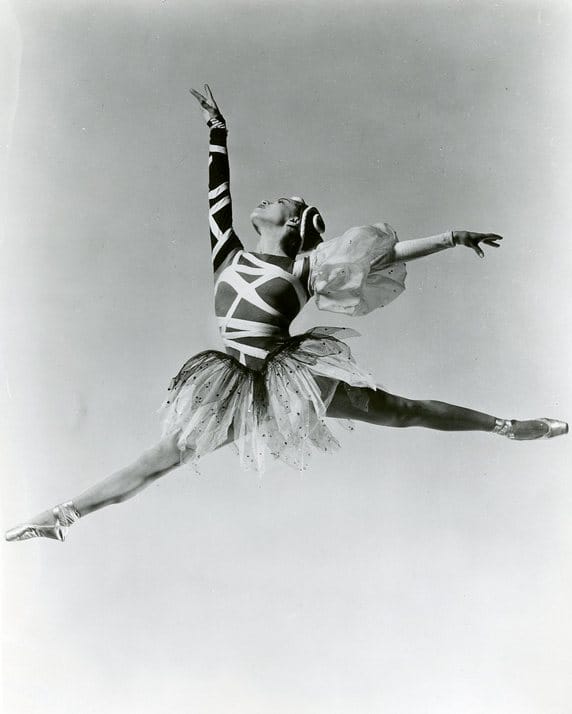
It also appears in "The Four Temperaments", as Peck, with Jared Angle, showed in Sanguinic from "The Four Temperaments". Watts talked about Maria Tallchief and her imperial, commanding presence. (Mary Ellen Moylan was Ballet Society's original Sanguinic but Tallchief was closely associated with the role for years.) Balanchine's roles are flexible, Watts stressed, and saying she talked to the dancers about many approaches, adding that Merrill Ashley was a particularly impressive Sanguinic.
Balanchine's women do not dance alone, Watts reminded the audience, and emphasized the difficulties the man in Sanguinic has in lifting the ballerina. She asked Angle to demonstrate the final series of lifts as he helps the ballerina float along and then posing her smoothly on point.
Nor is Balanchine all about the women's solos, as Roman Mejia showed in the male solo from "Tschaikovsky Pas de Deux". Mejia, now in his second year at NYCB, has worked with Woetzel and Watts at the Vail International Dance Festival and Watts' respect, admiration, and critical eye were evident as that warmhearted charmer danced the technical showpiece. For all the role's considerable bravura, Watts was concerned with style – "Throw more flowers" and "point your back foot" were more important than "higher".
The all too brief evening ended with Angle and Watts dancing the opening of the Second Act pas de deux from "A Midsummer Night's Dream" as Watts sat and watched; she introduced it by saying she would make no comments so as not to break the spell. It was a serene and haunting summation of Balanchine's many tributes to femininity.
Copyright © 2018 by Mary Cargill



