Osipova and Hallberg
“The Leaves are Fading,’ “Flutter,” “In Absentia,” “Six Years Later,” “Ave Maria,” “Valse Triste”
Natalia Osipova’s Pure Dance with David Hallberg
New York City Center
New York, New York
April 3, 2019
It has become commonplace for ballet stars to gather a few supporting dancers to tour a program of solos and duets. Natalia Osipova is in town this weekend for just such a program at City Center. However, choosing David Hallberg as one of her three male partners, puts her concert closer to Fonteyn and Nureyev than to Sylvie Guillem or even Wendy Whelan. Hallberg is too big a talent to take second place to a ballerina, not even one he works with and admires as much as he does Osipova. So despite its title, this was a show of equals.
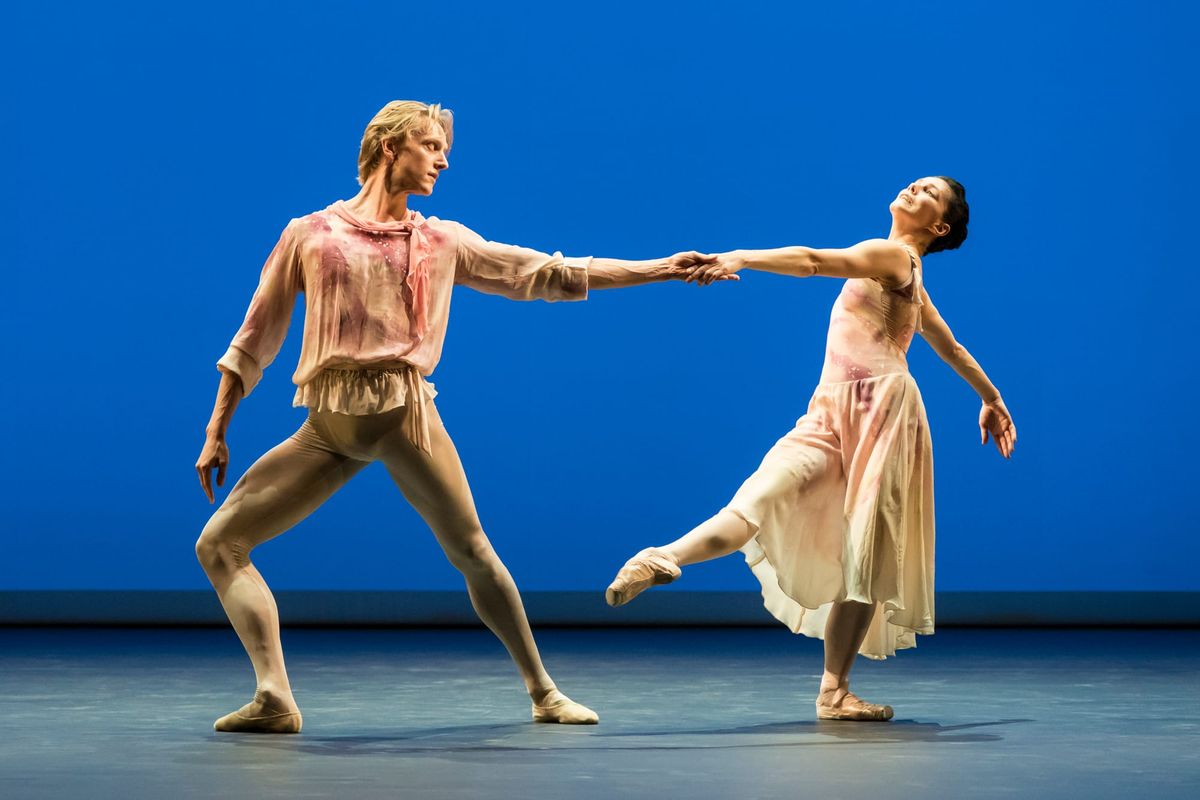
Hallberg danced in only three of the six works, to Osipova’s five, but his solo and his two duets with her were the high points of the program, at least for this viewer. One of them, the central duet from Antony Tudor’s “The Leaves are Fading,” opened the program. Tudor made the work for American Ballet Theater in 1975, and seeing this excerpt made me wish ABT would bring back the entire ballet.
"The Leaves Are Fading” is an abstract work set to a variety of Dvorak chamber music, and as the title suggests, it bears a whiff of nostalgia, a looking back to past youth and loves. Tudor’s sensitivity to music is especially striking here; the choreography looks effortless, the dance and music seeming to be one magical whole. In an age where athletic lifts and difficult, often strained, physical interactions abound in duets, nothing in this dance is exaggerated or feels forced. The movement flows like spring water. We are also reminded how Osipova and Hallberg complement each other: he is tall and blond, she is small and dark, he is elegant and restrained, she is emotional and impetuous. These opposites certainly attract, but more important, they connect and enhance each other.
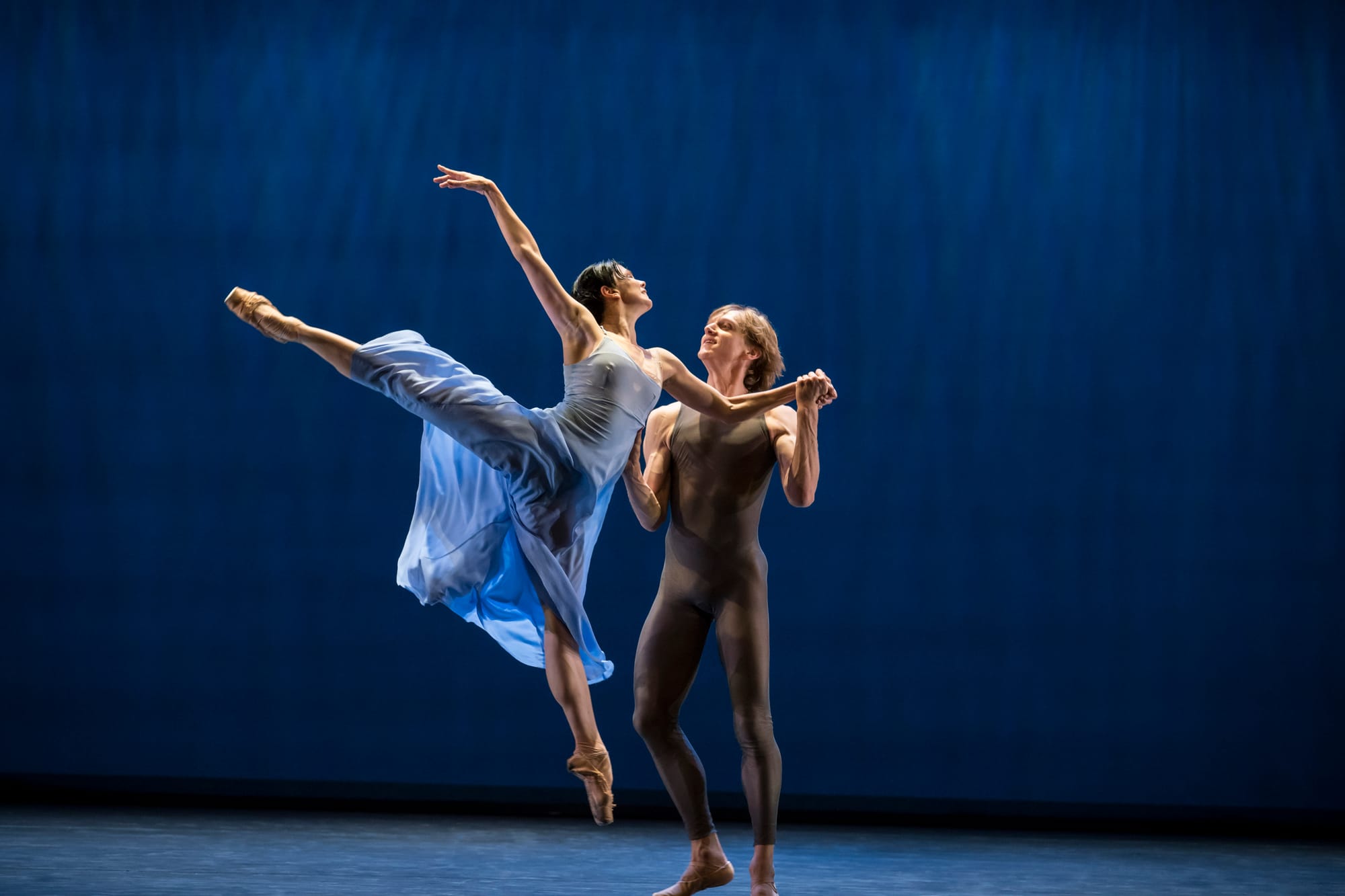
Alexei Ratmansky worked with Osipova at the Bolshoi, where he was director from 2004 to 2008, and at ABT, where she often guests and he is resident choreographer. He has also worked extensively with Hallberg at ABT. So he knows both dancers well. He created a duet for them last year, especially for this program, entitled “Valse Triste,” after the Sibelius tone poem that provides the music. Unlike the “The Leaves Are Fading,” “Valse Triste” seems to exist in the present or near present, with a couple experiencing past happiness interrupted by a crisis in which the woman suffers more and is comforted by the man. It’s difficult not to think of this dance, like Ratmansky’s choreography to music of Shostakovich, as at least hinting at political trauma, but it is also, as Ratmansky says in a program note, “pure dance,” which leaves interpretation open to the viewer. Again, Osipova and Hallberg brought special poignancy to the work through their nuanced response to each other.
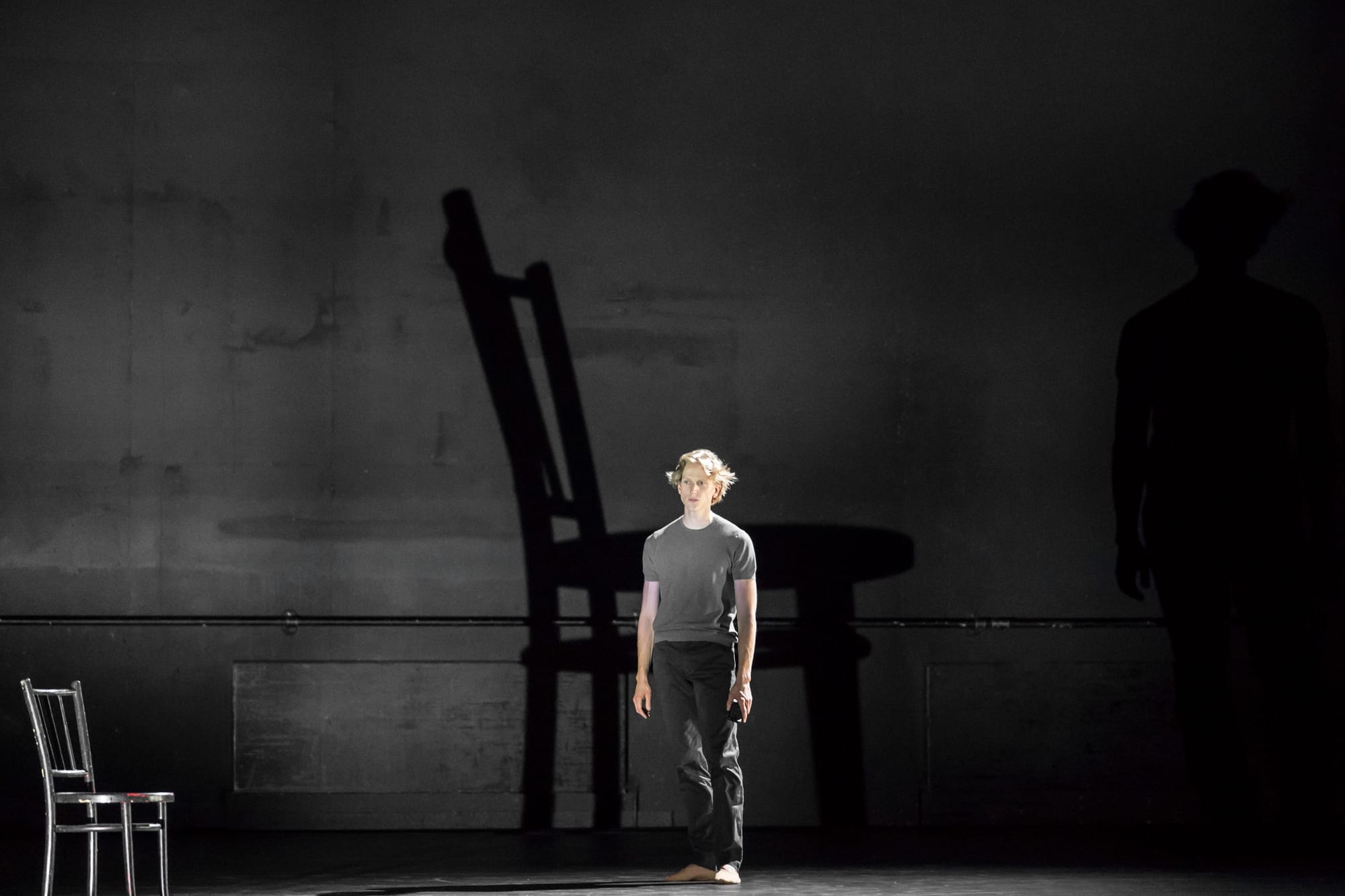
Of the other dances, Kim Brandstrup’s solo for Hallberg, entitled “In Absentia,” was the most intriguing. It is set to J.S. Bach’s famous Chaconne in D-minor. (The music was recorded, as it was for the entire program.) The dance opens with Hallberg seated in a chair, a TV set positioned at an angle in front of him and facing away from the audience. This area is spotlighted, casting a gigantic shadow of the seated Hallberg against a semi-dark space that seems limitless. Using a remote, Hallberg turns the TV on and off several times until the Bach music is heard. His body begins to respond to the sound internally, with only the slightest glimmer of movement visible in his torso. He rises, sits, rises again and slowly reacts to what he is hearing. His movement is based primarily on twists of the torso that grow larger into arcs and turns of the entire body, reflecting the swirling sounds of the score. It’s as if the music gradually inhabits him. Brandstrup is inventive in how he is able to fashion both movement and timing so that they build as the music does and comes to a satisfying conclusion.
The concert included extensive program notes for each dance, which gave some insights into the choreographers’ thinking. Brandstrup wrote that he was drawn to the introspection and intense concentration Hallberg gave the music as he absorbed it. Certainly that element was captured in the dance, as well as an evanescent sense of a moment lived, then vanished.
Two of the remaining dances were for Osipova and other partners, as well as a solo for her. All were in a contemporary vein that omitted point shoes. Of them, Iván Pérez’s “Flutter” was perhaps the most interesting. Perez is a Spanish choreographer who set his duet for Osipova and Jonathan Goddard to music of Nico Muhly. Goddard is a British dancer who has performed and choreographed for a number of ballet companies and the commercial theater.
The score for “Flutter” consists, in part, of voices singing the numbers of the composer’s past addresses. So, again, memory was invoked, as it was in several of the dances. This work, though, felt lighter in mood than the others. The dancers seemed like children engaged in play that at times could be dangerous but exhilarating. Pérez, in his notes, speaks of jumping into the abyss, aerial movement, and suspended flight. In much of the dance the performers move in parallel lines from the back of the stage, which is in darkness, to the front, which is in light, then back to darkness. There are many lifts, in which the ballerina leaps into her partner’s arms, and a great deal of windmilling of arms, all of which becomes more frenetic until finally the dance ends in a blackout.
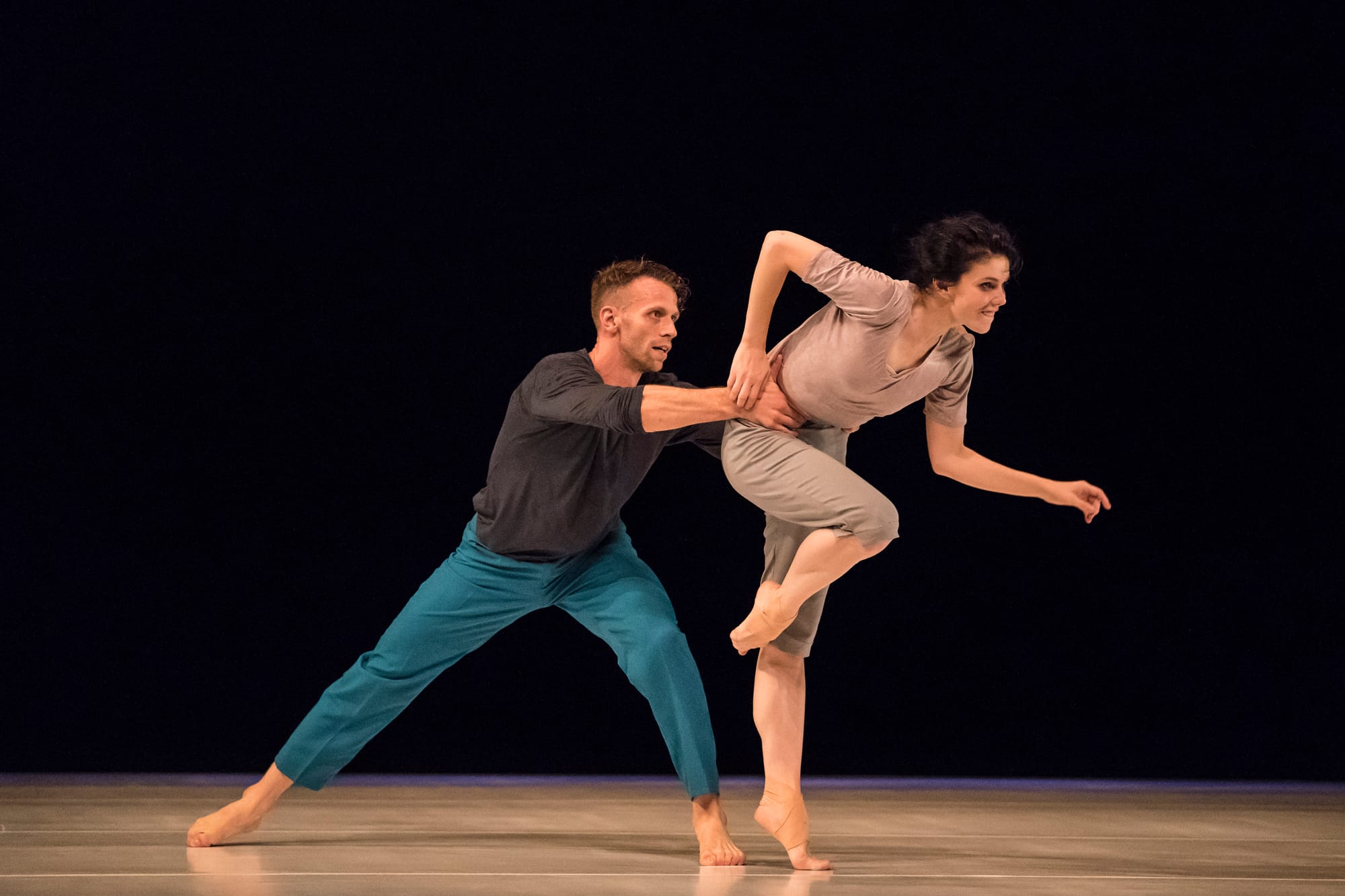
Osipova also included Israeli choreographer Roy Assaf’s “Six Years Later,” a duet I saw several years ago at Jacob’s Pillow. The problem with program notes is that sometimes the choreographer’s written intentions don’t seem to be reflected in the dance. Such is the case with “Six Years Later.” Once again, the focus in this dance concerns memory: something happened to a couple six years before the dance takes place, and now they meet again. Assaf’s notes make the past encounter seem innocuous, but the dance tells a different story, one of sexual and psychological violence — set to Beethoven’s “Moonlight Sonata,” of all things. In this section the man repeatedly grasps the woman by the neck and even her face, forcing her into movement. Then it’s her turn as she obsessively slaps and pounds his chest. The music then changes to a pop song, Marmalade’s “Reflections of My Life,” in which the dancers pantomime a friendly conversation with much laughter and gesticulating. This leads to the final section, set to Handel’s poignant “Dove Sei Amato Bene” from “Rodelinda,” in which the couple seems to more or less settle their differences, although at the end she leaves him in the dark. Assaf’s choice of music is so out of keeping with the movement, it causes a disjunct in his choreography, as if he can’t see how particular movements might convey violence, especially violence to women, or that this couple’s relationship, which in the past was so steeped in abuse, is unlikely to lead to a lighthearted reacquaintance six years later, short of total amnesia on both their parts. Osipova, as in all her dances, gave the work total commitment and Jason Kittelberger, as her partner, had a chilling coldness in the first section that was compelling. Pho
The final dance offered was a solo for Osipova called “Ave Maria,” set to Schubert’s familiar song. It was created by a Japanese choreographer, Yuka Oishi, and had Osipova dressed in white and spotlighted in swirling fog. The atmosphere, however, was not quite enough to disguise the slight impact of the choreography. In all, though, Osipova’s programming was a vast improvement over years past, when stars pulled out the hoariest of war-horse pas de deux for these kinds of concerts. Osipova chose unusual works by both well-known and emerging choreographers, and that is a boon to audiences and to ballet.
copyright© 2019 by Gay Morris



