Old Movement, Anew
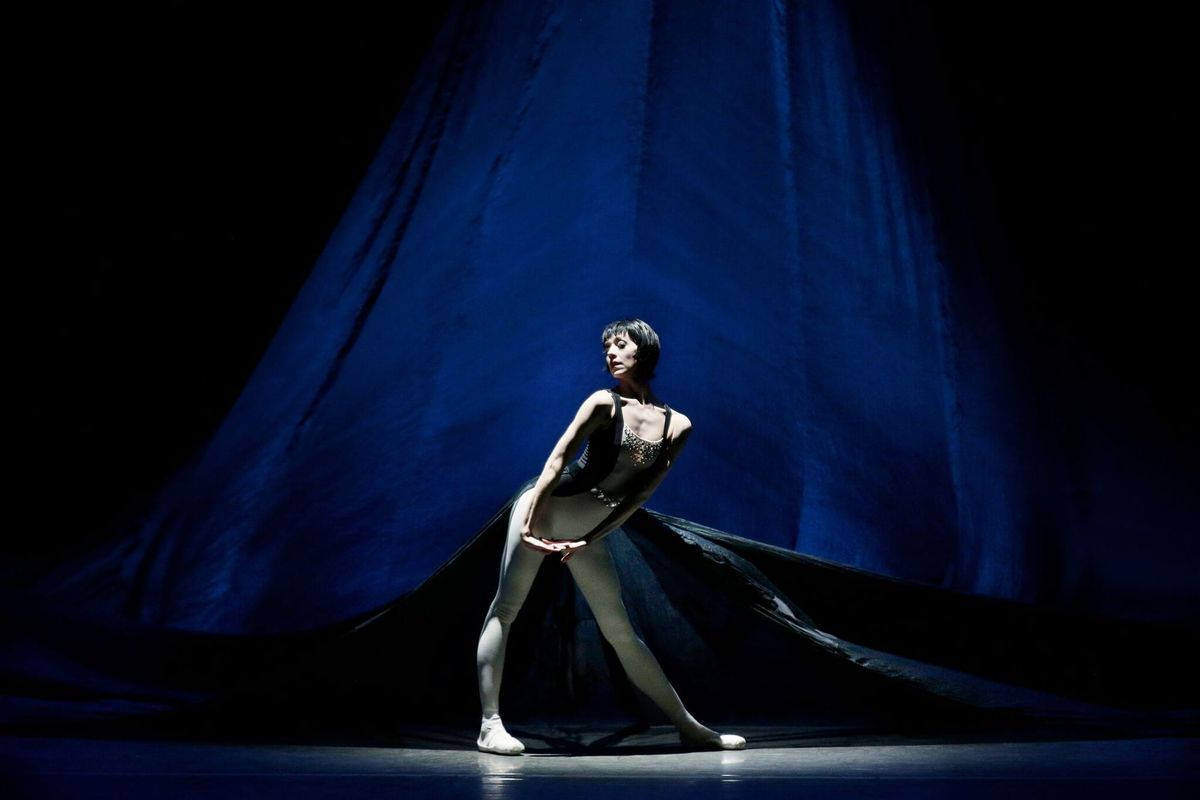
“Raymonda Variations,” “Variations Pour Une Porte et Un Soupir,” “DGV: Danse à Grande Vitesse”
New York City Ballet
David H. Koch Theater
New York, NY
September 22, 2019 (matinee)
New York City Ballet could have presented any combination of works for its “Balanchine + Wheeldon” program, but the particular selection of George Balanchine’s “Raymonda Variations” and “Variations Pour Une Porte et Un Soupir” and Christopher Wheeldon’s “DGV: Danse à Grande Vitesse” worked to highlight Balanchine’s creative genius, while contextualizing Wheeldon. Mr. B’s ballets were both around half-a-decade old, Wheeldon’s – a product of this century. Yet somehow it was Balanchine’s “Porte et Soupir” that seemed the most modern and in-your-face daring, with Wheeldon’s looking like a natural facet of the company’s expressive library.
The highly experimental “Porte et Soupir” is hardly the most eye-pleasing (or ear-pleasing, for that matter) of Balanchine’s ballets, and it is easy to see how this avant-garde creation of moves for a “Door” and a “Sigh” could have been expected to have a short shelf-life when it received its premiere in 1974. Old things having a tendency of looking new again, if they are of certain quality. This ballet to Pierre Henry’s accompaniment of sonority of door manipulation and human sighs looked very of this moment, with only just subtle giveaways of its true age, given the absence of digital visual effects and the like.
The casting could not be more perfect. As the Sigh, Daniel Ulbright opened the work crouching, crawling and at times just collapsing on the floor. His Sigh was an otherworldly bundle of plasticity, going from rigid to limber to limp within perfectly timed moments. If one pauses to wonder what makes us sigh, this physical expression captured some of the moods quite eloquently. For the Door, probably no other ballerina in the company today could be a better fit than Maria Kowroski, with her tall, slender physique, facile but impressive extensions, and a way of exaggerating the many body angles called for by the choreography. But her contribution to the role went further than that. With the choreography’s combination of mechanical and rigid movement, with very womanly gestures, Kowroski managed a mix of almost-warm femininity combined with an icy disposition. She was an enticing, but unapproachable ice queen.
Of course, the program also offered the completely opposite and more traditional side of Balanchine: the beautifully preserved, classical “Raymonda Variations.” The many debuts here allowed for a good look at the company’s promising female corps dancers, though some of them took to their roles better than others. The more successful dancing came from Alston Macgill, who danced the second variation with a crispness that relaxed during the ports de bras and the expansive arabesques, and Emma Von Enck, whose sixth variation was full of impressive staccato in the feet. Next to them, Olivia MacKinnon in the first variation was precise, but not effortless, and things got worse for the ending sequence of hops on pointe that looked particularly labored. Lydia Wellington’s fifth variation was appropriately light, but her troubles were in the musical expression, where her dancing could have been more engaged.
The other debut came from Joseph Gordon, who partnered veteran Ashley Bouder with regal aplomb and at times adopted a style that could have had him mistaken for a Royal Ballet dancer. He carried that attractive posture into the variations as well, which saved the overall impression, as the big jumps did not look to be his strength, at least on this occasion. For her part, Bouder had a slow start, with heaviness in her body and movement in the adagio, and atypically for her, misses on accents. All this went away though during the variations, where her dancing of the fourth one had remarkable nuance, like the moments where she would pause and playfully acknowledge her foot in the step-back sequence.
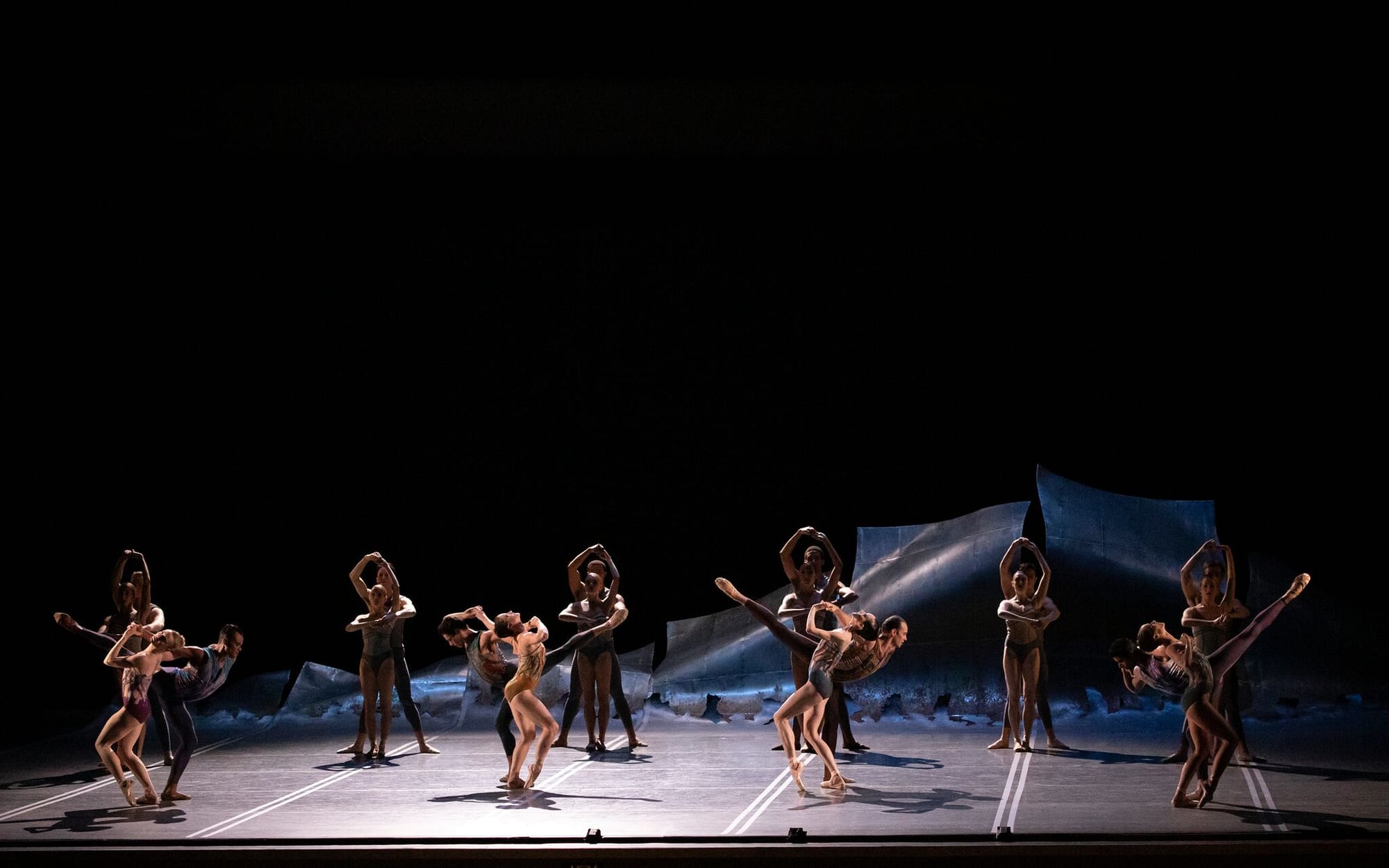
To close the evening, Wheeldon’s "DGV" came with some debuts as well, and this was the best performance of it I’ve seen in a while. Megan Fairchild’s first time in the second duet came with a serious, steely demeanor and placed emphasis on athleticism, but not in her usual technique-driven way. Instead of going full-throttle, this dancing showed a calibrated power and confidence in the role that had a quality of feeling intentionally held back, as though only allowing the audience to see some, but not all, of her character’s ability. The other debutant of note was Peter Walker, whose solid partnering of Brittany Pollack in the fourth duet gave their dancing a smooth but cold and edgy quality, a metallic tang. Another first-timer, Andrew Veyette, made less of an impression, not looking as athletic and electrifying as the others in the cast, but his dancing alongside Lauren Lovette showed a worthy exploration of the piece’s tender spots. In all, the cast, including veterans Sara Mearns and Taylor Stanley, gave the work that sense of urgency that gives it power, and delivered nearly-even potency in individual expression across the four couples.
I have written on enough occasions now that NYCB is apt and prone to show its range, but with programs like this it bears repeating. Whether intentional or not, the company continues to reinforce its expressive flexibility with works and new casts.
copyright © 2019 by Marianne Adams



