Not Forgotten
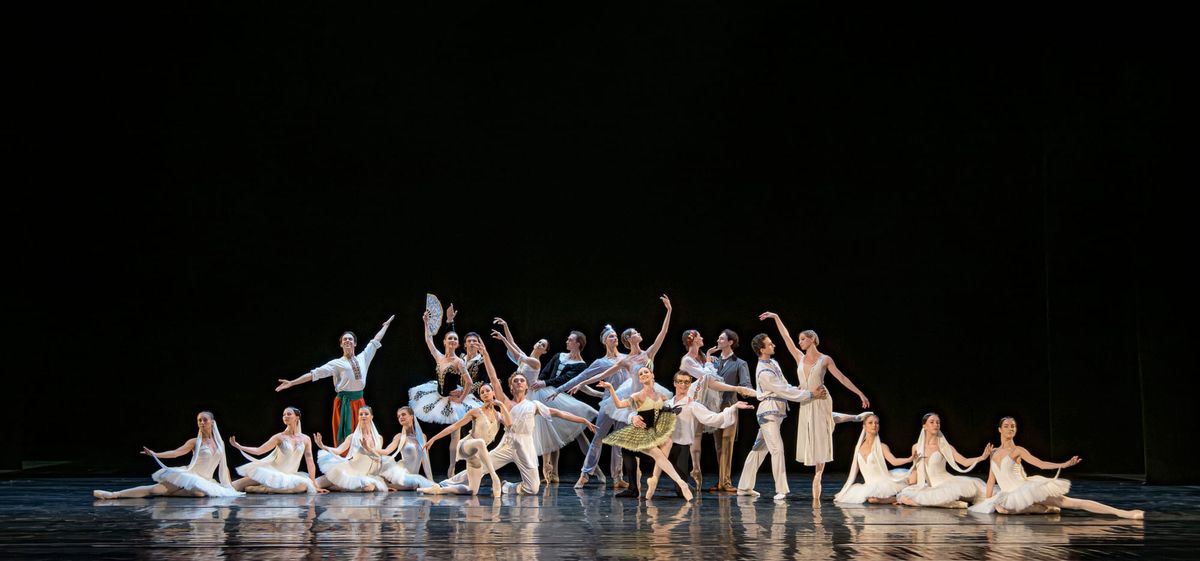
The National Ballet of Ukraine and the Shumka Dancers
Classical pas de deux and Ukrainian folk dances
New York City Center
New York, NY
October 15, 2024
Twenty four dancers from the National Ballet of Ukraine and the Canadian based Ukrainian folk dance troupe Shumka are on a grueling three-week, seven-state, sixteen-city tour to raise money for the war effort. The gala format (including a Don Q pas de deux) showed off their dancers and was generally upbeat, with many in the audience clapping along with the infectious folk rhythms. The dancing, despite what must be a difficult adjustment to new stages at almost every stop, was thrilling, especially the go for broke folk dancing, yet nuanced, as the dancers, even in the brief, out of context pas de deux, shaded their interpretations clearly. There were no sets, but the imaginatively chosen projected photographs set the mood; a misty graveyard for “Giselle”, a rocky cliff for “La Bayadere”, rippling water for the “Dying Swan”. (The 3-D glasses handed out helped bring the sets to life.)
In addition to the more familiar pas de deux, the company danced some recent works by Ukrainian choreographers. The program opened with “Melody in A Minor” by Mykyta Sukhorukov, a current dancer with the company, set to music by Myroslav Skoryk, a Ukrainian composer (the company does not currently perform any pieces set to Russian composers). The dancers, Olga Golytsia and Sukhorukov himself, wore folk-inspired costumes and it was danced in front of a backdrop of a village scene. It was a lyrical reverie full of soft lifts, an eloquently dance gentle depiction of young love.
There were excerpts of two works by the Ukrainian choreographer Viktor Lytvynov. “Chasing After Two Hares” was a very funny stylized romp for three strutting men (Yevhen Lohvynenko, Ivan Avdijevsky, and Ernest Kyrsenko) chasing after a girl, Elena Karandieieva, who gave as good as she got. The excerpts from “Forest Song”, a reworking by Lytvynov of the 1946 ballet based on Ukrainian folktales, showed a fine range. It was lyrical in the “Spring” section, as Tetiana Lozova and Yaroslav Tkachuk danced together in a woodland scene with melting tenderness alternating with secure and breathtaking lifts. “Fire”, danced by Daniil Silkin, was a technical tour de force, with heroic and flashy lifts, while “Winter”, with Irina Borysova and Volodymyr Kutuzov, was a magical vision in white. The plot summary of the full length ballet says the two lovers souls meet in the afterlife—this came across even in this brief scene, and left me wishing we could see more works by the choreographer.
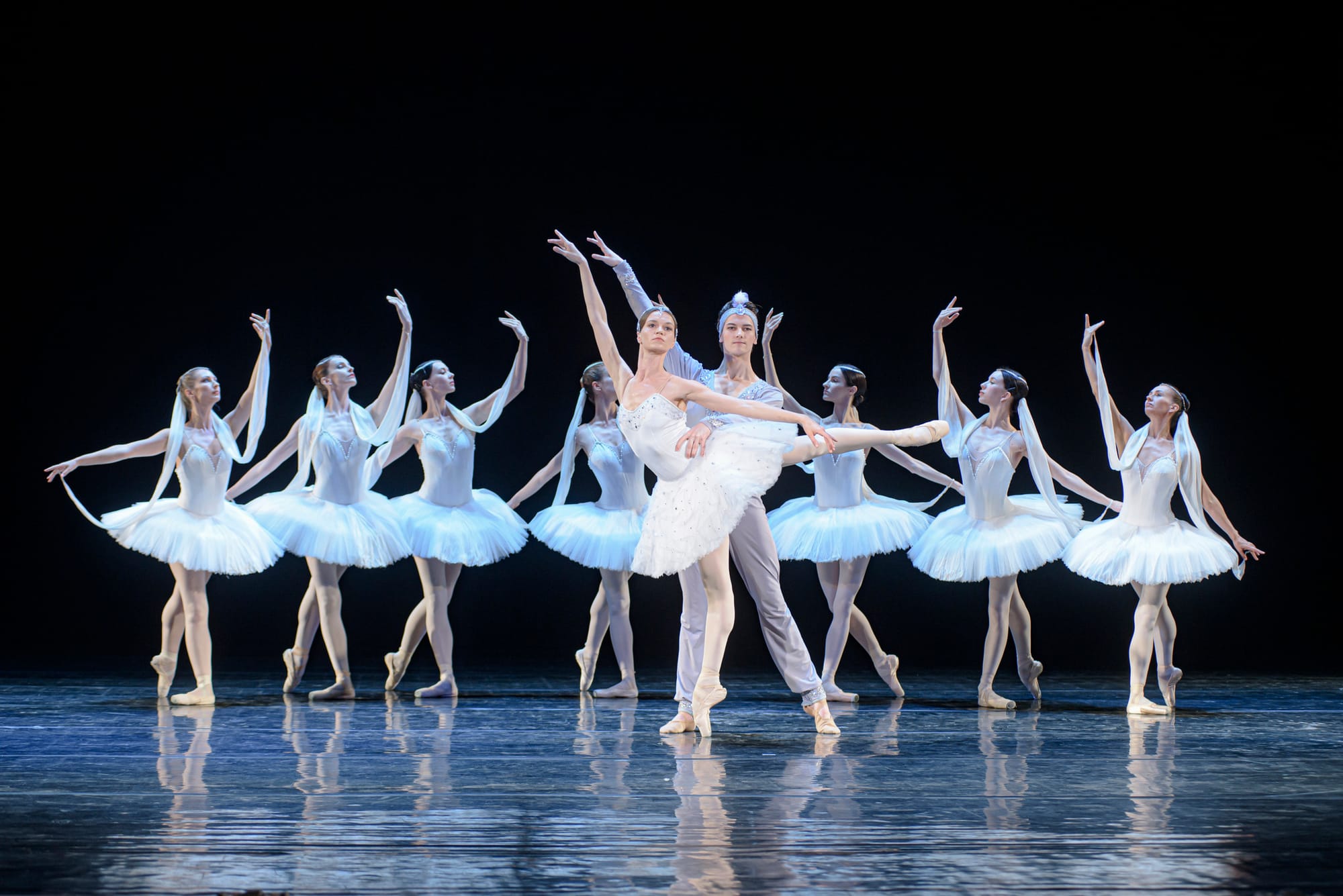
American audiences have certainly seen many versions of the classical pas de deux the company performed, but the dancers’ unflashy elegance, delicate style, and dramatic conviction are always welcome. Anastasiia Shevchenko and Ivan Avdijevski gave the “LA Bayadere” shades scene pas de deux a mysterious quality, as she danced as if she were in a dream, and he gave his body a sightly tense awareness. She was also a gentle dying swan, struggling against her fate. Natalia Matsak and Sergii Krynokon were also perfectly in character in their pas de deux from the second act of “Giselle, and Matsak combined a delicate floating quality with strong entrechat quatres.
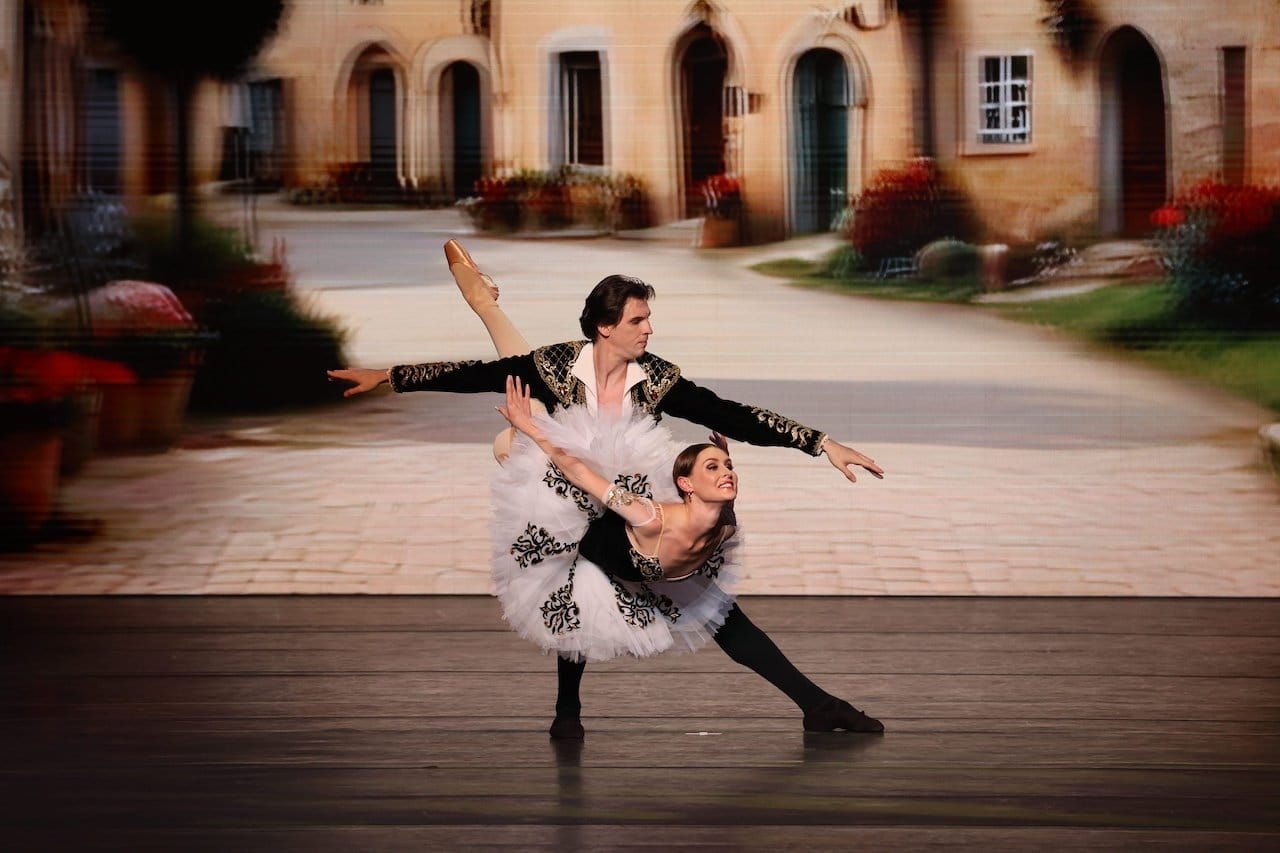
On the lighter side Tetiana Lozova and Yaroslav Tkachuk were very funny in the demi-caractère pas de deux from “Harlequinade”. Tkachuk was especially clear in the mime, letting the audience know “You ain’t seen nothing yet” before exploding in a series of low, fast jumps, and thrilling turns a la seconde and Lozova was delightful in her delicate hops on point. The ever-popular “Don Quixote” pas de deux got a stylish performance from Olga Golytsia and Mykyta Sukhorukov, with secure one-armed lifts and clean jumps. Her fouettés were solid rapid singles, stuck firmly in place. Though the Petipa ballet has disappeared, the pas de deux from “Le Talisman” does show up occasionally, and Kateryna Kurchenko and Daniil Silkin combined a lyricism (Kurchenko’s flowing arms were especially beautiful) with some long after Petipa bravura.
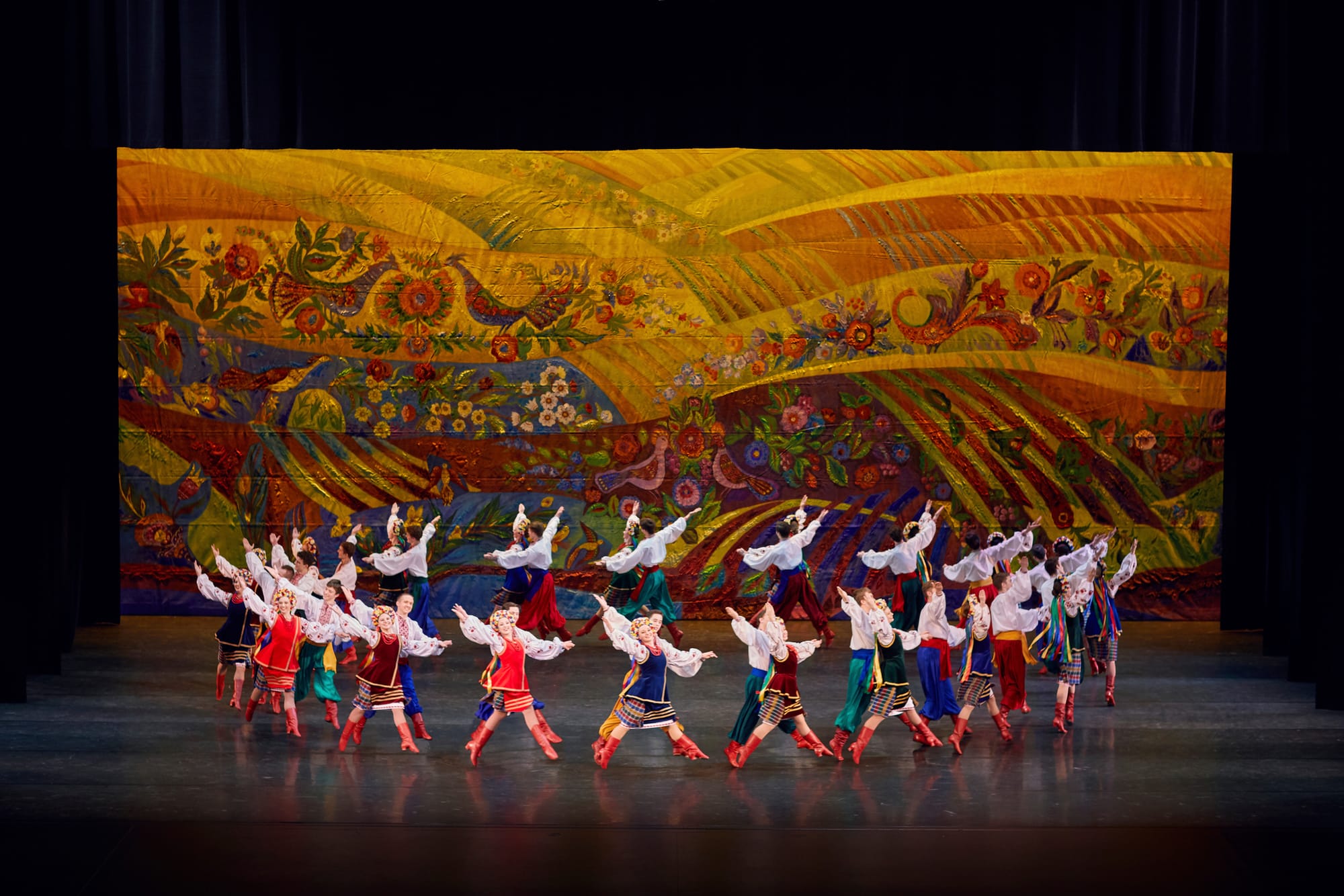
The Shumka troupe’s lively, colorful dances were interspersed among the classical pieces, and the program ended with a rousing hopak, full of daring competitive jumps, including some no-handed cartwheels. But it was not all bright, as the first act ended with the powerfully understated “Prayer for the Fallen” choreographed by Vadim Fedotov. Three dancers, Natalia Matasak, Sergio Kryvokon, and Volodymyr Kutuzov, mourned before projected photographs of some of the bombed cities, a haunting reminder of the ongoing tragedy; the audience would certainly welcome the company again in happier times.
© 2024 Mary Cargill



