Musical Masters
Le Sacre du Printemps (the Rehearsal)", "The Open Door", "Brandenburgs"
Paul Taylor American Modern Dance
David H. Koch Theater
Lincoln Center
New York, New York
March 26, 2017, matinee
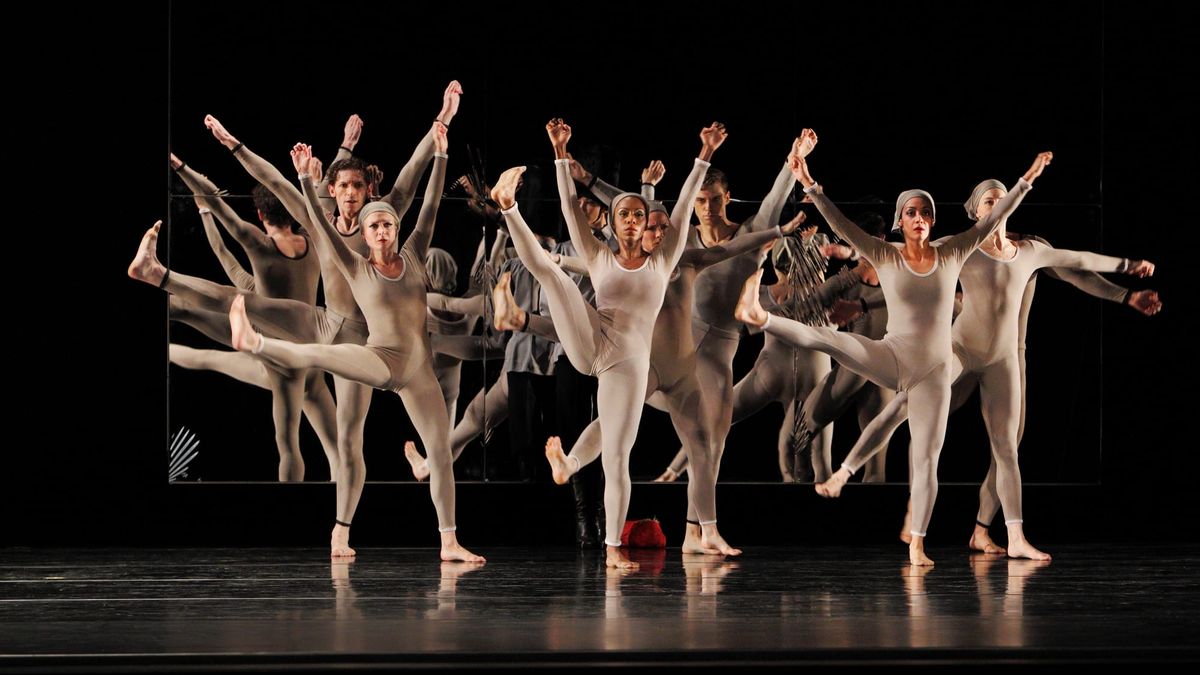
The final performance of Paul Taylor's New York season featured three Taylor works set to great music (by Stravinsky, Elgar, and Bach), outstanding dancing, and one farewell, as Francisco Graciano make his last New York appearance with the company. The afternoon opened with Taylor's oblique take on Stravinsky's "Rite of Spring", a score that has overwhelmed many choreographers. Taylor side-stepped the tidal wave by using Stravinsky's version for two pianos and by ignoring the pagan ritual at the dawn of time scenario.
Taylor's version is a surreal juxtaposition of a Russian ballet rehearsal and a penny dreadful melodrama. The dancers' low-to-the-ground runs, stiff-legged jumps, club-like hands, and flat profiles gave their antics a cartoon-like feel, while capturing the insistent rhythms of Stravinsky's music. The complicated goings on involve a baby, prison bars, and a wholesale massacre carried out by a Crook (Robert Kleinendorst), His Mistress (Eran Bugge), His Stooge (Jamie Ray Walker) and various henchmen, while a Private Eye (Michael Trusnovec) tries to rescue the Girl's (Laura Halzack) baby. This may or may not be the ballet overseen by the Russian Rehearsal Mistress (Christina Lynch Markham).
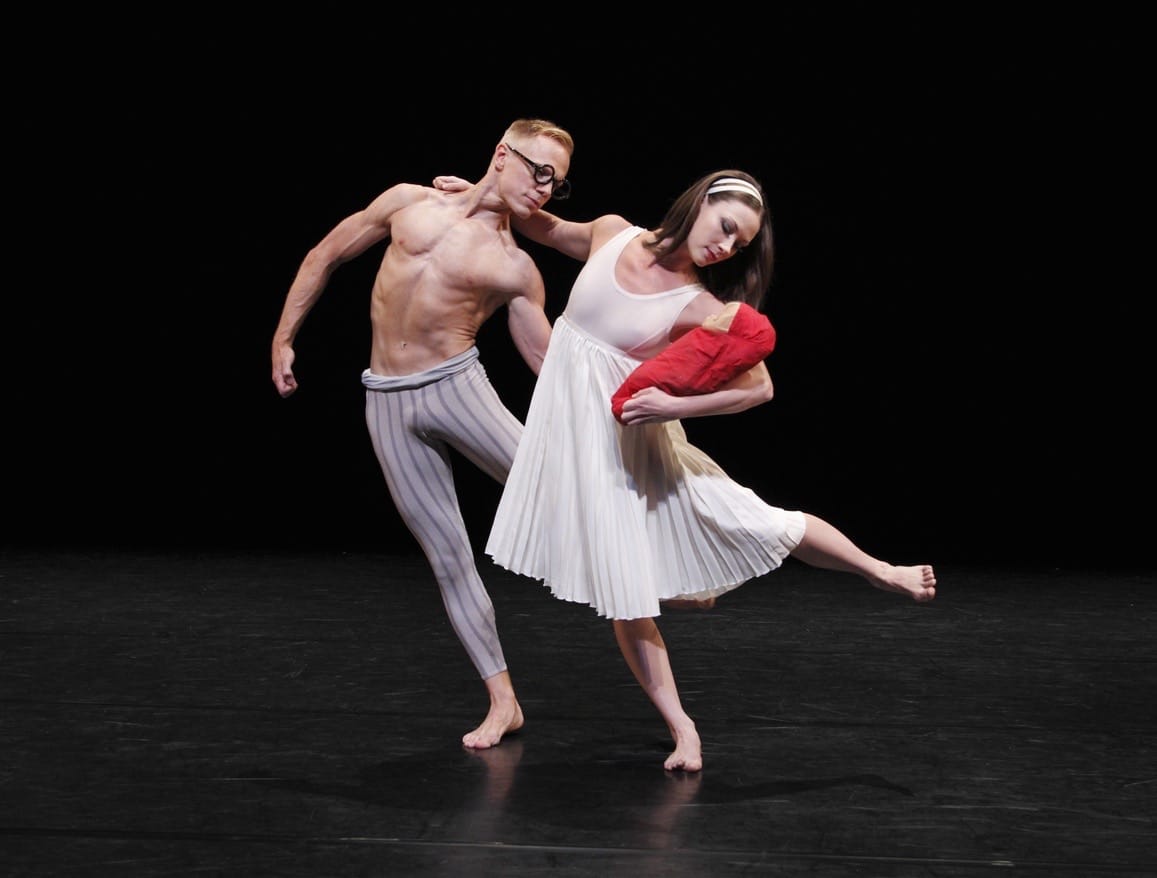
This was performed with a compelling sincerity by the dancers. Kleinendorst, who combines a powerful physique with a slinky grace, was an acute and musical comedian. Trusnovec, who somehow ended up behind bars, danced with a combination of dorky ineffectiveness and majestic strength, and Halzack, whose kidnapped baby is accidentally stabbed, danced the Chosen Maiden's dance of death with an impassive and shattering strength. It is still a very confusing piece and it works best when the viewer surrenders to its non-linear logic (or illogic) and appreciates each indelible moment separately.
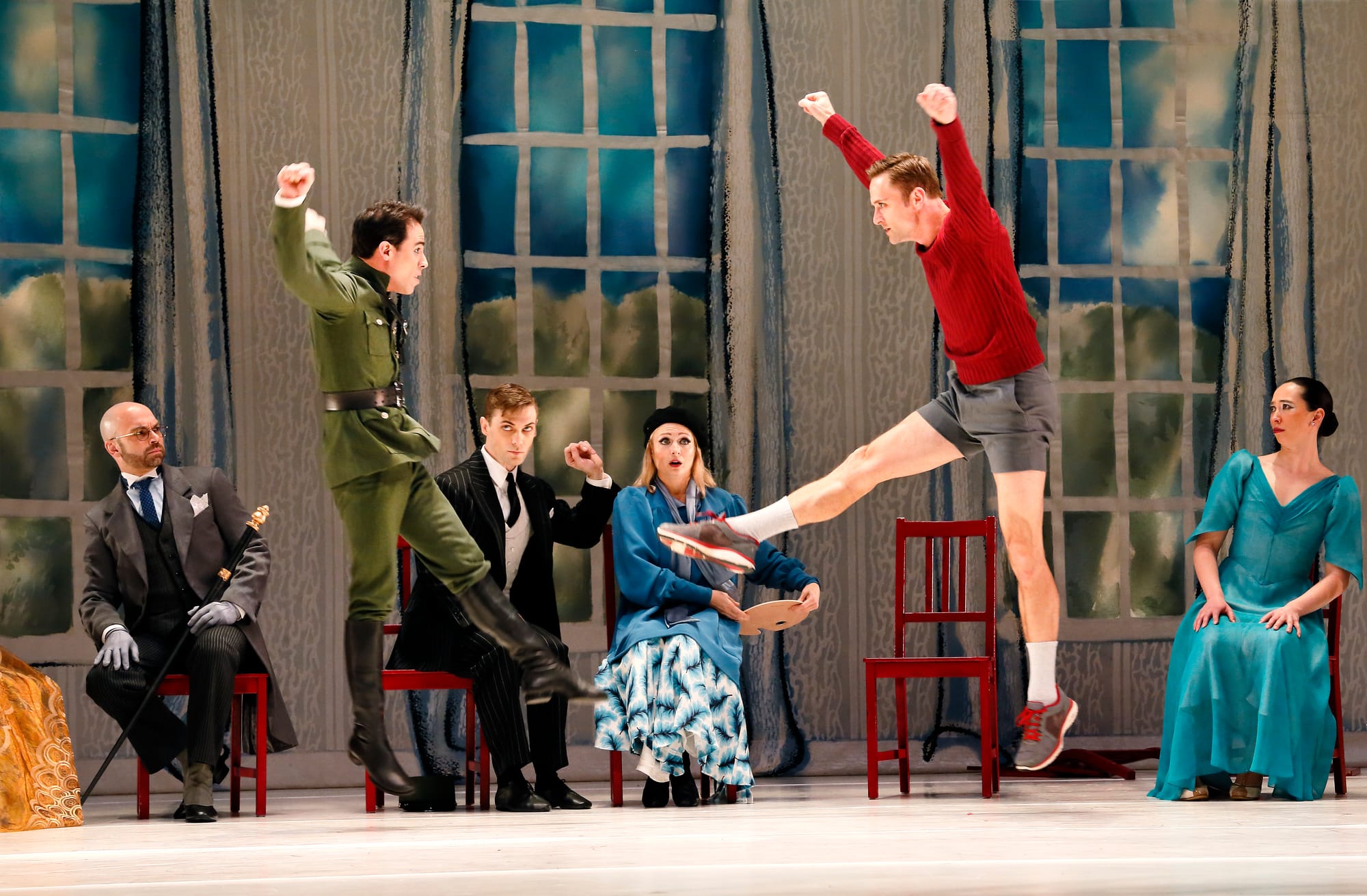
"The Open Door", new this year, is another non-linear work, though without the inspired irrationality or musical imagination of "Sacre". Taylor used Edward Elgar's "Enigma Variations", or rather most of them --he stopped at no. 10, leaving the final four hovering in the background, a surprising lapse of musical integrity. Frederick Ashton used the same score for one of his most moving and profound works (based firmly on the dedication "to my friends pictured within") and like Ashton, Taylor has house party guests perform the variations.
Taylor's host, Michael Novak, gave the work some depth, as he opened and closed the work arranging chairs for his guests, moving with a quiet and mysterious dignity. The other variations, though, could be subtitled "my dancers caricatured without", as they looked as if they would be more at home in a slapstick comedy than dancing the rich, detailed Elgar music. Poor Sean Mahoney in a red velvet lounge suit and cigarette looked like a compilation of limp-wristed cliches, and my heart sank at Laura Halzack, an overdressed and very fat dowager, waddled on, knowing that sooner or later she would fall off a chair. (It was sooner.)
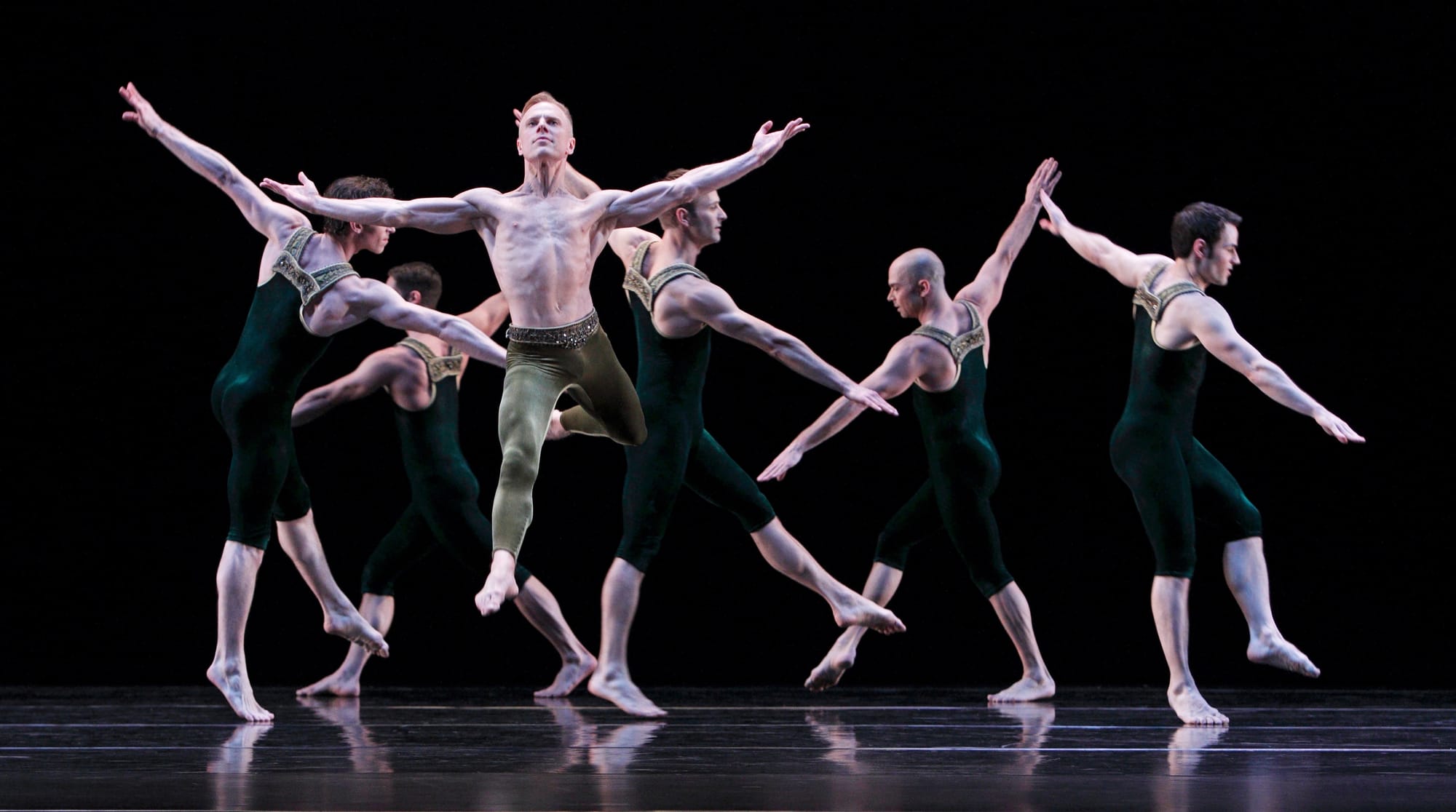
Taylor's approach to Bach in "Brandenburgs" was a palate-clearing marvel, as Taylor translated the majesty and generosity of the music into a bounding, joyful excursion led by Trusnovec accompanied by Michelle Fleet, Parisa Khobdeh, and Eran Bugge, backed up by five men (Robert Kleinendorst, James Samson, Sean Mahoney, Michael Apuzzo, and George Smallwood).
There are clear hints of "Apollo", as Trusnovec was saluted by three female solos, each with distinct styles. Khobdeh was lighthearted, with skimming little jumps, Bugge was more sensuous, delicately undulating as she turned, and Fleet was a study in dignified nobility and solid balances. Trusnovec may also have been a Paris who didn't have to make a choice, who got to live in a utopia with no threat of war.
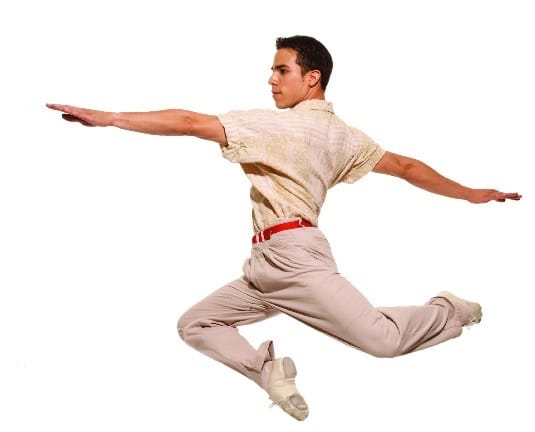
One of Francisco Graciano's best roles was all about the threat of war, and I thought of his "Tico Tico" from "Company B" as he received a heartfelt send off, with flowers and a standing ovation. His nervous bravado as he combed his hair, as if he hoped against hope that someone so alive could not die so young is an indelible memory the intense lyricism of a dancer who retired so soon.
Copyright © 2017 by Mary Cargill



