Moving On
"Cortège Hongrois", "La Valse", "Square Dance", "Duo Concertant"
New York City Ballet
David H. Koch Theater
New York, New York
October 15, 2015
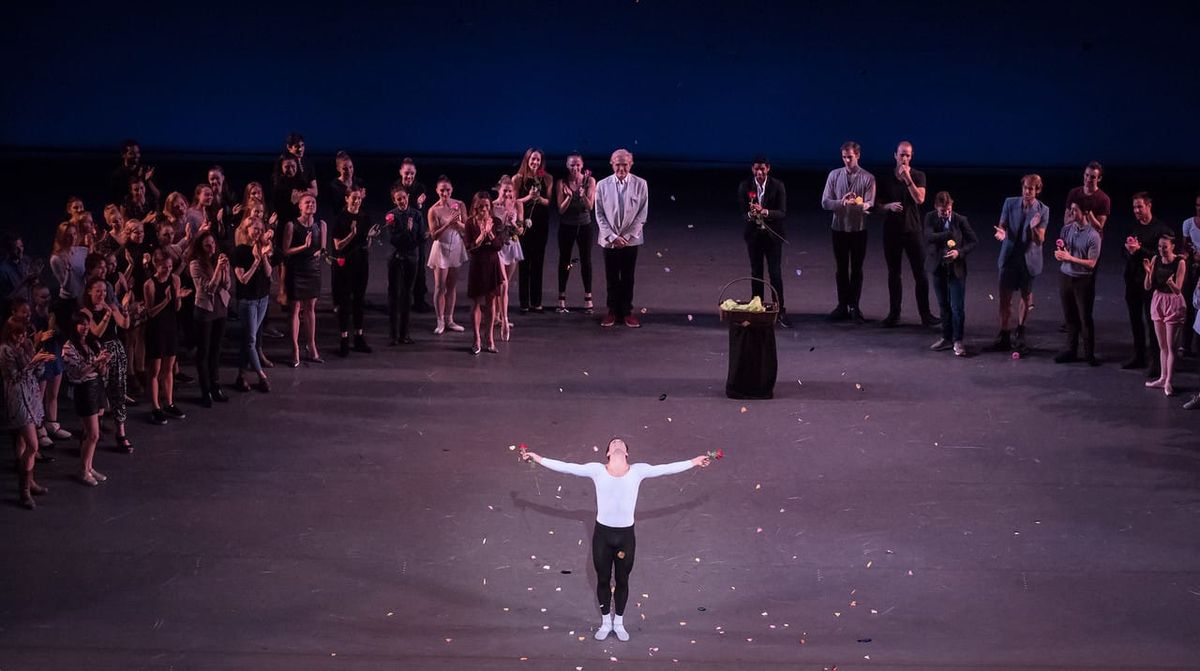
Robert Fairchild gave his farewell performance at New York City Ballet in Balanchine's low-key, pensive, and very personal "Duo Concertant", which was rescheduled to close the afternoon, in place of the apotheosis of closers, "Cortège Hongrois", which opened the performance. If the switch made for a somewhat unbalanced schedule, it let the audience thank Fairchild properly, as he handed out roses to the principal dancers amid a shower of confetti and cheers from the audience. His open-hearted, honest, and very American elegance has illuminated so many dances, and "Duo Concertant", with a radiant Sterling Hyltin, encapsulated his many gifts.
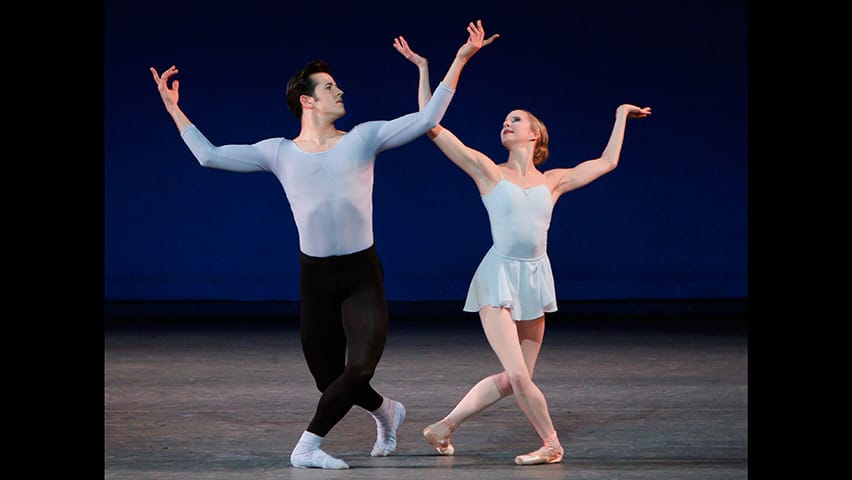
The opening, where the two dancers must stand behind the piano listening to the Stravinsky music, has rarely seemed so natural and spontaneous as the dancers reacted to the musicians and to each other with an unscripted ease, just two people sharing a private moment.
Their dancing extended the private, playful mood, as Fairchild flew into the quick little steps, seeming to skim the ground. Hyltin matched his speed, moving with her arresting wispy crispness. The final movement, which can seems a bit overwrought with those theatrical spotlights and disembodied hands, had an elegiac simplicity, as Hyltin seemed to turn into a luminous marble statue, a timeless beacon illuminating Fairchild's path.
"Cortège Hongrois" illuminated a path too, the path from Petipa to Balanchine, as much of the choreography, especially the haunting female solo, is modeled firmly on the older choreography. The work is more of a compendium of finales than a coherent and cohesive work of art, but the cascade of Glazounov's (as the program spells it) luscious music (one of the most luxuriantly danceable and melodic scores in history) and the effervescent choreography and contrast between character and classical dancing are irresistible.
New York City Ballet dancers don't get much practice in parading in character shoes and I missed the firm "The stage is mine" strut of the Russian companies. The NYCB corps tended to tiptoe a bit gingerly, as if they were wearing cowboy boots while negotiating a particularly unpleasant corral. But the lead character couple, Savannah Lowery and Sean Suozzi, danced enthusiastically, though the flavor hinted more of ballpark mustard than paprika.
Teresa Reichlin and Russell Janzen were the anonymous classical couple, formerly known as Raymonda and Jean de Brienne; this was only their second performance yet their dancing had an unusual and imaginative emotional arc. Reichlin used her cool and somewhat aloof stage presence to project an exalted isolation in the opening hubbub, as she seemed to be pulled back by the music. Her solo, one of Balanchine's (by was of Petipa) most glorious illustrations of femininity, had a smoldering intensity and she ended the ultimate finale with an outgoing blaze of confidence. Janzen was an elegant and unobtrusive partner, dancing with a plush and effortless flow; they made a noble and memorable couple.
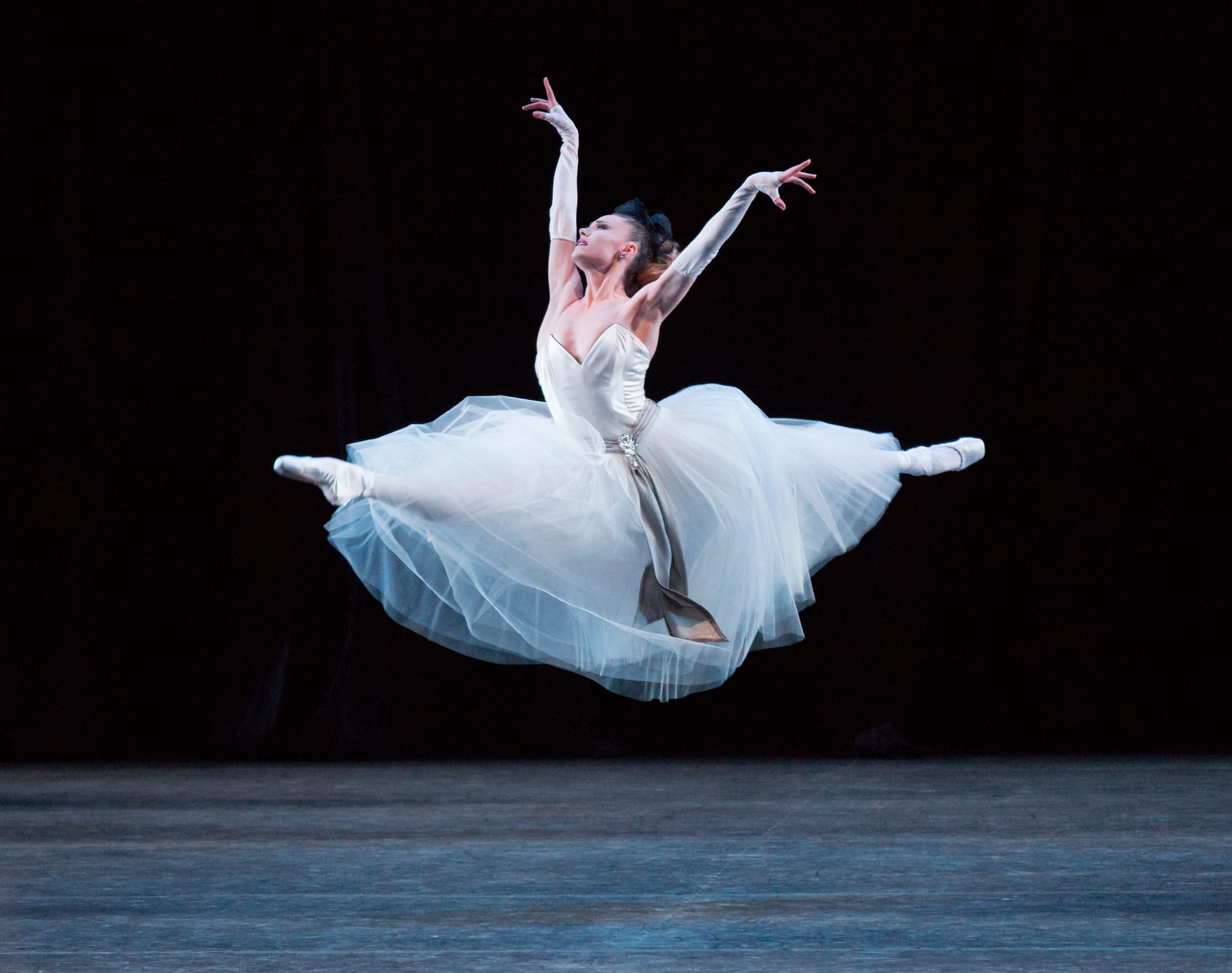
There is nothing reticent about Sara Mearns, who danced the doomed debutant in Balanchine's "La Valse". Mearns was no vulnerable innocent as she used her voracious and greedy jump to rush almost eagerly to her doom, but, as usual, her interpretation was unique and compelling. She made the pseudo-mime with her hapless partner (Tyler Angle) especially vivid, as she seemed to insist on going her own way, brushing off his desperate objections.
Even Amar Ramasar, as the man in black, seemed overwhelmed, almost pleading for her to take those jewels. This did upset the balance (at times it was like watching a hurricane rage through a hot house), and as if to compensate, Ramasar overdid his final exit, rushing off with a melodramatic flourish – he seemed late for an audition for a really bad Soviet von Rothbart.
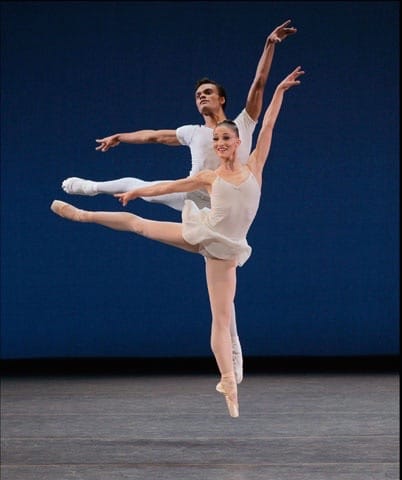
Ashley Bouder and Taylor Stanley needed no extra flourishes to burnish their fine, musical couple in "Square Dance", though Bouder did succumb briefly to an attack of the cutes at the end (she did not need to pose so ostentatiously for the audience to appreciate her). There are hints of emotion in that technical tour de force, as the man makes his courtly bow, but Bouder and Stanley met as equals, moving like two halves of the same musical note. Stanley gave a fluid, confident yet abstract tone to his solo, as if he were a distillation rather than the embodiment of Balanchine's eternal poet, giving it a haunting, timeless feel.
Bouder's dancing is an immaculate combination of perfect placement and ferocious energy. Her gargouillades, especially, were diamond sharp and astoundingly musical, as the movement seemed to flow from her legs through her arms. It did seem as if the entire company was doing their best to make Fairchild's final performance something to remember, and it was an honor to share it.
Copyright © 2017 by Mary Cargill



