More Jewels
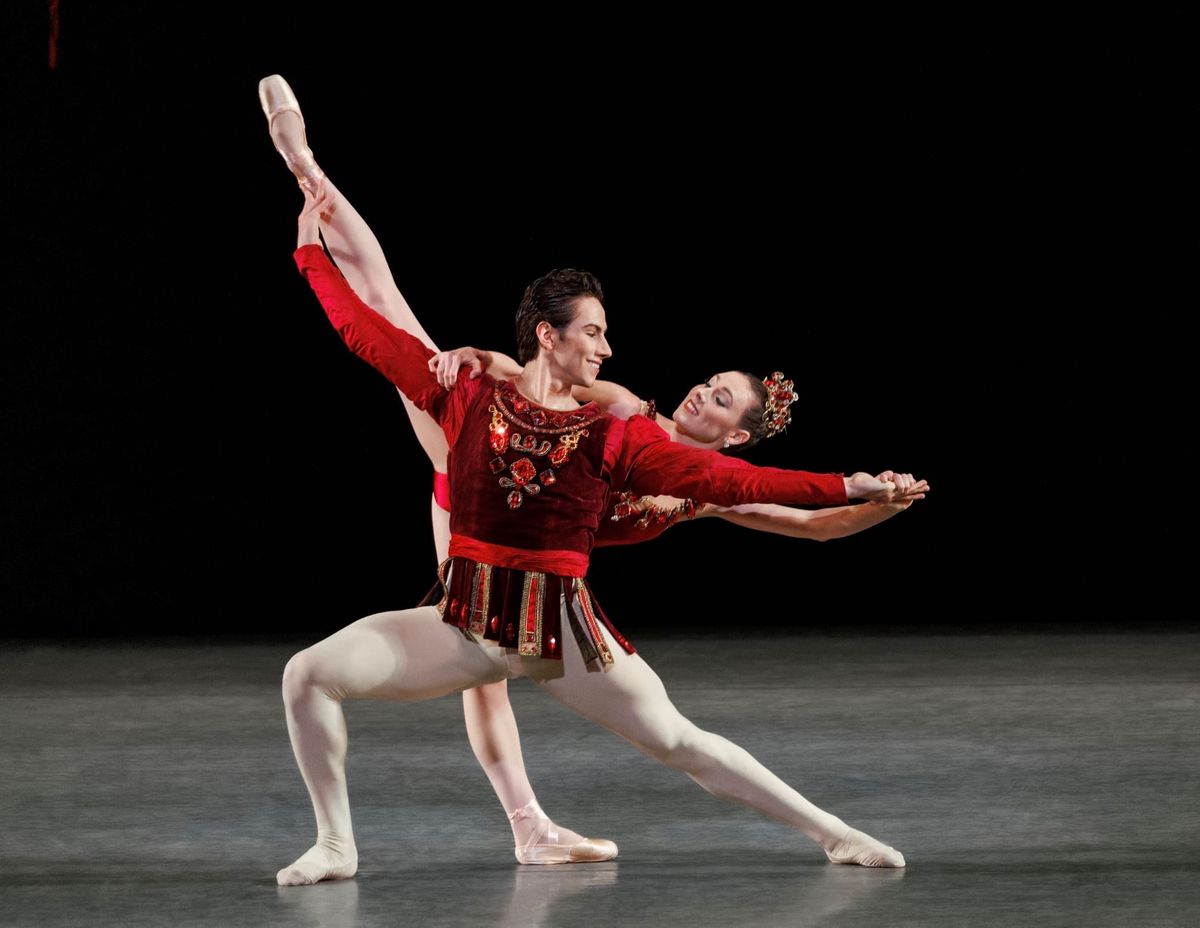
"Jewels"
New York City Ballet
David H. Koch Theater
Lincoln Center
New York, New York
September 23, 2023 matinee
This performance of “Jewels” featured two sections with new faces (Indiana Woodward and Emile Gerrity in “Emeralds” and Unity Phelan in ”Diamonds” made their debuts earlier this week) and one familiar one, as Tiler Peck returned to “Rubies”. “Emeralds” is the most fragile of the three and life, as they say, isn’t fair, and neither, unfortunately is ballet. Ballet is a visual art, and appearances do matter. Certainly not every dancer needs to be pin-up material, but a dancer’s looks shouldn’t damage the overall mood of the ballet. “Emeralds” is a romantic, chivalric fantasy, with idealized knights and ladies and unfortunately, in spite of his smooth, unobtrusive partnering, Tyler Angle with his bald head and bulky physique did not elevate “Emeralds” to the realm of fantasy and looked completely and distractingly out of place in the Pre-Raphaelite atmosphere.
Of course “Emeralds” is more than just one man, and Indiana Woodward (with Angle), in the Verdy role, used her creamy upper body to flow through the soft, elegant choreography . She made the bracelet solo into playful abstract shapes, luxuriating in the beauty of movement. She seemed to be making it up as she went along, almost as if she were singing wordless notes just for the fun of it. This glorious isolation continued to the pas de deux where she seems to hover over and near Angle without really seeing him, dancing with a serene, queenly control. His sensitive partnering contributed enormously, as she seemed to float through the lifts.
Emilie Gerrity, with Adrian Danchig-Waring, danced the second lead. She gave her opening solo a fluid, womanly quality, walking quietly yet confidently. The walking solo had the same hushed confidence, supported so nobly by Danchig-Waring, handling her as if she were the most precious woman on earth. Both couples danced with a serene control and a quiet shimmer, as if they were afraid to break a spell.
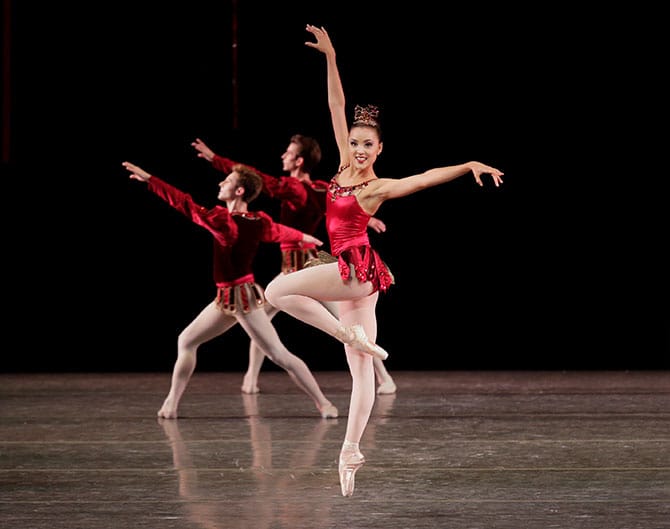
There is no spell to break in “Rubies”, which, with Tiler Peck and Roman Mejia, supported by Emily Kikta, blew the roof off. Kikta was a smoldering powerhouse, dancing like a more benign Siren; she was definitely in charge. Her penchés were rock solid and almost vertical, done with a calm, never showy, confidence. She was neither playful nor aggressive, she had a natural authority that received homage without demanding it.
Peck certainly received homage from the audience, as her fast, sharp, dancing seemed almost impossibly clear, every quirky shape carved out of the air with a brilliant sheen. She seems to have completely recovered from her injury and danced like a little red hurricane; those pique turns were a blur.
Mejia seems born to the swaggering, rollicking Villella role, dancing with a warm and earthy bravura, as if there were no other place he would rather be than dancing in front of that audience. He had an immediate connection with the audience without seeming to court it—he kept his eyes focused completely on his partner yet somehow made the entire auditorium feel included in every impossibly high jump and swirling turn. He seemed to inspire the company and his jogging companions (Victor Abreu, David Gabriel, Cainan Webber, and Andres Zuniga) were electric.
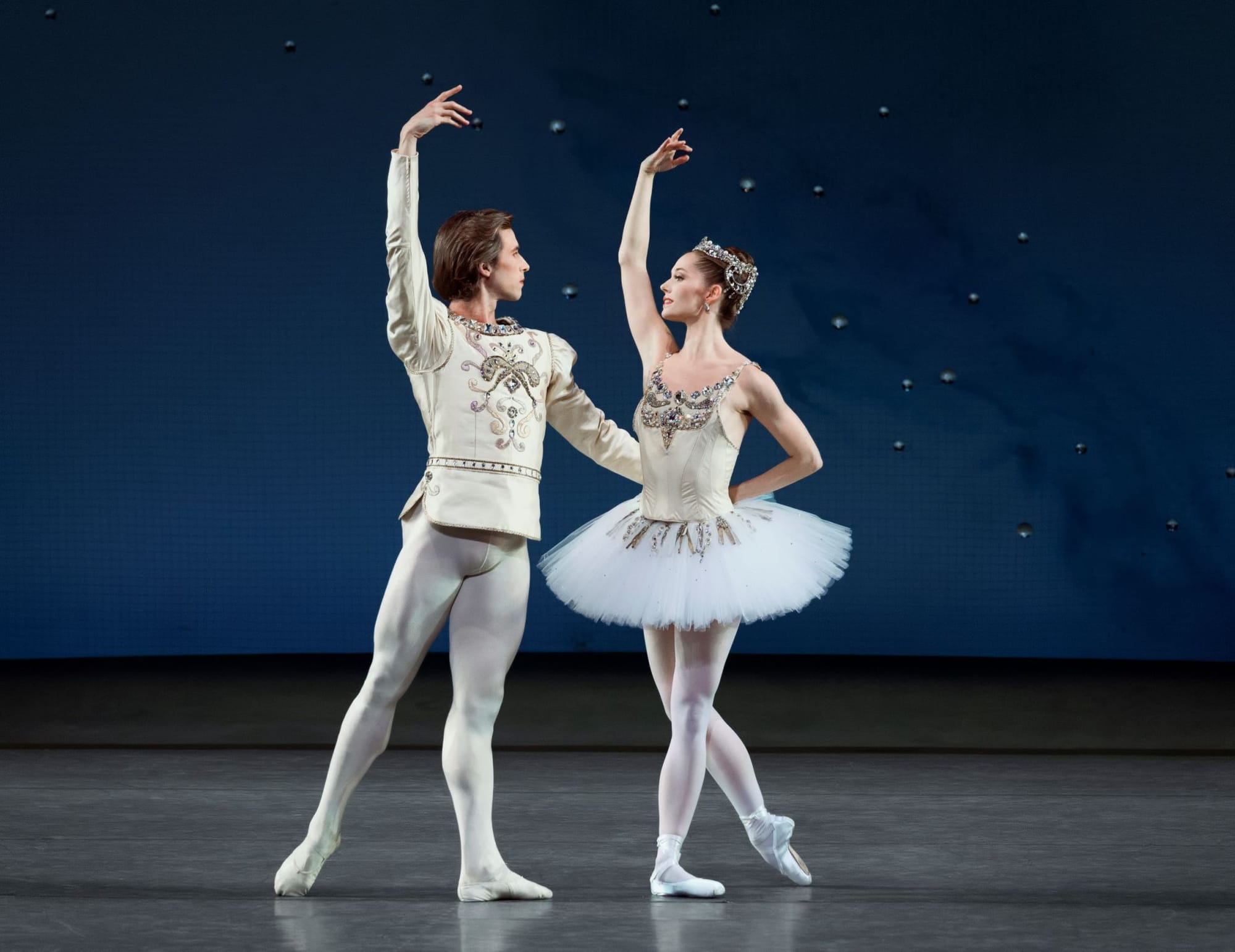
After the red hot “Rubies”, “Diamonds” was a cool drink of water, clear but unfortunately a bit bland. Unity Phelan is without a doubt one of NYCB’s great beauties, with a movie star face, a perfect ballet body and easy extensions, but at times she can be a bit careful, and “Diamonds”, so redolent of Suzanne Farrell, can’t be careful. Nor can it be anonymous—there is something going on in the pas de deux, though it may vary from couple to couple and even from performance to performance. Phelan’s serene perfection certainly had its beauties but they weren’t “Diamond’s” beauties, and she seemed to move from one perfect pose to another with little dramatic impetus.
Her partner, Joseph Gordon, brought a noble dignity to his role—his slow opening walk made it clear the he understood who Siegfried was and that he might be a distant relative. His dancing was glorious, clean and strong, especially his manège and his secure, controlled turns a la seconde. But “Diamonds” isn’t just about technique and he needed a partner who could truly join the world he created.
© 2023 Mary Cargill



