Miniatures
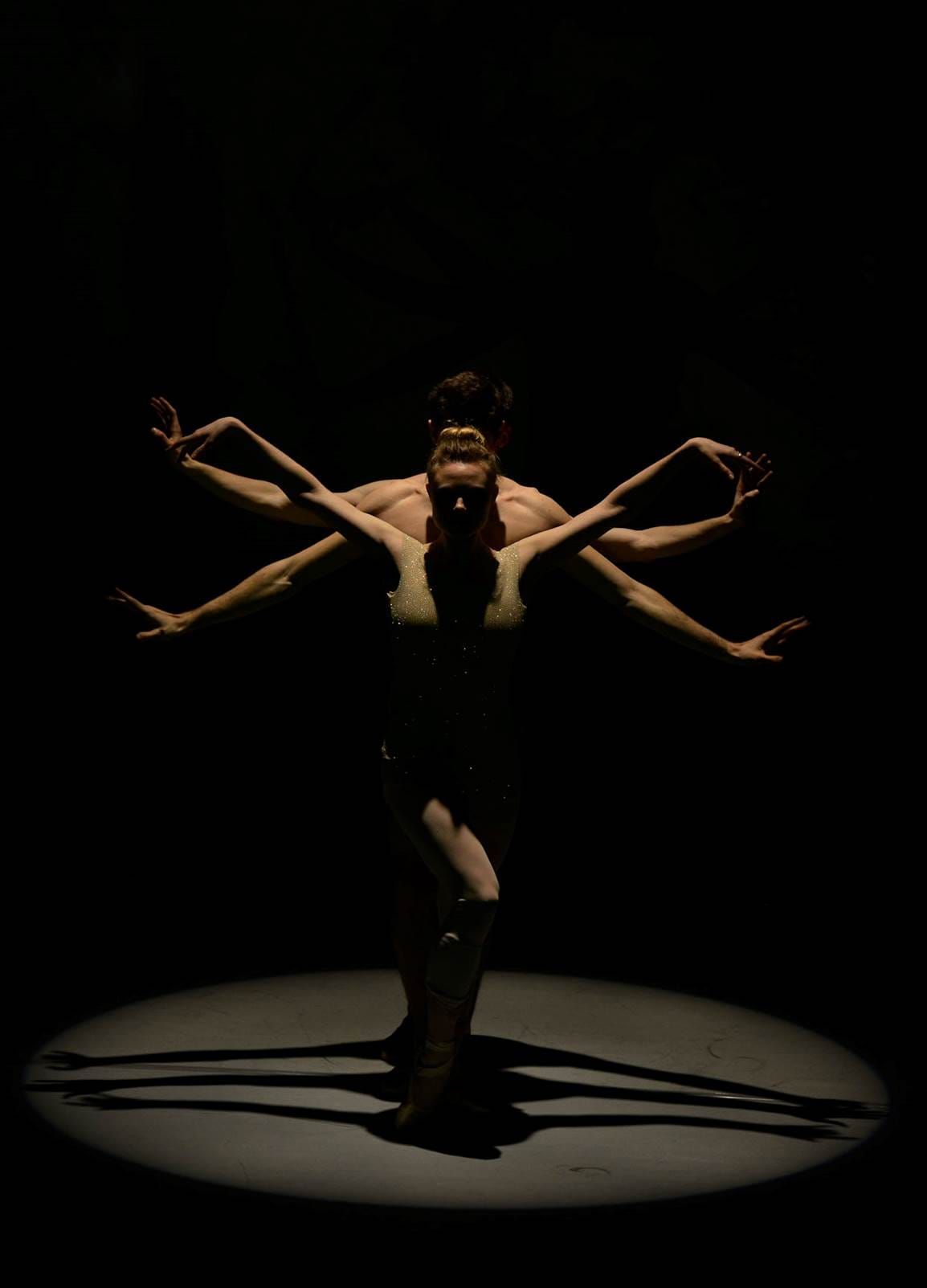
"Faure Fantasy", "Gershwin Preludes", "La Plage", "The Graceful Ghost", "Mad about the Boy"
TomGoldDance
Gerald Lynch Theater
John Jay College
New York, New York
March 12, 2013
Tom Gold, a former soloist with the New York City Ballet, noted for his forthright style and way with comedy, formed a company with a revolving cast of dancers selected from the New York City Ballet and American Ballet Theater. This two-day run featured, among others, NYCB principals Abi Stafford, Sara Mearns, and Adrian Danchig-waring, and other fine dancers. The five brief dances were set to a variety of composers, from Gabriel Faureto the avant-garde John Zorn, with stops in between for Gershwin, William Bolcom, and Noel Coward.
Music is obviously important to Gold, and he selected miniatures that could be played live (with the exception of the Zorn piece, which used recorded sounds to make its effect). Susan Walters, the pianist, is familiar to New York City Ballet audiences, and the music was first-rate. Gold's choreography is certainly watchable, if not completely original, and he made his dancers look good.
The opening ballet, a pink confection to Faure, was charming, and he used the stage well. There were four women and three men, and the odd-woman-out scenario made for an interesting off-balance symmetry. Likolani Brown as the woman on her own danced an opening solo which used her expansive line well. The second work, "Gershwin Preludes", was a pas de deux danced by APT's Luciana Paris and Stephen Hanna, formerly with NYCB. There was a slight Twenties feel in the little jazzy accents. There was also a real connection between the dancers; the adagio was a dance and not an excuse to pretend that the female is a pretzel.
"La Plage", to Zorn, used the interesting, haunting sounds (lots of animal noises and minimalist repetition) to create an otherworldly feel. The projected background showed forests, oceans, and finally a cascade of tropical flowers. The dancers, in light gold tunics for the women and briefs for the men (except for Adrian Danchig-Waring, who got to wear brown tights), looked like wood nymphs in an Amazonian rain forest. Sara Mearns was the head nymph, moving with a luscious mystery. The final scene switched to a sea scape, as the music became bouncier. With their cheeky hip swivelling moves, it looked like a group of nymphs doing the Beach Blanket Bingo, and was infectiously fun.
"The Graceful Ghost", to music by William Bolcom, was a solo for Gold himself; if anything it was a bit too self-effacing, as he danced a rather routine set of jumps and turns, very well-done but somewhat generic. "Mad about the Boy", on the other hand, had wonderfully distinct characters, and all eight dancers (including Gold) got a chance to show off. It was set to songs by Noel Coward and Ivor Novello; Coward is certainly a familiar name, but Novello's may not be. He was a British popular entertainer who composed popular ballads, jagged with sophistication, to use a Coward phrase.
The imaginative set, a projected backdrop of an overstuffed Edwardian restaurant, set a luxurious scene (a lovely land of might have been, to quote from one of the songs), and the women's costumes (by Ted Porter) were wonderfully danceable versions of 1930 gowns. The songs (sung live by Bret Shuford, with impeccable diction) set the scene for the little vignettes, which ranged from gentle romance to comic high jinx, including the most elegant feather duster imaginable. In the title song, Gold was a deadpan waiter and Mearns a desperate woman in black, madly in love with the boy. Her swoops, back bends and lunges were not overdone, and her tongue stayed in her cheek. Their slight underplaying and comic timing made for great fun.
copyright © 2013 by Mary Cargill



