Material Girls
"Goddesses & Demonesses"
Blanca Li Productions
New York City Center
New York, New York
March 31, 2017
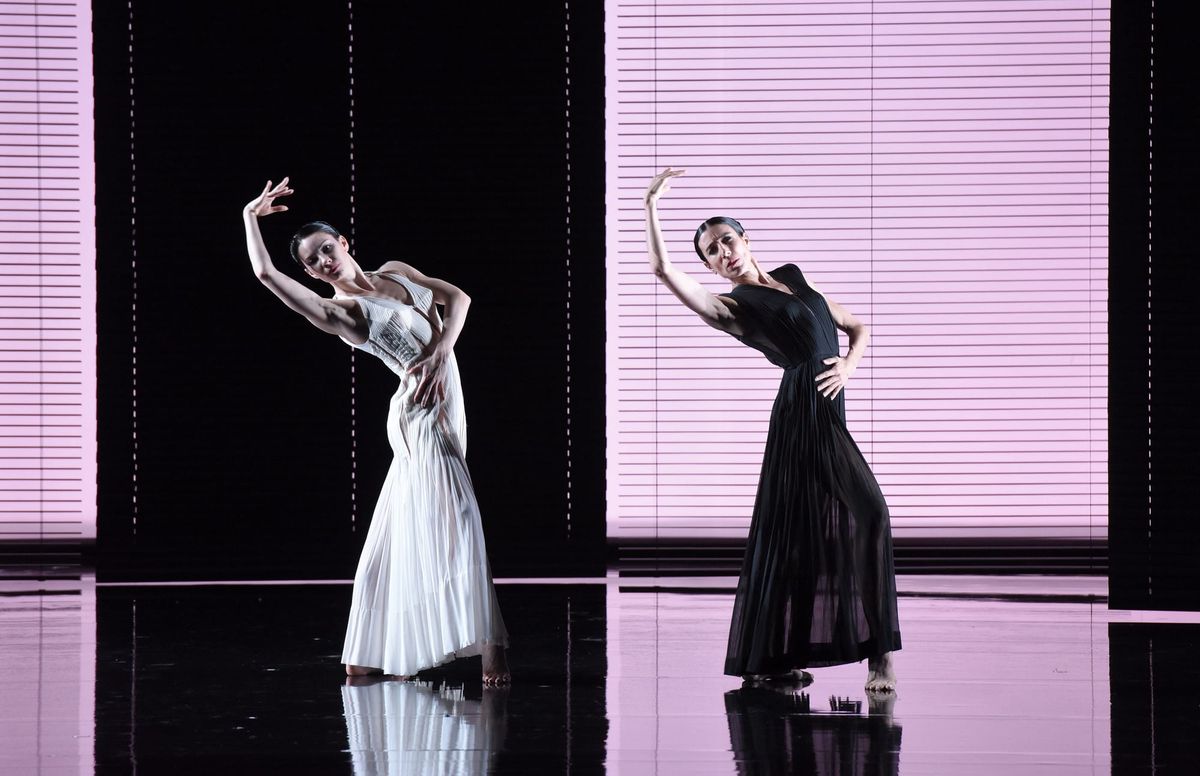
Blanca Li is a Spanish choreographer with modern and flamenco roots, and in 2015 she teamed up with the renowned Bolshoi dancer Maria Alexan- drova to create an exploration of womanhood refracted through various Greek myths. She used their two amazingly strong bodies, imaginative lighting by Caty Olive (who knew Venetian blinds could be so beautiful?), stunning video wizardry by Charles Carcopino, and lots of dresses by high-powered designers (gowns by Azzedine Alaïa, Jean-Paul Gaultier, Stella McCartney, and Sophie Theallet). "I am woman, watch me shop" might have been the subtitle.
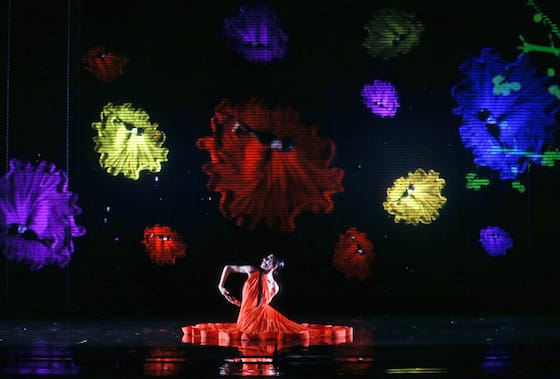
The connection to the Greek myths was at times a bit opaque, though the giant Medusa projected on the backdrop which through the magic of video morphed into snaky tentacles which wrapped around the dancers was a dramatic tour de force. So too was the transformation of arge projected roses into colorful skirts with images of Li in the centers as the real Li moved with her video doubles while sitting on the floor (gown by Stella McCartney). This was followed by a magical forest with Alexandrova swirling around in yellow (also McCartney); the dancers looked like a vivid reimagining of the Persephone myth.
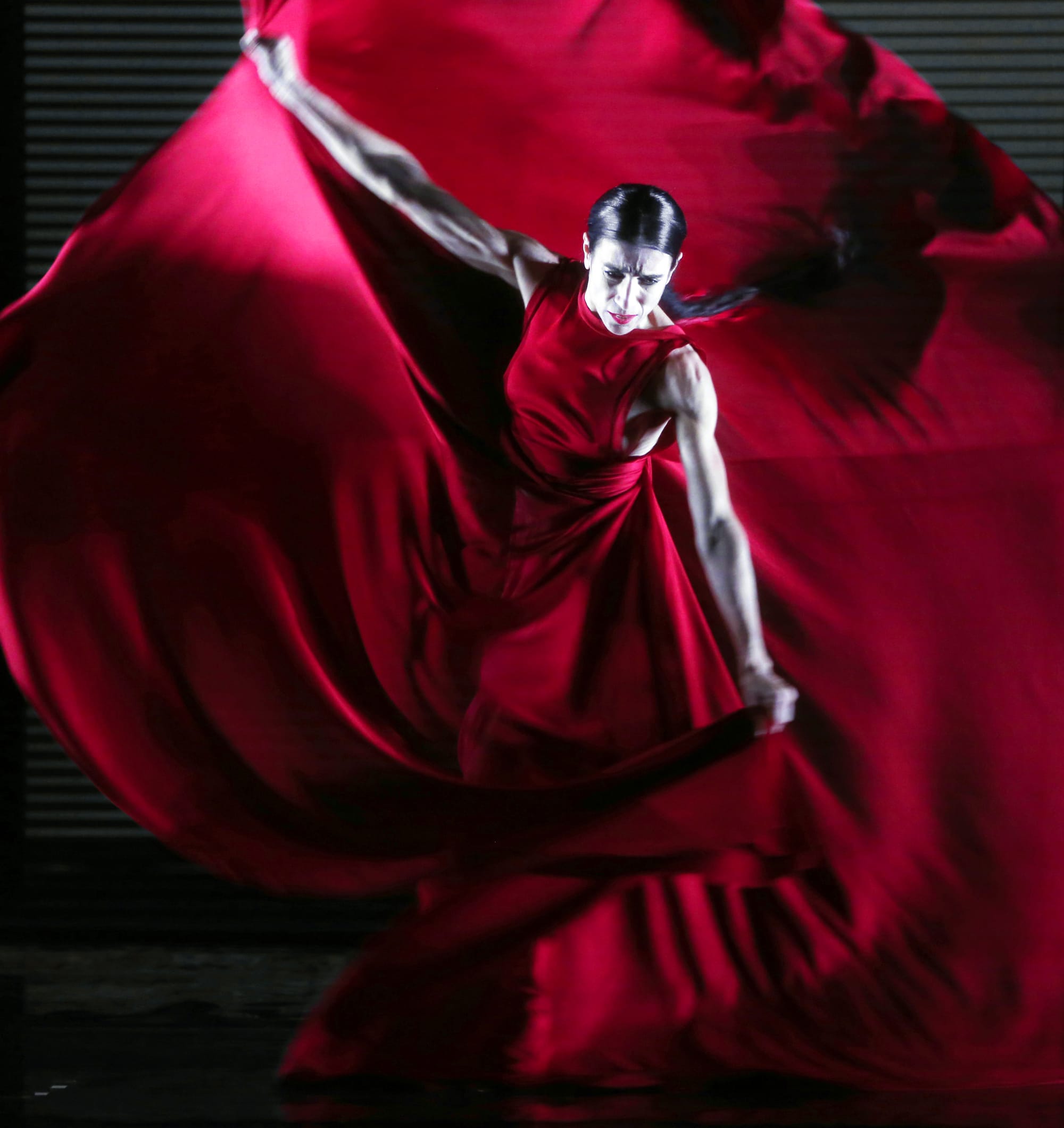
The other episodes, well-dressed and strikingly lit though they were, seemed more like exercises in style than a vision of the eternal. The performance opened with a leotard-clad Alexandrova silhouetted against the Venetian blinds as she bent and twisted with growing strength, developing quite a relationship with the floor. Alexandrova's smoldering femininity may have been meant to suggest the birth of the world. Li had a stunning solo with yards of red fabric (gown by Alaïa) which she fashioned variously as a matador's cape, a shroud, a mask, and a set of wings that suggested Loie Fuller. There was also an episode with two chairs and a starry sky (the video projections made the night look like someone had spilt crystals over the Milky Way), as the dancers lifted each other in various ways. Alexandrova also got to evoke her past, as she danced on in a bell-shaped white gown (by Alaïa) bourréing in with swan arms which turned to talons now and then.
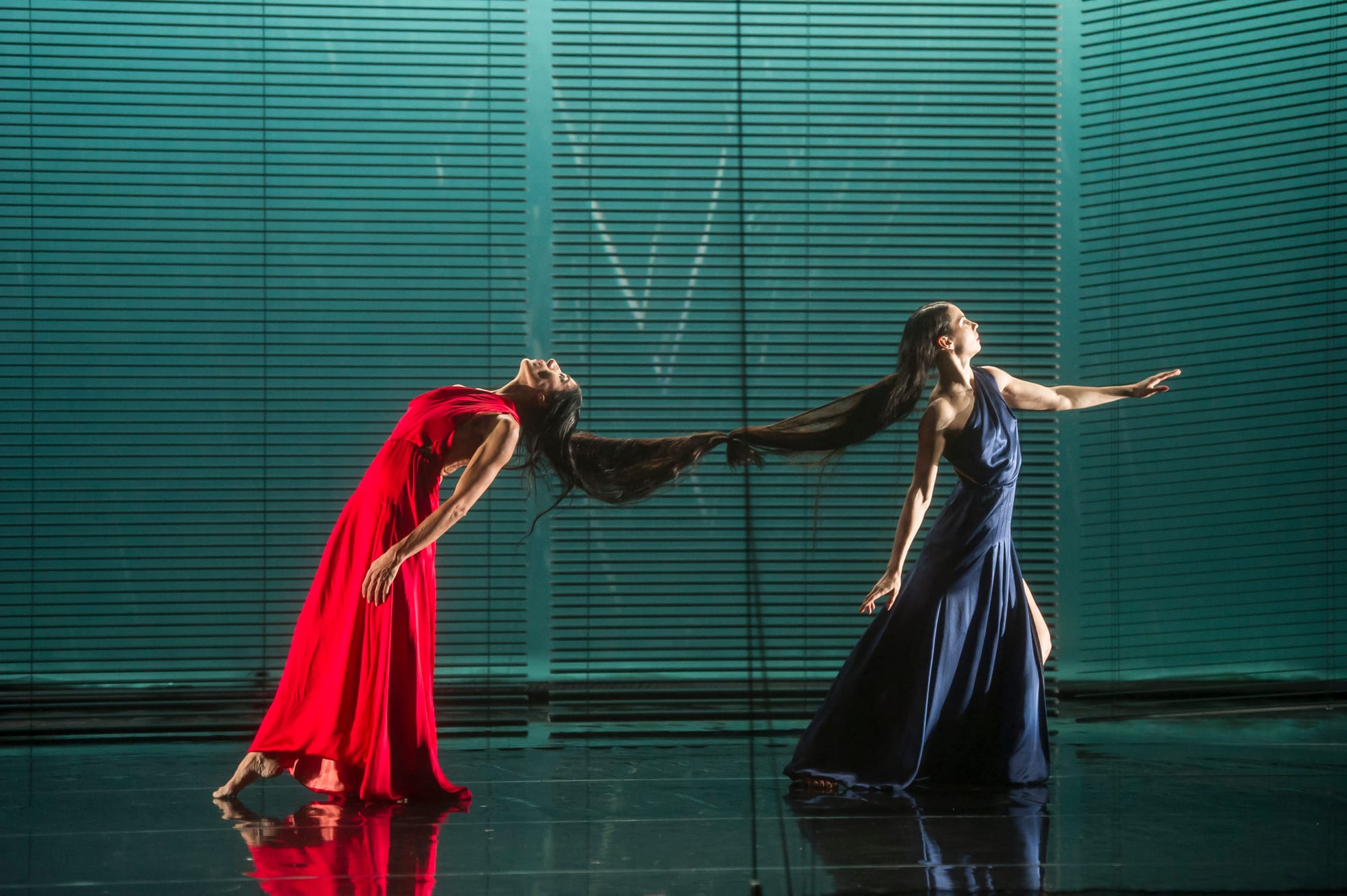
The dancers' styles complemented each other, with Alexandrova's graceful power contrasting Li's powerful grace; Li's flamenco training was evident in her proud, defiant carriage, which smoldered even when she stood still. Though she was rarely still. The dancers raced, pounded, and whirled their way through the music (by variously Camille Saint-Saëns, Frederic Chopin, Isaac Albeniz, and MAD4STRINGS, plus some breathy untranslated French, all loud and all taped). There were several apparent finales, but the final finale, with the two dancers plus their hair (wigs and hair design by Maison John Nollet Paris) in dresses by Sophie Theallet was a non-stop explosion of energy. Even though it had little do to with Greek mythology and the choreography was overshadowed by the special effects and those wonderful dresses, the work as a whole had a haunting beauty. However, the message that style supersedes substance is probably unintentional.
Copyright © 2017 by Mary Cargill



