Lest the Future Be in the Past

“Voices,” “Composer’s Holiday,” “Herman Schmerman Pas de Deux,” “Foreseeable Future”
New York City Ballet
David H. Koch Theater
New York, NY
October 10, 2025
There is no such thing as too much new dance, but that does not always lessen one’s longing for the old. For its last program of the fall season, New York City Ballet presented three works from the last decade, including a premiere from its Fall Gala this season by Jamar Roberts, and William Forsythe’s 1992 “Herman Schmerman Pas de Deux,” which felt most assured and timeless, even if the new Roberts ballet did make a statement.
The program opened with Alexei Ratmansky’s 2020 “Voices.” Not quite experimental (though clearly trying to be), this work to a series of pre-recorded spoken voices of great females, to abbreviated music by Peter Ablinger, is a brilliant concept that collapses under its own ambition. The dancers, mostly in debuts, wrestled with the choreography, poking and prodding the steps to draw out coherence, ultimately surrendering to technique as the performance’s subject.
Miriam Miller's debut in the opening solo to Bonnie Barnett's voice was both the most beautiful and the most problematic. Here was this beautifully lanky, commanding dancer straining toward expression she couldn't quite reach with the steps given her – the dance’s physical phrases yoked too literally to garbled piano notes. And as the ballet progressed, a dispiriting pattern emerged: women were marched on and off stage by a posse comitatus of four men, their dancing solos punctuated by the men's quick technical solos in complete silence – as if no sound should compete when men perform, with little connection between the steps and the spoken words or even the vocal timbre. Of the other female debuts, Khloe Walker seized her role to Forough Farrokhzad with leg throws of impeccable control, hinting at potential for richer dancing elsewhere, and Lauren Collett succeeded at tethering the steps to the Setsuko Hara vocal quality by crouching assertively and touching the floor with vulnerability. It wasn’t enough. By the finale, as Agnes Martin’s voice mused about painting and meaning, the dance proved itself but a chorus, saying nothing at all.
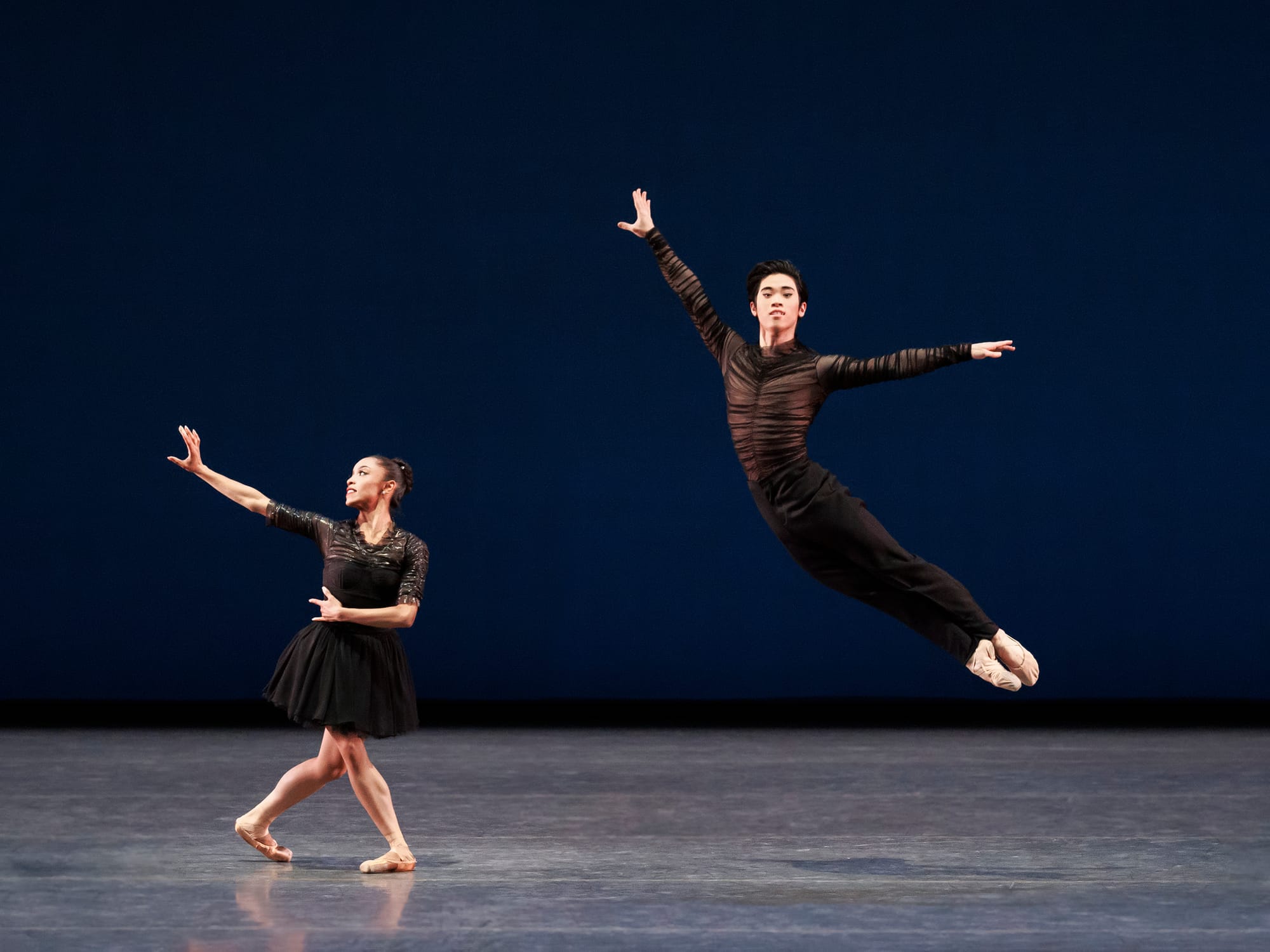
Gianna Reisen’s “Composer’s Holiday” followed an intermission and stood in stark contrast. Though the ballet was made in 2017, when Reisen had barely entered adulthood, the creative spark and successful rearrangement of conventional interplay between men and women on the stage was at the very least engaging. But it went farther than that. Mia Williams, partnered by KJ Takahashi, was a revelation. Fully in control, showcasing great lines and filling the stage with impressive leaps and soundless landings, all with an eloquently expressive upper body, she was a joy to watch, and Takahashi seemed the perfect partner to her assured dancing, never missing an accent. The dance’s formations and use of stage were an immediate demonstration of Reisen’s talent. While not the peak of the choreographer’s work – I am certain we will see a lot of greatness from her over the years – it was a delight.
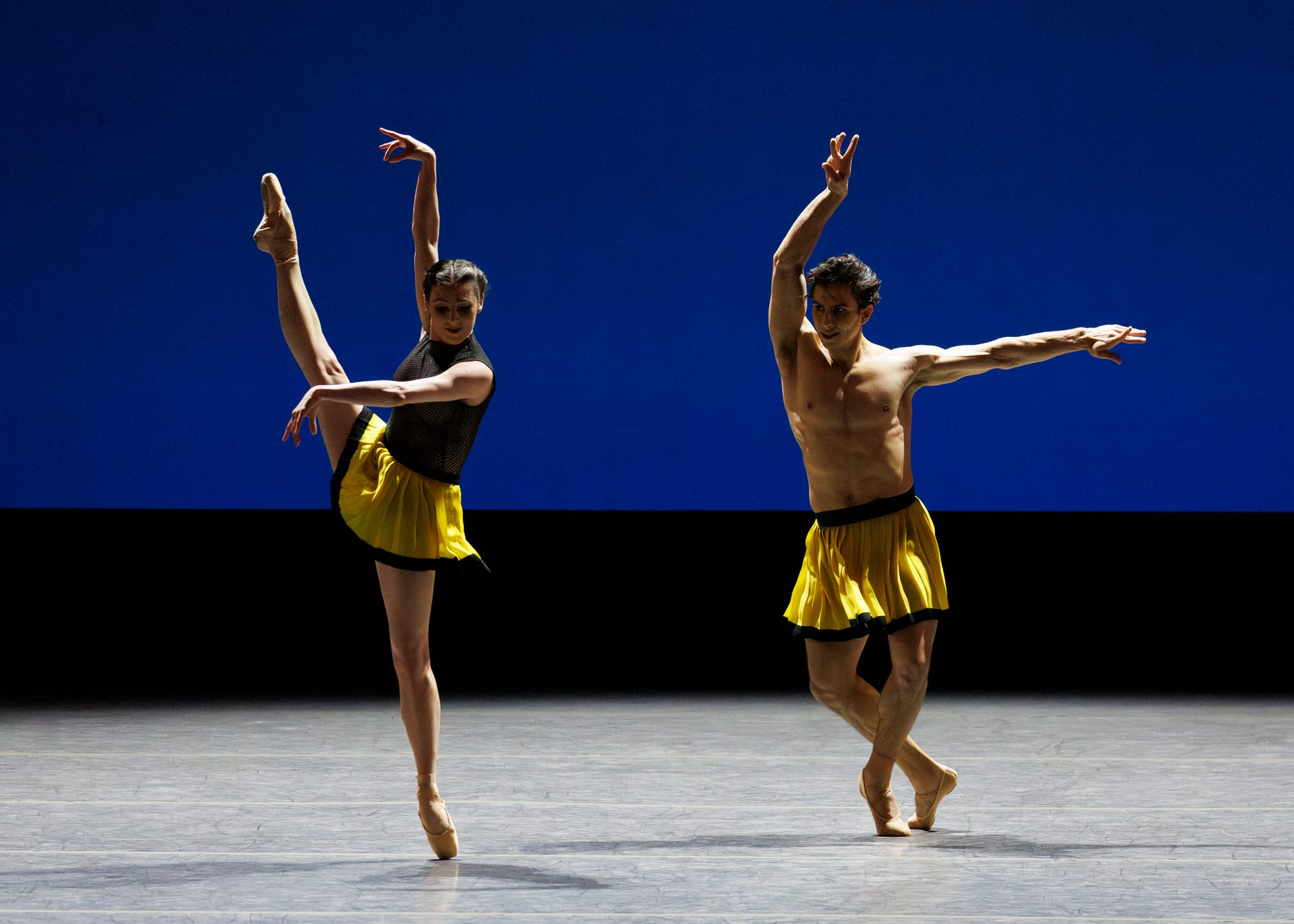
The pause before the next work was just long enough to recompose and be prepared for more, and when Tiler Peck and Roman Mejia appeared for the Forsythe ballet, it was clear that the antes were upped. Despite their age difference, these two dancers are thriving with their technical prowess and it made the duet an incredible experience. The challenges of the choreography were obviously not even a thought – they seemed to know they’d nail each technical feat effortlessly – and so the dancers were fully dedicated to having fun. With just the facial expressions between them all this could well have been happening in one of Peck’s fun Instagram videos of this real-world couple’s life. Even when she patted Mejia before going offstage for the costume change, there was a fun and personal, playful connection. While it is undeniable that the roles generally benefit from a different line and aesthetic, the pure expressive treatment alone, with the impeccable technical execution, was easily the highlight of the night, if not the season.
Which brings us to the much discussed (including on these pages) new Roberts ballet to music by Arca and costumes by Iris van Herpen. I will confess, I loved a lot about it: the steps innovation, the mechanical movements that indicated robotic beings, the patterns that were created on stage, and how they were lit, in perfect circles, even the at one point eye-burning orange spot projected onto the stage’s back that was backlighting the dancer and made me wish I had brought sunglasses. But ultimately, the work fell short, not least with the point it could have but failed to make.
There were two groups of dancers. Those representing living beings – Sara Mearns, Taylor Stanley, Isabella LaFreniere and Ryan Tomash – and a larger group, representing something robotic, with very interesting laser-printed costumes. In the end, the tech side takes over and presides over the extinction of the beautiful creatures in a fascinating, mechanical and matter of fact way. The two camps took turns dancing before we got to this finale, but neither one came off as particularly alluring or dangerous (or even cool), not ever giving the viewer a side to cheer for.
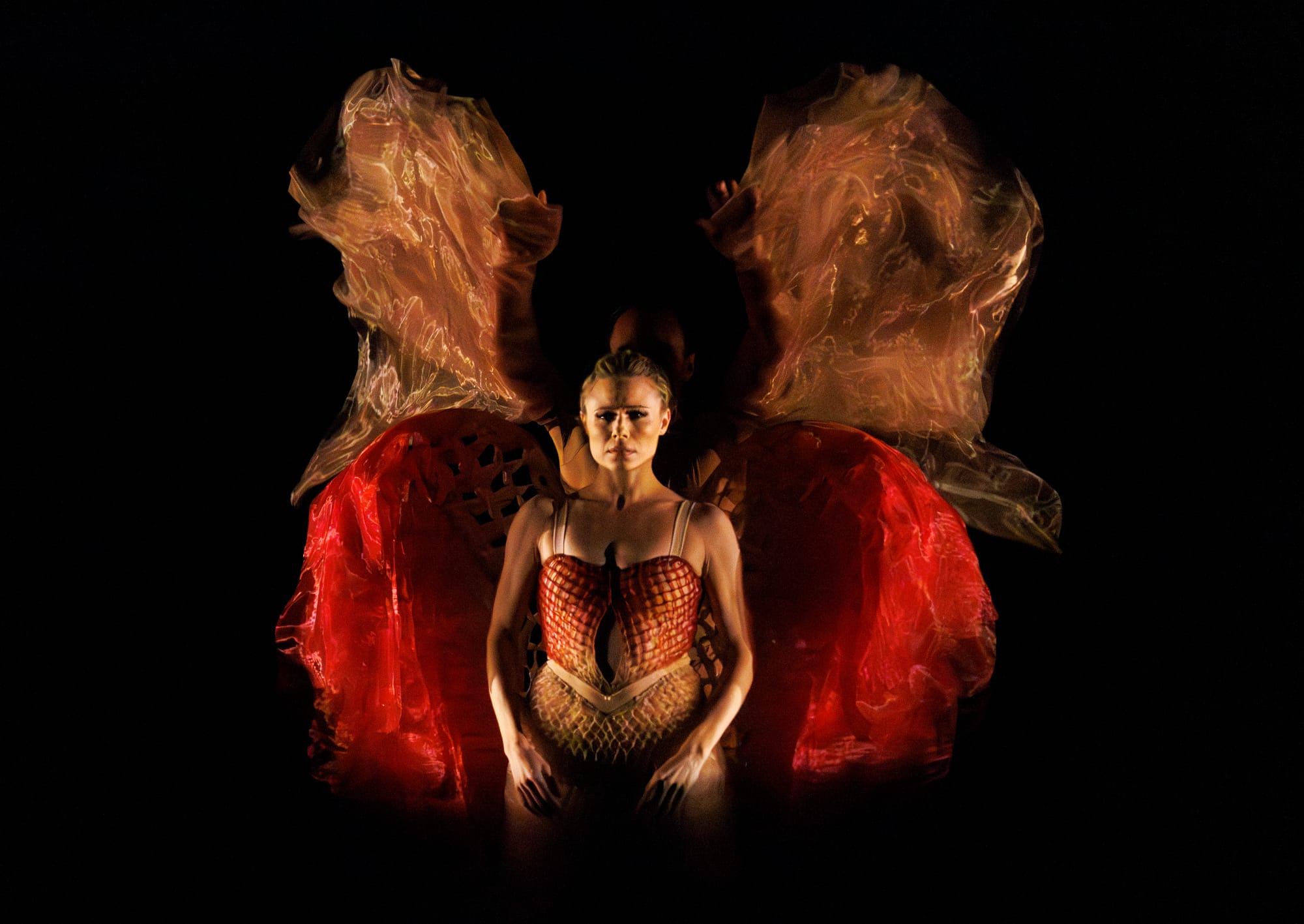
For the living, bio side, the men wore flowing sleeves and the women had intricate attached wings – all beautiful. But that’s where the trouble began. Much of the movement focused on manipulating these sartorial elements – mechanics over embodiment, since no actual living creature concentrates quite so much on how its appendages move in the course of normal existence (and these weren't courtship rituals either). The choreography served the costumes, not the dancers, and quickly became reductive.
Then, the robotic group dance – with punctuated movements and rotations at right angles – felt like something that should be performed at an AI awareness conference as an opening salvo, and designed to entertain, not warn. The back of the stage glowed with a centered light, like an “on” indicator, and after a while you wanted to "unplug" all of this because it grew bland and unpleasant, not because it seemed harmful. Spoiler alert: Roberts thinks it is harmful. The mechas do ultimately kill the bios.
By the fourth section, with three women from the robotic camp in a circle creating striking interplay, one leaning into a penché, there were glimpses of something deeper and sinister. Then, there was a duet for Mearns and Stanley that almost had a “fallen angel” quality to it, her wings appearing on fire with how the costumes were manipulated for this part, and it hinted at the emotional core this work needed. Too bad it all came too late to really have a charge, leaving any warning about the dominance of technology or AI threat feeling ironically lifeless.
copyright © 2025 by Marianne Adams



