LaMama Moves Online
LaMama Moves/Online
Annabella Lenzu & Kari Hoaas
January 20, 2021
Inauguration Day and the Pandemic both played into the hands of artists at LaMama's annual festival of dance, this year on video instead of downtown in New York. Norwegian choreographer Kari Hoaas and Argentine-American Annabella Lenzu had to adapt work originally meant for LaMama's theater space. And while their creative solutions narrowed the scope of their pieces, they may also have sharpened their focus.
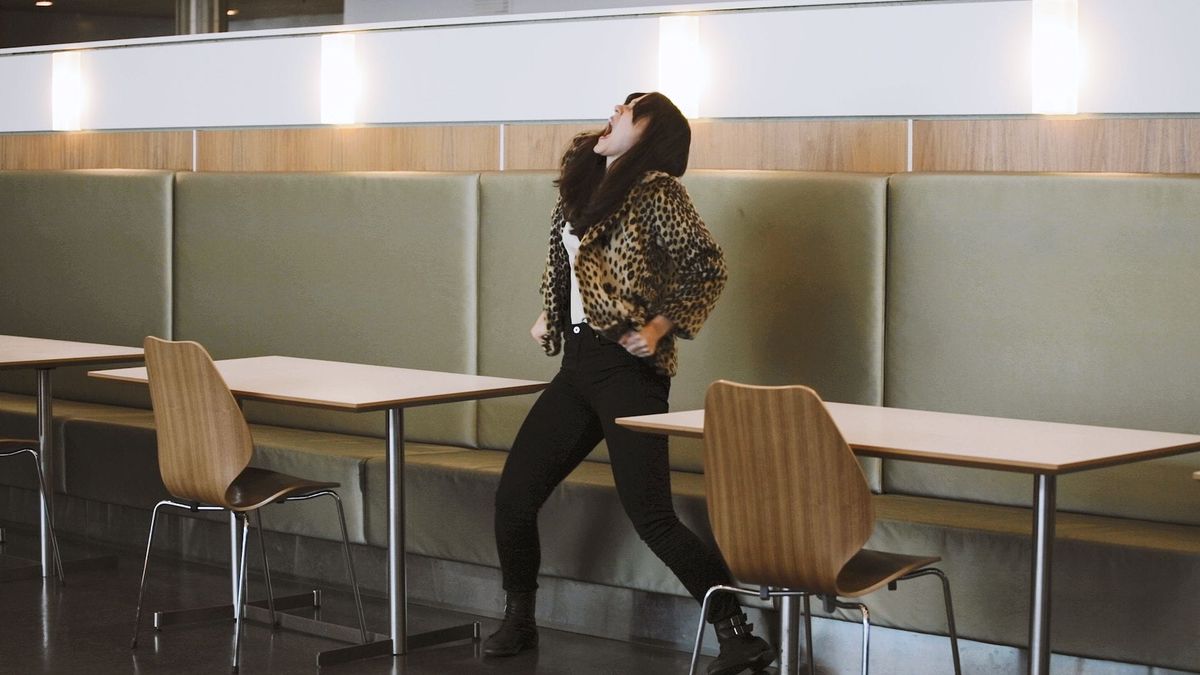
The artists are two actual mamas, veterans of the international experimental dance scene. For LaMama Online, Hoaas refined her 2018 evening-length work HEAT — about the climate crisis – into a series of digital "dance haikus" for solo performers, shot in an empty airport in Oslo. Like the 17-syllable Japanese poems, they say one thing about one subject, in one continuous take. The most riveting were two opposite numbers by dancer Ida Haugen. In "Grow" she undulates like a sea anemone at the top of a staircase in a sunlit, empty terminal. In "Rise," she sits in a deserted cafeteria, wearing a faux leopard-skin jacket, then bares her teeth in rage as she staggers to her feet behind a table. It feels like the freak-out we've all flirted with as the pandemic drags on. Two more haikus have male dancers twisted up in knots trying to stay on their feet as they take off their coats – Alexander Aaro in an empty parking lot next to a reflecting puddle, Jens Jeffrey Trinidad on a walkway to nowhere. Hoaas calls the series "HEAT – the distant episodes," referring to social distance and the camera angle – a full-body shot from medium range, no pan or zoom, like staring through your window at someone on the sidewalk; contemplation in quarantine.
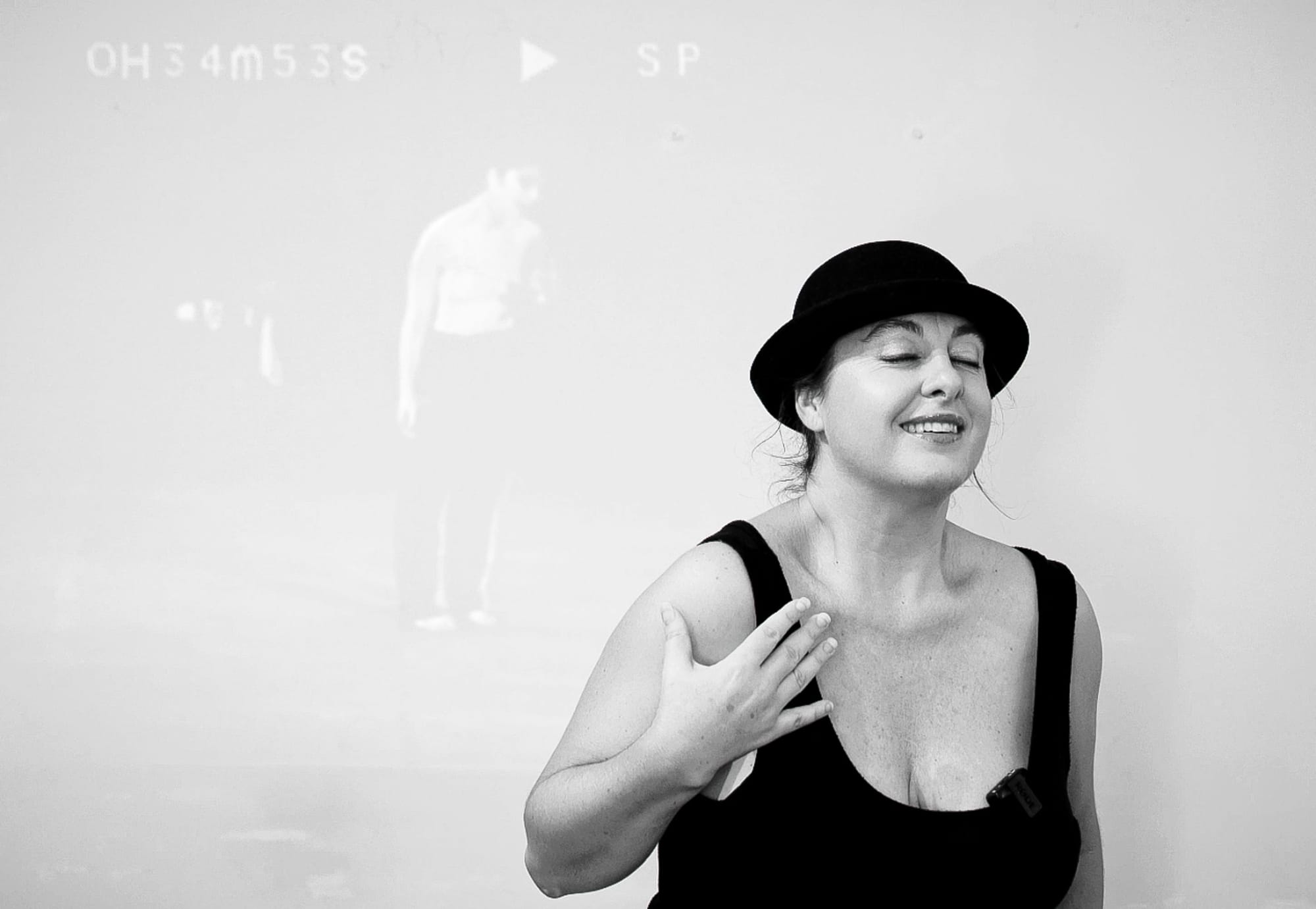
Annabella Lenzu's piece is also just one shot in one take from a stationary camera, but it is a half-hour tour de force in her living room. Lenzu is a middle-aged performer, choreographer and professor, an Argentine immigrant to New York with two kids and, as she puts it, a body full of stories. La Noche que dejaste de actua -- The Night that You Stopped Acting – is a reflective look at her performing career, from early childhood to the present. At five she wanted to be a ballerina, but was cast as a bullfighter. As she grows up she performs as a clown, a Bohemian, and now a mom boogieing about the house with headphones and an air guitar. Lenzu is a rubber-faced comic with eyes full of mischief, but the fun is shadowed by fear. She was born in 1975, while Argentina was under military rule and 100,000 people "disappeared" over a decade. She became an American citizen in 2018, but still lived in fear as a Latina. In La Noche she mocks both nations, goose-stepping to the Argentine national anthem, drinking a toast to the US but spitting out it out and wiping her face with the American flag.
But tonight, in a moving post-performance talkback, she welcomed a new day for democracy in the US. "I'm a Latina," she said, "and I feel safe again."
copyright 2021 © by Tom Phillips



