In the Mood
In the Mood
"Poem", "Moods", "Sweet in the Morning", "Preludes", "Dreams"
Sokolow Theatre/Dance Ensemble
The Mark O'Donnell Theater
Brooklyn, New York
March 8, 2018.
Anna Sokolow was a modern dance pioneer whose works, while abstract, are richly theatrical, dealing with both human emotions and broader social themes. Her legacy has been valiantly carried on by Director Jim May and the recently appointed Artistic Director Samantha Géracht, both former Sokolow dancers. The program, subtitled "Moods and Dreams" ranged from the meditatively personal "Poem" to the haunting Holocaust-inspired "Dreams". The dancers' grounded strength, unexaggerated power, and fierce theatrical determination made the works seen timeless.
Sokolow's 1995 solo "Poem", to plangent music by Ernest Bloch (understandably though unfortunately on tape), was danced by guest artist Jennifer Conley. She moved with a concentrated power as she slowly crossed the stage, reaching and bending as if dancing both happy and sad memories and ending with a feeling of loss and acceptance that was both simple and powerful.
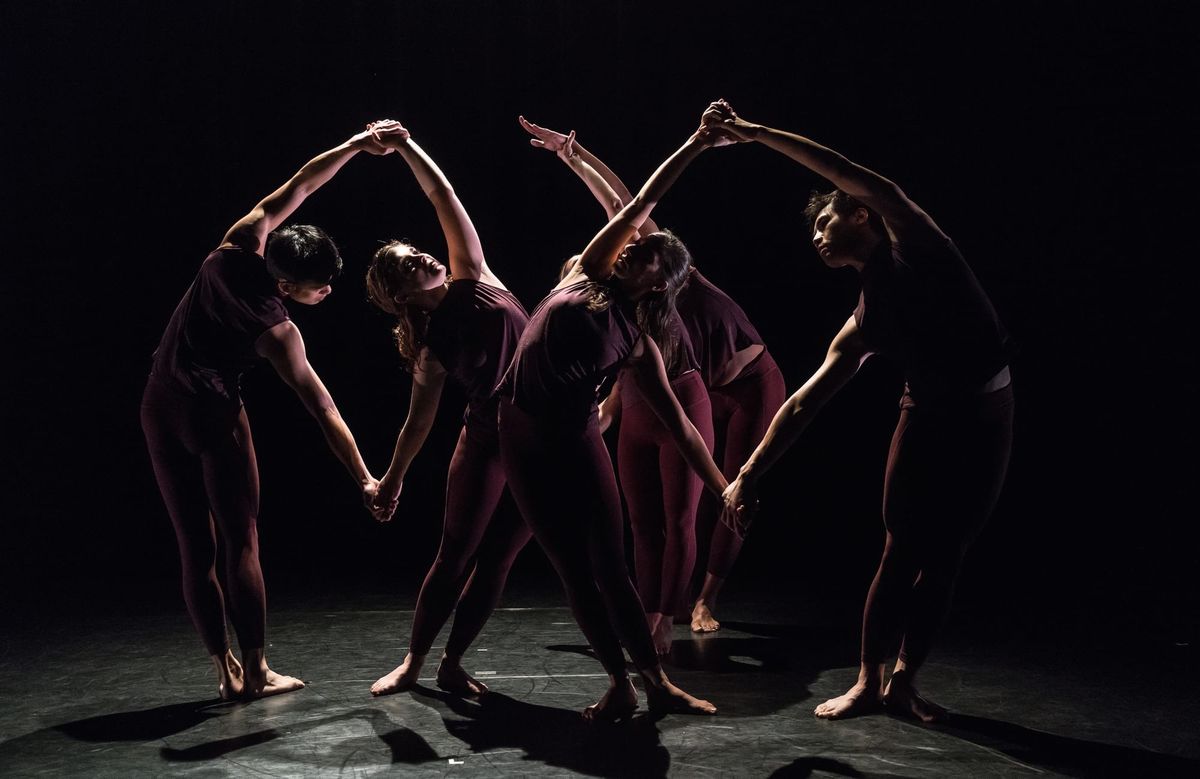
"Moods", from 1975, was set to ten pieces by György Ligeti, and has not been danced since the late 1970s; it has been revived by Sokolow dancer Lauren Naslund. The seven dancers, in burgundy unisex leotards, explored the various moods suggested by the music, opening and returning to the protective, though sometimes ominous community. The dancers, with their low, grounded moves and stylized architectural groupings, moved seamlessly through the music and the piece had a hypnotic, if at times unsettling quality, punctuated with undercurrents of violence and fear.
"Sweet in the Morning", choreographed in 1972 by Leni Wylliams to the song by Bobby McFerrin, was a bracing contrast. Guest artist Clarence Brooks danced on and around a low bench, his undulating arms and slow grace suggesting a hot and languorous day. It was not all sweetness, though, as his powerful center hinted at hidden sobs. The music, the dance, and the dancer melded into a lazy afternoon.
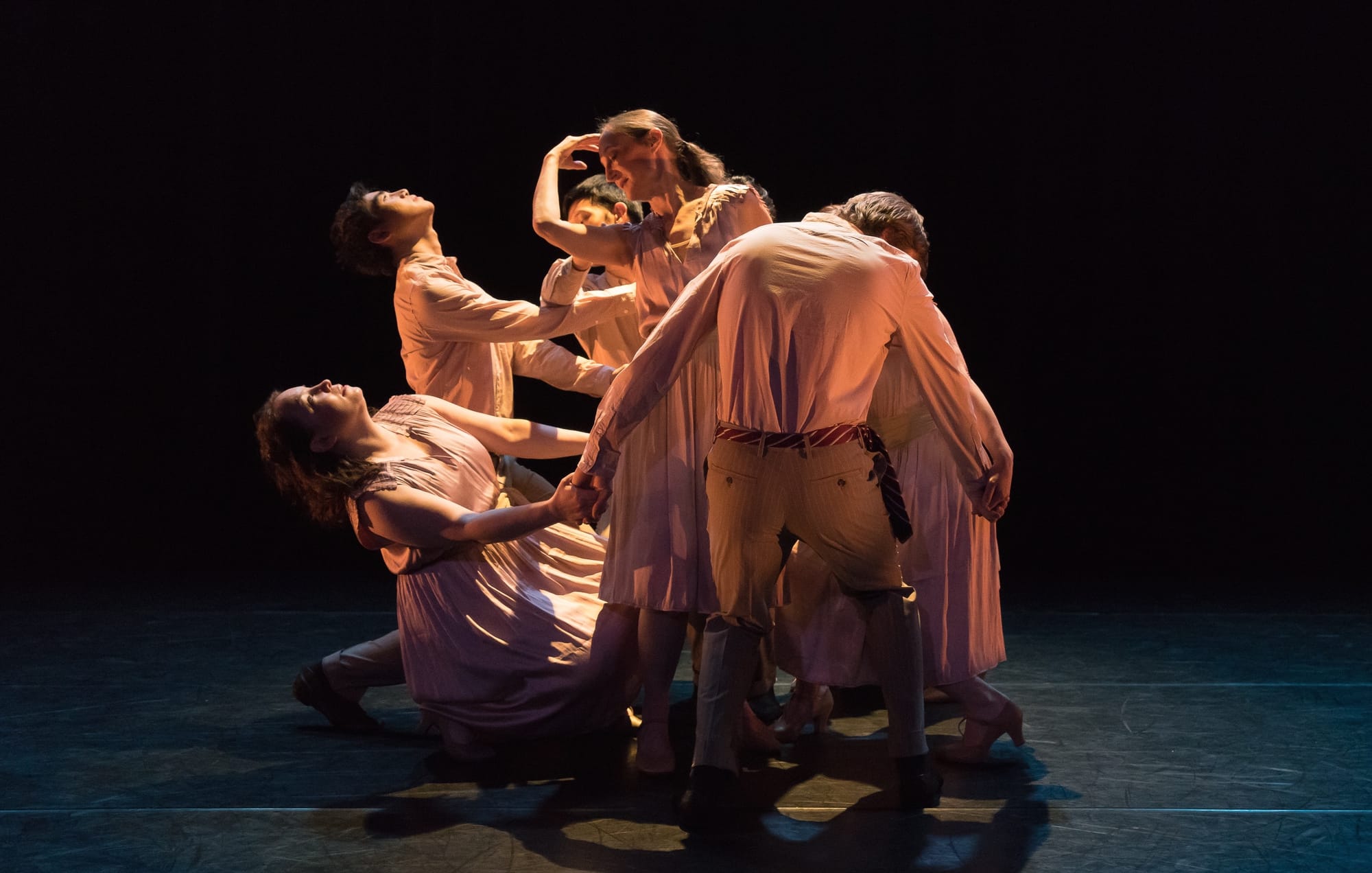
"Preludes", which Sokolow choreo- graphed in 1984 to George Gershwin, was another exploration of a late afternoon mood. The four couple in gracious costumes reminiscent of the 1930s strolled, waltzed, flirted, and shared imaginary cigarettes. The four men had a brief and friendly boogie-woogie competition before slowly waltzing into a massed group, echoing the friendly tinkle and subtle rhythms of the recorded piano music. They could have been small town friends on a picnic outing, people you would have been happy to know.
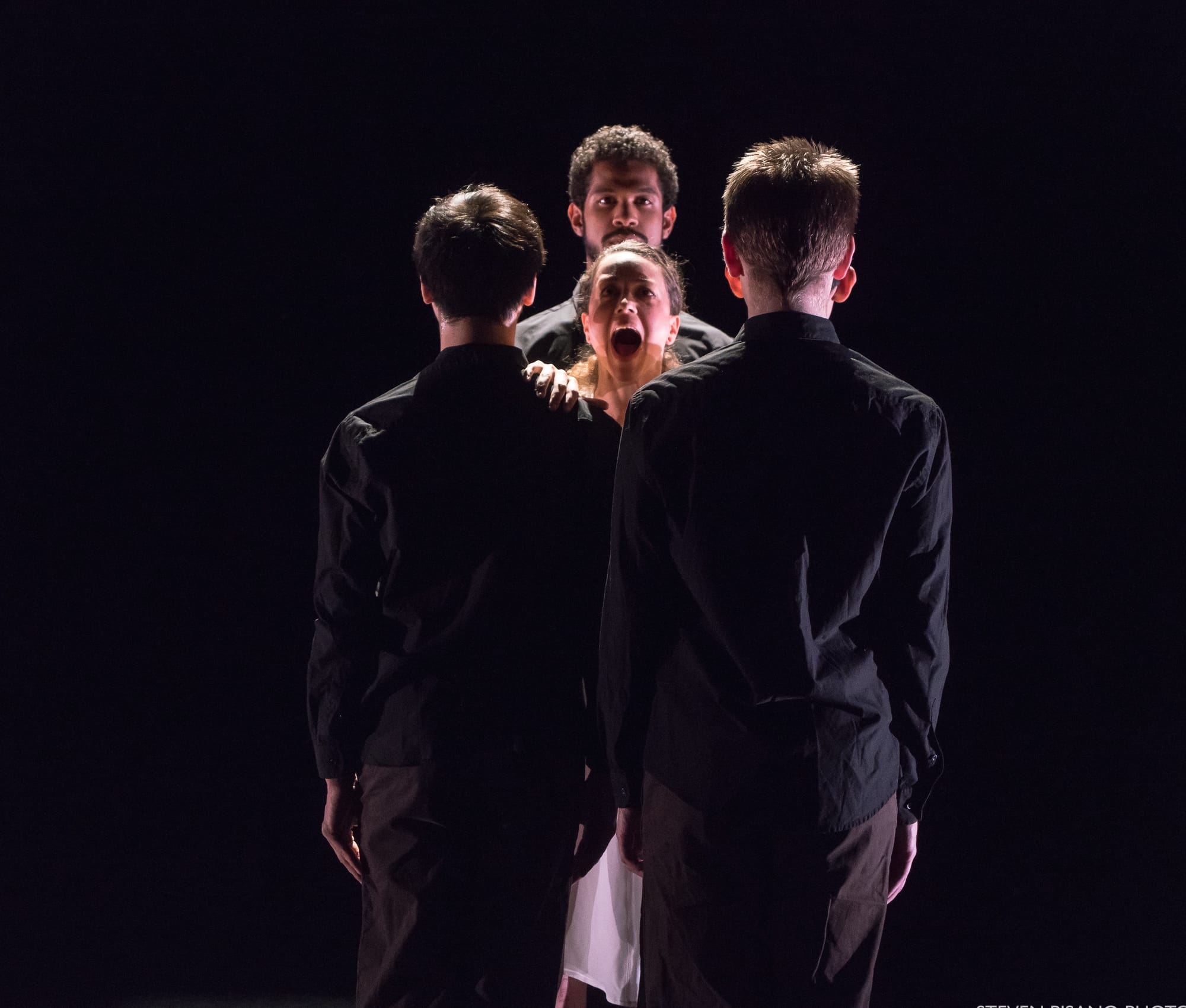
"Dreams", Sokolow's 1961 work inspired by her readings on the Holocaust, was a dark and uncompromising finale. It was disjointed, a visual nightmare, set to silence and music ranging from Bach to Webern. Like a dream, the brief vignettes appeared separate, connected only by their intensity. It opened in silence as a woman in white was surrounded by men who seemed to capture her, lifting her up as they trapped her on their shoulders; the only sound was the sharp snap of their hands hitting their legs, like a door closing. Other snapshots included three Mary Magdalenes in pastel shifts holding roses in their hands like stigmata, a lost woman saved briefly by an angelic child (the religious context was made clear by a dancer quoting "Genesis"), and a figure saving a couple and then dancing in anguish. It ended with the group kneeling in the dark – an uncompromising "why" by a choreographer powerful enough to ask the question.
Copyright © 2018 by Mary Cargill



