"How Puzzling All These Changes Are"
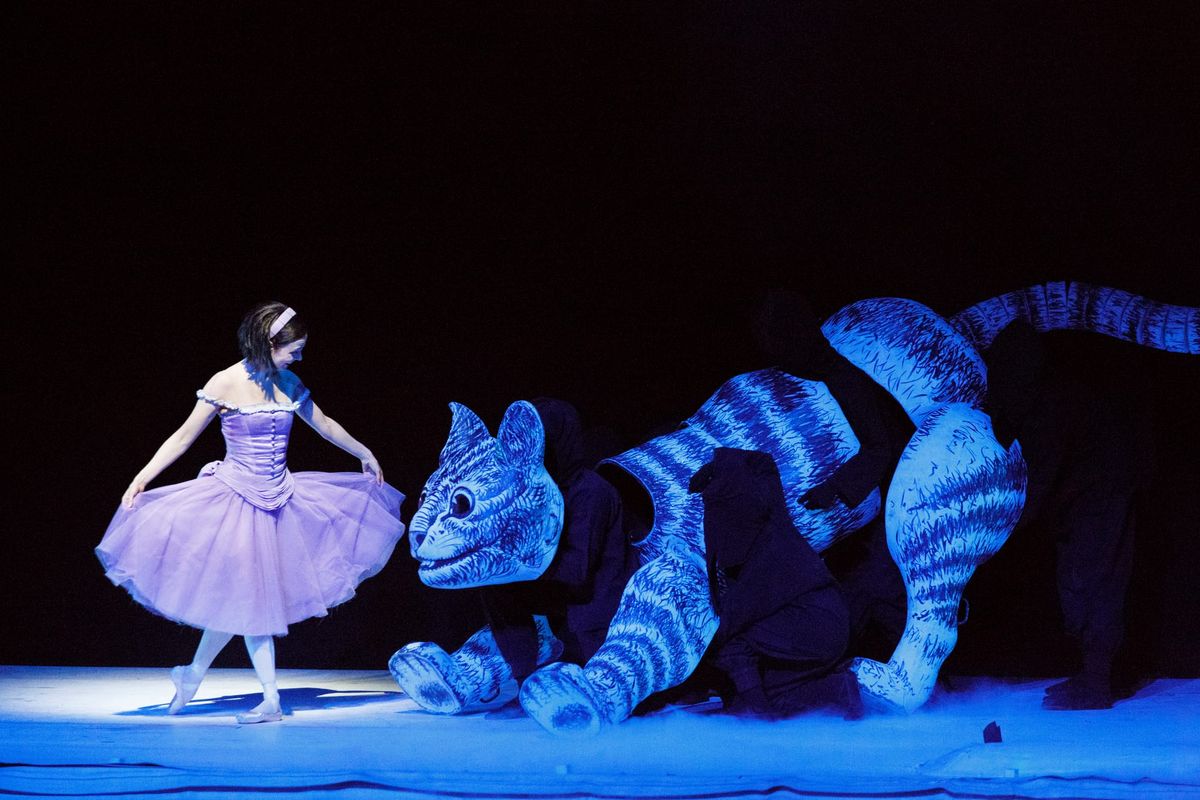
"Alice's Adventures in Wonderland"
The National Ballet of Canada
Four Seasons Centre for the Performing Arts
Toronto, Canada
March 7, 2019
The National Ballet of Canada's winter season coincides with March break and as usual presents a crowd favourite meant to attract families and new audience members, "Alice's Adventures in Wonderland". Christopher Wheeldon's brilliant version, a co-production with The Royal Ballet, has been a hit since its premiere in 2011. While the plot twists and spectacular special effects are most impressive on its first viewing, it continues to provide reliable revenue for the company and the dancers seem to have a lot of fun with the whimsical choreography and theatrical elements.
The success of this full-length ballet rests largely on the fantastic set and costume design (Bob Crowley), lighting design (Natasha Katz) and original score (Joby Talbot). The creative team behind this ballet is extraordinary. Nicholas Wright's libretto ties together a series of Wonderland's most recognizable vignettes bookended by a prologue set in 1862 Oxford and an epilogue set in modern times. Digital imagery is used effectively to create optical illusions and an immersive experience. From the disappearing and reappearing Cheshire Cat (manipulated by hidden puppeteers) to shifting doors that create a disorienting feeling of drunkenness to flower petals that shower the audience from above, the high production value of this ballet is a feast for the senses. However, it is problematic that so much of the ballet's impact and storytelling comes from stagecraft rather than choreography.
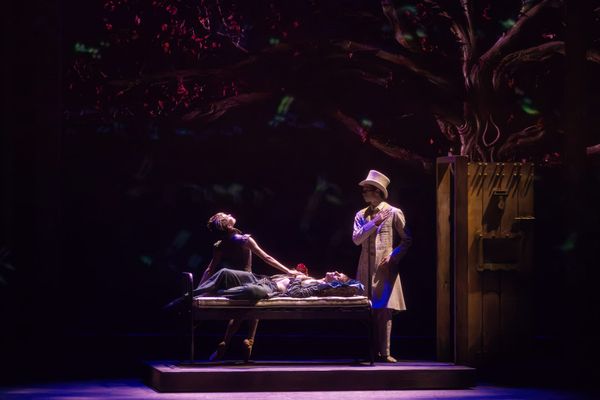
Despite the run time of 2 hours and 40 minutes, sustained dance sequences are few and far between. Prior to Alice's descent down the rabbit hole, she is at a garden party hosted by her parents. Guests arrive one by one, each with their own movement vocabulary that hints at their alter ego in Wonderland. Alice and Jack, the gardener's son and her love interest, enjoy some brief but sweet stolen moments together. Their feet shuffle sideways with alternating heel and toe in unison, an expression of budding affection. This motif is repeated in Wonderland, where Jack becomes the Knave of Hearts. Her stern mother examines Alice and her two sisters the same way she later examines the roses as the Queen of Hearts (although, as the Queen, the fingers across the throat "off with his head" gesture becomes a tad repetitive). There are moments of choreographic invention and movement shaped by character, but in a full-length work there really must be more. There are humorous moments, for instance when the corps de ballet as playing cards line up only to fall down on each other like dominoes. It creates an effect, but it comes from physical comedy, not from their dancing.
The choreography comes in stops and starts. Part of this is due to the episodic nature of the narrative. Some vignettes are more effective and memorable than others. One of the more extended dance sequences is the scene in the Queen's garden, effectively a spin on the waltz of the flowers. There is a reprise of seemingly inebriated flowers after Alice eats a piece of the caterpillar's magic mushroom. The grand pas de deux between Alice and the Knave of Hearts in the trial scene is one of the few uninterrupted dance segments. Before a peanut gallery of silly characters, the pair declares their love and Alice defend's the Knaves innocence.
Alice and Jack/The Knave of Hearts were danced by Jillian Vanstone and Francesco Gabriele Frola on opening night. Fresh off a brilliant run of "Paquita" together, theirs is a solidly developing partnership. Frola was, as always, technically brilliant. He brought moments of bravura to his role, adding flourishes such as arms stretched overhead during double tours. At the same time, he did not overshadow the other artists on stage. In keeping with Jack's persona, he exuded generosity and humility. Vanstone, the company's original Alice from the 2011 premiere, portrayed a feisty and good-natured young woman finding her place in the world. She learns to stand up to a tyrannical authority, navigate the absurdity around her, and find love. Her dancing has the lightness, speed and stamina required for this marathon role.
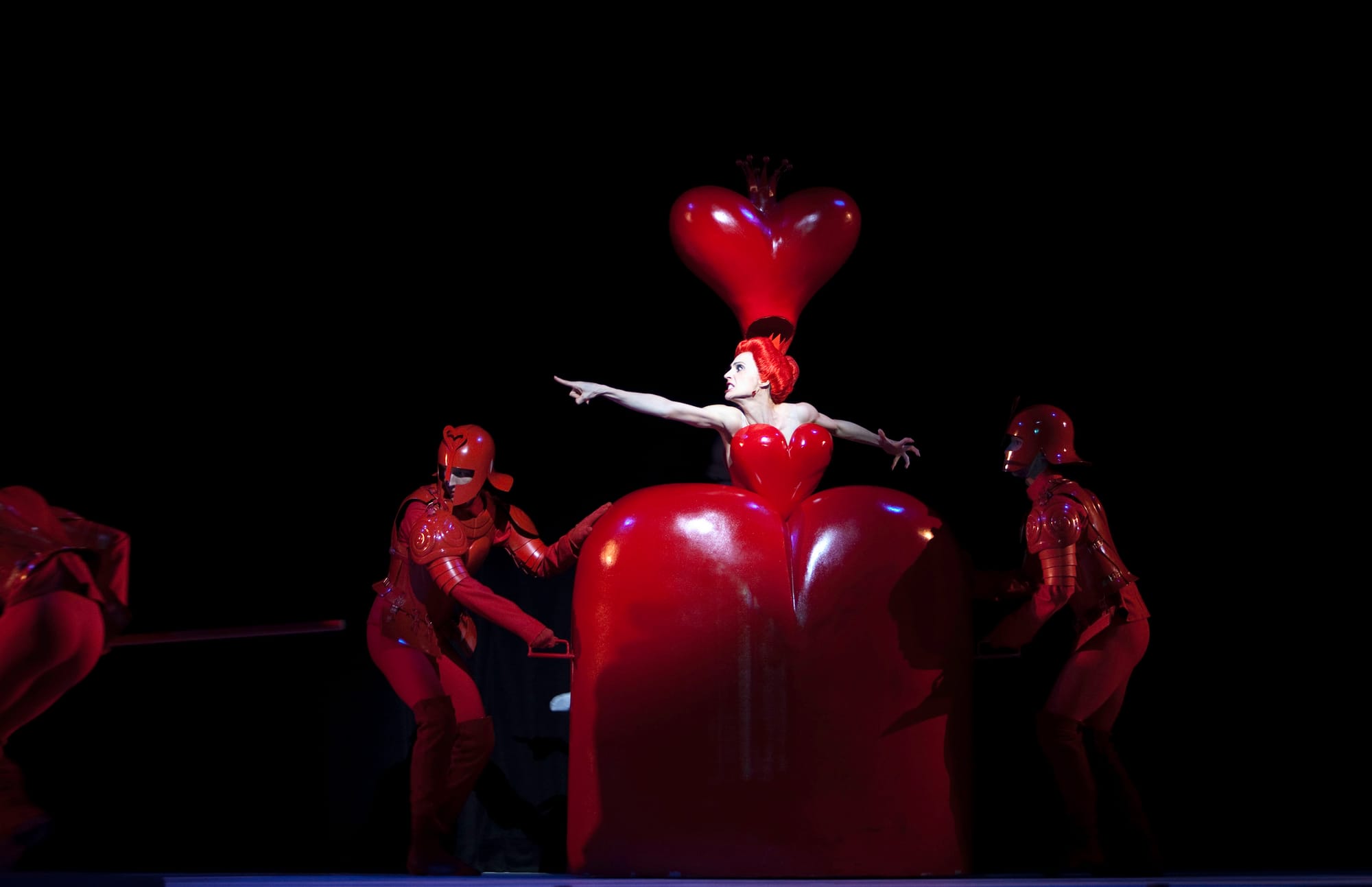
There were many memorable performances in the supporting roles. NBoC veterans Greta Hodgkinson and Rex Harrington (now artist-in-residence) hammed it up as Alice's parents and the Queen and King of Hearts. Hodgkinson, as the authoritarian Queen, demonstrated how much can be told with port de bras alone, as she is wheeled around in a giant skirt for parts of the ballet. Harrington was her skittish spouse, more comfortable hiding beneath said skirt. In the dual role of Lewis Carroll and the White Rabbit, Skylar Campbell brought cheekiness and wit. At the garden party, he sassily wiggled down the jelly cake, borrowing the 60's "swim" dance move, as he fell down the rabbit hole. As the White Rabbit, his choroegraphy is all jester-like petit allegro, which he nailed. The tap-dancing Mad Hatter was brought to life by Donald Thom, who hit every beat clearly with mercurial attack. Harrison James appeared boneless as the Caterpillar with fluid arm movements and undulating body rolls.
"Alice's Adventures in Wonderland" is a clever, fun and engaging work, yet it feels more like a Broadway production than a ballet. Subsequently, many of the NBoC's full length ballets, including "Le Petit Prince" and "Pinnochio", have followed in a similar (albeit less successful) vein. This is not a trend that we need more of. Delightful as it is, this production leaves the balletomane longing for more of what ballet does best, telling stories through movement.
copyright © 2019 by Denise Sum