His Way
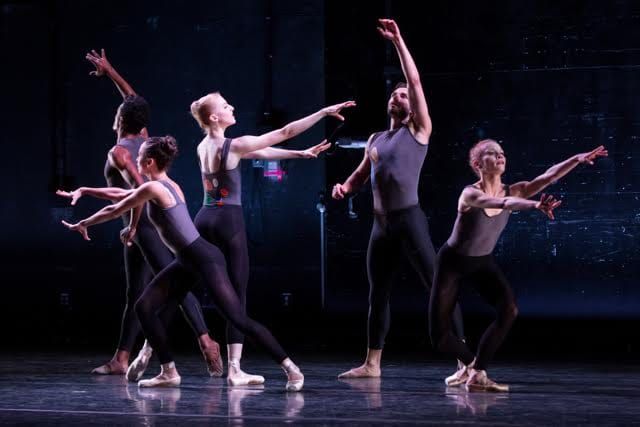
"All That We See", "Dear and Blackbirds", "The Last Time This Ended", "Invisible Divide"
BalletCollective
NYU Skirball Center
New York, NY
November 4, 2015
Troy Schumacher's BalletCollective is a company of seven dancers from the New York City Ballet, where Schumacher also dances. Obviously they all have day jobs, but the performances of this young company (founded in 2010) are not those of a casual pick-up group. Schumacher has a unique voice and he uses his supremely talented dancers with imagination and integrity, showing them off physically with stretchy but not distorted phrases and using their personal qualities to create oblique and intriguing dramas. The collective aspect refers to both the dancers and to his collaborators: poets, photographers and musicians whom he uses as a springboard for his works. Unlike so many younger choreographers he is not afraid of emotions--his dancers are not twitchy little cogs in a badly oiled machine--and his works tend to be meditations on young love, alienation and friendship. These are youthful emotions and if at times watching the company can feel like being involved in a long dorm-room discussion, the conversations are generally interesting and unexpected.
"All That We See", from 2014, was inspired by sections of a painting by David Salle, reproduced in the program. The relationship was oblique--nothing in the work except perhaps the small colored circles on the dancers' black leotards seemed to refer to the picture--but this glimpse of Schumacher's creative process was intriguing. The five dancers (Lauren King, Claire Kretzschmar, Megan Mann, David Prottas and Taylor Stanley) opened to vaguely ominous music (commissioned from Ellis Ludwig-Leone and played live by Hotel Elefant), creeping forward, crouching warily. The dancers broke up into various combinations, seeming to have brief, private conversations. Schumacher used ordinary moves (jumps, hops and shrugs) to connect the dancers; the pas de deux for Mann and Prottas was like listening to an animated, impassioned discussion in a foreign language. I was especially struck by Kretzschmar's spiky, expansive solo as the dancers seemed to work out their initial fears separately or together to return for the lyrical ending, a series of floating lifts (the girls looked like they were wearing invisible chiffon).
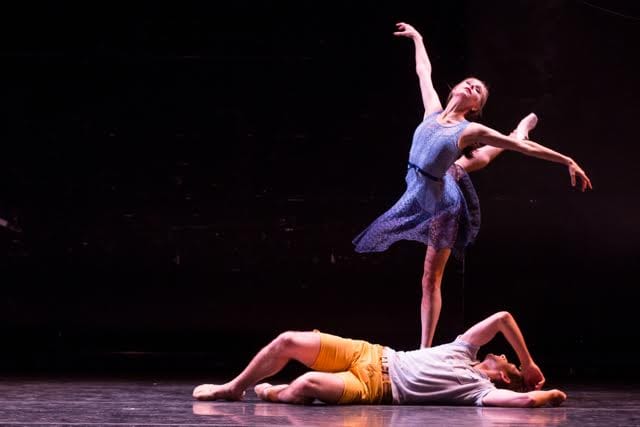
The chiffon was visible in "Dear and Blackbirds", a pas de deux for Ashley Laracey, a dancer of cool hauteur in a stunning ombre dress, and Harrison Coll, wearing shorts and a t-shirt. They were hesitant young lovers at first, with Coll revolving around Laracey like a love-sick puppy while she seemed to hold back, confident in her beauty. She did soften and the closing moment, as Coll gently loosened her ponytail, had a rare poetry.
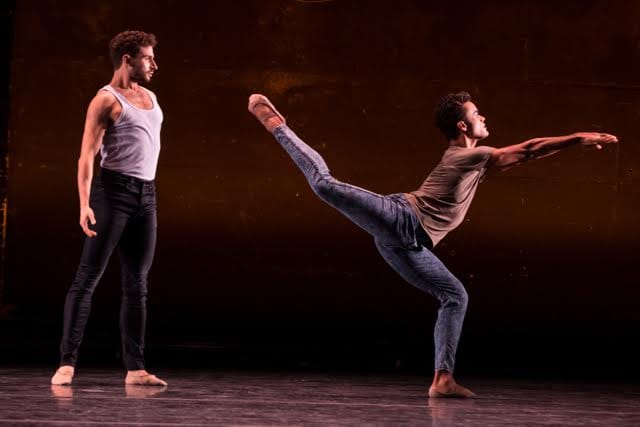
"The Last Time This Ended", a premiere, was another pas de deux danced by Prottas and Stanley, in jeans and t-shirts (no princes here). The "source art" as the program called it, was a series of photographs of grass and flowers by Dafy Hagai. The work had a faintly elegiac quality as it ended with Stanley walking slowly away while looking back. They may have been two lovers or two friends; the relationship was not explicit. What was explicit was the quality of the dancing. Stanley could make tying his shoes seem profound and his loose-limbed intensity gave his dancing both power and vulnerability. Prottas was huskier but equally fluid.
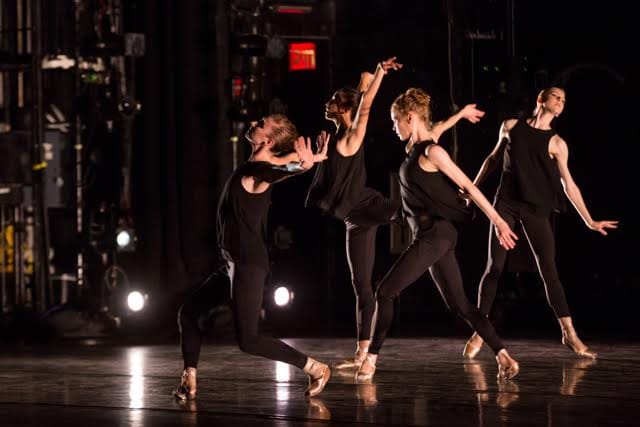
"Invisible Divide", another premiere, featured all seven dancers, black leotards, and a singer, Vanessa Upson (profess- ionally known as Violetness) with a fluty mournful soprano singing lyrics that seemed marinated in self-pity.
Coll was the loner, crouched on the floor with the four girls in a square around him. He danced an agonized solo, building up to a frantic array of running and jumping; his simplicity and honesty made it much more than a "man alone, oh woe is me" cliche. The ending, as the group danced together but reached out in different directions was ambiguous--Coll wasn't completely alone but each person in the group had their own secrets.
Schumacher's success is no secret and his respect for his colleagues, his independence and his imagination are clear. He has his own quiet voice, creating spaces for dancers to shine, both physically and emotionally. He, at least as yet, doesn't use the dancers to carve shapes out of space in the classical tradition, but has developed a company of individuals whom the audience wants to know better.
copyright © 2015 by Mary Cargill



