"Have K(NO!)w Fear"
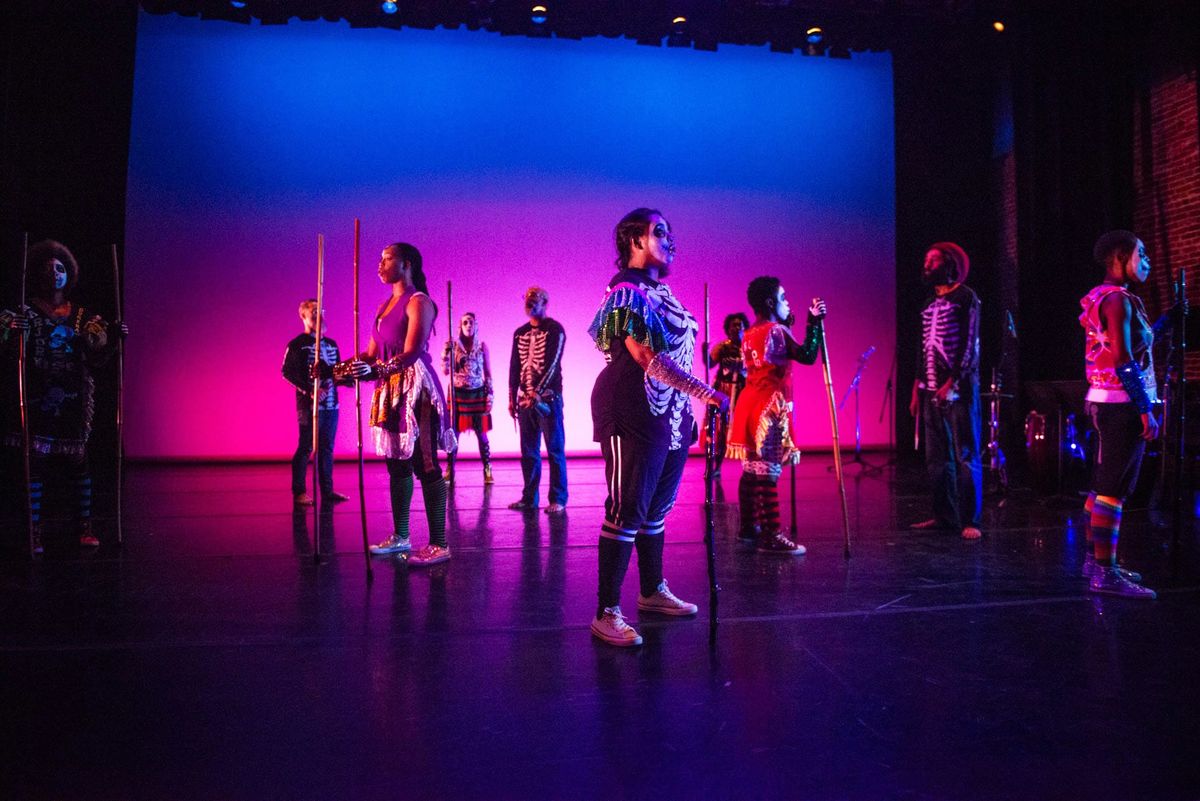
Ase Dance Theatre Collective
ODC Theater
San Francisco, CA
October 17, 2019
A dance artist’s most difficult task (besides nailing down the money) is to find a framework that can house and support expressive content Some rethink and reshape established formats — Ballet and Flamenco. Others become more radical–dance theater, installations. Adia Tamar Whitaker called her “Have K(NO!)w Fear ” for her Ase Dance Theatre Collective a “Bluessical”, for which she choreographed, wrote lyrics, composed music and danced in. It is a breathtakingly beautiful evocation of what some have called America’s “original sin,” slavery and its seemingly ever present after effects.
Whitaker drew the theatrical material from Africa and the Diaspora, such as children’s games, music, the stories and numerous social dance practices that have travelled around the world, Hip Hop just being the latest. The work dove unsparingly into anguish and anger about the many people of color who have been, and still are being, killed by police offers. It is brutally honest and speaks with a voice of fierce resistance that will not be silenced. Yet what struck me most deeply, besides its excellence as a staged performance, were the joy and the love that these artists brought to their tasks. Rarely has defiance looked so good.
I have two regrets. I became painfully aware of how limited my knowledge about the African Diaspora is. Also, Whitaker re-wrote the lyrics for many of the traditional songs, most of which remained unintelligible to me. (Microphone issues may have been part of the reason)
Also “Have”, apparently, was designed primarily for community settings, or at least much larger stage areas. Here the second half involved a lot of audience participation with many changes of direction. The stage area became so packed with people four and five deep that they probably could not see the center action much better than those of us who had hoped to get a better perspective from the raised seating.
At first the dancers wore Amazonian warrior costumes with skeletons on them, later modest dresses with a stiff underskirt, cut from richly patterned African cloth. Black and white paint halved the faces into masks. There was something ghost-like about these so alive dancers. For all its strength, it became clear that “Have” dances about death. Maybe the performers were also meant to be called-up spirits of those killed.
In the opening section the women stepped forcefully and reinforced the beats with long canes. Gradually, they moved into a tight union, recalling a street protest but I also saw a little of the disciplined male college-style Steppin. The company’s single male dancer (house dancer Brian Polite) became a Death figure that engaged the women in a kind of competition where it was not clear who was driving whom. For the trio of dancers to a Mother Goose rhyme I had to look up the relevant rhyme: “pease porridge in the pot, nine days old.” The food reference would return with lots of “water and a pot of mush”.
The documentary film “Have No Fear, “ shown before intermission, hauntingly spelled out what a dancer friend once told me: I spend all my time raising my son so he can survive. The film poetically showed Whitaker teaching her children to be strong, and when in trouble, never to call police.
After intermission, led by the “Follow the Fiddle” call and Guy de Chalus on violin, the audience moved onto the stage area. I could imagine that whole section being a type of parade, people ambling down the street behind this Pied Piper and encountering various performances on the way. One stop recalled a practice also found in Mexico and Peru. It mocked the pompous manners of the upper classes. The Cake-Walk, had its origin in the ante-bellum south, and the stiff-nosed Kontredanse Call came from Haiti. The glimpses of the remaining sections certainly were intriguing enough to make me wish I had seen more and heard better.
copyright © Rita Felciano 2019



