Group Effort
"Raymonda Variations", "Cortège Hongrois (excerpt)", "Schubert Symphony", "Glass Pieces (excerpt)"
School of American Ballet Workshop
Peter Jay Sharp Theater
Lincoln Center
New York, New York
June 7, matinee, 2025
With the exception of the opening “Raymonda Variations”, with its pas de deux and sparking female variations, this year’s SAB workshop featured ensembles, so not many individual dancers stood out. What did shine was beautifully cohesive dancing and a warm spirit—the anonymous couples all looked at each other, the men generously offering their arms and the women reacting with a gentle graciousness that elevated the scrupulous dancing into a performance. This was especially true of the new ballet, a premiere by NYCB corps member Laine Habony entitled “Schubert Symphony”, a lacy neoclassical work choreographed to the second and third movements of Franz Schubert’s Symphony No. 3 in D Major.
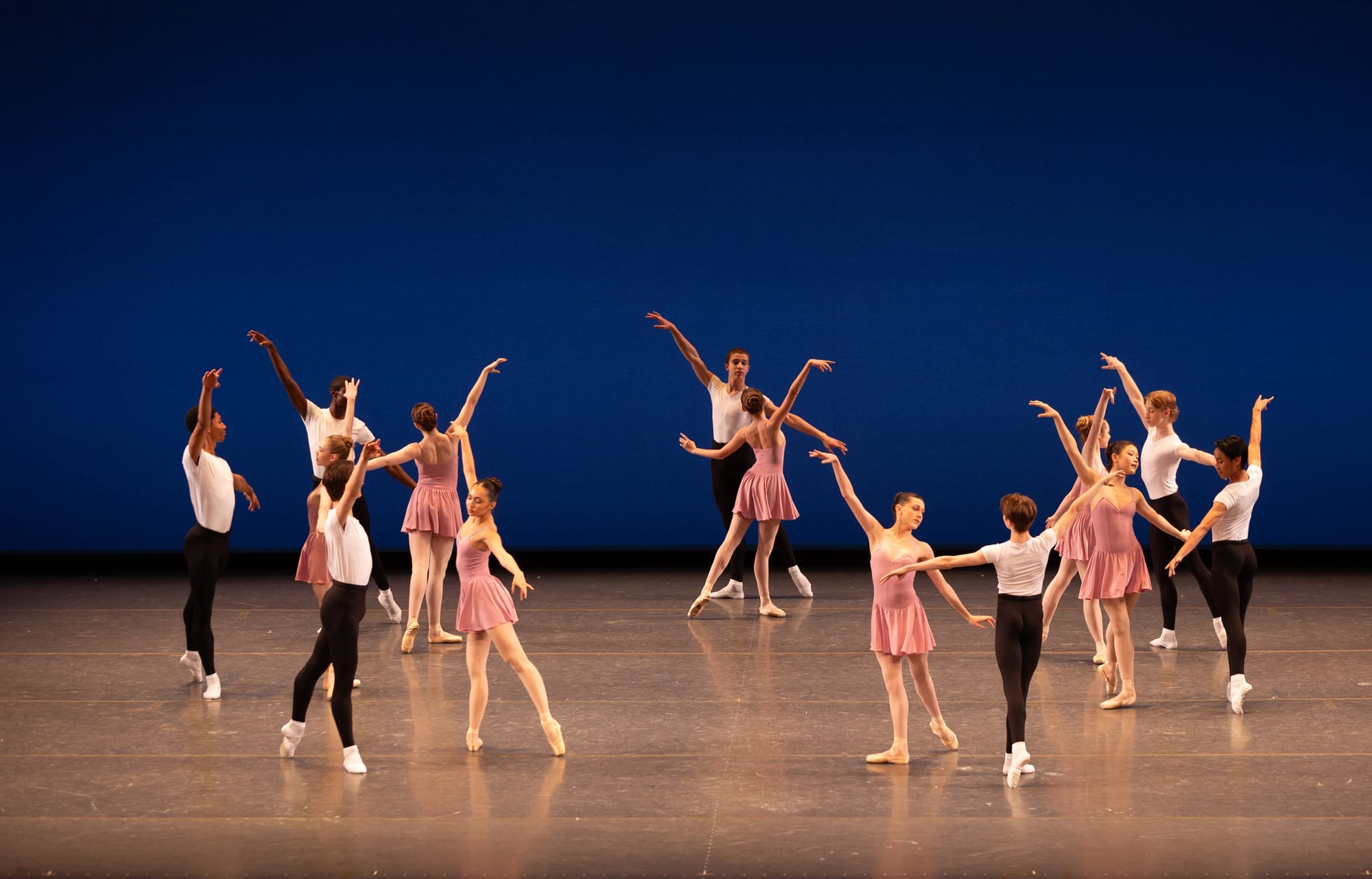
She set it on 35 dancers from the upper children's and intermediate divisions. It opened with the younger dancers arranged in a gracious formation; it was a formal but lively work, full of rippling little steps that seemed to emerge from the music as the couples bowed politely to each other. Gradually the older dancers emerged, the women on point and the men tossing in some sparking petite batterie. Habony arranged her dancers well; entrances and exits were smooth and musical, and the sculptural formations formed and reformed with a kaleidoscopic logic. It was a lovely bouquet for the dancers who danced with a quiet charm without any hint of cuteness or coyness.
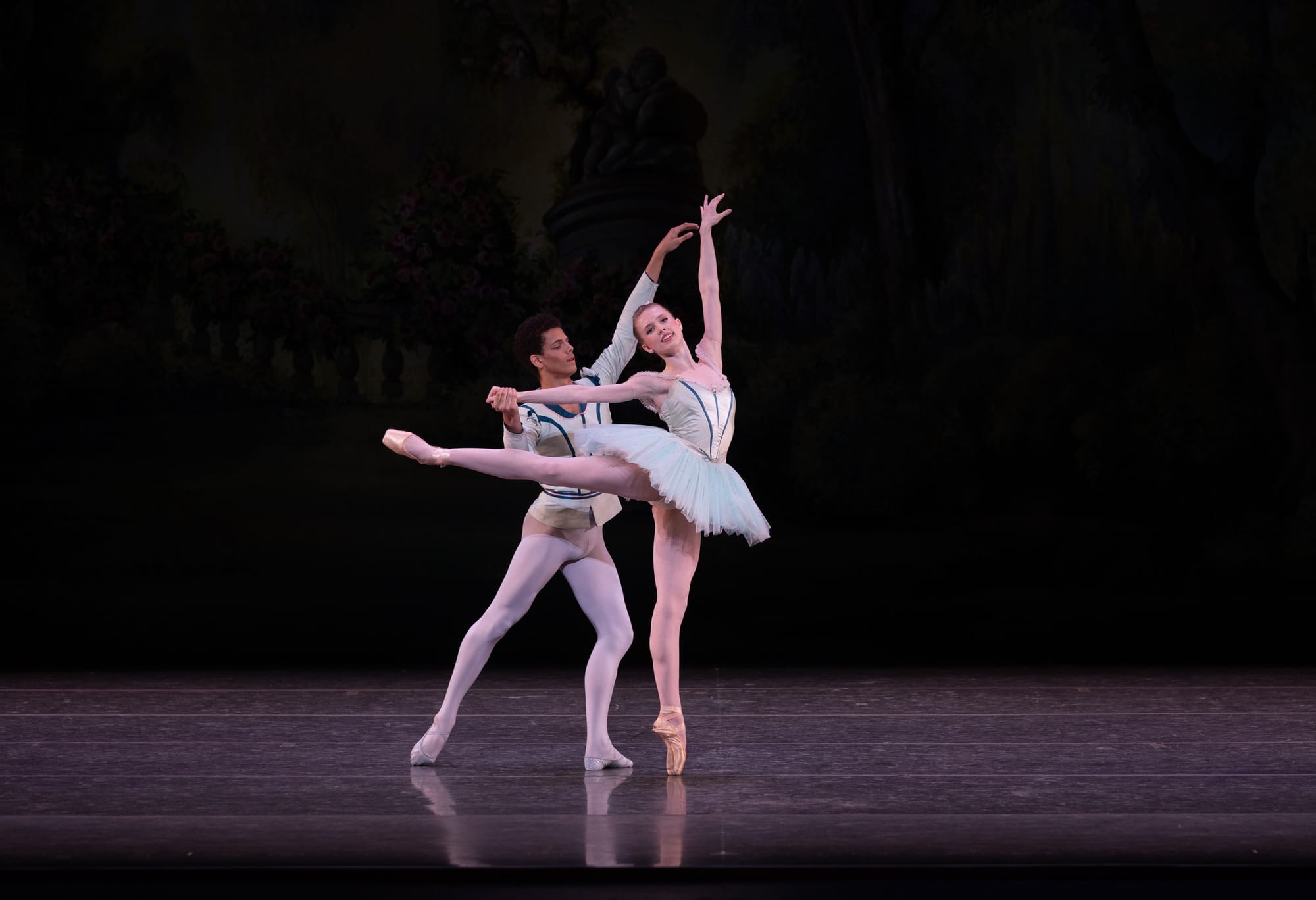
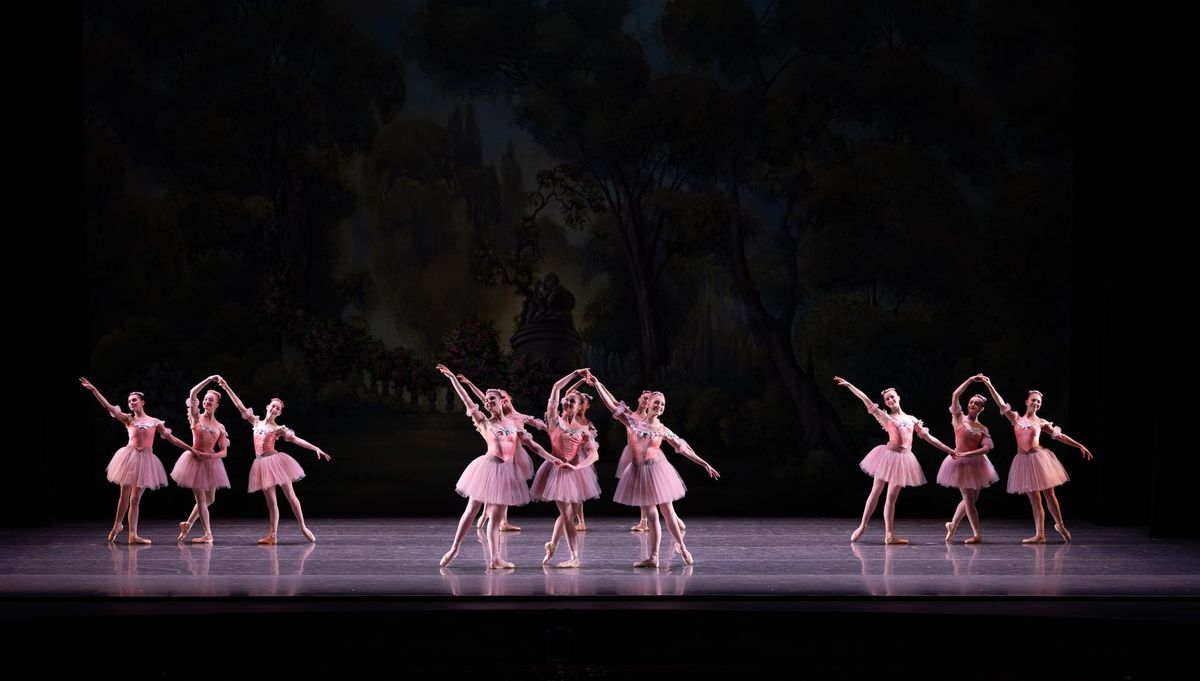
Balanchine’s 1961 “Raymonda Variations” is a bouquet too, a collection of solos inspired by the nineteenth century Petipa choreography and luscious Glazounov music from the original, plot-heavy ballet. SAB borrowed the fluffy pink and turquoise costumes and the backdrop (Horace Armistead’s flowery garden created for NYCB’s 1951 production of Antony Tudor’s “Lilac Garden) from the main company, which helped give a polish to the production. The happy couple, Lucie Richard and Corbin Holloway, danced with a radiant calm, focused on each other. Richard is a tall blonde beauty with expansive extensions and solid control. Her variation, with its echoes of folk dancing (all those arms behind the head moves) was light and smooth. Holloway had a distinctive presence and a fine floating jump; his brisé volés were fast, sharp, and very strong. He tore through his turns a la seconde in the coda with a real professional flair.
The other female soloists danced with a notable confidence, especially Tuscany Bramwell in the first variation, with those traveling hops on point and Kennedy Sullivan in the third solo, where her arms seemed to ripple through the harp music, catching the quick changes of direction. The corps too all looked like they were having a wonderful time, dancing with elegant precision and relaxed upper bodies; it was staged by Suki Shorer who received a well deserved round of applause.
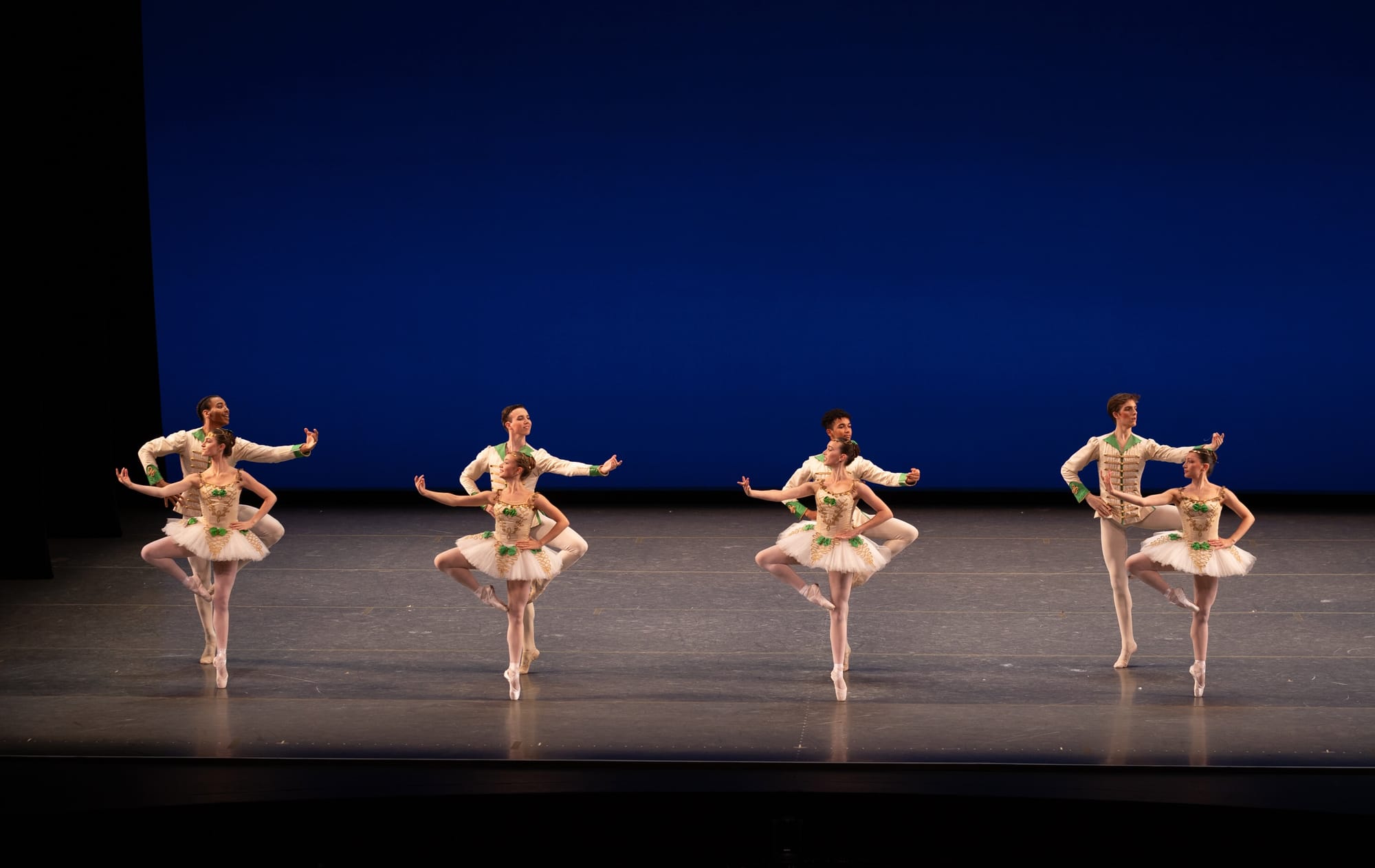
There was more Glazounov in the brief excerpt from “Cortège Hongrois”, another of Balanchine’s “Raymonda” reworkings. The ballet was made in 1973 for Melissa Hayden’s retirement and is basically a confection of classical and character dancing evoking the original ballet’s grand finale. The eight couples, in costumes by Rouben Ter-Arutunian borrowed from the main company, danced a stylish classical parade with elegant hints of character dancing. (The original finale was meant to celebrate King Andrew II of Hungary, who was a guest at the happy couple’s wedding—Petipa did love an excuse to add some character flair to his choreography.) The SAB couples danced with a hearty precision, tossing their heads and snapping them in unison; they, and Aesha Ash, their stager, seemed to relish the little character details. There was one slight mishap as one of the dancers fell, but she continued with unfazed aplomb.
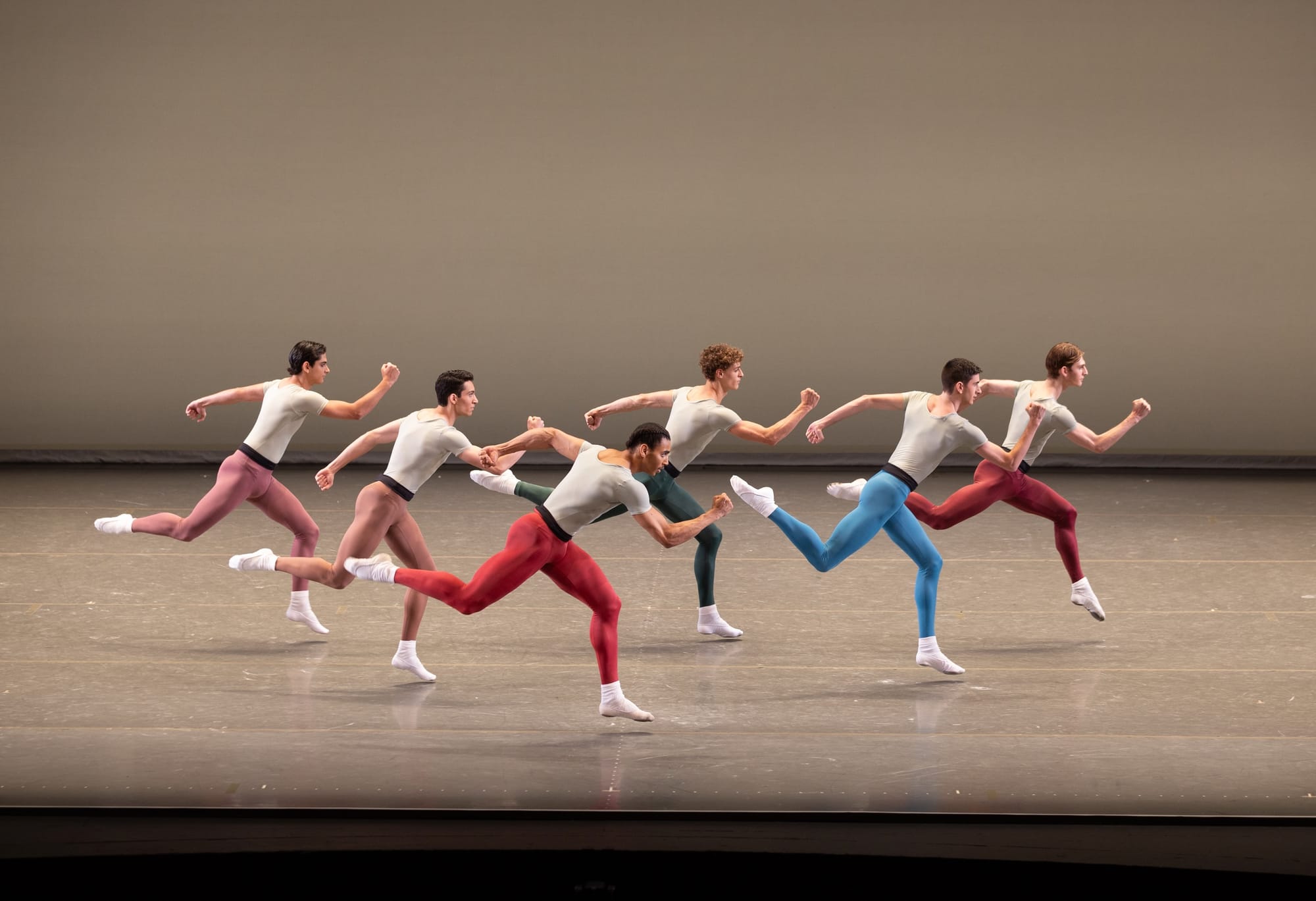
There was plenty of aplomb in the final piece, the third movement of Jerome Robbins’ “Glass Pieces”, set to throbbing, insistent music from his opera Akhnaten. The men poured on with a sharp and very exciting precision, pounding through the rhythms; it was staged by Jenifer Ringer, with Jean-Pierre Frohlich listed as the Supervising Répétiteur. Though the men dominate the work, they were eventually joined by some equally well-rehearsed ladies; it was, like the rest of the program, a celebration of group formations and the corps as a cohesive whole.
© 2025 Mary Cargill



