Graham at the Pillow
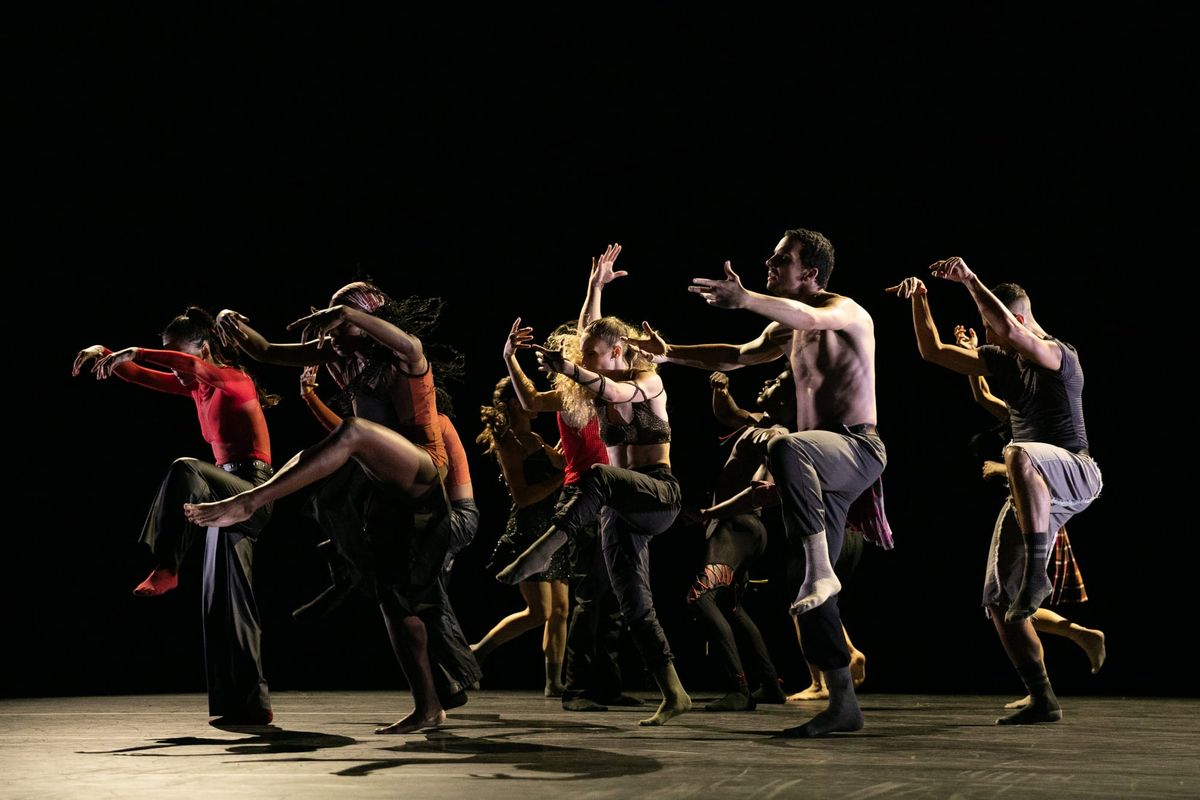
“Errand into the Maze,” “Cave of the Heart,” “Cave”
Ted Shawn Theater
Jacob’s Pillow Dance Festival
Becket, Massachusetts
Friday, August 18, 2023
Martha Graham was at the height of her creative and performing powers when, in the 1940s, she began to make dances based on Greek myths. The Graham company offered two of these works at Jacob’s Pillow last week: "Errand into the Maze" (1947) and "Cave of the Heart" (1946). In keeping with the company’s current strategy of including contemporary works in the repertory, Israeli choreographer Hofesh "Shechter’s Cave "(2022) rounded out the program.
As was her custom, when Graham choreographed a piece, she also starred in it. The dilemma, as for many modern dance companies, is how to continue after the choreographer/star is no longer present. Most groups simply cease to exist. Graham died in 1991, but the Graham company has survived, and judging from the Pillow performances, it is holding its own. It is now headed by Janet Eilber, who was a leading member of the company under Graham.
The program opened with "Errand into the Maze" from 1947, set to a score is by Gian Carlo Menotti. It is based on a myth, here taken from the standpoint of Ariadne, who makes her way through the labyrinth to confront the Minotaur, a horned beast, part bull and part man. In the 1940s, a time of intense interest in psychological interpretation, Graham transformed the myth into a dance of psycho-sexual trauma.
Originally, the Minotaur wore a horned headdress, reflecting both the mythic figure and the nature of the two characters’ encounter. The Graham company has made a radical decision to change the Minotaur’s costume. Gone are the horns and any other reference to the Minotaur. Now he is an ominous figure in a stocking mask that reads as a human rapist. So what was psychological has been made physical fact.
According to a program note, the original sets and costumes by Isamu Noguchi were damaged during Hurricane Sandy. However, the current answer to that problem creates a startling misrepresentation of Graham’s intention, and needs to be corrected, something that is easily done by the simple replacement of the Minotaur’s horns. The dancers in the Friday afternoon performance, which I saw, were So Young An and Lorenzo Pagano.
Better treatment was to be had with "Cave of the Heart" (1946, score by Samuel Barber), where at least Noguchi’s sculptural, cage-like enclosure has survived. The theme here is Medea’s response to Jason’s abandonment and his marriage to a princess of Corinth. Again, it is the psychological element that is at the core of the work with Noguchi’s golden wire cage a sign of Medea’s psychological state.
Xin Ying danced the role of Medea in a way that stressed the character’s pain more than her anger and desire for revenge. It was an affecting interpretation which made the character more sympathetic than usual. Lloyd Knight was a worthy Jason, while Marzia Memoli was the pretty blonde princess, and Anne Souder a dignified Chorus.
Shechter’s "Cave" (2022) could have done with another title since it sounded as if it might be related to "Cave of the Heart", which it wasn’t. Rather, it was a group work for twelve dancers that resembled both a dance party rave and a primitive ritual. In the context of Friday’s performance it served two purposes, broadening the company’s repertory, and making a finale to the performance that was guaranteed to get at least some of the audience cheering. Set to a powerful beat (music was by Ame and Hofesh Shechter), the dancers took off in shifting, high energy patterns of movement that occasionally slowed, then revved up again into another bout of writhing, swirling, hip swaying bodies. It was fun for a while, but finally became repetitious. In all, though, the Graham company’s performance showed it has staying power, which is what counts.
© 2023 Gay Morris



