Gods Dancing
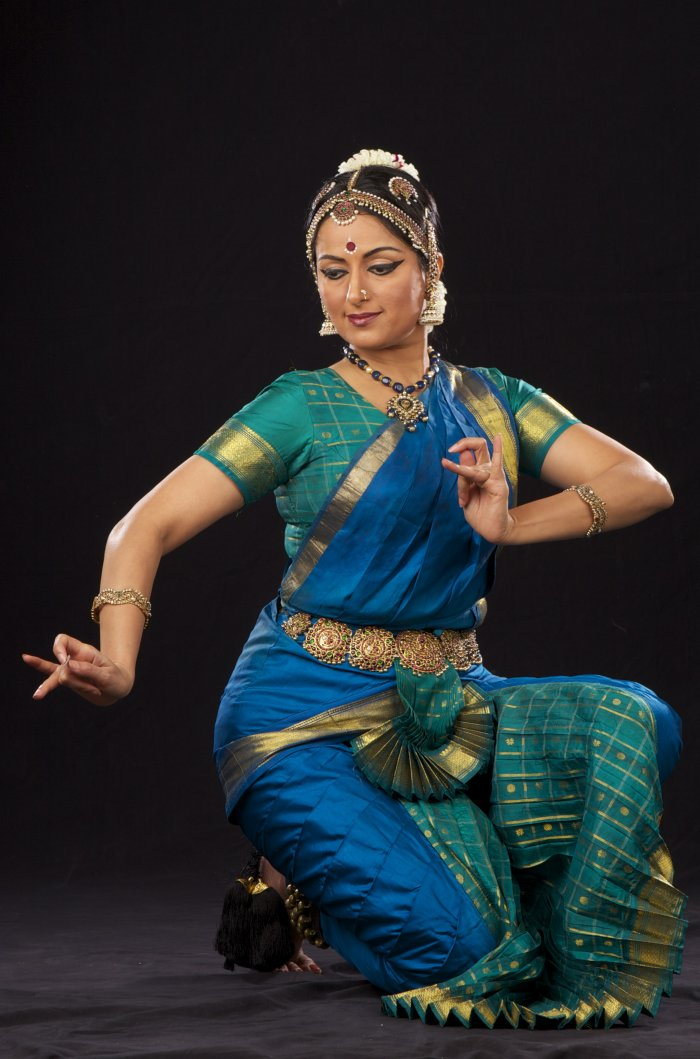
"Sthayee", "Aahne nila shaila", "Shivashtaka", "Bhavayami Raghuramam", "Sakhi he", "Omkarakarini"
Rahul Acharya and Vidhya Subramanian
The World Music Institute's "Dancing the Gods"
Skirball Center for the Performing Arts
New York University
New York, New York
April 26, 2014
The World Music Institute, an organization presenting music and dance from a range of countries to New York audiences, sponsored a weekend of classical Indian dance, called "Dancing the Gods". The Saturday night performance might have been called "Dancing Gods", as the two performers, Rahul Acharya and Vidhya Subramanian, gave their exhausting solo performances (each lasting almost an hour) a rare and profound beauty. Acharya, an Odissi dancer, performed three solos. The first, "Sthayee", was, according to the notes, a pure dance highlighting the postures and poses of Odissi; he looked like a bas relief come to life, with stylized, precise, and rhythmic moves. Every part of the body was engaged, as the head bobbled slightly while the torso undulated and the legs stomped. Even the eyes danced with a subtle playfulness.
The second solo, "Aahe nila shaila", is based, again according to the notes, on a popular song by Salabeg, a 17th century poet. This dance had more narrative that the first, as the dancer mimed various actions, including fighting and gambling. But without understanding the words, it was looked like more stylized movements, beautifully controlled and hypnotic, though obviously for uninitiated eyes the performance was limited to feeling rather than understanding.
"Shivashtaka", the last dance, was more abstract; the notes describe it as showing the various forms of Lord Shiva. It opened with the dancer in the center of a pool of light, flowing from pose to off-balance pose with a phenomenal control (made more impressive because there were two boors in the front section who kept flashing pictures). The dance ended with a miraculous back-bend, as if the dancer were consumed by an ecstatic emotion. He moved with an openness that connected with the audience, but there was no sense of courting approval; it was as if he was sharing a gift, a gift that was gratefully received.
Vidhyaidhya Subramanian is a Bharatanatyam dancer, a native of India who works and teaches in the United States. The three dances she performed were narratives, and she gave a brief summary of the story including stylized gestures, before the dances. The first told the story of Rama and Sita; even with the Cliff notes, it was difficult for a novice to follow, though it was thrilling to watch, as she danced with a gracious clarity. Like Acharya, her eyes were as much a part of the dancing as were her rhythmic movements and dynamic hands.
Her second dance, "Sakhi he", was danced to a 12th century poem about the love between the god Kirshna and Radha. Her movements were suffused with a sensuous longing, both earthly and eternal; I could have watched her for hours.
Devi, the divine goddess, inspired her final dance; the introduction explained that she was the greatest beauty of all. Subramanian certainly could embody the beauty, but she also showed power and control. There is, apparently, an infinite variety of moods that can be conveyed with these dances, and though the actual movements are somewhat limited (at least to Western eyes), the performances soared.
copyright © 2014 by Mary Cargil



