Dust to Dust
"Dust", "Private Domain", "Piazzolla Caldera"
Paul Taylor Dance Company
David H. Koch Theater
Lincoln Center
New York, New York
November 16, 2019, evening
The three Taylor works in this program were all, in different ways, sardonic but sympathetic observations of loneliness and isolation. This emotional downer did seem fitting, for this season is the final one for several Taylor dancers (Michelle Fleet, Parisa Khobdeh, Sean Mahoney, and Jamie Rae Walker – Robert Kleinendorst will retire later this year) and for many in the audience, the retirement of a favorite dancer does seem a personal loss. The dances, though, do survive, and so, I suspect, after a proper period of mourning, will the audience.
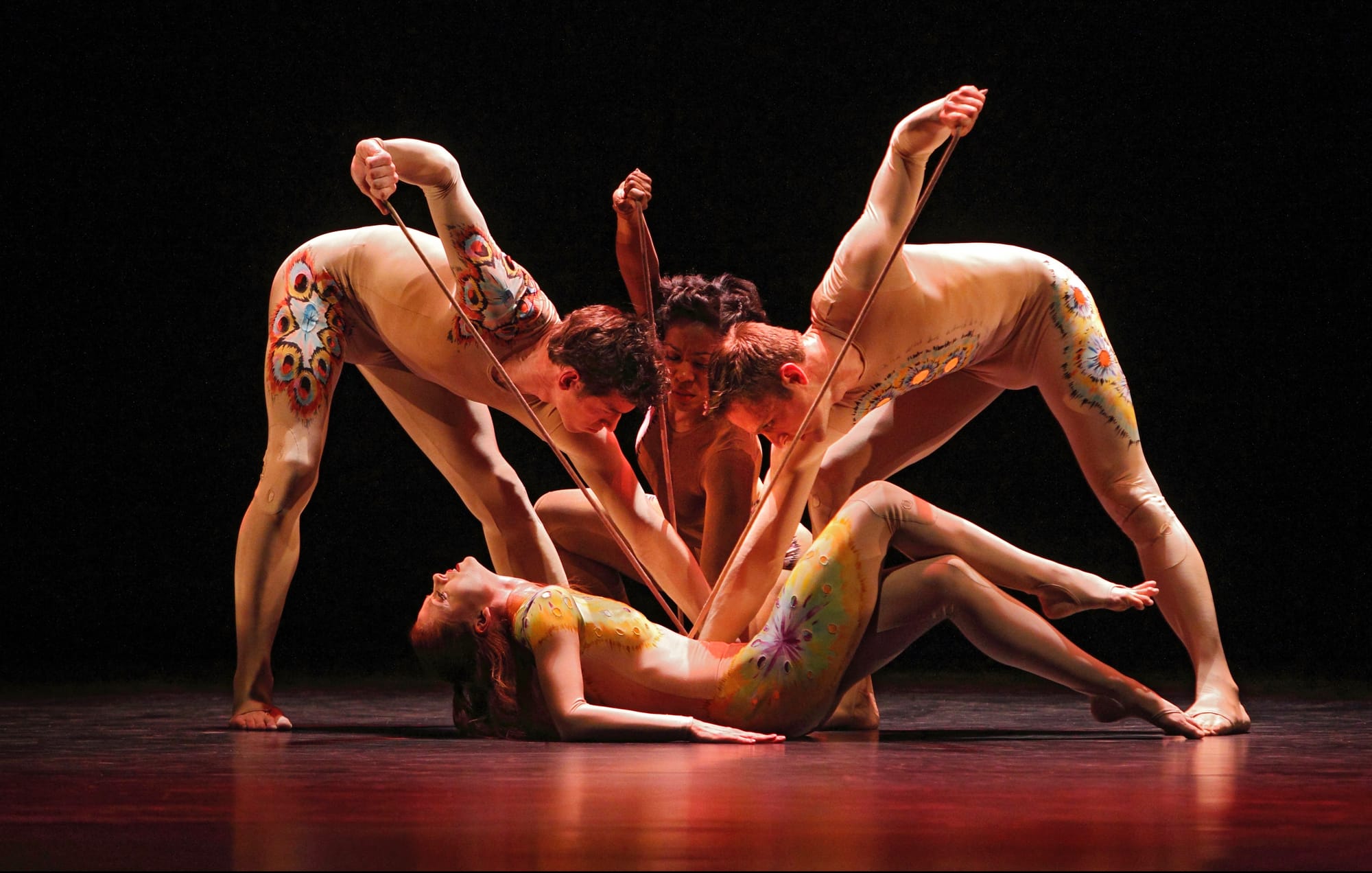
"Dust", choreographed in 1977 to the often bouncy music of Francis Poulenc's "Concert Champêtre", opened with an ominous stillness as a huge rope hung from the ceiling over the dancers posed in knotted, archaic shapes. These were overseen by a serene Madelyn Ho, and they seemed to emerge from the ground with powerful, awkward stutters, grotesque but with an odd pride. The work had an illogical nightmare quality as the focus shifted from group to group. The feeling of unease was unrelenting, as dancers fell to the ground as if stricken by some invisible disease.
Kleinendorst led an unexpectedly sprightly trio, full of fast footwork and knocked knees, dancing with an almost frantic energy. Even the gracious Ho, comforting a group of sightless dancers, was blinded in turn. Heather McKinley was especially impressive as the awkward and intense mourner, hovering over Sean Mahoney's twisted shape, reaching her arms out in a desperate attempt to understand.
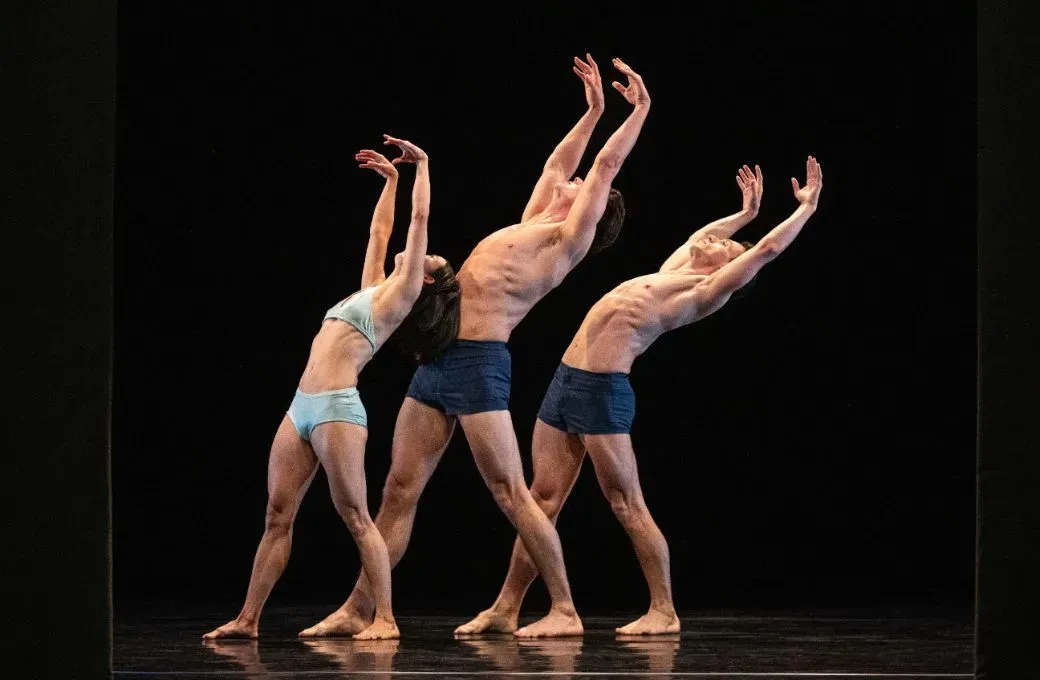
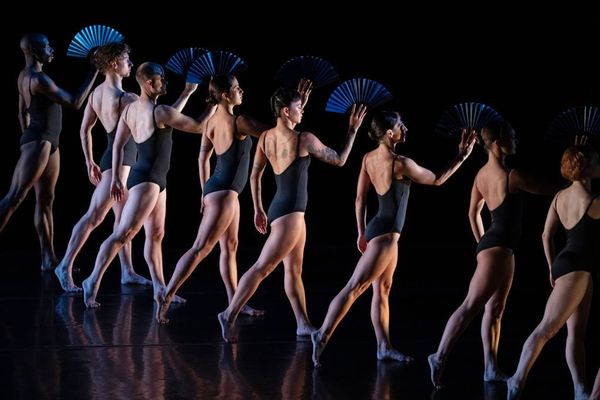
"Private Domain", the 1969 work to electronic music by Iannis Xenakis with sets and costumes by Alex Katz, shares a title with Taylor's 1987 autobiography. Though it is probably fruitless to pick over the dance for personal revelations, it is a sombre and scathing portrait of self-absorption. The set has three panels hanging at the front of the stage which depending on the angle of the viewer, hides different parts of the choreography, and disembodied hands and feet appear seemingly at random, a brilliant and imaginative image of disconnected humanity. The dancers posed and preened in their skimpy costumes, their movements muscular and mechanical and their eyes blank. They did not swagger with the "I'm so much cooler than you are" stare of so many modern works, their empty eyes were almost frightening. Only Kleinendorst, leaning against one of those panels, seemed briefly aware that something, some connection, was missing.
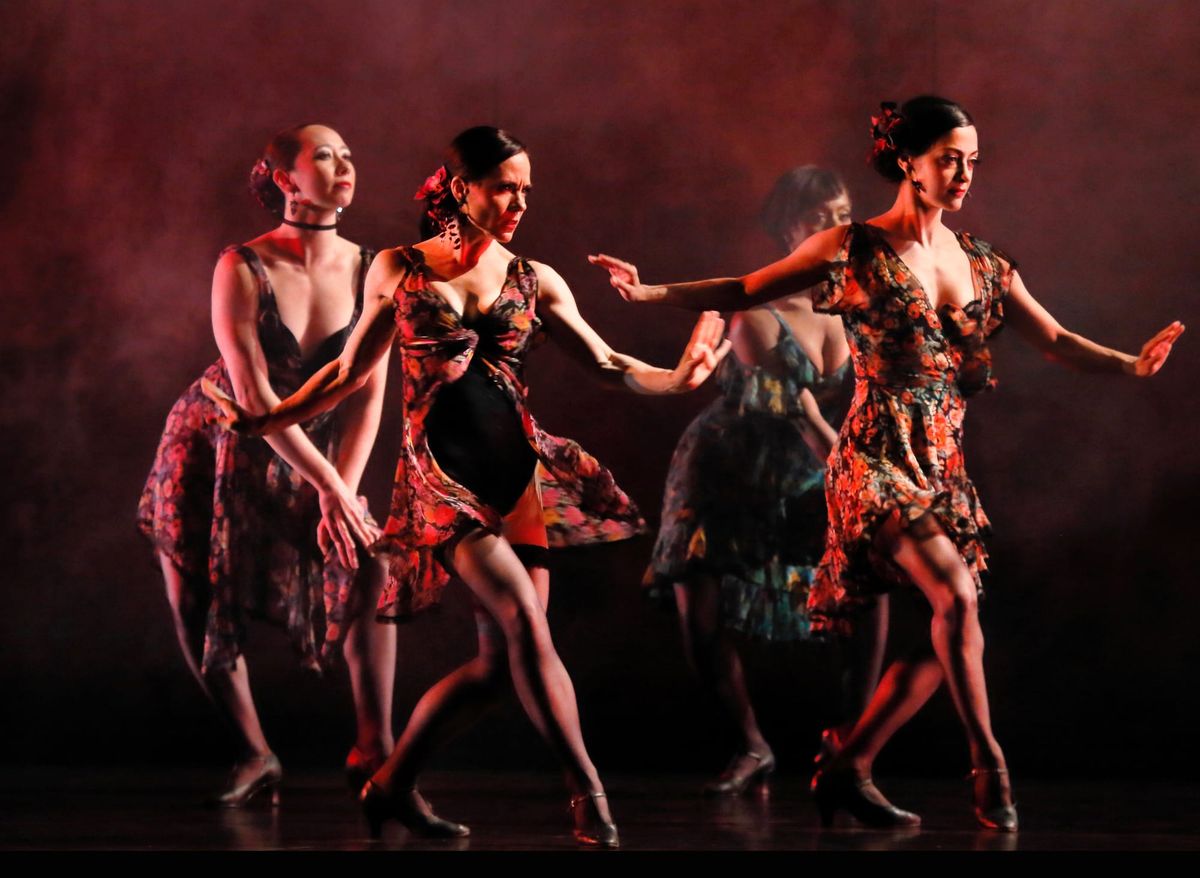
Though the atmosphere of "Piazzolla Caldera", from 1997, is hot and smokey rather than cold and clear, that haunted dive is just as hollow as the pillars of "Private Domain". The piercing, plaintive music of Astor Piazzolla lies under the macho swaggering, almost mocking the desperation. The two drunken men (George Smallwood and Michael Apuzzo) dancing under the off-kilter lights were particularly affecting as Apuzzo's' more gentle dancing set off Smallwood's sudden, almost helpless brutality.
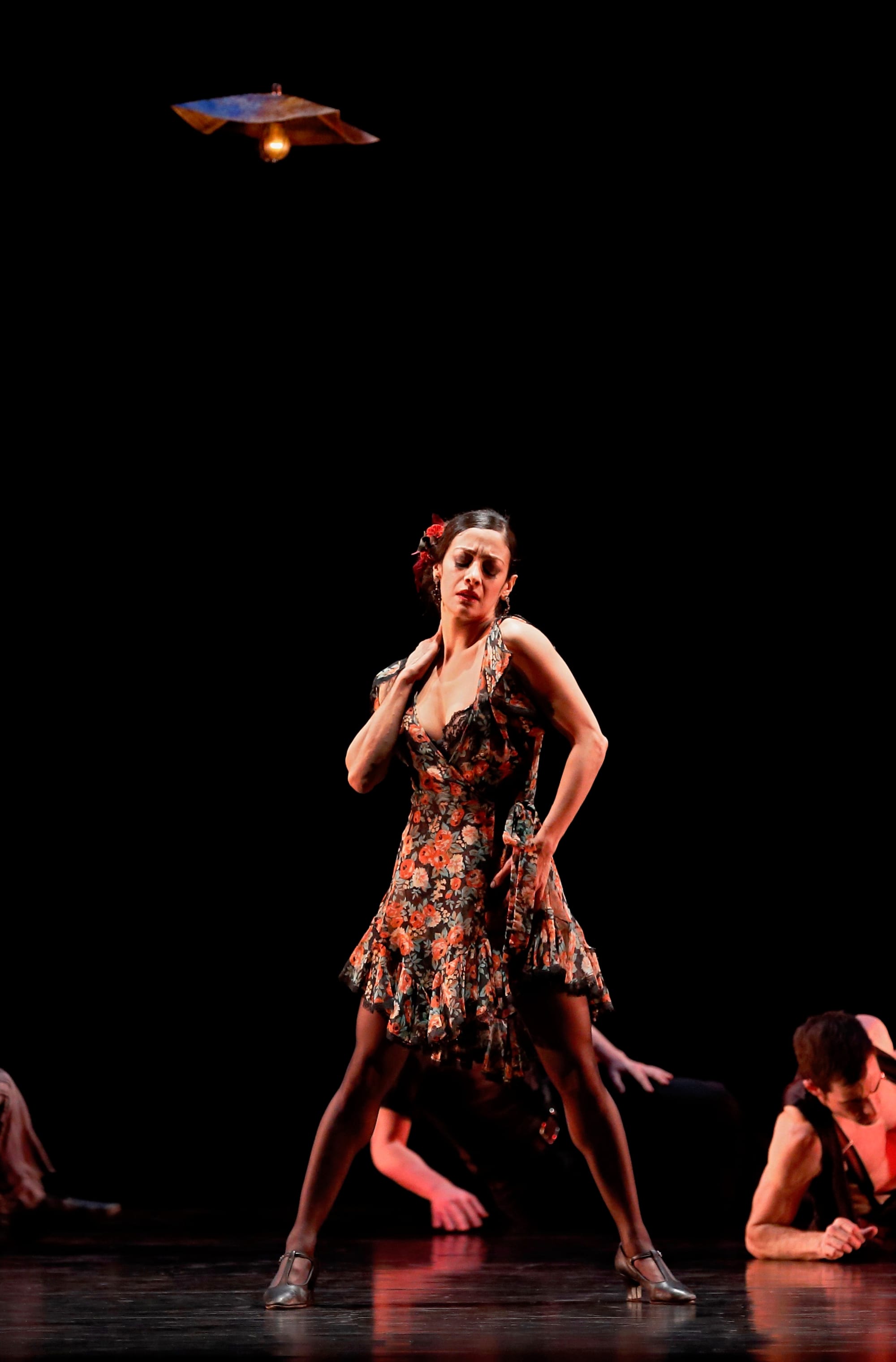
Parisa Khobdeh as the outsider gave her solo an unusual youthful tinge. She was not the hardened, bitter woman who had been betrayed too many times. She took a lighter approach that emphasized the contrast between human longings and her gritty surroundings and made her despair even more harrowing. It was a masterful interpretation, danced with immaculate fervor.
These dances all show, it seems, that Taylor wanted us to understand that strength and beauty (which his dancers all possess in spades) are not enough--love and sympathy are paramount.
copyright © 2019 by Mary Cargill