Dessert First
"Tschaikovsky Piano Concerto No. 2", "Apollo", "La Sonnambula"
New York City Ballet
David H. Koch Theater
Lincoln Center
New York, New York
October 8 2023
In a late shift, NYCB switched the program’s order and opened with “Tschaikovsky Piano Concerto No. 2” instead of closing with glorious exploration of Petipa—it was like having dessert before the main meal of “Apollo” and “La Sonnambula” but it was delicious all the same. Unfortunately, the costume gremlins have been working on “Tschaikovsky”and in 2019 new costumes by Marc Happel appeared, laden with crystals. (Like the program note for “Symphony in C”, Swarovski is credited for supporting the new costumes—does someone in the costume department have shares in a rhinestone mine?) The blue-grey tones blend with the background and, like the previous costumes, the corps, soloists, and principals are all dressed in the same color; so much for Balanchine’s salute to hierarchy. The only difference is that the corps have fewer crystals, but the heavily encrusted bodices of the principals make the floaty chiffon of the skirts look unfinished, as if the dancers put their tops on over their slips.
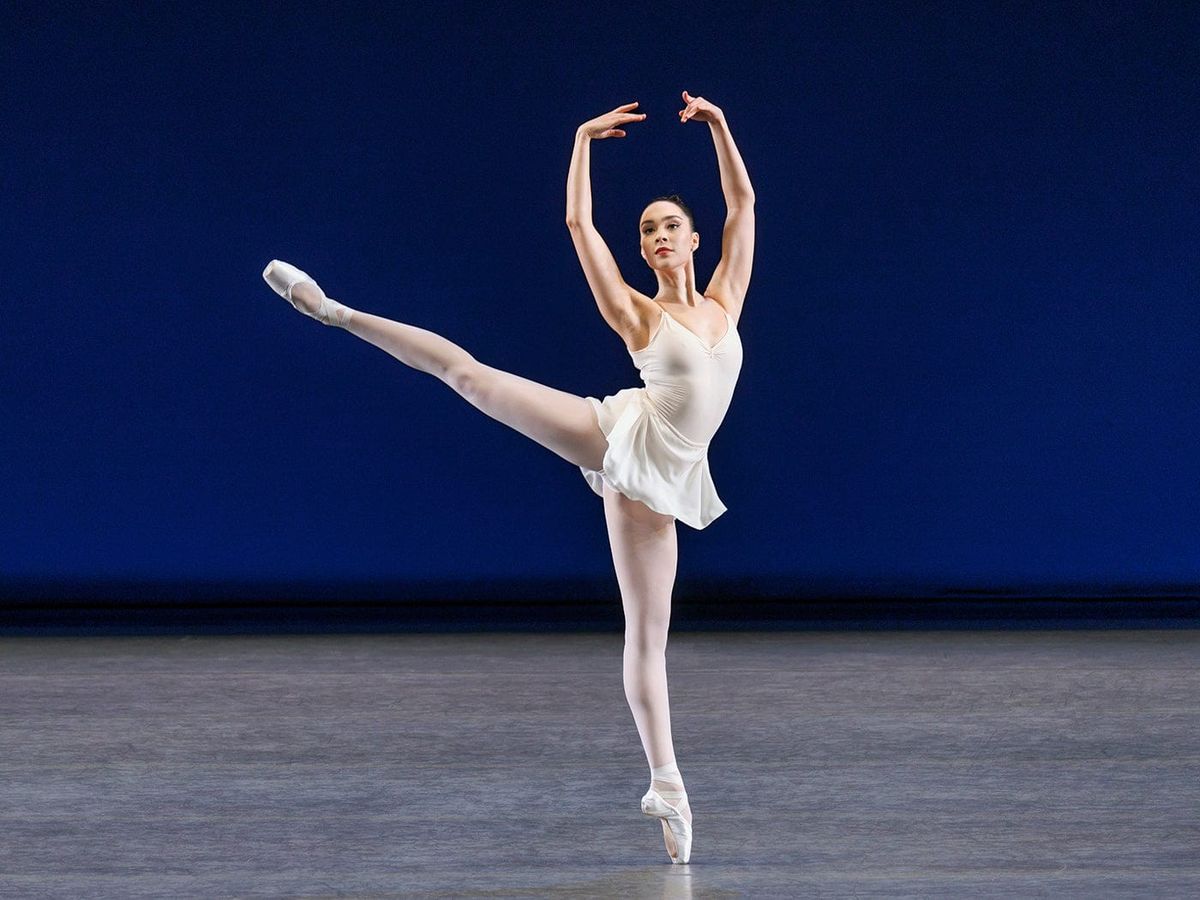
But the bling couldn’t hide the magnificence of the ballet, a distillation of Petipa, with its celebration of female beauty, its yearning hero, and its brilliantly designed finale all in 40 minutes. Tiler Peck and Joseph Gordon danced the leads, with Olivia MacKinnon as the soloist. Peck’s clarity and musicality provided all the glitter anyone would need, though the opening foot-dragging stop-on-a-dime turns were much slower than usual; this did show the beauty of the movement though I missed the released rubber-band snap. Beautiful though Peck’s dancing was, her performance seemed a bit distant, a demonstration rather than an experience, polite rather than rapturous. But few dancers have such control and musical responsiveness—at times she looked as if she were skating on air, and it was a truly beautiful demonstration.
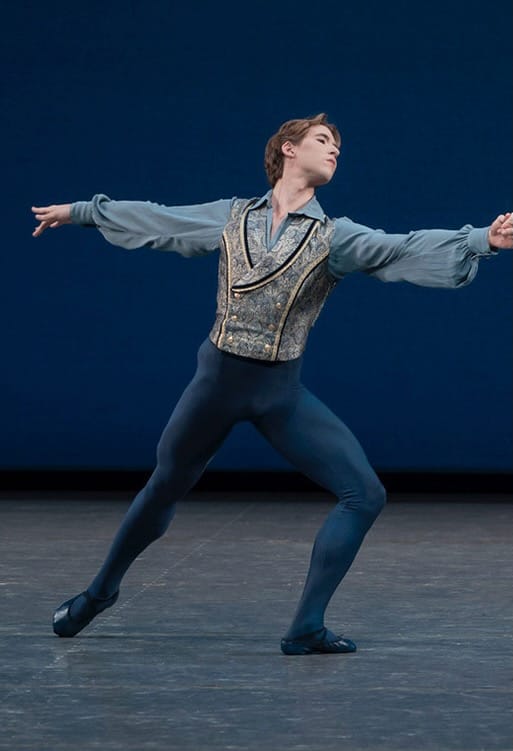
Gordon was impressively present, as he slowly walked through the garden of the corps, seeking his soulmate. Balanchine’s use of the soaring, yearning melody is so astounding, as his poet/prince just stands and pulls two lines of women towards him, letting the music etch the emotion; the choreography doesn’t try to top the powerful music, it floats inside it. And Gordon’s final slow walk backwards, bowing to the empty stage was the summation of every Romantic hero; I would love to see the original mimed sequence though the current simplicity is extraordinarily moving. His dancing had a fine elegant control, full of beats and snappy cabrioles and combined dignity and power without extraneous bravura.
MacKinnon is new to the soloist role, and gave the part a sunny warmth and confidence. The opening unsupported pirouettes going first one way then another whipped by, and the tricky pas de trois, where she is supported by two men turning her in a circle and they jump (nobly danced by Alex Knight and Davide Riccardo) was solid.
Chun Wai Chan is also new to “Apollo”; this was his second performance. He gave a detailed performance, and his Apollo was clearing thinking, experimenting, and reacting—I loved the way he looked so thoughtfully at the gifts to the muses. His dancing was firm and controlled, with absolutely silent landings, and he made the two solos quite distinctive. The first experimental, a little off center, testing his power and his second one was more powerful and confident. The reaction to the call to Olympus and the slow walk to the final pose (how I miss the staircase!) could have been more weighted, but Chan gave a very thoughtful and almost lyrical performance.
His muses (Mira Nadon as Terpsichore, Isabella LaFreniere as Calliope, and Emily Kikta as Polyhymnia) were also dancing their second performances. Nadon gave an astoundingly accomplished performance. Her Terpsichore was a guide, a companion, a teacher and their pas de deux seemed like an exalted and rational conversation. LaFreniere got the hint of modernism in her solo with its oddly literal movements. Kikta had a bit of trouble with the fast turns into arabesque—those long, glorious legs couldn’t quite move quickly enough. I did miss the feeling of fun their bouncy dance together can have and it had a bit of the frozen “Gosh, I’m in a masterpiece” look, but overall, it was a fine performance.
“La Sonnambula” will probably never be included in the long list of Balanchine masterpieces; it was choreographed in 1946 for the Ballet Russes de Monte Carlo (one of many post-Diaghilev companies) and in the Diaghilev-committee tradition, Balanchine was given the story, the music, and the designer. The original Surrealist/Gothic atmosphere has been diluted (though so far there are no rhinestones on the Sleepwalker’s white gown) but the haunted, mysterious mood can still cast a spell.
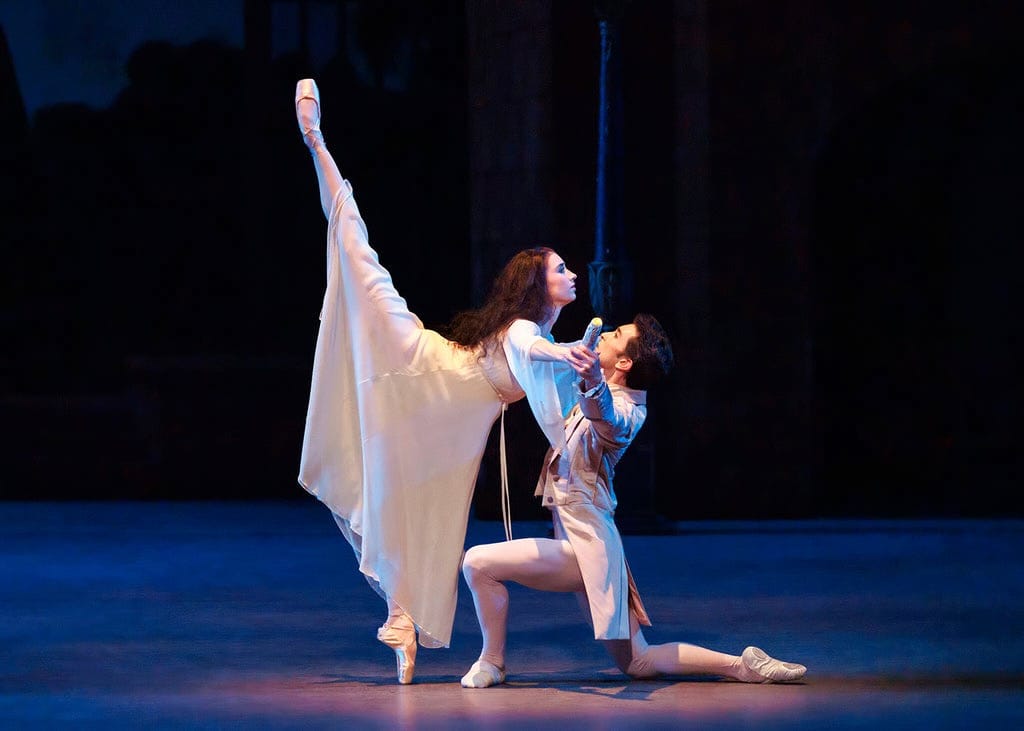
Alexa Maxwell was an unusually vibrant Sleepwalker, rushing in with an intense desperation, sensing but not seeing her surroundings; she really seemed close to falling off the edge of the stage. She was a haunting combination of urgency and obliviousness and seemed to melt into the air as she avoided the Poet’s grasp.
Anthony Huxley was a dignified Poet but without the sense of isolation and yearning some can give the role; he seemed confused by the Sleepwalker rather than enthralled with the vision of the unattainable Romantic ideal. This may have been in part because he seemed so happy with the Coquette (Brittany Pollack), who danced the role with a puzzling softness, as if the Poet were her true love. When he first appeared in the square, she seemed about to break into “Some Enchanted Evening” and she danced pas de deux, where the Coquette usually faces away from the Poet with a look of cold triumph, as if she were just too shy and overwhelmed to look at him. They seemed to be having a cosy little canoodle during the divertissements and she seemed broken hearted when she saw the Poet with the Sleepwalker and overcome with grief and shame at her treachery. The aura of mystery and danger, of some hidden evil in the Baron’s establishment but Maxwell’s vivid Sleepwalker showed how haunting the ballet can be.
© 2023 Mary Cargill



