Dances in the Round
"Fast Forward", "Gravity", "Anna's Last Day", "Sunrise", "Dark Forest"
New Chamber Ballet
City Center Studio 5
New York, New York
February 11, 2017
Miro Magloire's all-female six-member New Chamber Ballet performed five of his works in his usual home, the modest, informal Studio 5. It has no wings, lighting, or sets, which allows the audience to get up close and personal with the dancers. Magloire, as usual, introduced each piece, making it seem as if the audience were invited guests at a private performance; he had rearranged the seats so the audience was in a circle surrounding the dancers, so the audience got to watch each other watching the dancers, an interesting and lively experiment.
The first dance, "Fast Forward" from 2014, set to Beethoven's Rondo for Violin and Piano, was equally lively; Magloire is committed to live music and his frequent collaborators, Melody Fader on piano and Doori Na on violin, shared the stage with the dancers (Sarah Atkins, Traci Finch and Cassidy Hall). They wore attractive black leotards with short shirts (costumes by Sarah Thea) and their quick footwork and gracious arms matched the sparkling music. Atkins seemed to be the leader, a sylvan goddess with her two attendants, perhaps. It was a formal, finely constructed trio which built to a delicate crescendo, full of sharp jetés and quick changes of direction, a perfect opening ballet.
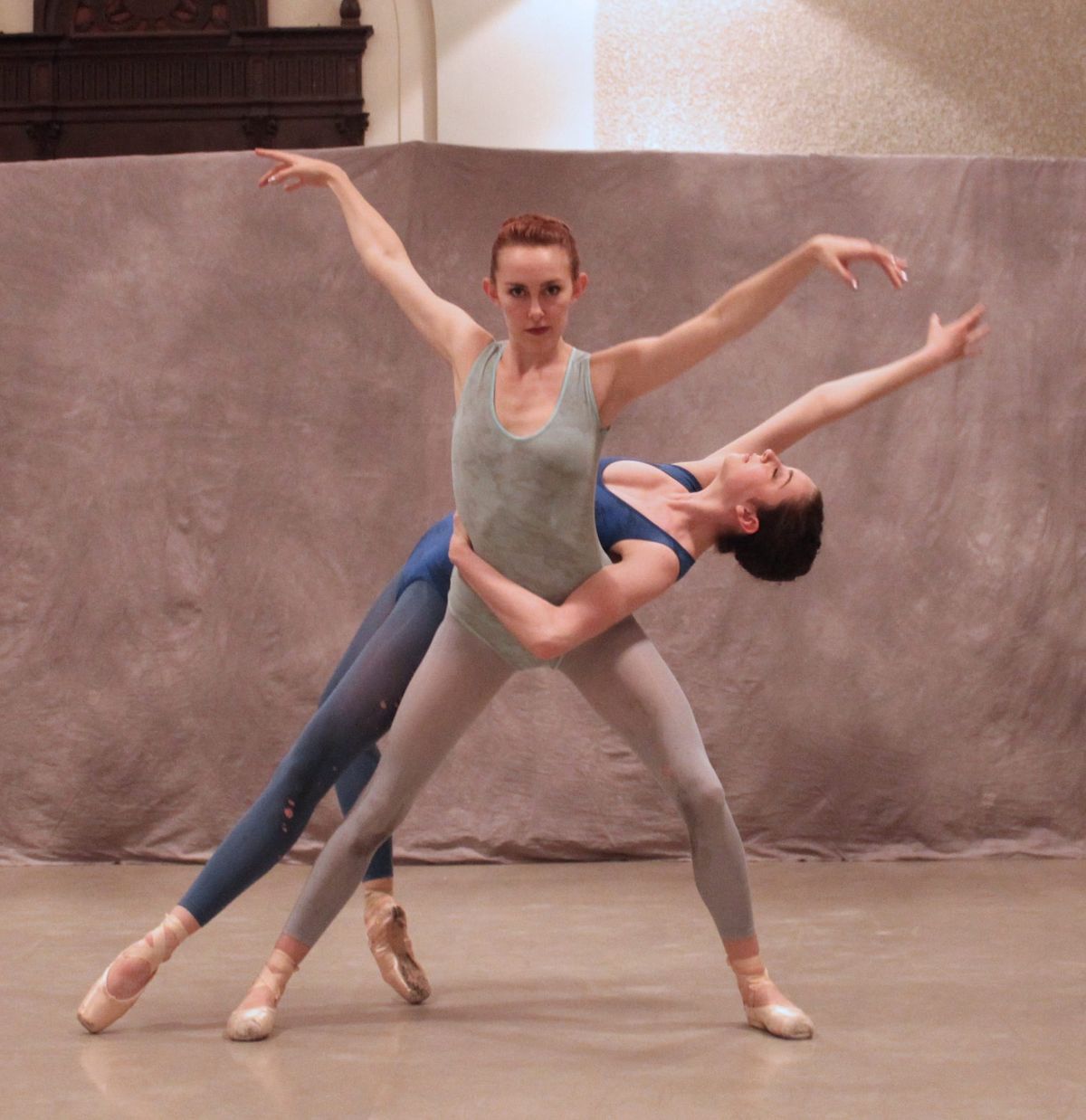
"Gravity", from 2015, is also a trio (danced by Elizabeth Brown, Gracie Holway, and Amber Neff). It is set to a violin solo by Friedrich Cerha (a contemporary Austrian composer, best-known for his completion of Alban Berg's "Lulu"). This was a long way from Beethoven but Magloire, a trained musician, has an impressive way of finding physical ways through the notes. The dancers moved through the uneasy, dissonant music supporting and leaning on each other, sometimes in threes ad sometimes in pairs, while the odd woman out watched carefully.
The dancers moved slowly and deliberately, as if they were in their own private world, keeping their eyes on each other. It was an abstract universe but their wary, careful moves and their intense gaze gave them a human warmth.
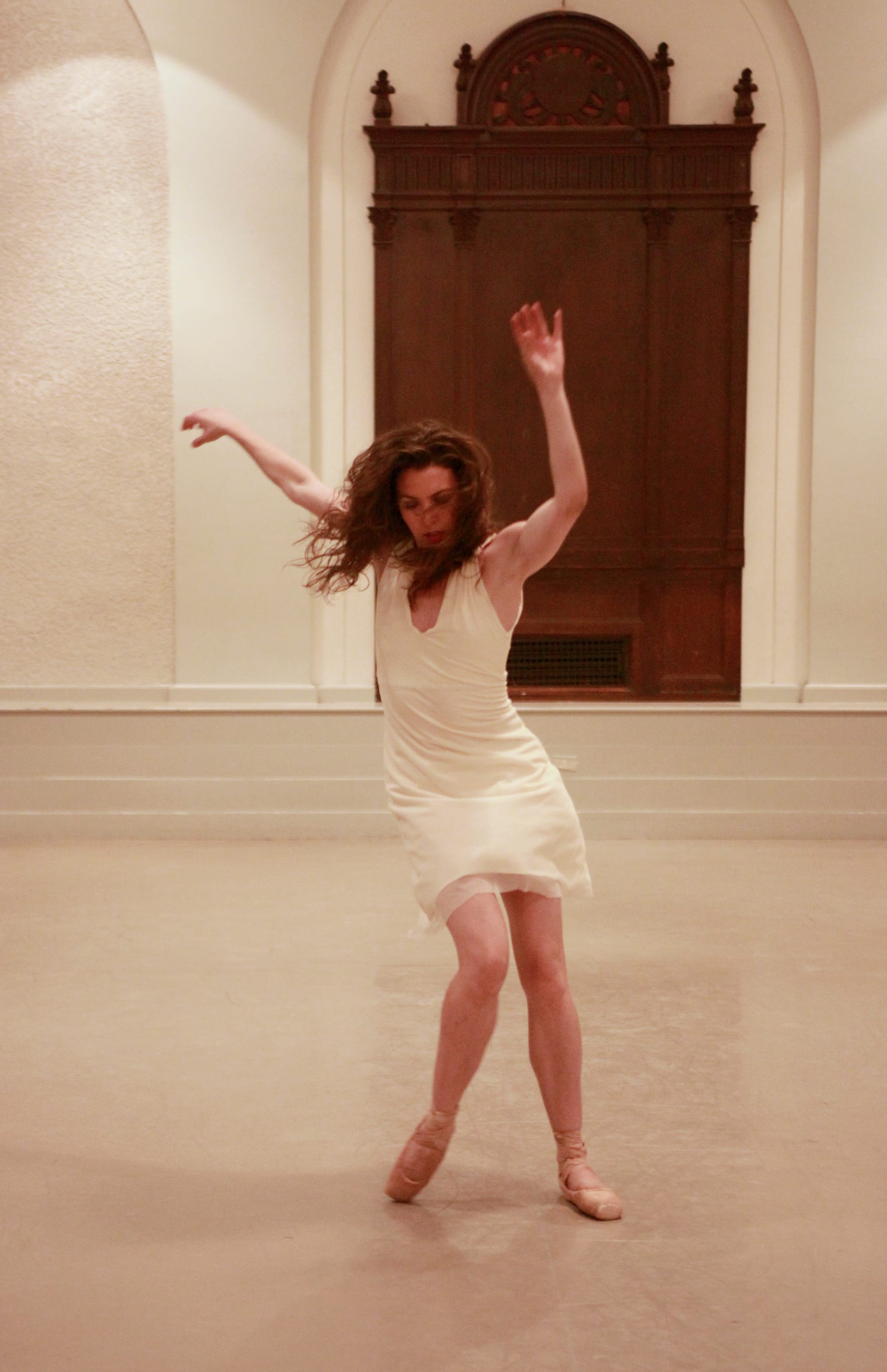
"Anna's Last Day", from 2013, was also human, though without warmth; it told the chilling story of Anna (Holway) and her ghostly sister (Atkins) relives the sister's suicide as Anna descends into delirium. The setting was minimal – two chairs seated side by side, as was much of the choreography, as Holman remained seated throughout the entire piece while Atkins moved around her, sometimes violently, sometimes seeming to share a memory. Every gesture and subtle change of mood had to resonate, and the dancers made each simple moves compelling, as the two mimed eating cake batter together, a memory perhaps of a happier time, which merged into the sister drinking poison as Holway watched helplessly until her mind, too, seemed to snap. The dancers gave it a riveting performance.
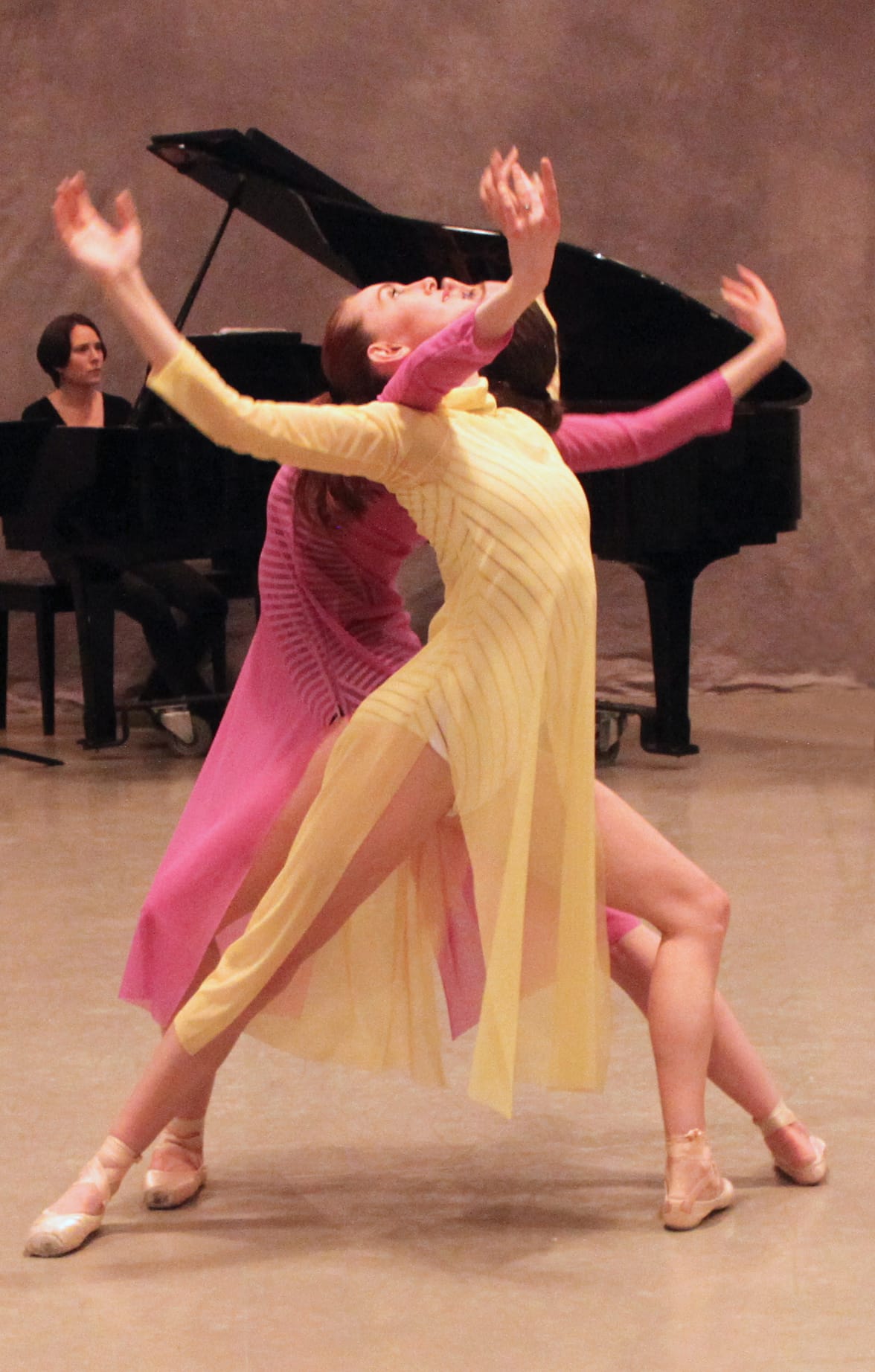
The mood brightened with "Sunrise", the only premiere, set to a piano solo by Ryan Brown. Four dancers (Atkins, Cassidy Hall, Holway and Neff) wore colorful tunics (again by Sarah Thea) of dawn-like colors (orange, lilac, yellow, and blue) and swirled around to the staccato music (by Michel Galante, played by Doori Na and Melody Fader). The sounds ebbed and flowed as the dancers formed constantly shifting shapes, ending in a calm heap. It was a vivid impression of a daily miracle that most people sleep through.
"Dark Forest", from 2016, was another nature quartet, danced with quivering intensity by Brown, Finch, Hall, and Neff, in black leotards with fringed sleeves, which made them look like giant birds (Sarah Thea designed them). Two of the dancers again wore ripped tights, as in "Gravity", though this seemed more of an affectation than a statement. Indeed, the piece, while striking, used many of "Gravity's" odd, supported poses and lifts and had some of the stylized miming used so effectively in "Anna's Last Day", though here it just seemed quirky. This piece did seem a bit derivative. There was nothing derivative, though, about the dancers' dynamic control and commitment and it was a privilege to be part of their circle.
Copyright © 2017 by Mary Cargill



