Colorful Assorted Parts
“Signs,” “Red Angels,” “Zakuski,” “Heatscape”
New York City Ballet
David H. Koch Theater
New York, NY
October 4, 2025
Although the program was titled Eclectic NYCB, the combination of “Signs,” “Red Angels,” “Zakuski,” and a new to the company this season Justin Peck ballet – “Heatscape” set to Bohuslav Martinů’s music – registered more as an assortment of stripped-down, thematically minimalist styles than an eclectic curation. The takeaway: this type of dance is comfort-territory for the company, even when the choreography is flawed.
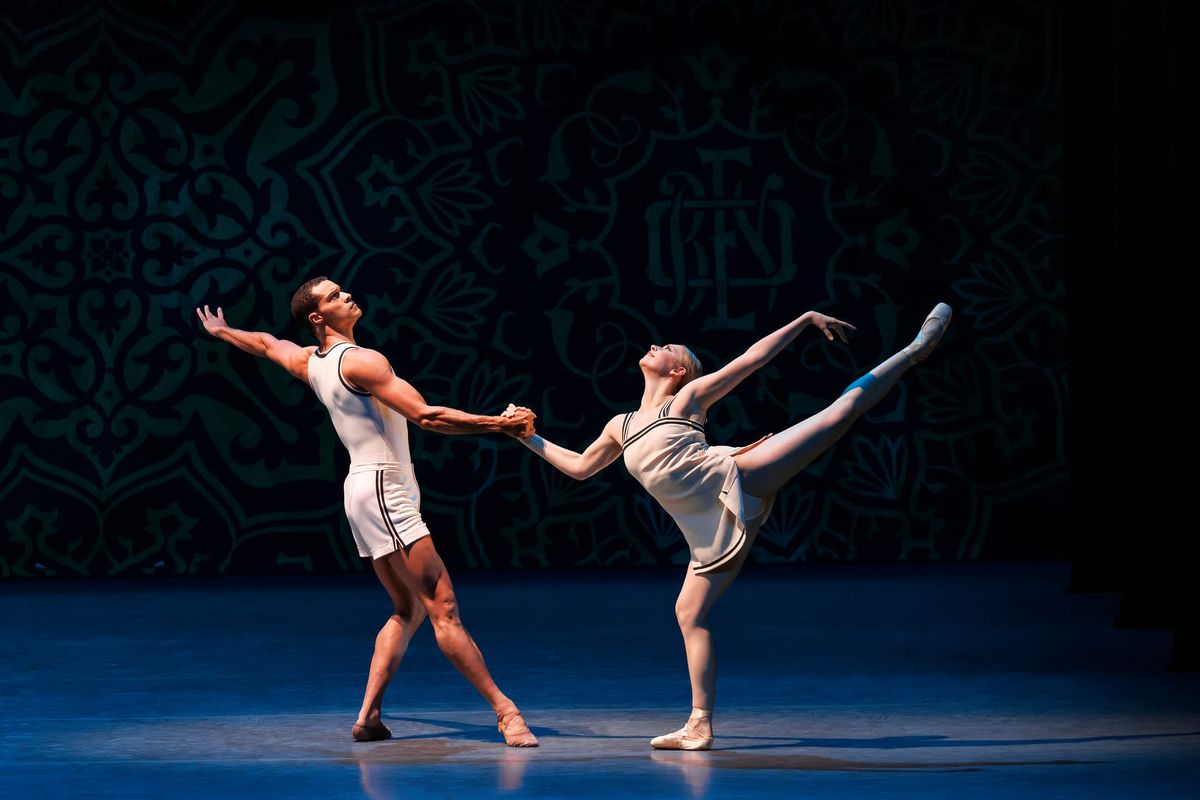
Danced by an all-new second cast on this night, Peck’s work was a predictable member of the pantheon of his dances, in many sections calling back his “Everywhere We Go,” “Year of the Rabbit,” and, to a lesser extent, “Copeland Dance Episodes.” First created for the Miami City Ballet in 2015, the work arrived in New York with an aesthetic and sequencing that was oddly reminiscent of David Foster Wallace's novel “Infinite Jest,” so evocative it was with a tennis academy-styled costumes, repetition and rapport of dancers, and quirkiness in presentation; but also with its futile attempt to endlessly entertain. The ballet struggled with pacing, particularly in its opening sections, and the featured duet in the first movement, danced beautifully by Miriam Miller and Peter Walker, relied heavily on familiar poses and arabesques that felt pulled from a choreographic catalogue rather than freshly imagined for the music and theme. It was not anything new, but also simplified.
The second movement compounded these issues, this time with Dominika Afanasenkov and Preston Chamblee in the lead. Here, extended passages of walking interrupted the dance's momentum, though some of the blocking felt novel and uniquely Peck-esque, like the diamond cluster formation of the corps whose repeated hops served as an ensemble-fueled focal point. Then, the third section reached for something more energetic, channeling the vigor of Peck’s “Copeland,” with great group dancing and individual dancers taking turns having the stage to themselves to showcase their skills. They did shine, but with so much emphasis on solos and duets – hardly Peck’s choreographic forte – the ballet sacrificed the ensemble coherence that distinguishes Peck's strongest work.
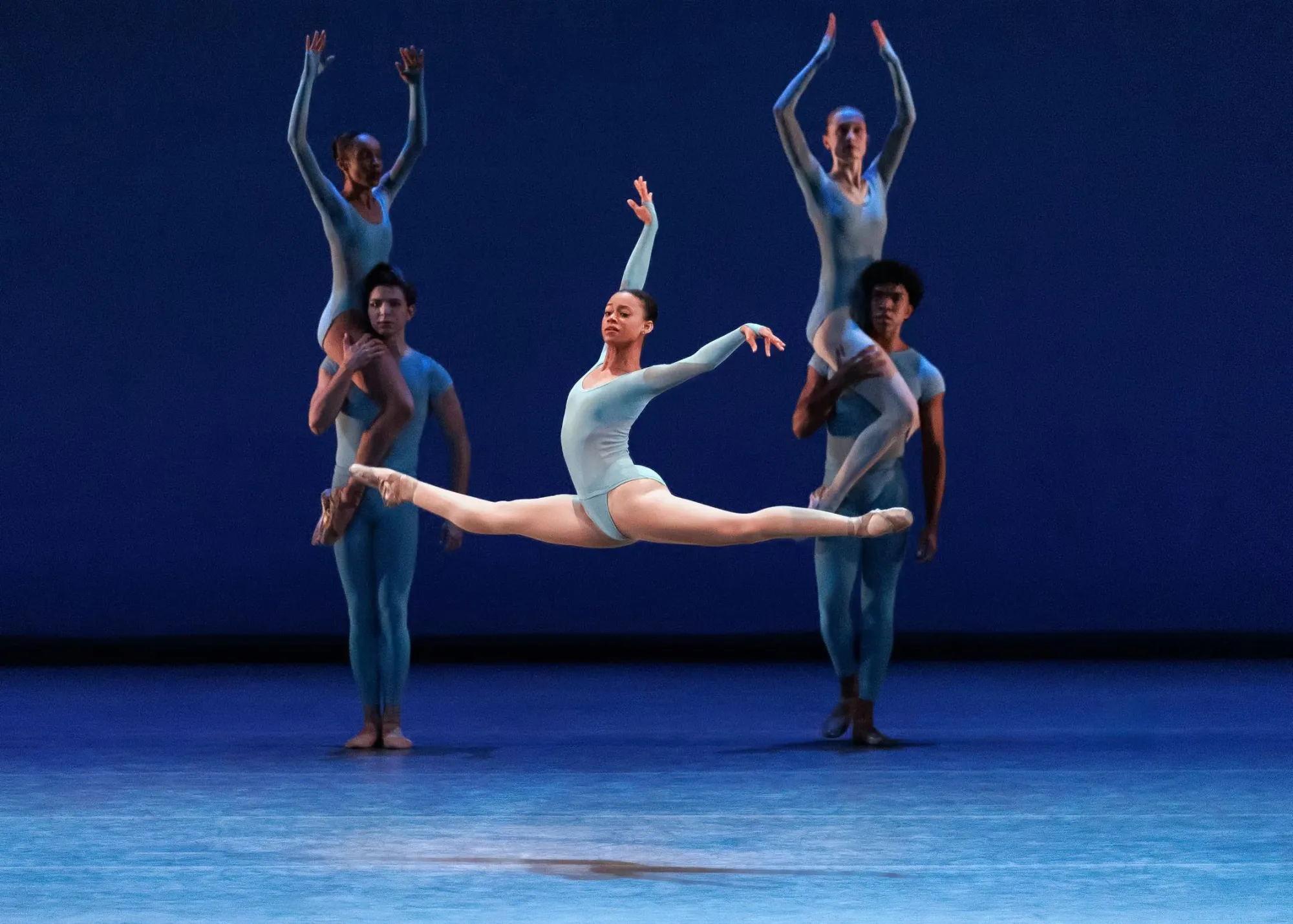
That was all at the end of the program which began with Gianna Reisen’s “Signs.” Receiving frequent programming this year, and slated to appear again in the Winter 2026 season, the ballet oddly felt tentative rather than assured. The patterns that should have registered as crisp appeared muddled, and Olivia Bell's veteran interpretation lacked the conviction that once defined her approach to the lead role, feeling like a forced run-through rather than ownership of a work she could now fill with nuance. The few moments that still carried weight were her interactions with the pianist (the wonderful Michael Scales on this night), but that authority faded when she turned to direct the dancers in the later scene. Afanasenkov made her debut as the other female lead, struggling in the duet with Charlie Klesa, and looking about as uncomfortable with the physical demands of the choreography, and as unflattered by the work’s costume, as Bell.
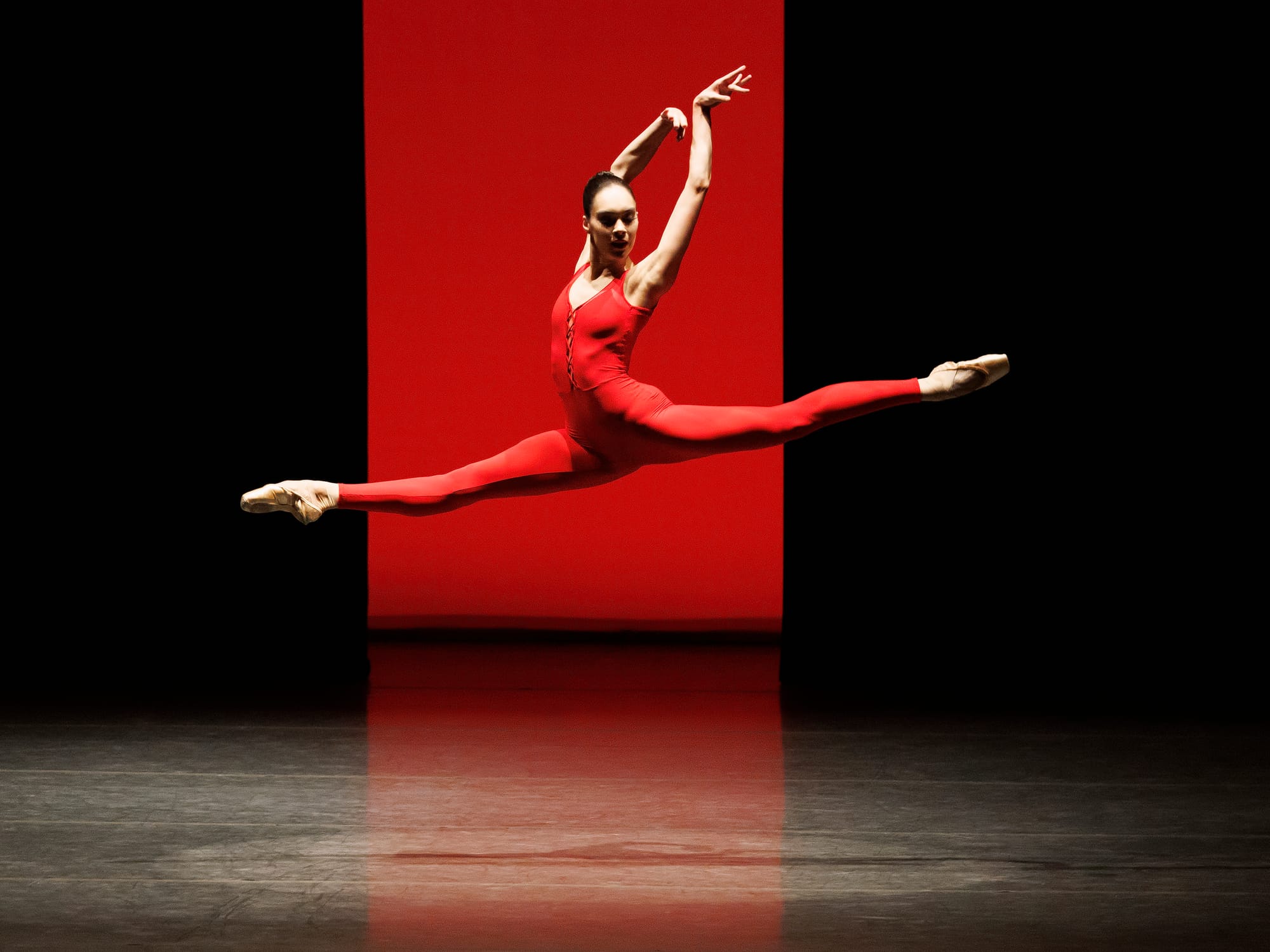
But there were some shining moments in the evening, and they came in Ulysses Dove’s “Red Angels.” It is hard to believe the ballet dates to 1994 when the cast, particularly Taylor Stanley and Mira Nadon, gave it such a sumptuous and commandingly fresh presentation. Stanley brought remarkable strength and power, while Nadon countered with an elegant fluidity of movement that dripped throughout the steps, only yielding to assured but feminine poses in her dancing or fierce assertiveness in the fouettés. The other leads, Ashley Hod and Jules Mabie fared no worse, and made similarly emphatic, though slightly less noteworthy statements. These angels were confident, powerful and maybe just a little devious. How fun!
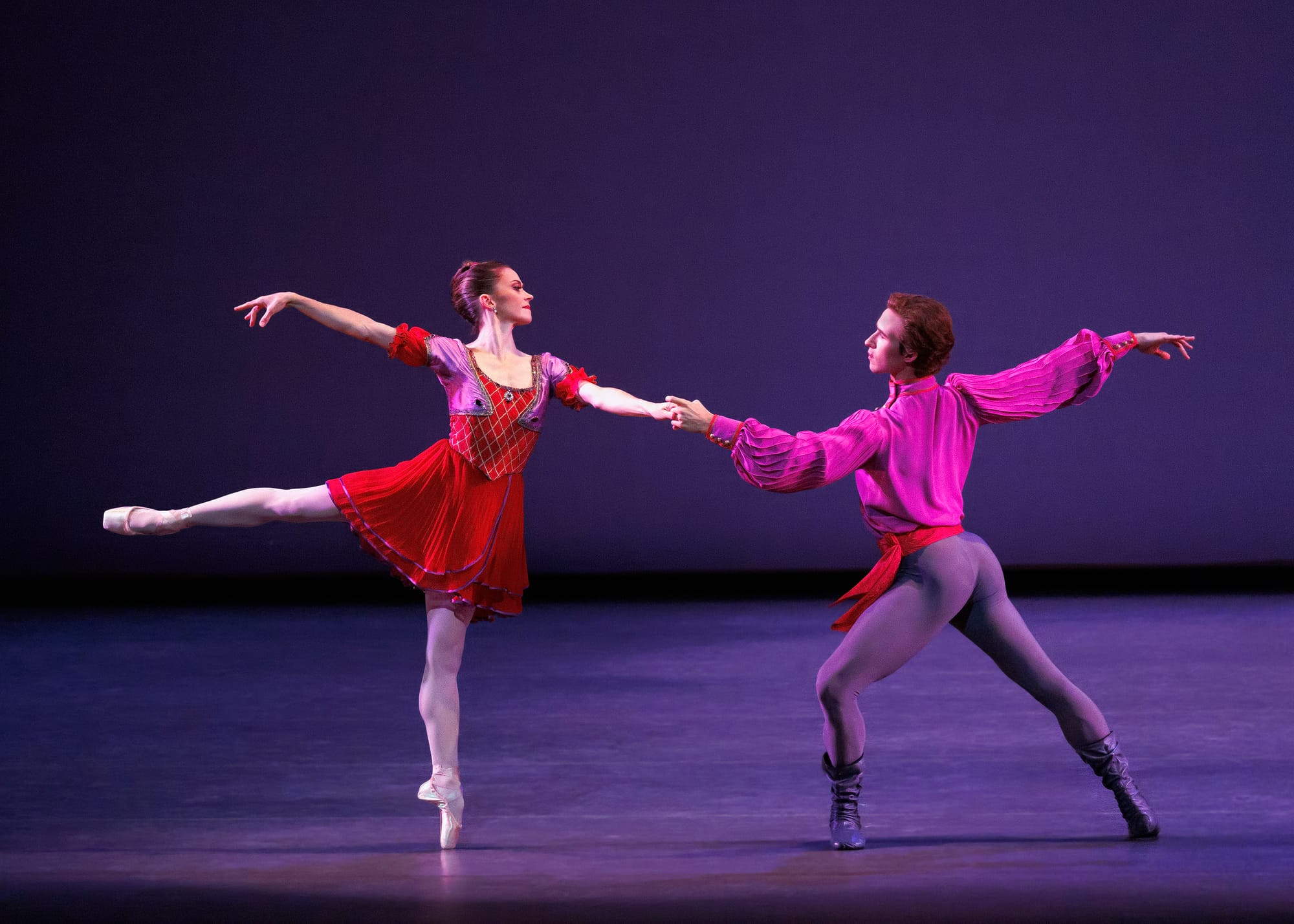
And then, there was “Zakuski.” This 1992 Peter Martins ballet is intended to give a tapas-like presentation of four Russian composers – Sergei Rachmaninoff, Igor Stravinsky, Sergei Prokofiev and Pyotr Tchaikovsky – and yet it failed to either distinguish the composers or meaningfully satisfy. The dancing was solid, particularly by Megan Fairchild, who seems an eternal technical force and doesn’t look for a moment like she’s a dancer in her last season. She and Joseph Gordon were reaching for inspiration and saving embellishments, capitalizing on the far more Hungarian than Russian flair in the dancing, with Fairchild at one point channeling her signature “Rubies”-styled presence. It was a no holds barred, and best possible effort at trying to make this work seem intricate and relevant.
copyright © 2025 by Marianne Adams



