Color Study
"Dances of Isadora", "The Beauty in Gray", "Piazzolla Caldera"
Paul Taylor American Modern Dance
David H. Koch Theater
Lincoln Center
New York, New York
March 21, 2018
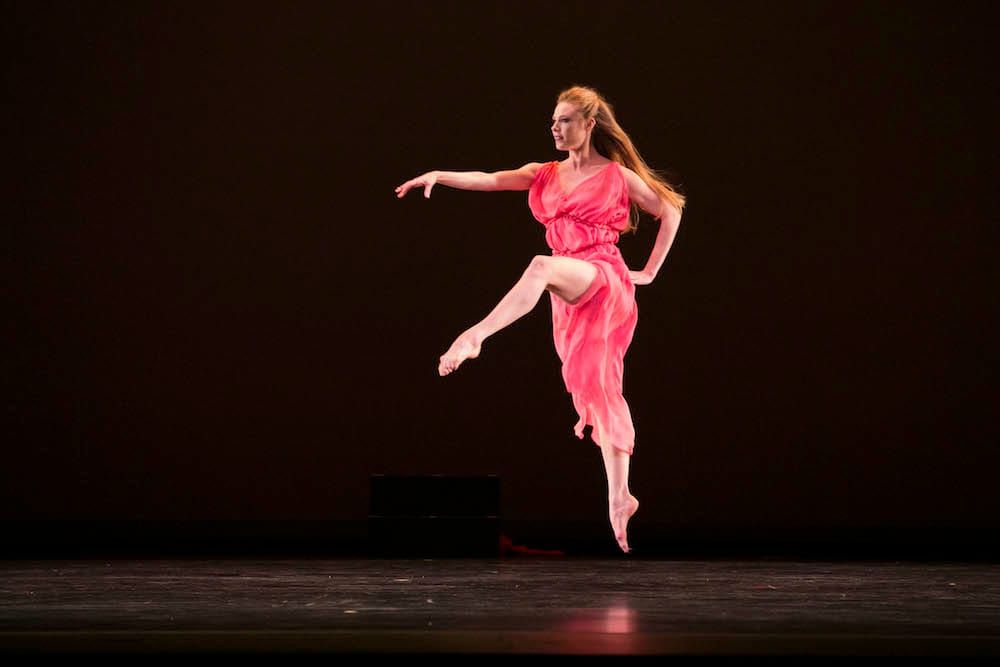
With recorded music and a solo piano on the program, the orchestra got the snowy evening off, though most of the audience, buoyed by a $10 snowstorm special, braved the weather and responded enthusiastically. The program ranged from Isadora Duncan to Bryan Arias' 2018 "The Beauty in Gray", and also included the steamy "Piazzolla Caldera". Each work, perhaps coincidentally, highlighted a specific color, pink for Duncan, gray (obviously) for Arias' work, and the sultry, sullen red of Loquasto's designs for "Piazzolla Caldera".
"Dances of Isadora" was a collection of ten solos by Duncan recreated by Lori Belilove, who learned them from two of Duncan's adopted daughters (the Isadorables); barring any miraculous discovery of a filmed treasury, this is probably as close as it is possible to come to style of the legendary, unique, and important performer. In her pink tunic Sara Mearns, from the New York City Ballet, showed that pink can have many shades as the dances, though physically similar, had a searching emotional arc. The simplicity -- just music and movement -- created a powerful impression as the on-stage pianist, Cameron Grant, played Chopin, with a few pieces by Brahms and Liszt. Mearns, with her bare feet and flowing hair, seemed to lose herself in the music and the low, bent knee jumps and skittering runs seemed completely spontaneous, as if she, and the audience, were hearing the music for the first time.
Mearns gave the mazurkas a magnificent voluptuousness, sensual without being vulgar. In "Les Funérailles", to Liszt, she was grief personified, using simple arm gestures and a vibrant stillness to embody a timeless sorrow without exaggeration or sentimentality. Even the dripping rose petals of the final Brahms waltz, evoked so memorably by Sir Frederick Ashton in his homage to Duncan, looked organic, as if the petals magically appeared from Mearns' fingertips. But the most potent impression was of complete freedom, as Mearns moved with her arms outstretched and her head flung back. Mearns' powerful and imaginative dramatic intensity was like being blinded by pink lightening and made the twenty-five minutes seem far too short.
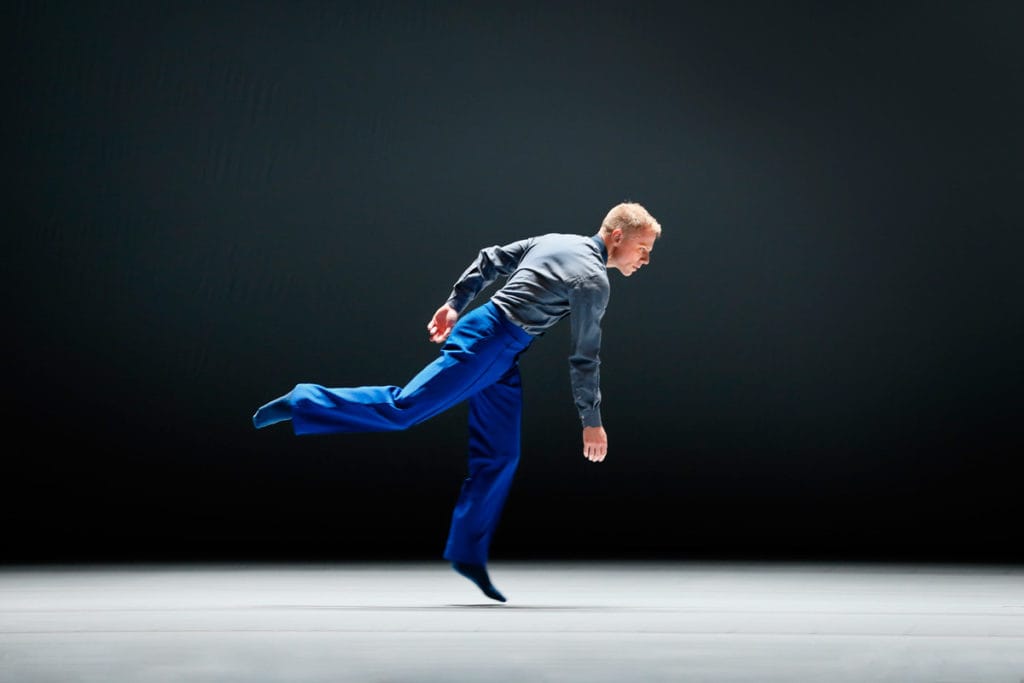
"The Beauty in Gray", on the other hand, seemed far too long. The droning recorded music by Nico Muhly and Ólafur Arnalds had little rhythm or variety and the choreography emphasized separate, staccato twitches which looked impressive but not interesting. Poor Michael Trusnovec had to hoist himself up by the neck while being spun around in the inevitable circle of light.
The gray background and dramatic lighting (in addition to the circles, several scenes started with the dancers silhouetted against the gloom) and the stylized violence and make-up hugs tried to set a mood but the dancers' blank, impassive stares gave everything a ho-hum quality. It does take a certain talent though, to take eighteen of these vibrant, individual, and interesting dancers and made an anonymous, undifferentiated mass.
"Piazzolla Caldera" in Taylor's sullen, angry red color scheme, also shows a mass of dancers but Taylor's wry, understanding eye can see the human need underneath the soulless bravado and the company burst out into smokey, smoldering set like they couldn't wait to grab on to the choreography. Taylor made this during the period when live music was prohibitively expensive for him (a time, fortunately, which seems to have passed) and some of his dances used recordings as a crucial atmospheric backdrop ("Company B" and "Black Tuesday" are two other examples of works which need the recorded music). "Piazzolla Caldera" uses the distinctive tinny, plaintive whine of recording to reinforce the isolation of the dancers as they wander through their dark red nether world. Parisa Khobdeh stood out with her fierce vulnerability as the girl looking for love, but all the dancers made the dark red work throb.
Copyright © 2018 by Mary Cargill



