Bread and Cheese
Paul Taylor Dance Company
"Aureole", "Troilus and Cressida (reduced)", "Brandenburgs", "Piazzolla Caldera"
David H. Koch Theater
Lincoln Center for the Performing Arts
New York, New York
March 13, 2012
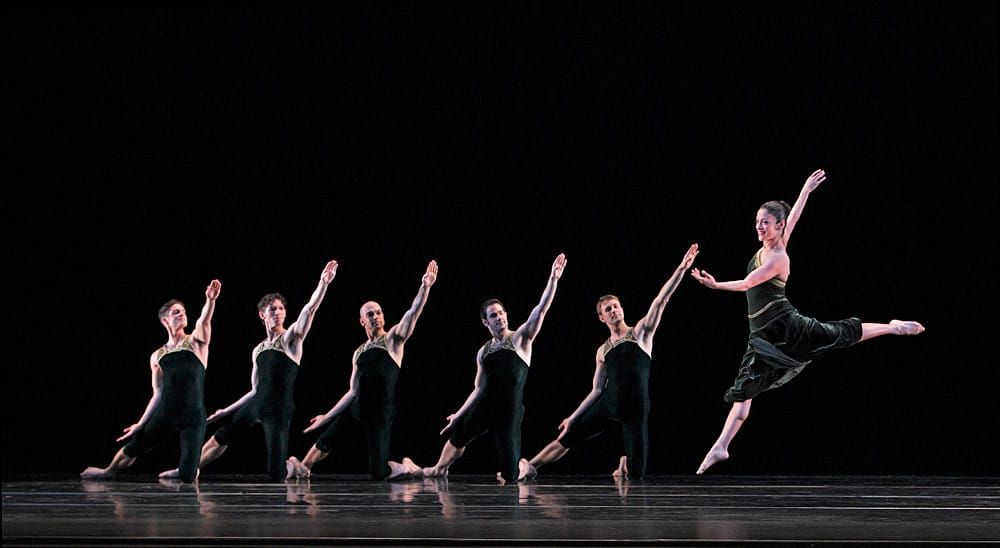
Paul Taylor made his first-ever appearance at Lincoln Center with a full and appreciative audience (the $3.50 tickets, in honor of the price of the original "Aureole" certainly helped). The prices may have been the same, but this performance was danced to taped music, an unfortunate requirement in the recent economic climate. The program included several of Taylor's substantial works, as well as a hunk of cheese, his jokey "Troilus and Cressida (reduced)". The Koch Theater is much larger than the more familiar City Center stage, and the black proscenium framing them gave an unusual distance to the dancers, but this distance also helped the audience see the shapes of Taylor's impeccably crafted choreography.
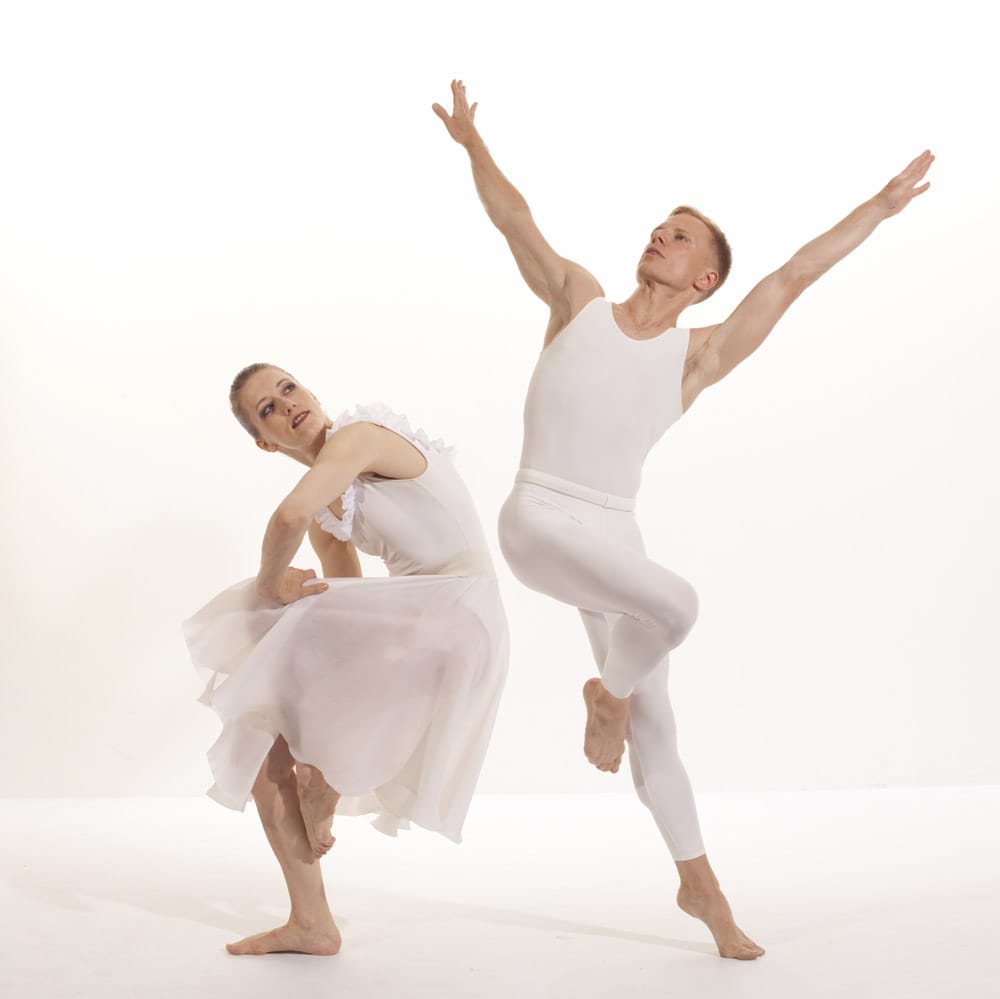
"Aureole", first performed in 1962, is one of Taylor's most important pieces, his affirmation of the place for joy in modern dance (and by extension, in life). The five dancers, all in white, perform a modern dance blanc, a serene frolic to Handel. The heart of the piece is an extended, exposed male solo, originally danced by Taylor (available on film). Michael Trusnovec does not have Taylor's physique, with those long arms, nor his off-centered darkness, but he is a simply marvellous dancer, classically proportioned, open-hearted, with apparently oil in his joints, as he merged seamlessly from one balance to another. Francisco Graciano, the other man, was crisp and fleet, tossing off some incredibly difficult knee bends with ease.
"Troilus and Cressida", from 2006, is a lighthearted send up of 19th century conventions, beginning with the overly familiar Ponchielli "Dance of the Hours", known, to those of a certain age, as "Hello Muddah". With its pretentiously meaningless Shakespearean motto "O Cupid, Cupid, Cupid" made literal in the three hyper-active Cupids in curly wigs, and its dorky hero (Robert Kleinendorst) whose pants keep falling down to show bright red underwear, this is a deliberately silly work. Taylor has skewed 19th century pretensions before, notably in "Offenbach Overtures", but that work has wit as well as humor. "Troilus and Cressida" has craft--the action is clear and musical, but the jokes are broad and often labored. It is the cheese to "Aureole's" bread.
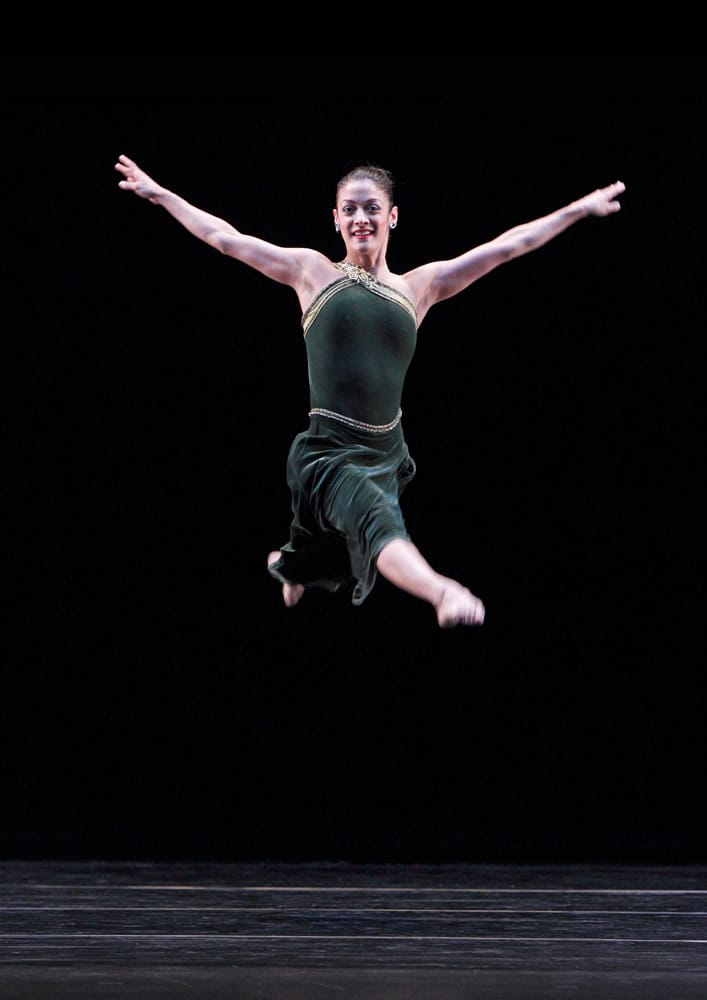
There is nothing cheesy about "Brandenburgs". It is a stunning work, similar in some ways to "Aureole", since it is set to Baroque music, features a meditative male solo, three women, and those powerful, swinging runs. The three women, Amy Young, Eran Bugge, and Laura Halzack, all have solos (perhaps a nod to Balanchine's "Apollo"). Young was especially majestic, Halzack enticing, and Bugge was a burst of energy. Trusnovec was again the featured man, flowing through his solo with a noble simplicity.
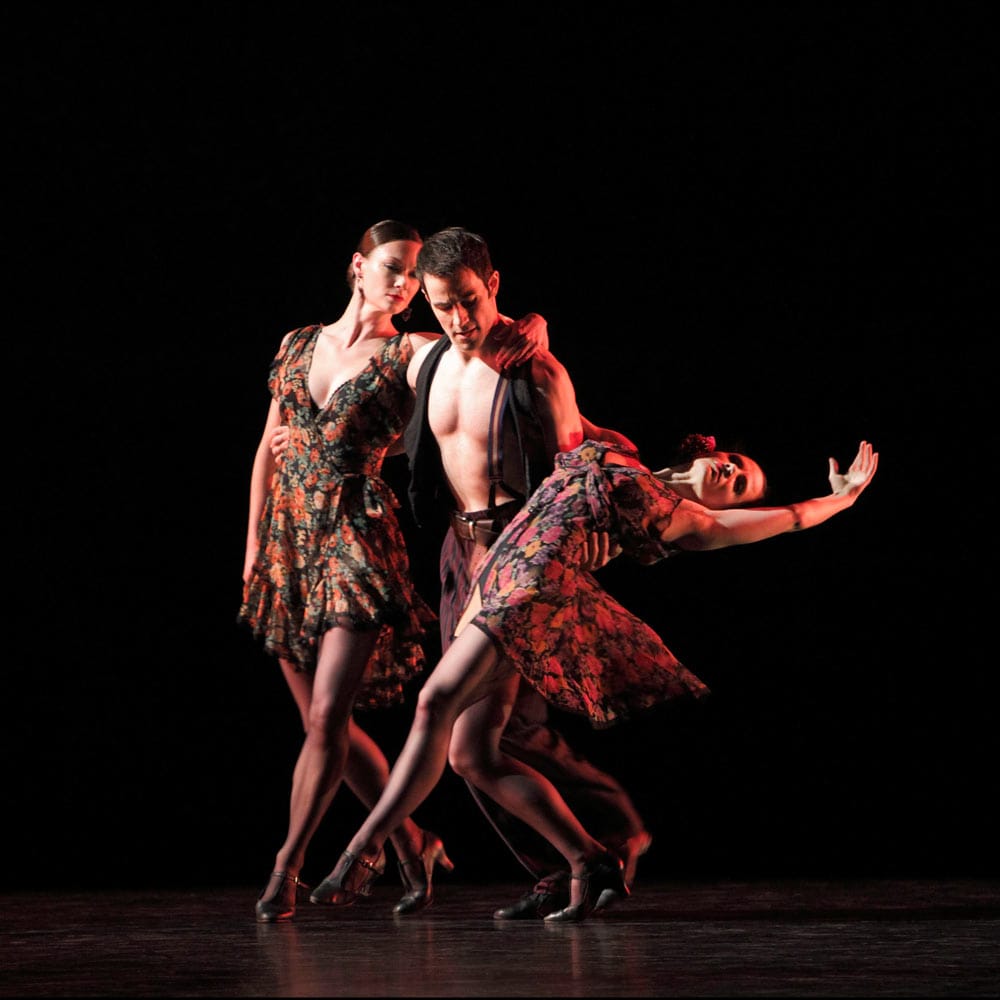
"Piazzolla Caldera", set to plaintive melodies by Astor Piazzolla, has little nobility. These dancers live in an underground world of stale beer and smoke, and Taylor captures both the brutality and the vulnerability so brilliantly shown in the dark setting and the slightly sleazy costumes. Parisa Khobdeh danced the role originated by Francie Huber, and she captured much of Huber's loneliness and tawdry desperation. It is a clear-eyed, unsentimental, sour yet ultimately sympathetic view of human need for companionship and the violence of which he is capable. The dancers, to a one, were astounding.
copyright © 2012 by Mary Cargill



