Black and White and Rainbows
Balanchine Black & White
"Monumentum Pro Gesualdo/Movements for Piano and Orchestra", "Apollo", "The Four Temperaments"
New York City Ballet
David H. Koch Theater, Lincoln Center, New York
May 5, 2011
Yes, a program of all black and white is not balanced, and the individual ballets would probably look more distinctive if they were set in a different context, but a stunning debut (Chase Finlay in "Apollo") and a vibrant and shimmering performance of an unqualified masterpiece "The Four Temperaments") made the evening one that few will forget. It opened with "Monumentum/Movements", a shorthand title for two different but frequently paired works. Maria Kowroski was the lead in both, partnered respectively by Charles Askegard and Sébastien Marcovici. "Monumentum" is a more courtly exercise than the spiky "Movements", with the corps (made up of six couples) echoing and reflecting the lead couples movements. Korowski was self-contained and private, letting the audience in on secrets without seeming to share them. She didn't flaunt her easy extensions, or exaggerate the poses, and gave a hypnotic, understated performance. Askegard, as always a noble partner, supported her with an elegant unobtrusiveness. "Movements" has only one man, and two groups of three women supporting the main couple--amazing to see how Balanchine can fill a stage with so few people. Kowroski put aside her elegant demeanor and was both enticing and deadpan as she pawed the ground. Marcovici danced the off-center steps with a luxurious combination of softness and weight.
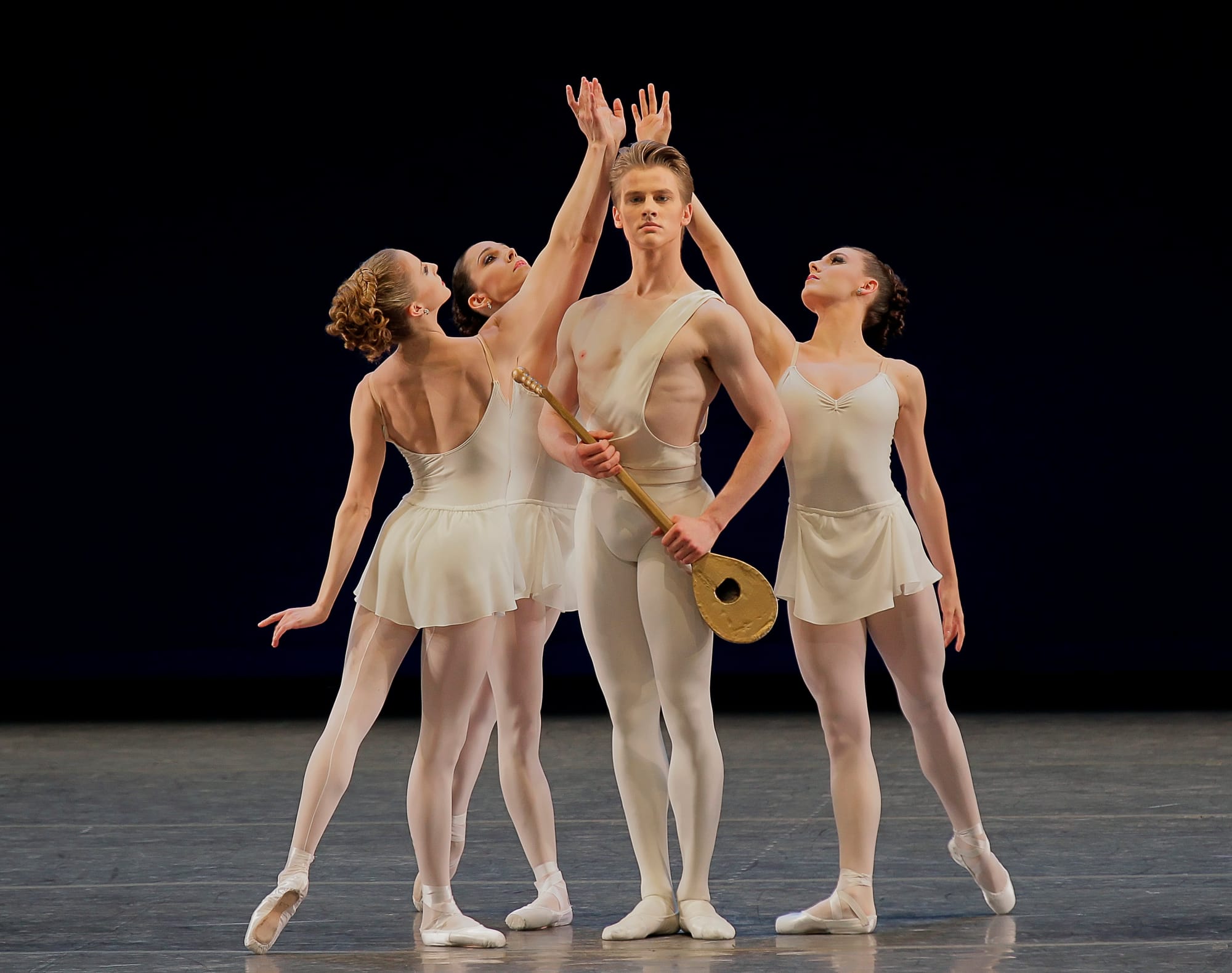
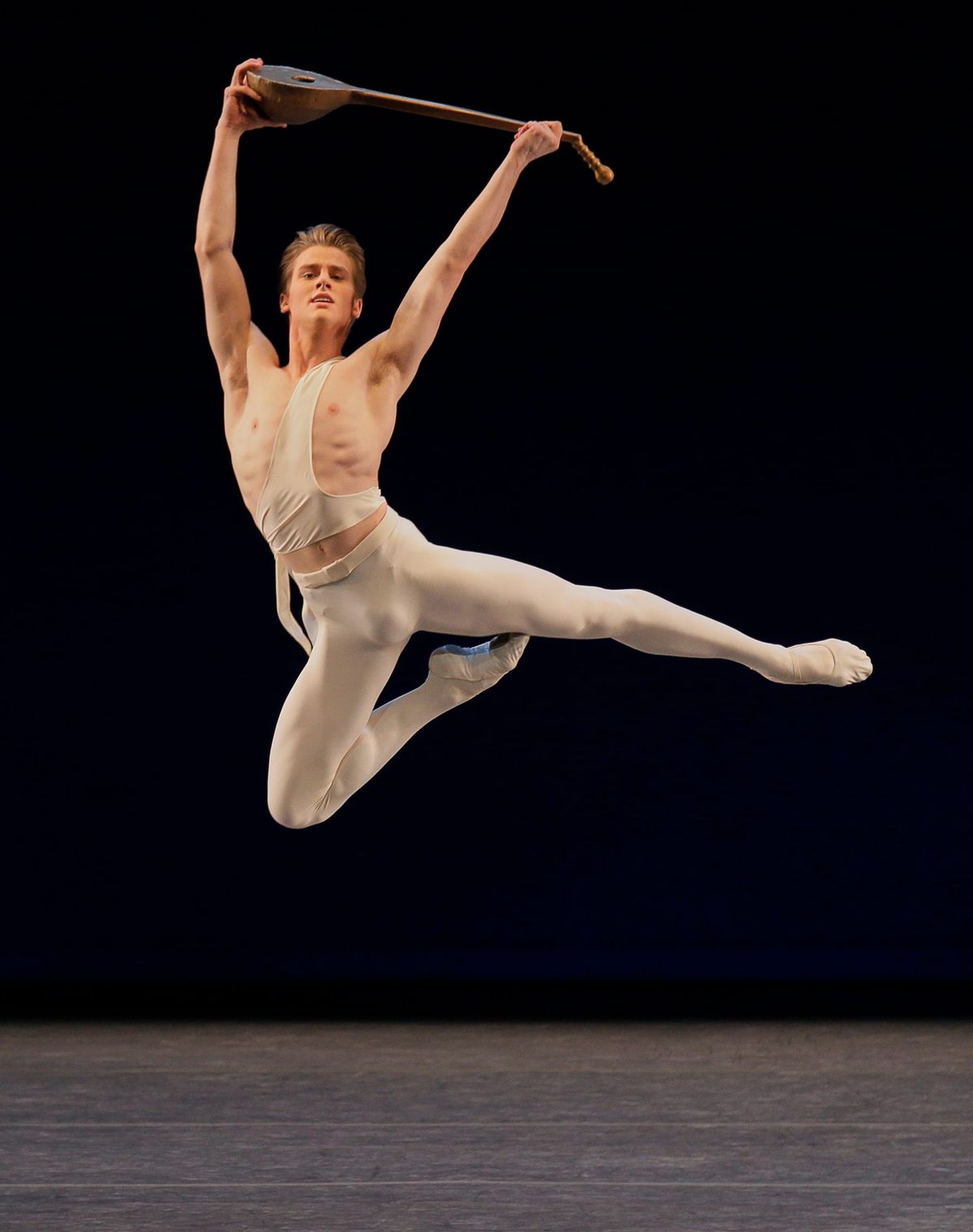
The corps dancer Chase Finlay has been on dance goer's radar for a while, noted for his scrupulous dancing and and unmistakable stage presence, but it is quite a jump from the occasional soloist role to Apollo. And jump he did, cleanly and softly. But this was more than just a technical tour de force, it was a true and thoughtful performance. There was no exaggeration of the young Apollo's rawness in the opening solo, just an honest portrait of a youth trying out his strength. There were intimations of immortality combined with a playfulness that was completely captivating. No, it wasn't perfect--the final walk to Olympus could have been given more power, but it was a debut that, I suspect, the audience will remember for years.
His Terpsichore was Sterling Hyltin, who didn't quite capture the mysterious allure and power of the goddess. She gave a serious, scrupulous performance, but it lacked individuality; her face, as yet, doesn't quite read from the audience. Her two cohorts, Polyphemia and Calliope, were Tiler Peck and Ana Sophia Scheller, whose dancing does reach every part of the theater. Their pas de deux was both perfectly in sync and utterly abandonded, as if they were being pulled together by the same impulse. Scheller, a stunning classical dancer who can be a bit bland, gave a finely calibrated performance of her solo, individual without any acting with a capital "A". Peck's phrasing of her solo was musical and thrilling.
Thrilling was one of the many words that could be used to described "The Four Temperaments", which looked scrupulously rehearsed. It's astringent yet melodic music and still modern after all these years choreography never get old, but this was a finely honed and focused performance. Gonzalo Garcia was Melancholic, and gave a nicely calibrated version, never descending into melodramatic flailing. Meagann Mann and, especially, Georgina Pazcoguin, as his two tormentors, danced with an almost frightening intensity, giving the section an unusual dramatic flair.
Jennie Somogyi's Sanguinic, always beautifully danced, was especially radiant, as she swept through the music; at one entry, she seemed so much a part of the music that she seemed to float on like a beam of light, and the audience responded with an astonished burst of applause. It was an electrifying performance in an evening of fine dancing, and proved that black and white have all the colors needed.
copyright © 2011 by Mary Cargill



