Bits and Pieces
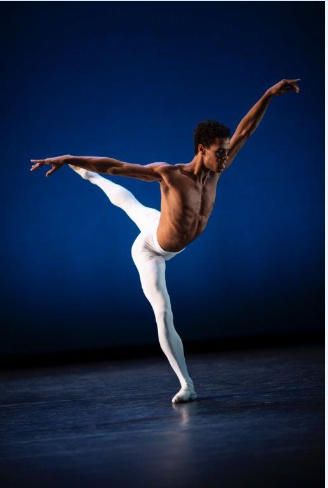
"Asphodel Meadows pas de deux", "Dance of the Blessed Spirits from 'Orpheus and Eurydice: Dance in the Elysian Fields,'" "Concerto pas de deux", "Within the Golden Hour (two duets)", "Obsidian Tear," "Qualia pas de deux," "Jojo," "Five Brahms Waltzes in the Manner of Isadora Duncan"
Ballet Festival Program A
The Joyce Theater
New York, NY
August 6, 2019
Once upon a time, the Royal Ballet was a reliably frequent visitor to New York City. The locals knew its dancers, repertory and history almost as well as those of the home teams. The high cost of touring put an end to such familiarity. So the prospect of seeing even a small sliver of the company, in combination with the dearth of ballet in town in August, filled the Joyce with an enthusiastic audience. The program, comprised of solos and duets and over in eighty minutes, was a lightning fast Cook's tour of the company's history, dancers familiar and new, and repertory, spanning Ashton and MacMillan, but with the accent on the younger generations, and dances less than a decade old.
The duet from "Asphodel Meadows" opened in a landscape familiar from other works by Liam Scarlett: a dark stage with the dancers, Romany Pajdak and Calvin Richardson, picked out in golden light. The dancers stood, facing front, with the space of a stream between them. It became clear that this was a couple at its most harmonious when apart, often in two horizontal and parallel planes across the stage. For the middle of the piece, set to the second movement of Poulenc's " Concerto for Two Pianos in D Minor, was a study in stress, conflict, hostility and knotty partnering. Calm, if not harmony, reappeared with the opening theme, as the dancers again occupied their separate safe spaces. The dancers' concentration and control held it all together.
Joseph Sissens was handed one of the most daunting assignments for any dancer: to step into a role made for Anthony Dowell -- and a solo at that. "Dance of the Blessed Spirits" is a study in dynamics and control, from rushing eddies to absolute stillness, with the transitions turning on a dime. Sissens looked rushed throughout, unable to take all the time he needed to settle into Gluck's and Ashton's realm of the cool and sublime, though his arms, if perhaps a little too baroque, were hauntingly fluid.
"Concerto pas de deux" takes the pure hard work and necessary self-absorption of a dancer's training and transforms them into choreography, performance and the gentlest of poetry. The modesty and concentration of Nicol Edmonds, imperturbable and imposing, even when used as a barre, and Lauren Cuthbertson, soft-edged and elegant, made the poetry glow.
The two excerpts from Christopher Wheeldon's "Within the Golden Hour", a ballet originally choreographed for the San Francisco Ballet, re-costumed when presented by the Royal, did not register as strongly. Sissens and Richardson bounded happily though one space-gulping duet, while Sarah Lamb and Marcellino Sambé were stuck in a dutifully conceived adagio which didn't seem to go anywhere.
The second half of the program opening with Sissens and Richardson again bounding around this stage, this time bare-chested in red and black sarongs respectively, through Wayne McGregor's "Obsidian Tear". Unusually, at least for a New York audience, the choreographer did not push the dancers' bodies into such extreme positions that one hoped there was an orthopedist in the house. That was left to the pas de deux from "Qualia" in which you feared for the hip joints of Sarah Lamb and Edward Watson, though their bodies looked beautiful and their demeanor unconcerned. There was one moment that hinted at something more than trained bodies pushed to the max. Lamb, with Watson behind her, both extended a leg upward, not quite to the ear but close, in perfect unison. Then each brought the leg down at different speeds. All of a sudden, there arose compelling questions about unity and velocity about steps and their use as the building blocks of choreography.
Charlotte Edmonds, the first Royal Ballet Young Choreographer (2015-2018), still in her twenties, describes herself as a neo-classicist who takes her cues from the music for her dances, here "Pandi Groove" by Chinese Man. Edmonds mentor, however, is Wayne McGregor. And "Jojo", a solo for the hard working Joseph Sissens, in a red bathing suit with white stripes at the sides, seems closer to "Obsidian Tear" with some street cred added than to the classicism of Ashton or of MacMillan in "Concerto". Like "Asphodel Meadows" the dance was anchored to the horizontal axis of the stage. Like "Within the Golden Hour" it took place without a sense of origin or arrival. Edmonds is still finding her own voice.
After three doses of isolated joints twitching, Ashton's "Five Brahms Waltzes in the Manner of Isadora Duncan" beckoned like a port in a storm. And so it seemed to be as the first chords of the Brahms rang out from the piano (Kate Shipway pianist, a distinct asset to the evening in "Concerto" and "Asphodel Meadows" as well) and a sense of authority, so often wanting during the evening, asserted itself. But Romany Pajdak couldn't bring Ashton's reincarnation of Duncan to life, stomping around the stage in march rhythm against the 3/4 time of the waltz and nowhere near conveying Duncan's sensuality or magnetism – an opportunity missed if not squandered. The steps were there; the essence of the dance – and dancer – were not.
A program of excerpts, particularly when pared down for touring, brings up a several questions. What happens to a work when it is excerpted? To what extent is the excerpt decontextualized? What happens when certain details, the stairs in "Dance of the Blessed Spirits", the corps de ballet in "Concerto", are omitted? Is supported adagio inherently exploitative (the man as porteur in "Concerto" the woman as manipulated body is "Asphodel Meadows" or the "Qualia" pas de deux)? In the complete ("Concerto" would be the exception here) those dancers would have an opportunity to reveal more of themselves than here. How does that change one's perception of them and of the work? For this audience, however, it was enough that the Royal Ballet, even reduced to an octet, was back in town.
copyright © 2019 by Carol Pardo



