Atmospheric Conditions
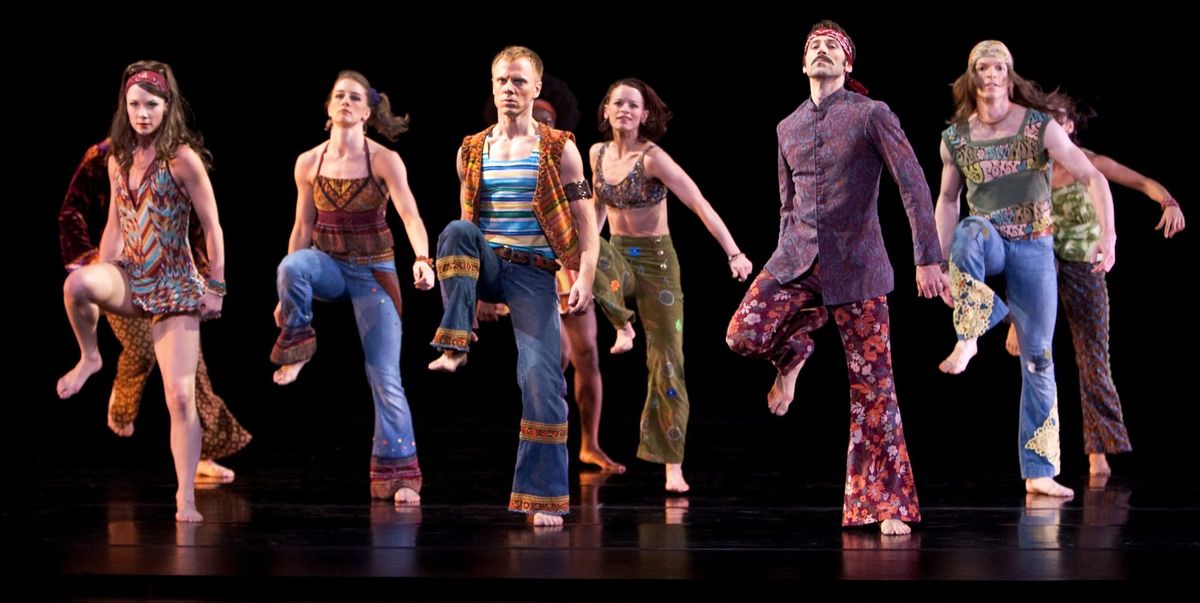
"Aureole", "Changes", "Eventide", "Piazzolla Caldera"
Paul Taylor Dance Company
David H. Koch Theater
New York, New York
March 17, 2018, matinee
The generously programmed matinee had four substantial pieces, from the breakthrough "Aureole" (1962) to the more recent "Changes" (2008), in addition to two powerful works from 1997, "Eventide" and "Piazzolla Caldera". While "Changes", to songs by the Mamas and the Papas, was enthusiastic, the earlier works were richer and more imaginative, showing Taylor's magnificent ability to evoke mood and develop characters without overt narrative.
"Aureole" was the first of what may be called dance blanc works, where god-like dancers frolic to Baroque music. It was a profound declaration of the power of structure and its classical form and popularity were severely criticized by the modern dance establishment of the time; fortunately Taylor stuck to his beliefs. Sean Mahoney danced Taylor's original role with the lyrical (and very difficult) male solo. Mahoney's long arms and impeccable control gave the solo a formal grace, with little accents of stillness. I did miss the slight undercurrent of searching and unfulfilled longing the solo can have, but his confident serenity as the shapes so flawlessly unspooled had its own haunting beauty.
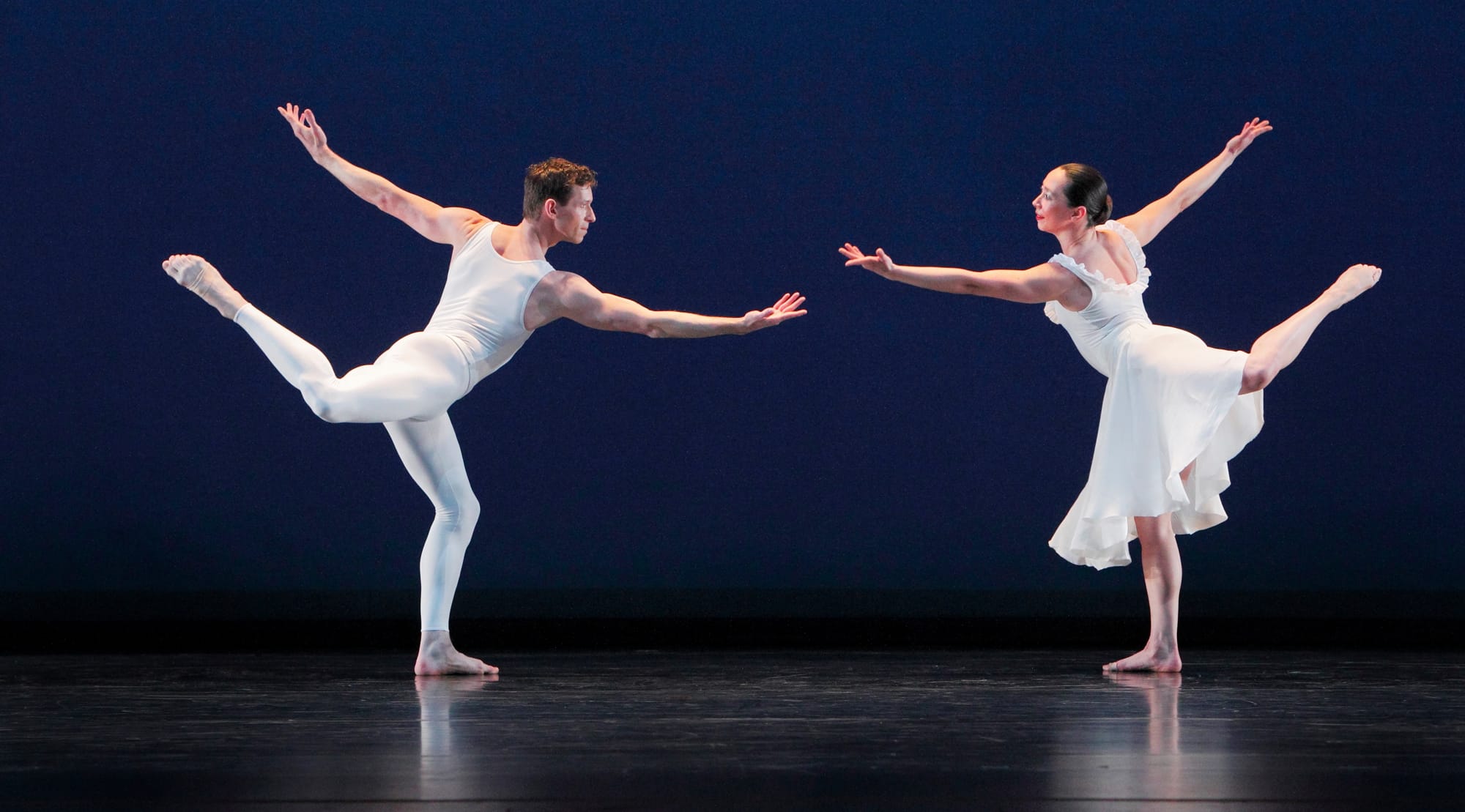
The five dancers (Mahoney, Robert Kleinendorst, Michelle Fleet, Heather McGinley, and Christina Lynch Markham) made the simple phrases (lots of outstretched arms and sideways skips) seem profound, opening out to the music and the audience. They all had a magical way of pausing slightly before moving, as if pushing the air aside or swimming through a rare, radiant atmosphere.
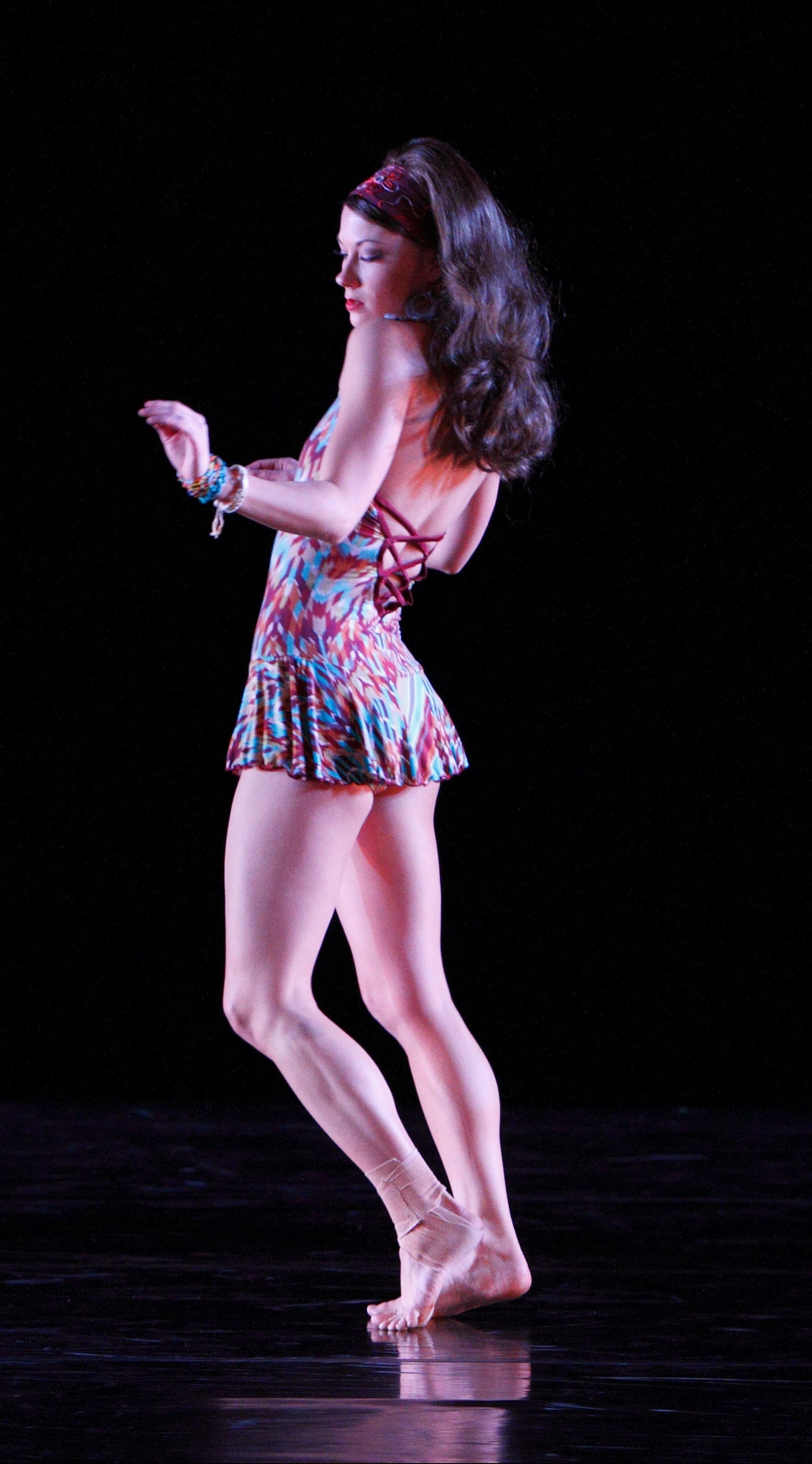
"Changes" had a distinct atmosphere too, as the bell-bottomed, headscarfed dancers shared a (presumably imaginary) joint. The cast fruged through six songs by the popular sixties band the Mamas and the Papas with brief, unconnected vignettes. Laura Halzack was a disco baby, climbing on male shoulders like a hipster Siren (the usually serene Halzack was certainly enticing), which Christina Lynch Markham hinted at the violent undercurrent of the rebellion, but it was hard to tell whether Taylor was saluting the 60s or satirizing them, and the piece, despite the vigorous dancing, seemed unfocused. The choreography could have come from reruns of "American Bandstand".
"Eventide", to music by Ralph Vaughan Williams, was on firmer ground. Its backdrop suggesting rural England and the early twentieth century, both by Santo Loquasto, place it in Thomas Hardy country and the dances are nostalgic without sentimentality. The five couples, for all the pink misty atmosphere, are not uniformly happy, as the brief, unsettling dance for Eran Bugge and Robert Kleinendorst showed. His strutting walk and abrupt approach reeked of selfish sensuality, though I missed the casual cruelty that Andrew Asnes, its originator, showed; Kleinendorst seemed a bit as if he were trying to live up to an image, swaggering a bit too broadly. Bugge was haunting as his helpless, hopeless victim and for the first time I realized that in the elegiac finale, as the ghostly dancers drifted slowly around, each couple stepping into the light for a brief reprise, that her arms reached out to emptiness as Kleinendorst slipped through.
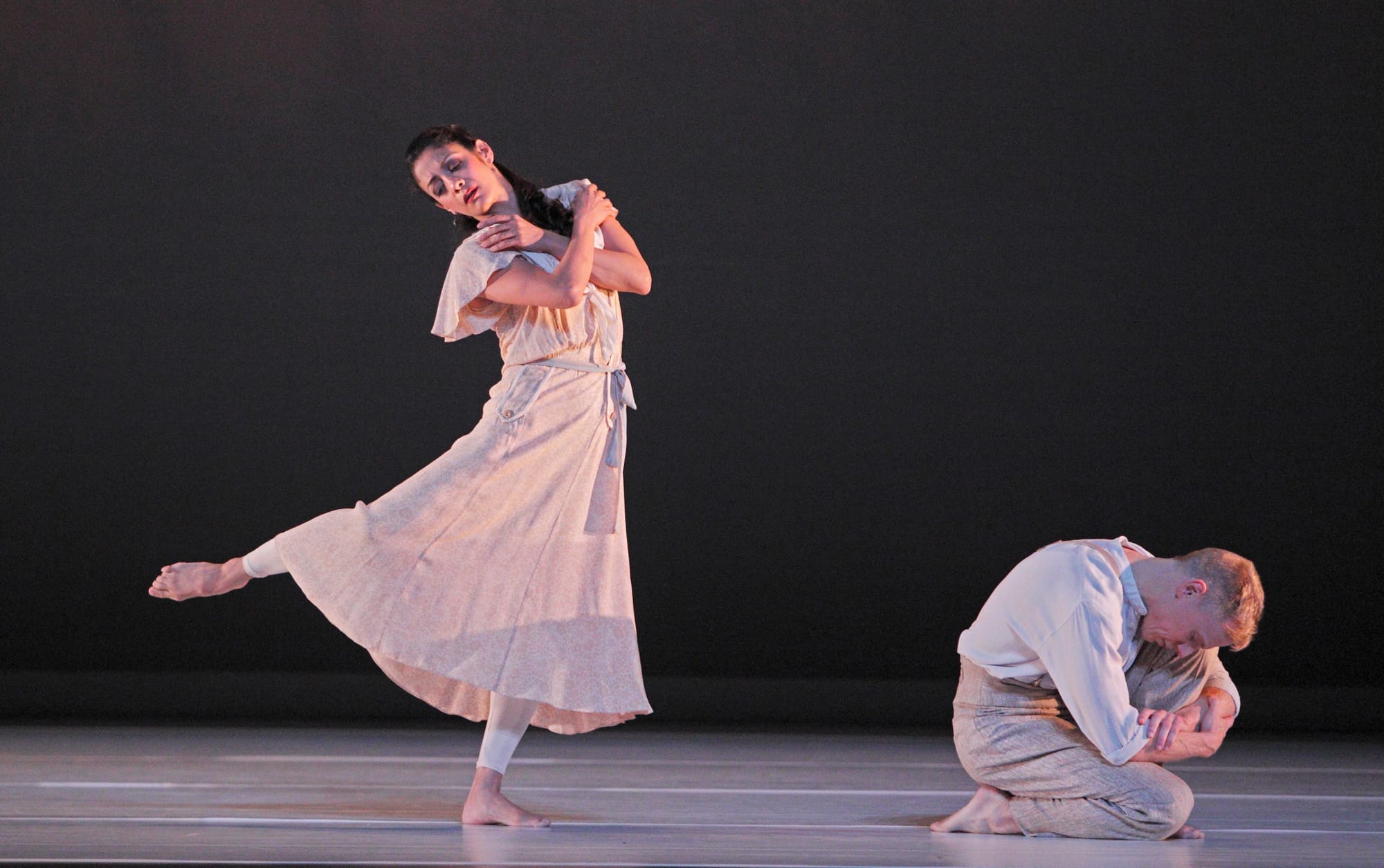
There were two happier couples (Jamie Rae Walker with Sean Mahoney and Heather McGinley with Michael Novak). Walker and Mahoney had a playful and flirtatious pas de deux, while Mahoney and McGinley were securely happy. Parisa Khobdeh and Michael Trusnovec were the main couple, with the first and the last dances. In the first one Khobdeh seemed to be suffering from some sorrow and as Trusnovec lifted her carefully and gently by her waist, it struck me that she might have just lost a child. Their positions were reversed in their second dance, as she comforted him. Their dancing was restrained, quiet, and absolutely beautiful. They had the final moment of the work, as they reached out in vain to each other before disappearing into the mist; love is strong, Taylor seems to be saying, but death is stronger.
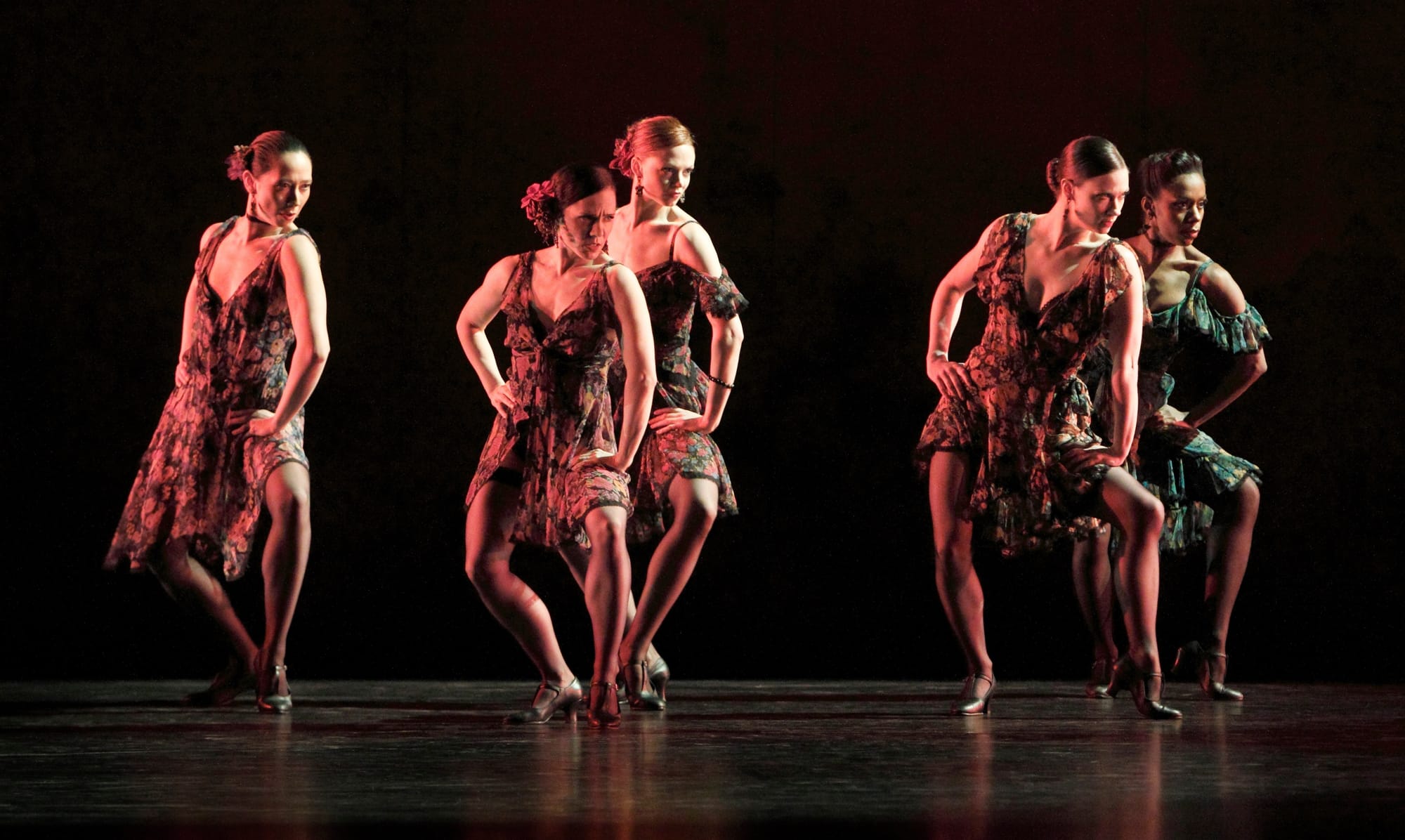
There is no love in "Piazzolla Caldera", Taylor's exploration of the tango milieu (without any tango steps). The deep red, harshly lit sets and the seedy costumes (again by Loquasto) combine with the hauntingly plaintive music by Astor Piazzolla to show a bar just west of Hades, where lost souls combine heat with emptiness. It is one of Taylor's bleakest works. Khobdeh was especially moving as the odd girl out, dancing with a bitter bravado concealing a desperate heart. Her solo had a sullen vulnerability as she reached out for her imaginary partner, looking in vain for someone to save her.
James Samson and Michael Apuzzo were also outstanding as the drunken comrades, falling all over each other. They gave the dance a tentative eagerness, downplaying the slapstick element, so there were no easy laughs as they oozed over each other with a shallow and temporary bonhomie. Trusnovec gave an especially hard edge to his athletic dance with a fearless and defiant Michelle Fleet, and the work is a triumph of atmospheric suggestion.
Copyright © 2018 by Mary Cargill



