Atmospheres
"Mozartiana", "Nuages", "The Firebird"
American Ballet Theatre
David H. Koch Theater
New York, NY
March 14, 2026, matinee
The sold out audience enjoyed two ballets plus one brief pas de deux, each with its own distinct atmosphere and music. Appropriately, nuages is French for clouds, which were floating in the background of the ballet Jiří Kylián set to Claude Debussy’s dreamy “Trois Nocturnes”. “Mozartiana”, to Tchaikovsky’s “Suite no. 4”, based on themes by Mozart, is another of Balanchine’s hymns to Suzanne Farrell, set in an exalted sunny realm. There was no sun in Ratmansky’s version of Stravinsky’s “The Firebird”, as blasted trees glowed red and poured out smoke. The dancers also glowed in their various ways, and the audience responded enthusiastically.
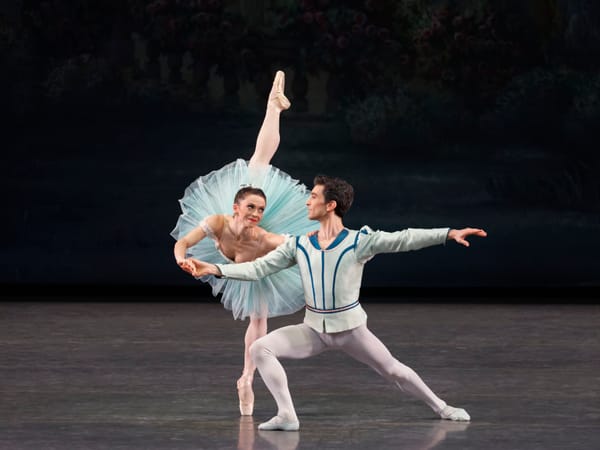
Christine Shevchenko and Andrew Robare (a corps dancer making his debut) were the lead couple in “Mozartiana”. Shevchenko danced the role in 2017, when ABT last performed it, but with nine years separating performances and one performance this season, it did feel like a special occasion. Though it didn’t have all of the otherworldly exaltation it can show, Shevchenko’s opening Preghiera was seamless and serene, with lovely floating arms an a gentle sincerity. Her dancing in the theme and variations section began with a fluttering charm and she negotiated the quick changes of direction and little hops on point with a witty flair, looking as if she was having the time of her life. But eventually her smile became a bit fixed, and her dancing seemed a bit uniform, a series of steps rather than a witting, charming, and varied conversation. The steps, though, were elegantly danced, crisp and precise.
Robare negotiated the fast, quick jumps with an elegant ease. He gave his solos a fine swinging quality, turning his head to follow his working leg with a definite Danish grace. (The Danish Ib Andersen originated the role, and his lilting style permeates the role.) The Farrell/Andersen partnership was unusual in that it wasn’t romantic—he was slightly shorter than she was and the constant back and forth of the solos made the work seem more like a friendly conversation than a love story. The taller Robare seemed to hover protectively and the final arabesque pose saw Shevchenko lean her head back into his secure arms—a more lyrical approach that had its own beauty.
Tyler Maloney gave the Gigue a sprightly elegance, flowing through the complicated counts. His syncopated shifting arm movements and quick jumps were sharp and clear but not flashy or cute. I was particularly struck by his awareness of the four demis as they entered behind him, as if he had conjured them out of the music. The demis, Scout Forsythe, Tillie Glatz, Courtney Shealy, and Paulina Waski, were more youthful and sunnier than the usual NYCB amazons, almost skipping to the music. Their eager dancing was irresistible.
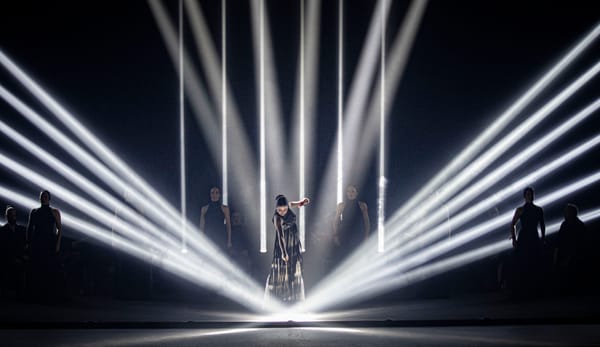
Hee Seo and Thomas Foster did not skip through “Nuages”, they flowed slowly and softly through the melting choreography; it had the fascination of a beautifully lit lava lamp. Seo’s light, boneless quality and supple back illuminated the shifting shapes and the many stunning but not overly-complicated lifts were handled by Forster with a gracious ease. There were brief hints of drama—the couple opened with their backs turned to the audience, seemingly oblivious to each other, and it ended with them in a pool of light going their separate ways, but it was an elegantly flowing lollipop, enjoyably sweet and welcome anytime.
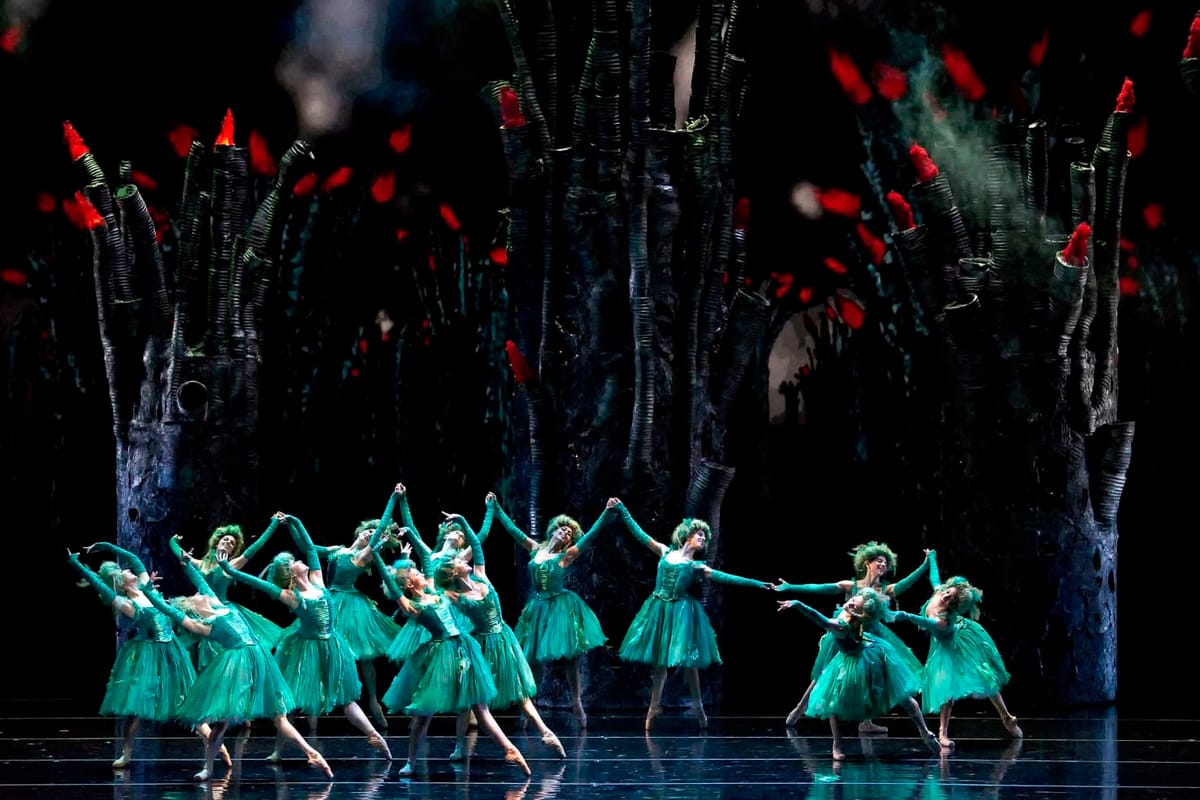
Ratmansky’s version of the old Fokine ballet has its sweet moments too in the daffy, somnambulant princesses, but there are darker moments. Marina Harss’s detailed and perceptive biography of the choreographer, ties the dark, smokey, glowing set to the 1986 Chernobyl disaster, the meltdown of a nuclear reactor in Ukraine (where his family lived). Ratmansky’s works are complex and multilayered, and certainly don’t reveal their secrets in one viewing, but I have found his “The Firebird” intellectually interesting, but artistically disappointing when compared with the beauty and majesty of the Fokine version. The nightmarish vista of the ominous, apocalyptic, glowing trees (brilliantly designed by Simon Pastukh) does not mesh with the juvenile jokiness of much of the choreography or the lilting Russian rhythms of Stravinsky’s music.
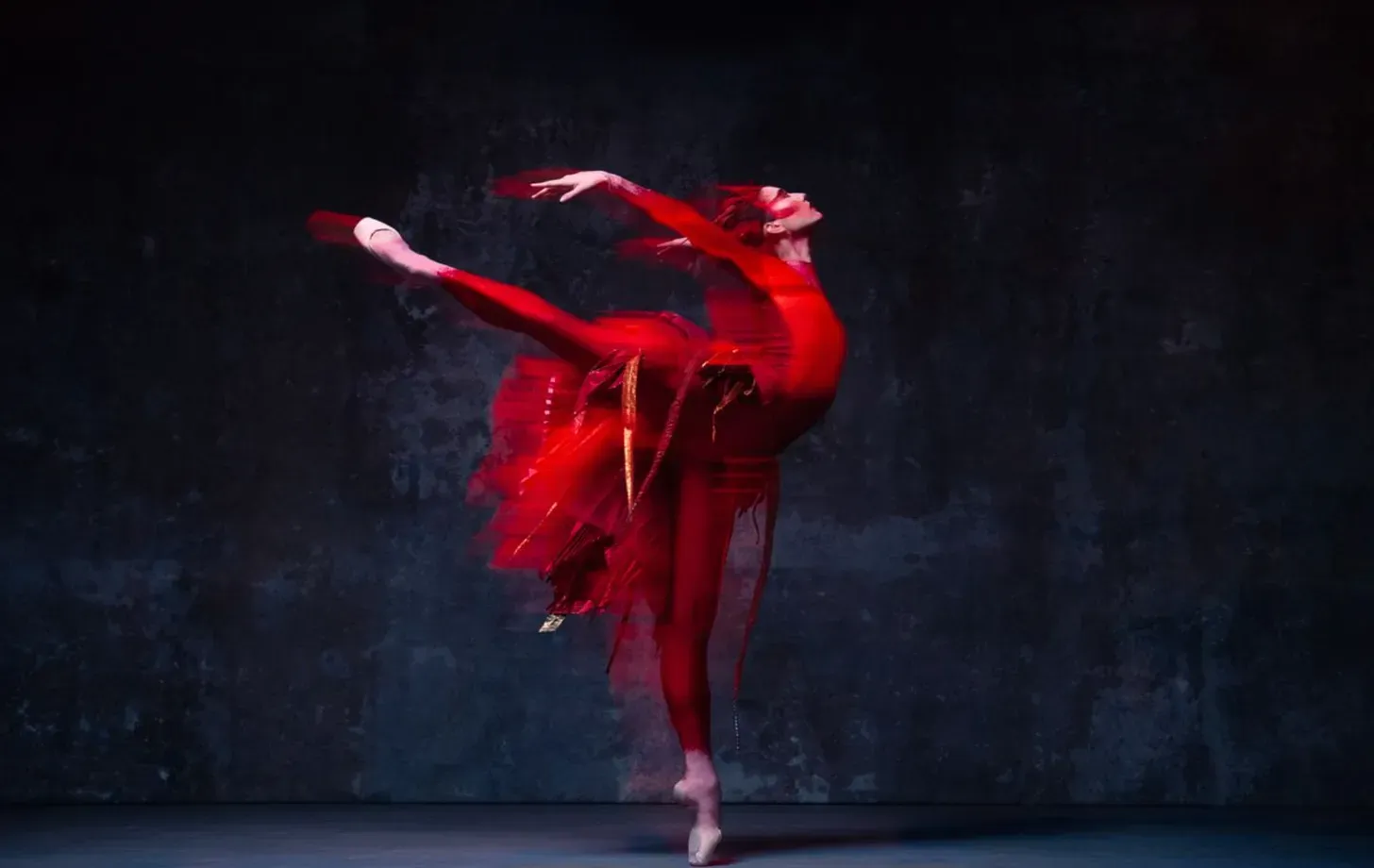
Ratmansky’s firebirds (in Russian folklore they traveled in flocks) were led by Chloe Misseldine in a remarkable debut. She did have a minor slip in her opening pas de deux with Ivan but recovered well and she was fierce and clear, with rapacious jumps and wing-like arms. Her tall, thin form, accentuated by the red leotard, did not look human, and her sharp little head turns and glaring eyes made it clear that she wanted her freedom. Ivan, Jarod Curley in his debut, looked dapper in his white suit, though I did miss the rustic grandeur (so vibrant in the music) of Fokine’s Russian Prince. Ratmansky’s Ivan is a bit of a child, tossing apples with the maidens (the legendary golden apples that fed the Firebird were lined up on the front of the stage) and scribbling “I love you” to the main maiden. Curley a charming Ivan, childlike but not childish, and his innocence set off Misseldine’s avian exoticism.
Ratmansky’s treatment of the maidens and Kaschei, the evil magician who has enchanted the maidens, were, for me, the most disconcerting aspects of the ballet. The maidens were played strictly for laughs, and instead of dancing a stately khorovod, they clomped around whenever they weren’t snoozing. Skylar Brandt was the head maiden, dancing like a wide-eyed automaton, with sharp, awkward moves. She gave the role an energetic spunk, but the choreography couldn’t help but make her look completely goofy.
Kaschei (Duncan Lyle), too, despite the ominous looming shadow projected in the background, was essentially a comic character, skittering on with green hair and gloves and a flamboyant black cape, literally blowing smoke. Lyle played it straight, without excess exaggeration, but without his monsters (the maidens got their music) and his threatening mime, he seemed like a cartoon. But the work is a chance to hear the complete score, and that powerful music creates its own atmosphere.
© 2026 Mary Cargill