Another Trip to Spain
"Paquita", "In the Night", "Symphony in Three Movements"
New York City Ballet
David H. Koch Theater
Lincoln Center
New York, New York
February 7, 2025
The New York City Ballet fielded a completely new cast of Ratmansky’s new version of Petipa’s “Paquita”, showing yet again, how rich the company currently is. It was followed by Robbins’ “In the Night” with yet more debuts, and closed with Balanchine’s majestic “Symphony in Three Movements”.
Allegra Inch, Rommie Tomasini, and KJ Takahashi danced the opening “Minkus Pas de Trois”, a preview, as it were, of “Paquita”. It did seem a bit out of place as a mere come on to the main attraction, and its difficult and exhilarating choreography deserves a better buildup; the group didn’t even get a curtain call with the rest of the cast. Takahashi’s had some fine moments, especially his juicy cabrioles, but he did have some issues with the turns. Inch and Tomasini were neat and elegant, especially Inch, with her Spanish-tinged arm movements, but as yet, they didn’t project much beyond the stage.
Tiler Peck and Roman Mejia danced the happy couple in “Paquita”; their opening adagio was especially limpid, with Peck leaning back on Mejia with a soft confidence. Peck’s solo, with its floating arms and soft bends alternating with zippy footwork was musically incisive, and her final turns in the coda almost flew off the stage. Mejia emphasized swagger over nobility, but his generous charm is irresistible, and his solo, with the non-stop petit batterie (such bouncy entrechats) alternating with larger jumps was glorious. His final melange of turns in the finale may have shouted “Basilio” rather than “elegant French soldier”, but his radiant grin let the audience share in his triumph.
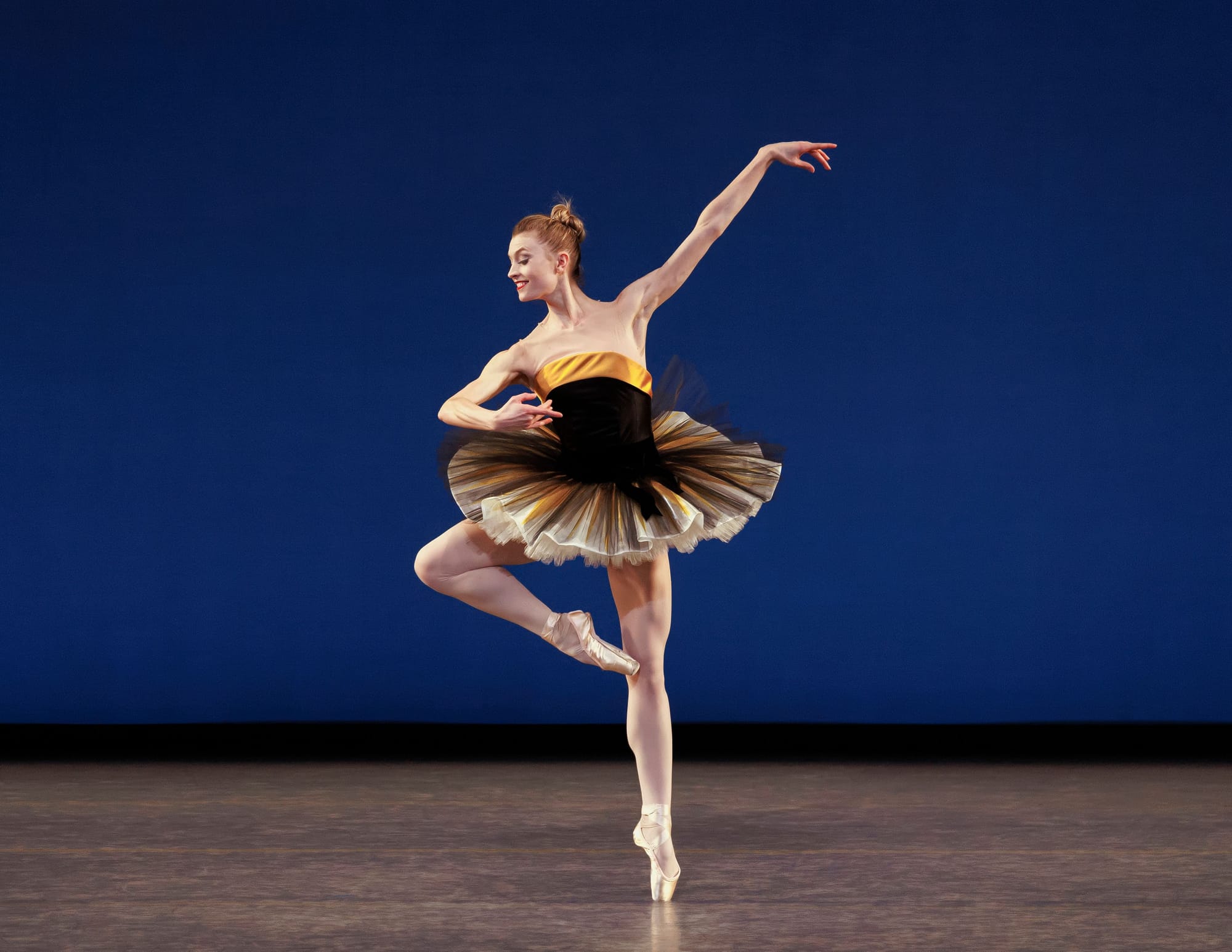
The four female solos are little gems, endlessly fascinating; Petipa’s steps made the dancers look beautiful and Ratmansky’s coaching made them vivid, lively, and individual. Ashley Hod (what an incredible week she has had) looked wonderful in the jumpy first variation, light and controlled. Dominika Afanasenkov gave the second variation a spiritual pensiveness, with a touch of Aurora’s vision scene in the reverse développés. The sprightly jumps in the third variation suited Emma von Enck perfectly, though her upper body was a bit sharp. There was no sharpness at all in Miriam Miller’s fourth variation (soon, I expect, to be known as the tall solo), with luxurious backbends and Spanish-inflected arms; Petipa was a master at adapting folk elements to give some spice to classical steps.
And how he loved steps; jumps flow into arabesques which flow into balances in a radiant stream without the self-conscious preening pauses of so many current long after Petipa productions. This exuberance shows up especially in the corps formations, as they softly echo the principals moves or form a protective circle around the loving couple, or bound on in glorious harmony (not always in perfect harmony, though the City Ballet corps seems to be trying). I especially enjoyed the brief moment in the finale when Afanasenkov and Miller linked their arms and skipped through a series of emboîtés with such carefree elan that the audience laughed. It was like getting a message from the old choreographer—there is beauty and joy and harmony in the world and the ballet was both moving and uplifting.
“In the Night”, danced in the middle of two imposing works, felt a bit like a tiny hill between two mountains. It is basically a collection of lifts superimposed on some often over-heated sentimentality, but engaged dancers can give it resonance. Few dancers are as engaged as Indiana Woodward and she and Joseph Gordon, as the opening couple made the most of the wispy choreography. Woodward held her backbends, as her arms stretched, with emotion seeming to flow out of her fingers.
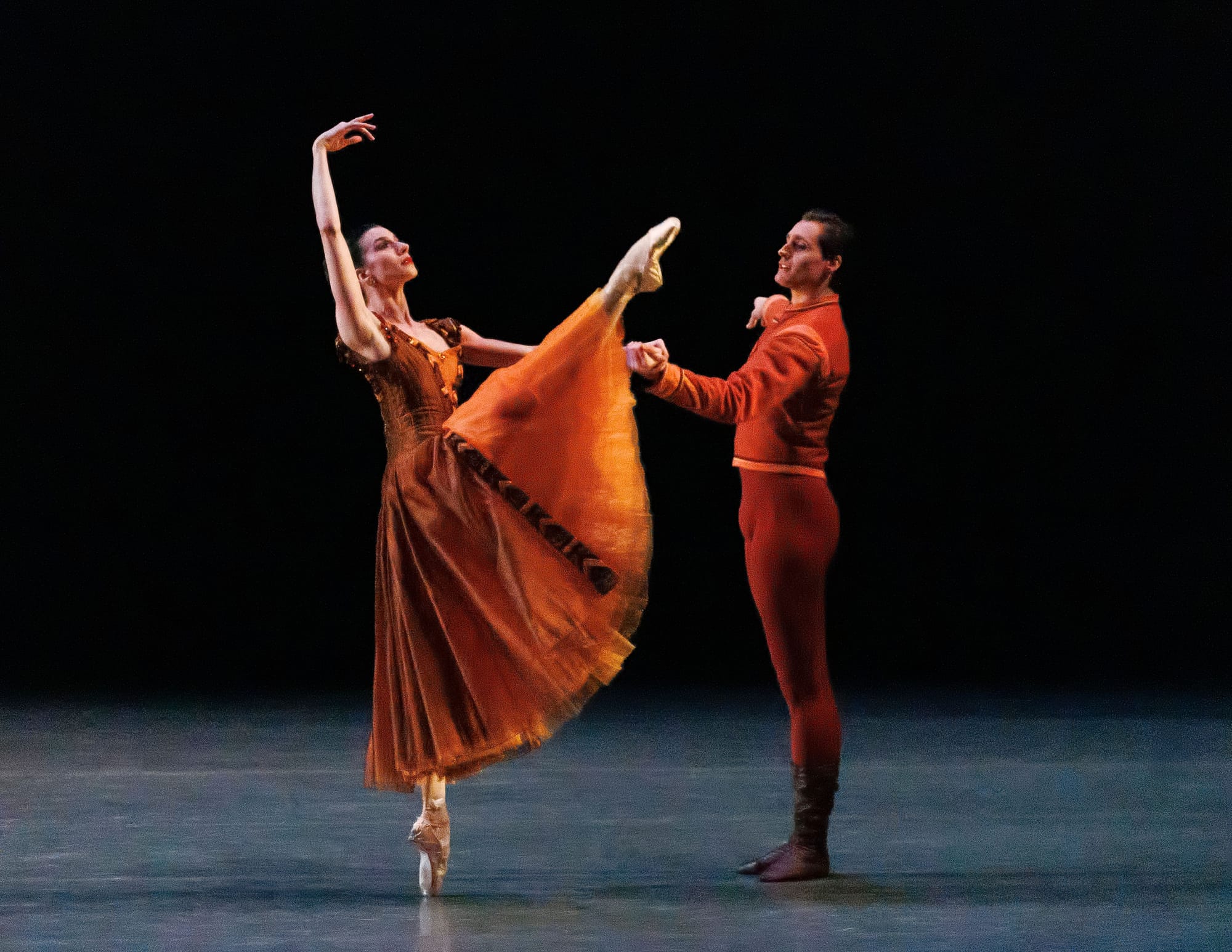
Hod (in her second debut of the evening), with a dignified Aarón Sanz, danced the middle couple. They gave it an air of almost frozen indifference, walking slowly side by side with an air of almost painful boredom. Then, apparently, memories break through and they indulge in a bundle of lifts; nothing says “I love you”, apparently, like holding your partner upside down.
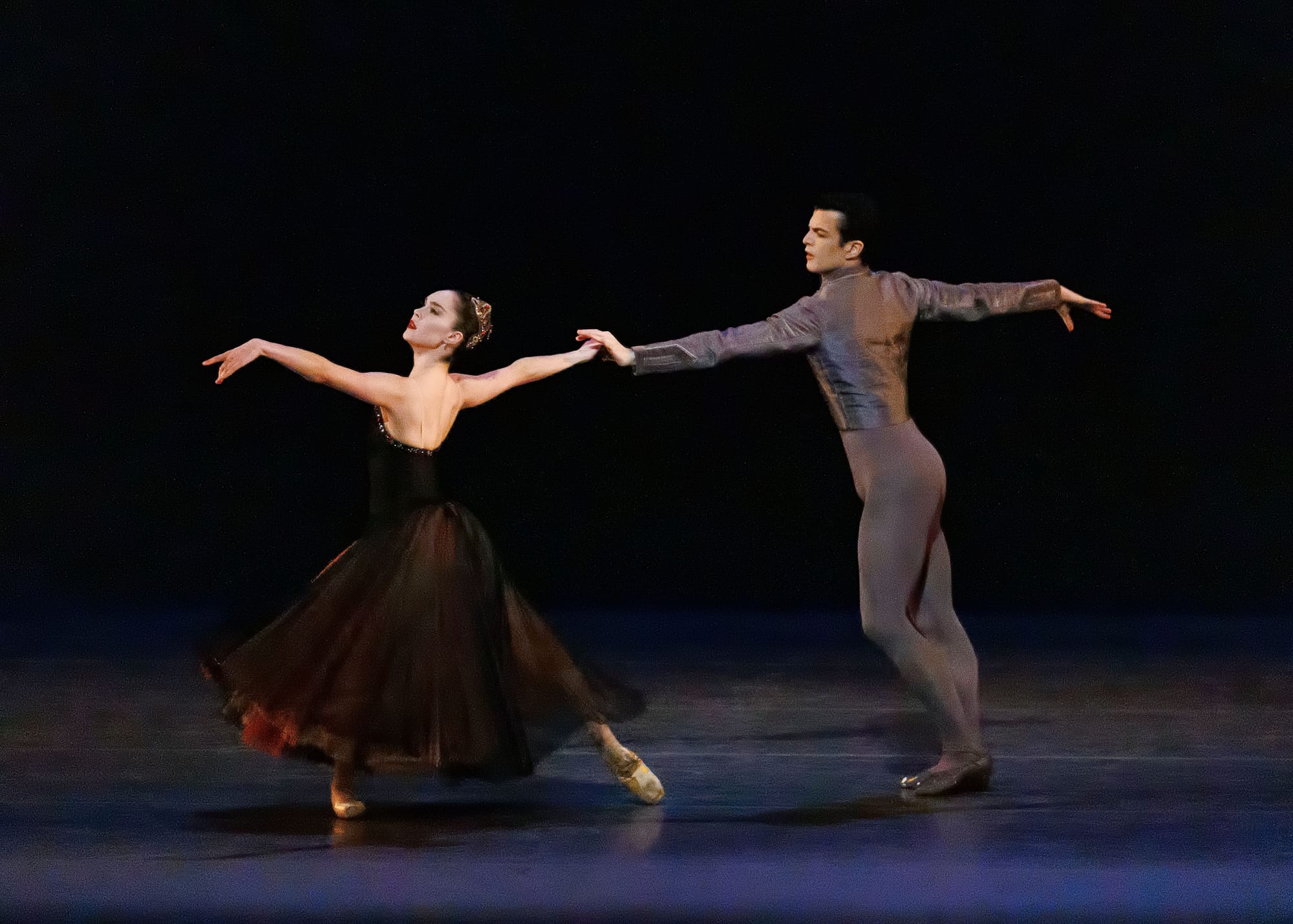
Mira Nadon and Gilbert Bolden III debuted as the third couple. Both dancers are wonderfully intuitive and imaginative performers and they seemed to have thought carefully about their pas de deux, which they danced with an almost violent abandon full of dramatic pleading and furious rejection until Nadon abased herself, kneeling in front of Bolden. It was gripping, but the mixture of pretty twirling and daredevil lifts looked a bit like a high school dance Apache.
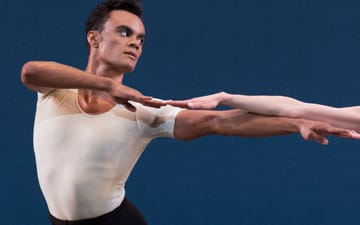
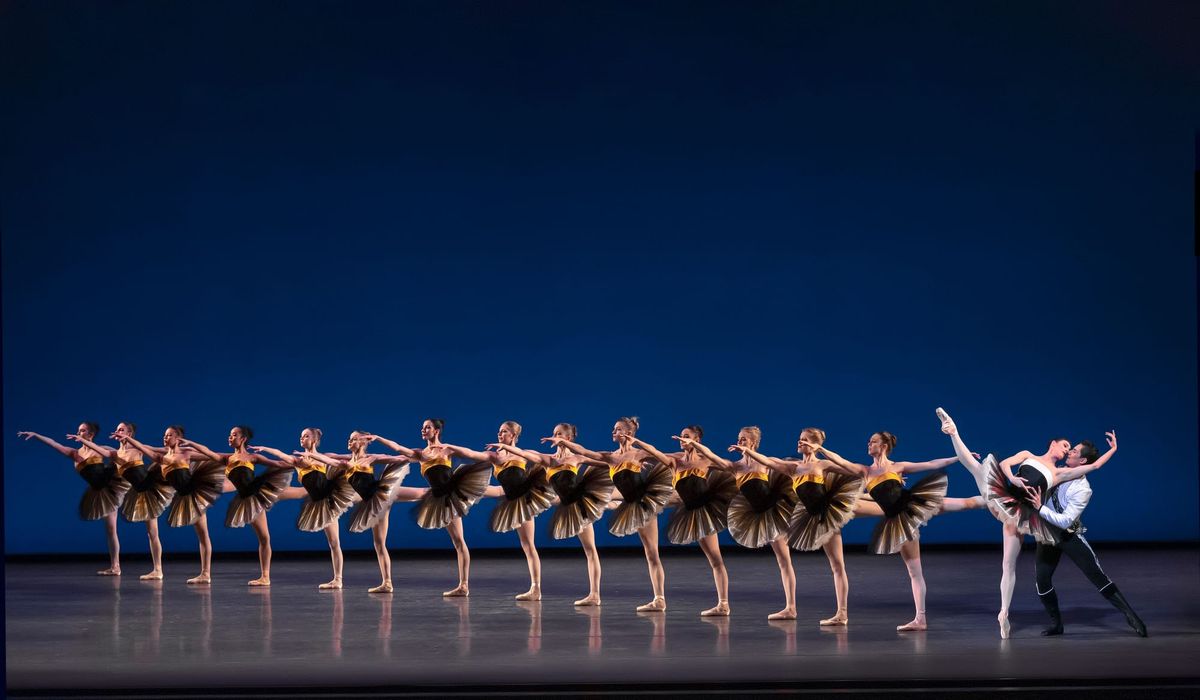
Despite the pony-tailed corps, there is nothing high schoolish about Balanchine’s “Symphony in Three Movements”. Unity Phelan and Taylor Stanley danced the middle couple. Phelan had been intriguingly feminine the night before when she danced it with Sanz, but was very different with the taut, wiry Stanley. He combined liquid movement with a blank, impassive demeanor, as if he were some sort of invisible idol, controlling her movements. She seemed to sense him rather than see him, echoing his arm movements as if she were hypnotized. It was a captivating, odd interlude between the glorious chaos of the opening movement, so full of daredevil jumps and industrial strength arms, and the order eventual order of the third movement, with its almost Art Deco final sculptural pose. This mountain may be miles away from “Paquita’s” Spanish heights, but the same sun shines on both.
© 2025 Mary Cargill



