Angels and Mortals
"Chroma", "Marguerite and Armand", "Angels' Atlas"
The National Ballet of Canada
Four Seasons Centre for the Performing Arts
Toronto, Canada
February 29, 2020
The National Ballet of Canada's winter mixed program was a strong one, highlighted by the world premiere of Crystal Pite's captivating "Angels' Atlas", her second ballet commissioned by the NBoC. She created the powerful "Emergence" for the company in 2009 and "Angels' Atlas" follows in a similar stylistic vein while still feeling fresh. This program also marks the retirement of veteran principal dancer Greta Hodgkinson after an impressive 30 years in the company. She chose Sir Frederick Ashton's dance drama "Marguerite and Armand" for her swan song. Rounding out the program was a revival of Wayne McGregor's crowd-pleasing "Chroma".
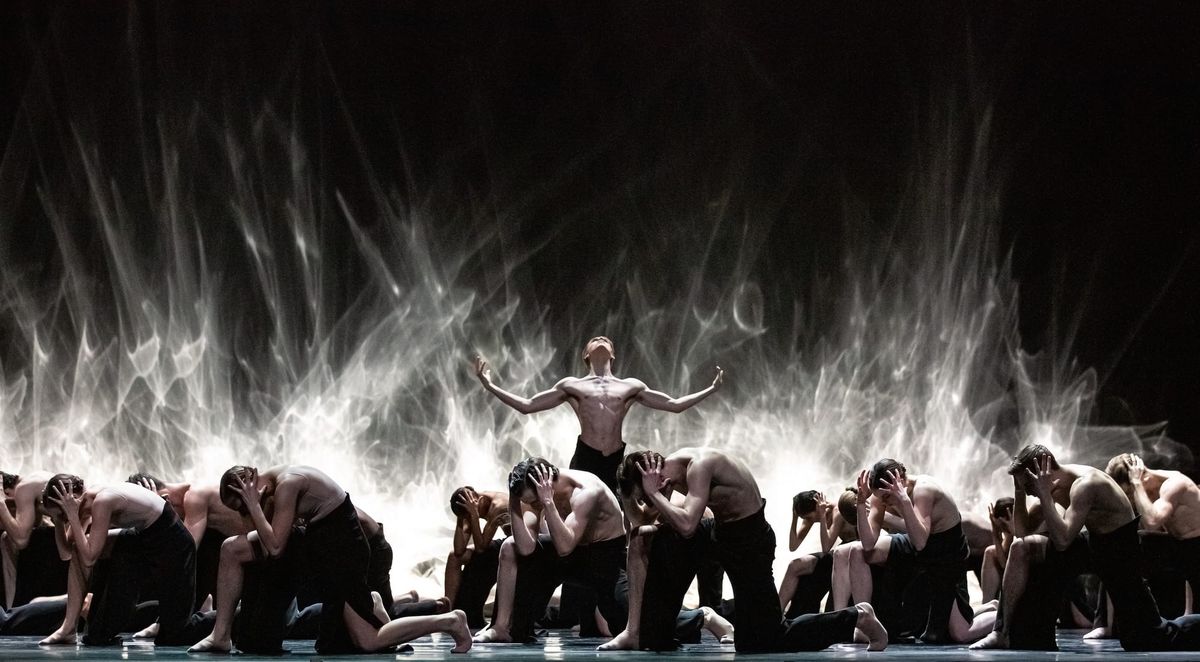
The hotly anticipated "Angels' Atlas" is hypnotic, and classic Pite. The program notes tell us that the work was inspired by a system that reflects light developed by set designer Jay Gower Taylor, her partner and frequent collaborator. Lighting designer Tom Visser worked with Gower Taylor generating a backdrop that manipulates light in different ways creating a kaleidoscopic effect. In different instances, the backdrop evokes smoke, waterfalls and celestial bodies. The title and music automatically suggest themes of spirituality, transcendence, the universal and unknowable. Angular gestures are set to an elegiac score by Owen Belton as well as Tchaikovsky's "Cherubic Hymn" and Morten Lauridsen's "O Magnum Mysterium".
The ballet uses a large cast of 36 dancers. The ensemble segments at the core of the work are Pite's finest. She is a master of moulding a large group from a collection of individuals into a cohesive body, dispersing them and bringing them back together again. The transitions occur so seamlessly, you do not really notice them until they are complete. Pite understands the power of symmetry and repetition. The ensemble twitches and pulses in unison with breath that is sometimes audible and always visible. All the dancers wear the same elegant high-waisted wide leg pants. The men are shirtless and the women are in nude bodysuits, creating a striking and uniform look. "Angels' Atlas" hints at a narrative without explicit characters. Hannah Galway and Siphesihle November form a central pair. In one scene, November lies on the ground and Galway hovers by him, grieving. In a later scene, the situation is reversed. Then everyone is flat on the floor, which could be interpreted in a multitude of ways.
McGregor's "Chroma" feels modern with its stark, minimalist design and daring music by Joby Talbot and Jack White of garage rock band The White Stripes. The movement vocabulary is at once athletic and creature-like -- necks jut forwards, hips pop to one side, and torsos undulate. It is rare to see dancers' true end range of motion on stage, but their extreme flexibility is on full display here. The dancers cast including Tanya Howard, Svetlana Lunkina and Tina Pereira are some of the most hypermobile in the company. In backbending moments, Lunkina's foot nearly whacks herself in the head more than once.
The dancers in "Chroma" are androgynous, similar to the ones in "Angels' Atlas". The men and women both wear hip-length flesh-colored camisoles and dance similar steps. While some male dancers in the past have struggled with the body rolls, looking awkward in movements requiring spinal articulation, this opening night cast nailed the fluid choreography. Skylar Campbell was particularly agile and controlled, while Alexander Skinner never missed an opportunity to show his gorgeous, long lines. November was eminently fun to watch with a springy elasticity to his movement and swagger to boot.
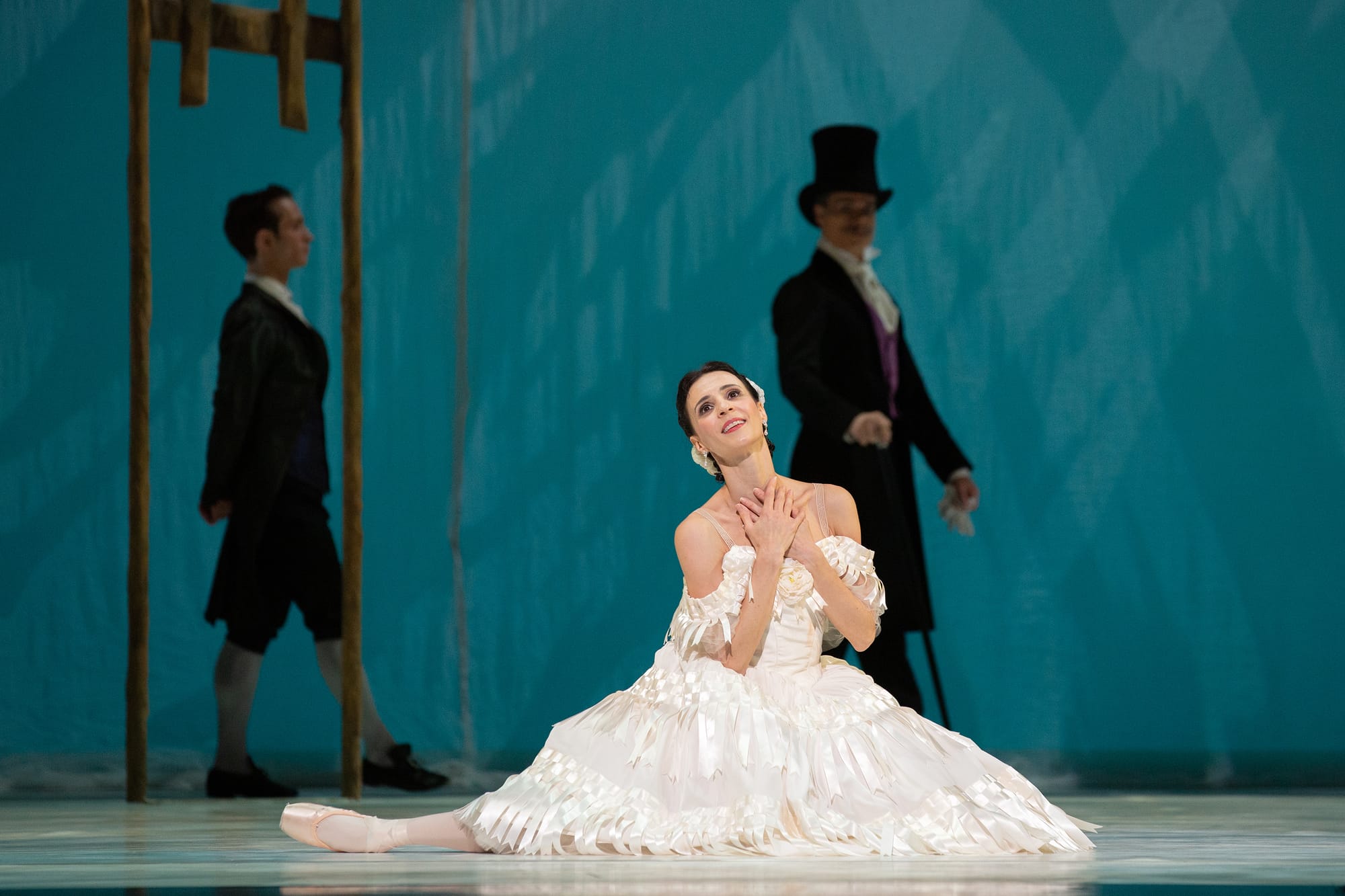
"Marguerite and Armand", while somewhat at odds with the rest of the program, provided a fitting vehicle for Hodgkinson's retirement performances. As a showcase for a mature ballerina, it works. As a ballet, it often crosses the line into melodrama. It is a dancer-driven work that requires the right cast. The legendary Margot Fonteyn who created the role of Marguerite was 44 when it premiered in 1967. Hodgkinson is 46. Her Armand was the dashing Guillaume Côté. They have a solid partnership with the trust and unspoken communication necessary to make the difficult partnering in the various pas de deux rapturous rather than arduous. Hodgkinson has always been a strong all-around performer, blending steely technique with genuine emotion. She put her own stamp on Marguerite, making the most of iconic moments like the cambré back on the floor and using gesture and facial expression to in turn convey wonder, ecstasy and despair. Ashton packs a lot of drama into this 30 minute ballet and it goes by quickly.
Hodgkinson has been one of the NBoC's most consistent and versatile dancers, inhabiting every role she danced with conviction. She seems to have danced every major role in the repertoire (including many that were created for her) and one would be hard-pressed to think of one she did not excel in. She has certainly left an indelible mark on the company and hopefully will be able to share her vast experience and knowledge wherever her next steps lead her.
copyright © 2020 by Denise Sum



