Akram Khan's "Xenos"
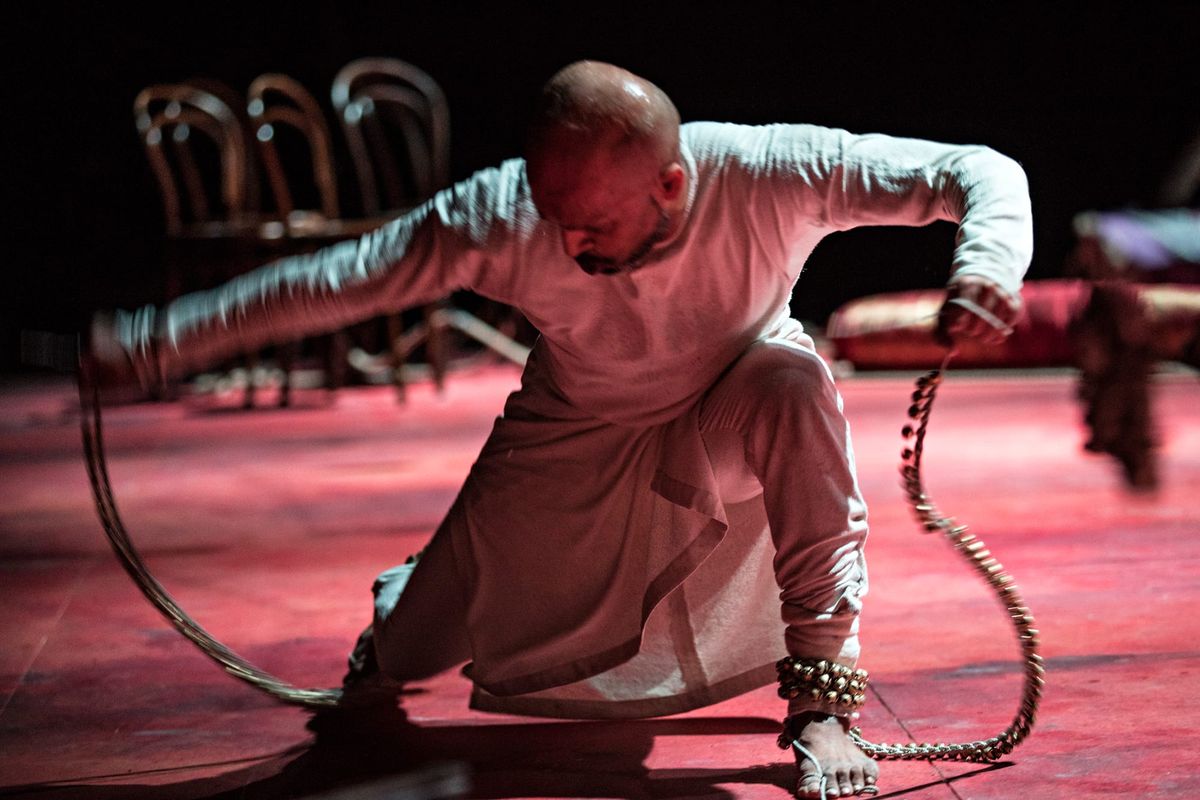
“Xenos”
Akram Khan
White Light Festival
Rose Theater, Lincoln Center
New York, New York
October 31, 2018
Akram Khan has long been one of the UK’s most inventive dance artists. He is known for imaginatively combining classical Indian Kathak dance with contemporary western forms, and for his collaborative productions with important artists from varied genres. “Xenos,” presented as part of Lincoln Center’s White Light Festival, has to do with Indian soldiers who fought for Britain in World War I. As such, this hour-long solo may be one of Khan’s greatest challenges.
Khan has said in interviews how he was shocked to discover that 1.5 million Indians fought in World War I. We are familiar with the horror of trench warfare in that conflict, but at least British soldiers had some notion that they were defending their country. To be a soldier fighting for colonial rulers must have been even more horrific.
“Xenos” means stranger or foreigner, and certainly Southern Asians must have felt like aliens, dying in Europe in a war that had little to do with them. Khan’s dance focuses on the confused and despairing mind of a shell-shocked Indian soldier. We see him at the beginning of the piece in what looks to be a traditional Kathak dance, accompanied by two singer/musicians. He is dressed in white shirt and trousers and wears the strings of bells wrapped tightly around the lower legs that are part of the Kathak form. He is surrounded by cushions and other furniture suggesting an Indian home.
As the dance ends, he slowly removes the strings of bells, and the familiar trappings of home disappear from the scene in a rush. The dancer is suddenly left at the bottom of a barren slope of no-man’s land. From that point in the dance any sense of logic and groundedness is left behind. In its place, we see a kaleidoscope of impressions of the soldier’s experience of drudgery, danger and fear, always overridden by a sense of confusion as to where he is or why he is there.
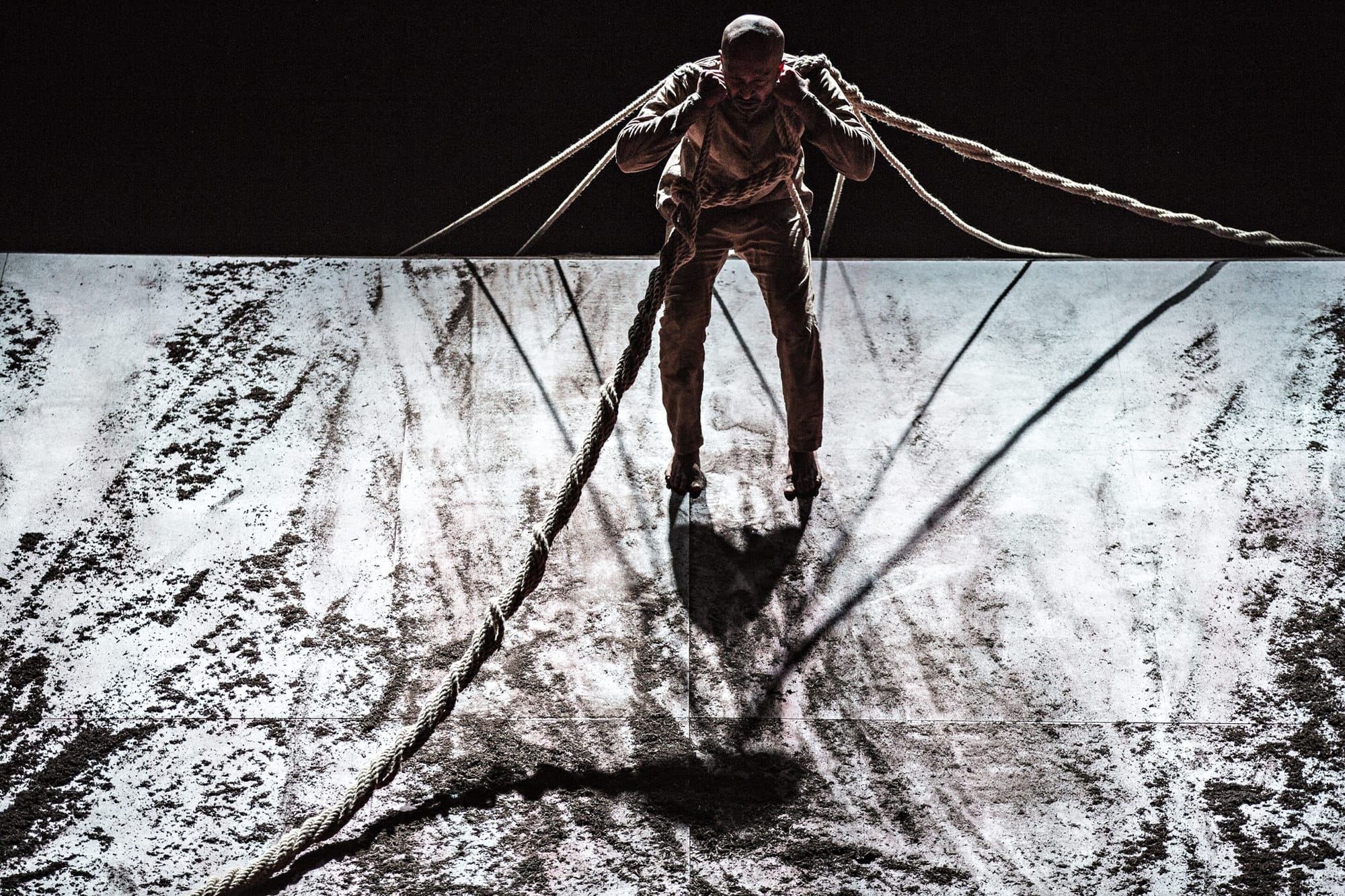
Mirella Weingarten’s ingenious set plays a major part in the production. Early on, dirt slides down the slope. As the dance progresses, the dirt coats the soldier’s body and clothing. Like the mud of the trenches, it invades everything. Later, piles of rocks slide down the embankment, suggesting the death of untold numbers of soldiers.
Music also is a defining element of the production. The score and sound design by Vincenzo Lamagna include both recorded sound — explosions, roars, whines, whistles, etc. — as well as live performance by an orchestra of bass, percussion, saxophone, violin, and vocals. There is also occasional spoken text created by Jordan Tannahill, which consists primarily of recorded words and short phrases. At one point we hear a voice sing, “If you want to know where my battalion is, it’s hanging on the old barbed wire.”
Khan’s choreography for the work is sometimes frenzied, sometimes restrained, but it’s the sense of confusion and hopelessness that dominates and that he conveys with poignant power. At forty-three years of age, Khan says this will be his last solo, but his dancing shows no sign of becoming diminished. He throws himself to the ground repeatedly, is immensely fast in whirling turns and flexible in the torso. His use of arms is especially expressive, now angular and harsh, now softly lyrical.
Altogether, the production is a rich combination of elements that support the central dance and theme of the work. Khan has said that “Xenos” is his view of the world today and its loss of humanity. Sadly, it’s not an unusual view, and amply reflects the mood of the moment far beyond England’s shores.
copyright © 2018 by Gay Morris



