A Sparking Send Off
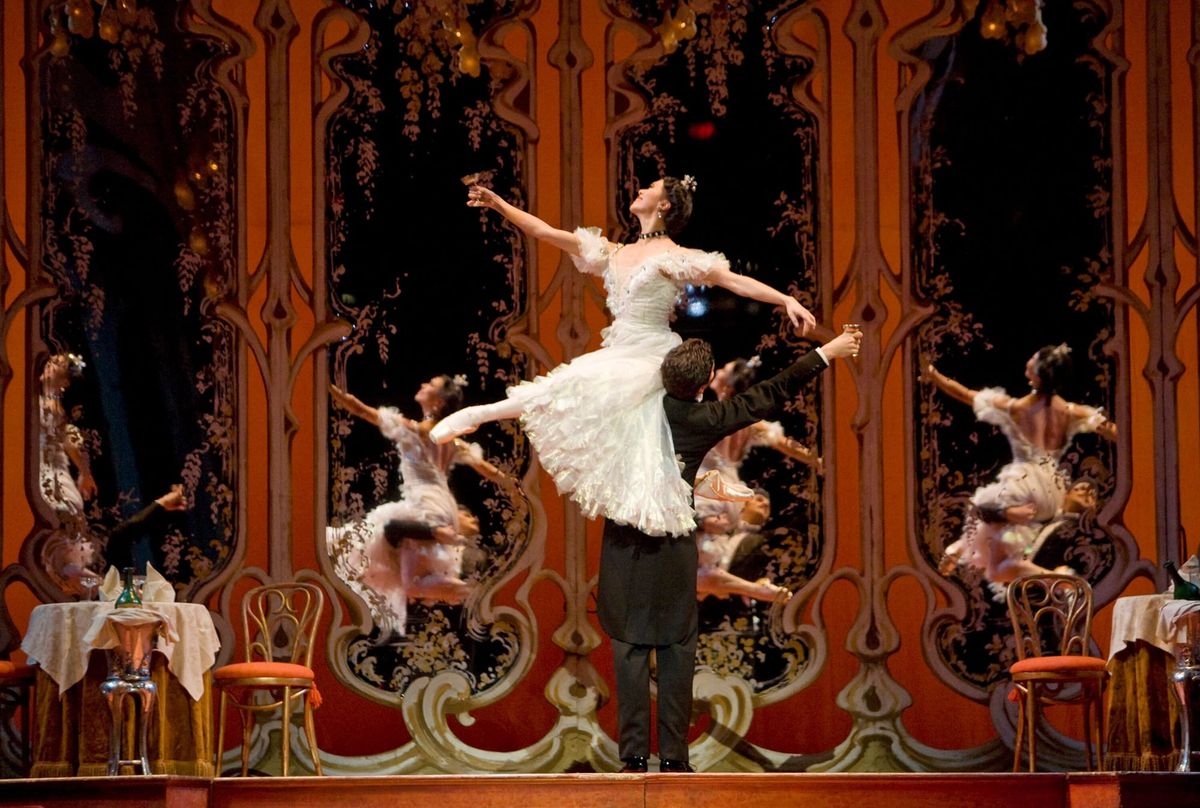
"The Merry Widow"
The National Ballet of Canada
Four Seasons Centre for the Performing Arts
Toronto, Canada
June 19, 2019
The National Ballet of Canada bid farewell to one of its most beloved principal dancers, Xiao Nan Yu, with Ronald Hynd's splashy ballet "The Merry Widow" set in fin de siècle Paris. It is a love story with humour, elegance and lively classical and character dancing – a perfect showcase for Yu's artistic gifts. The whole company came together to celebrate in style. Yu spent the entire 22 years of her career at the NBoC and she is certainly dear to Toronto audience members who have watched her grow and flourish as a dancer.
"The Merry Widow" is light bon bon of a ballet that is easy to watch. Like a predictable romantic comedy, it follows an established formula and there are no real surprises. Part of the pleasure of such a ballet lies in its comfortable familiarity. Love is lost then found again by the leading couple, a secondary couple representing the sweetness of young love, and a supporting cast of wacky character provide comic relief. The story centres around the fictional country of Pontevedro, whose economic fate rests on the romantic whims of the wealthy widow, Hanna Glawari. Act I and III are set in the Pontevedrian Embassy and Chez Maxim bistro respectively. The choreography encompasses refined ballroom dances and the flirty can-can. Act II takes place in Hanna's villa and provides a showcase for a clan of lively Pontevedrian dancers, led with gusto by Kota Sato (incidentally, "Pontevedrian" dance seems to closely resemble Hungarian folk dance). All this is paired with Franz Lehár's effervescent and eminently danceable score and Desmond Heeley's opulent costumes and set design.
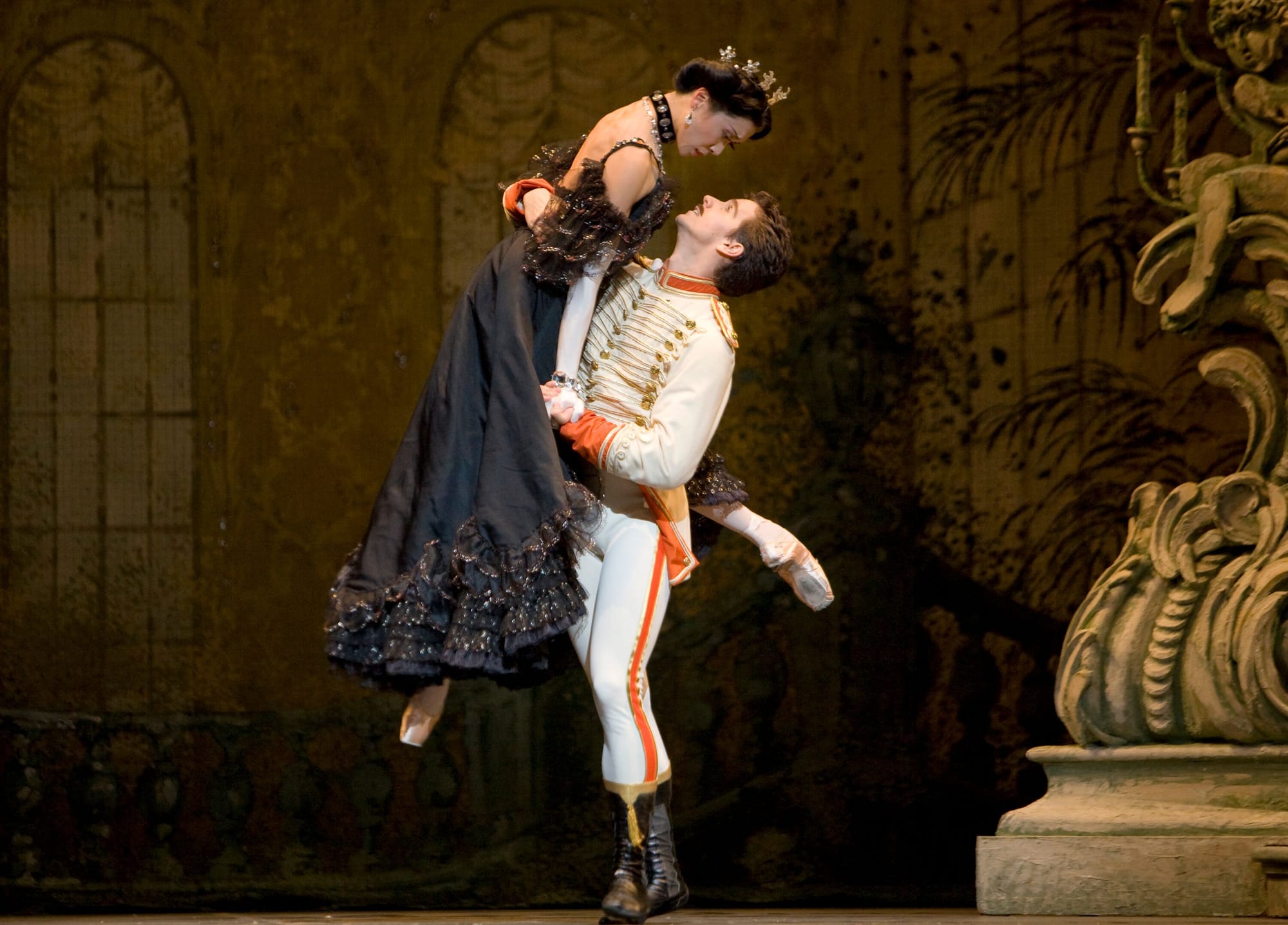
The role of Hanna is tailor made for a distinguished and confident dance actress. Yu follows in the footsteps of the legendary Margot Fonteyn and NBoC artistic director Karen Kain in performing this role, which fits her to a tee. Her Hanna was radiant, gracious, and pure class. Dramatically, she showed range and endeared the audience to her character. In the ballroom scene when she first encounters her former lover Danilo (Guillaume Côté), she holds the upper hand. While he may have rejected her all those years ago, here the tables have turned. But the moment he takes out the handkerchief that she had given to him as a girl, she melts. In the following flashback sequence, we see her as a lovelorn young woman, making her subsequent transformation into the belle of the ball all the more striking. Her cheeky side came out in her Act II variation, where a slow developé with a flexed foot then points sharply towards Danilo in a playful yet accusatory manner, eliciting plenty of laughs. In the final act, she enters the scene in a glamorous white feathered coat, ready to move on from her past and start a fabulous new chapter in her life.
Côté was charming and easy to love as Danilo, even in his sheepish, drunken moments in Act I. From the beginning, he makes it clear that his affection is genuine and he goes to lengths to prove that to Hanna. He added flair and energy to his character-infused variations and perfect comic timing to his mime. His partnering of Yu was steady and smooth -- she glided, barely skimming the floor in those waltzes. As the secret young lovers Valencienne and Camille, Jillian Vanstone and Naoya Ebe were a delight. Often cast together, they have a solid partnership and lovely chemistry.
At the end of the performance, the audience sprung to its feet to fête a revival of a dazzling production and a fitting conclusion to Yu's brilliant dancing career. She will most certainly be remembered and missed.
copyright © 2019 by Denise Sum



