A Present from Spain
Barcelona Ballet
"Bruch Violin Concerto no. 1", "For 4", "Pálpito"
New York City Center
New York, NY
April 17, 2012
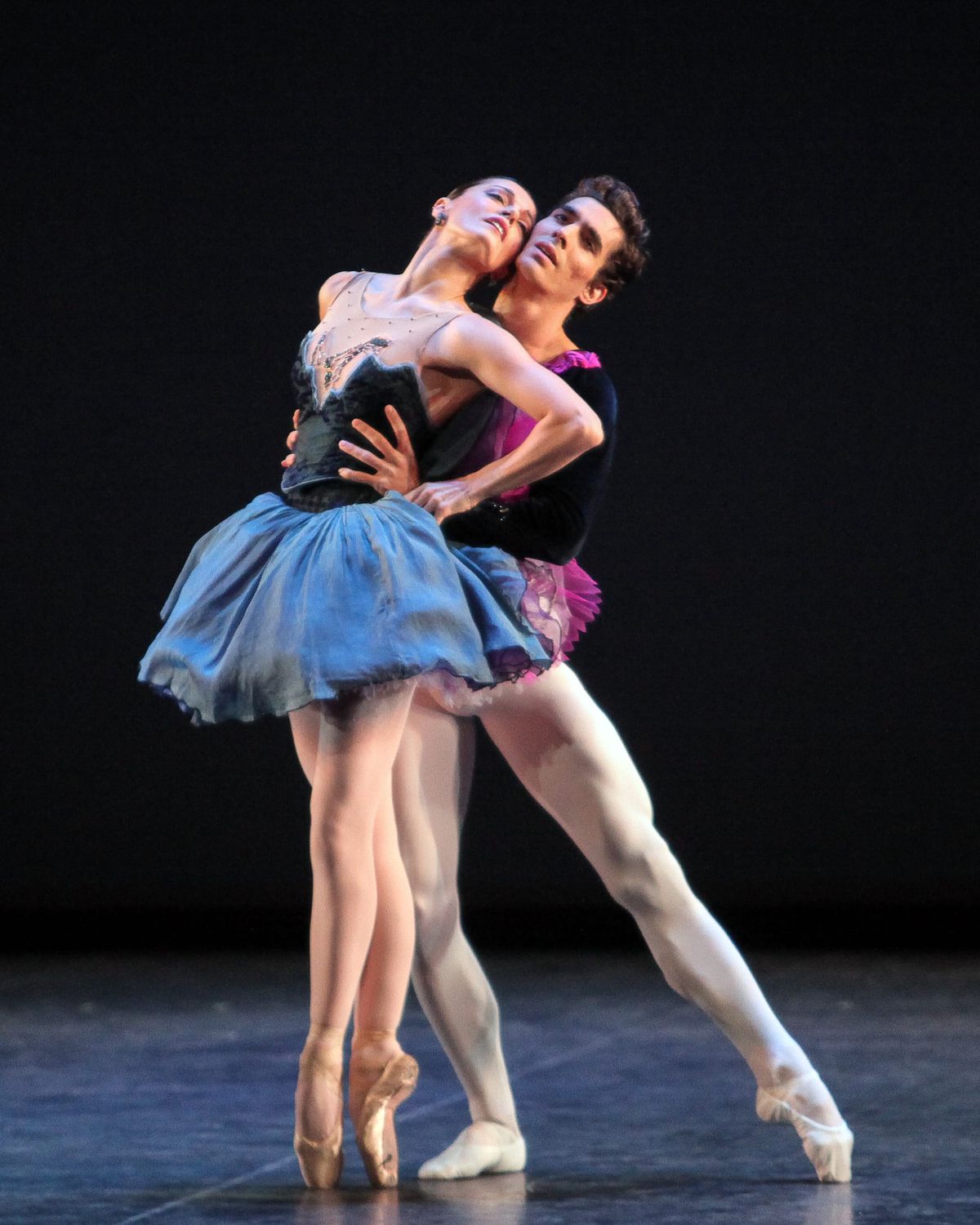
The financial crisis in Europe has affected much more than the stock market, as the Corella Ballet, founded in 2008 by Angel Corella, has seen its official funding shrink. He has moved the company to Barcelona and rechristened the company, but the impression left from his first visit to New York, in 2010, of a fine, well-trained, and engaging group of dancers, remains. The evening opened with the late Clark Tippet's "Bruch Violin Concerto no. 1", a generous introduction to the company. The work is a neo-classical exploration of the ballet vocabulary, both formal and exhilarating, with four couples and a corps filling the stage with constantly shifting shapes. As in the last visit, some of the women seem to have rather fixed grins, but all danced with a refined clarity. Carmen Corella, with Dayron Vera, danced the adagio role, with an innate sense of drama, using her eloquent back to express a generalized sorrow. She, and her generous partner, did have a few technical glitches, but it was a lyrical, gracious, and mature performance. Momoko Hirata, with Alejandro Virelles, were a fine contrast, as they sparkled through the slightly Hungarian variation, with its fast footwork and exciting jumps. The corps, in yellow tutus, supported by men in brown, were very well-rehearsed, alert, eager, and completely winning.
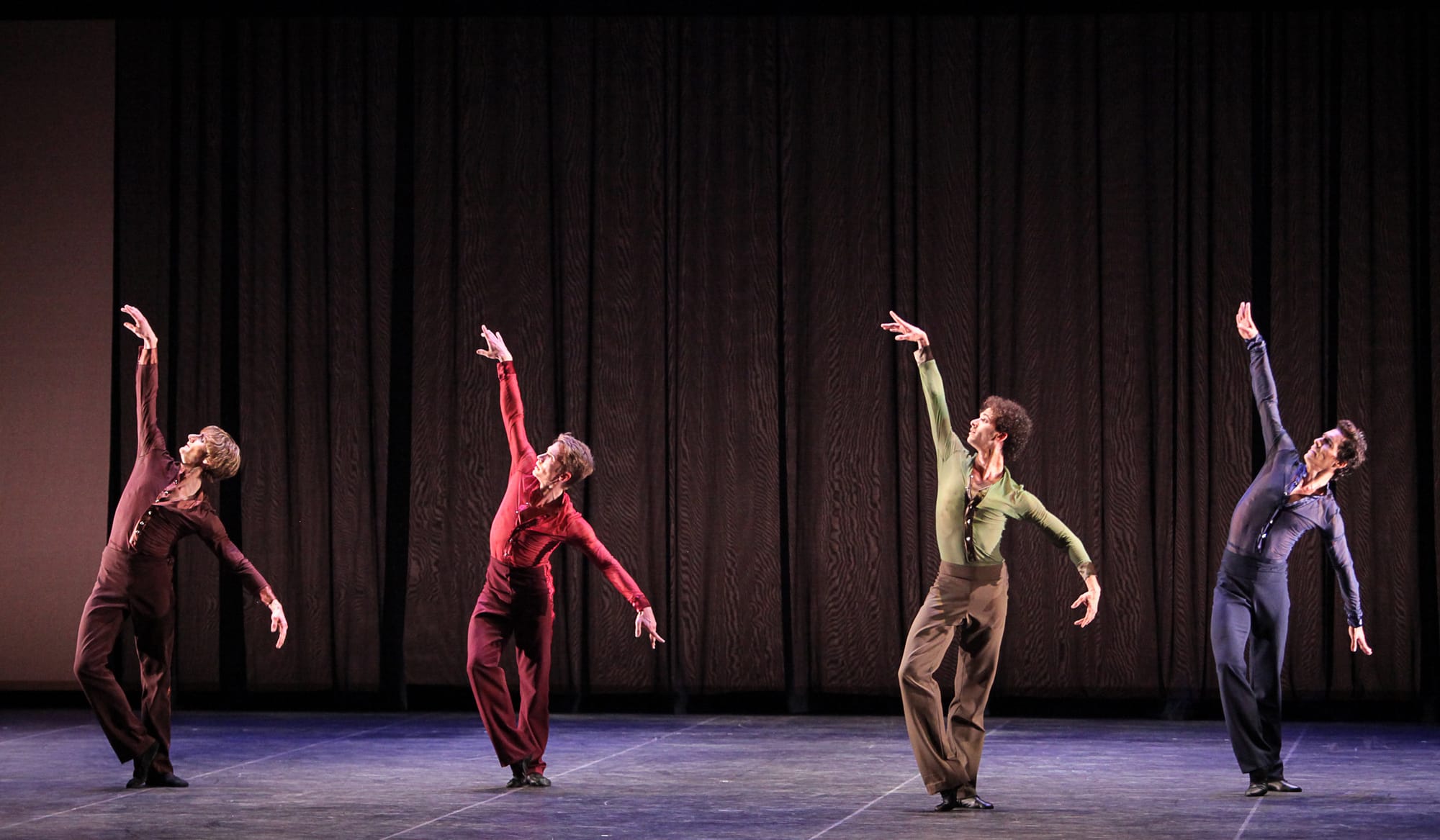
The second ballet, Christopher Wheeldon's "For 4", set to Schubert's "Death and the Maiden", showcased four of the men, Kirill Radev, Virelles, Aaron Robison, and Vera. It was originally made for the "Kings of the Dance" showcase, and made little use of the ravishing music, as the men shimmied and shook with squiggly arms and preening gestures. The dancers were not differentiated in any way, each doing basically the same, rather silly, steps. It was showy, and elegantly danced, but it seemed a waste of effort; these fine dancers deserved something better.
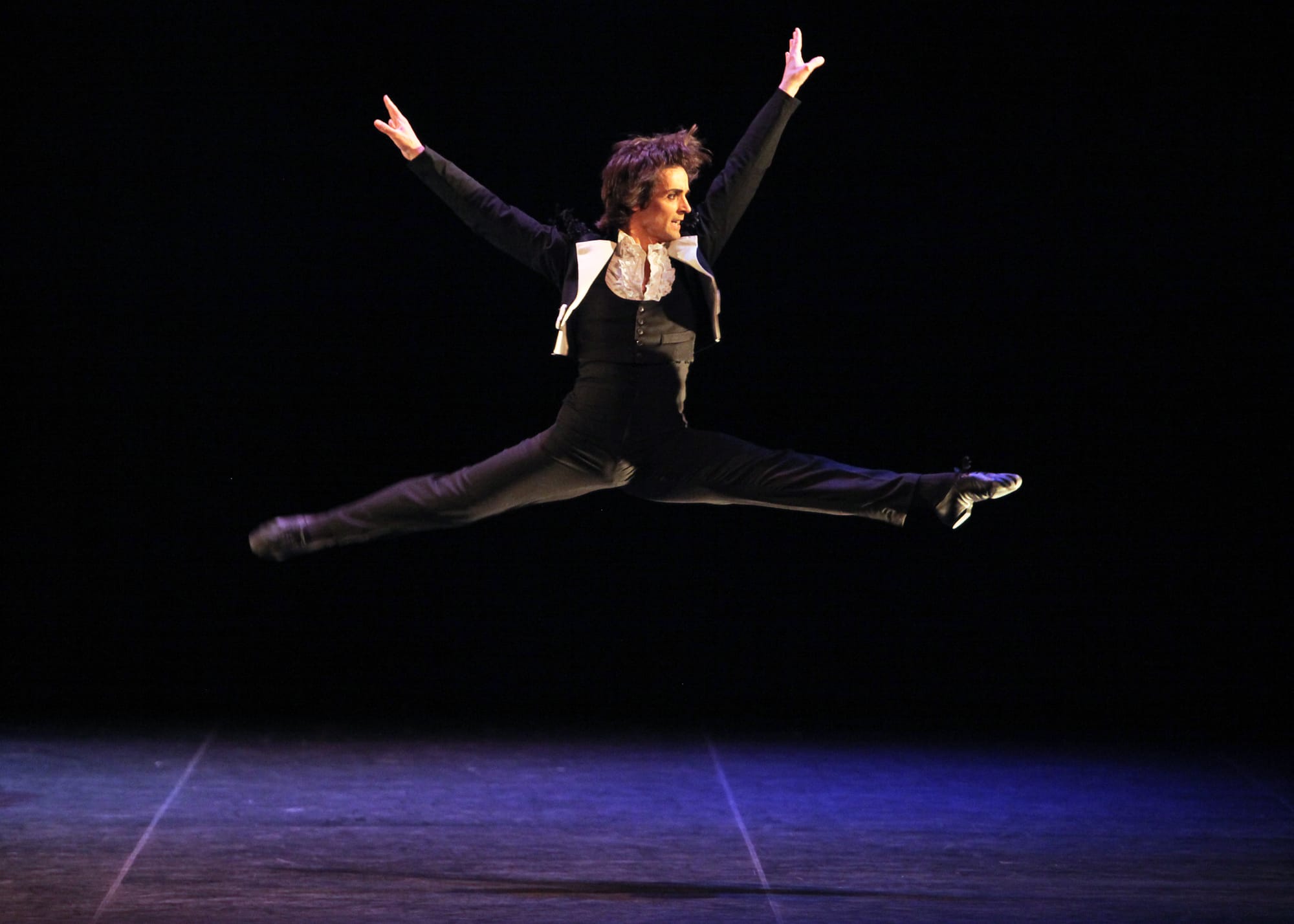
"Pálpito" which, according to the program, means "hunch" in Spanish), was an attempt to merge traditional Spanish dancing with ballet. The flamenco choreographers Rojas and Rodriguez worked with composer Hector Gonzalez, who combined modern electronic music with flamenco songs (all the music was recorded), to produce a show "about the main character who is trying to free himself from the strings that have him bound to his former role of a dancer and that keep him from advancing into the mature role in his spirit with tranquility and peace". Since the main dancer is Angel Corella, who will give his final performance with ABT this season, I suspect any similarity between these situations is intentional.
The styles didn't really meld, and often the dancing was a bit choppy--entrechant, attitude, then flamenco strut, repeat at will. But it was a tour de force for Corella, who was impassioned, direct, and committed. The first part, Sequidilla, ended with two pairs of dancers (Carmen Corella with Dayron Vera, and Maria Jose Sales with Aaron Robison) dancing what appears to be a version of Carmen by Kenneth MacMillan, complete with bed.
The second part, the Habanera, was theatrically stunning, with a darkly lit group of women in black lace body suits with over sized Spanish combs in their hair, led by Momoko Hirata. They were joined by a group of men carrying lanterns, and the gleams gave the stage a fine, eerie feeling. This was based, I expect, on a Spanish folk dance, where the women wave lights to show their fisher husbands the way home. This wasn't the bright, sunny Spain of the travel posters, this was the dark, fatalistic Spain.
Corella than had an explosive solo, breaking through a circle of light, while Momoko mimed untying him. He then walked to the back of the stage, and turned briefly to the audience, as if saying goodbye, a powerful and unforgettable ending. Except that it wasn't the ending; for some reason the stage was then filled with dancers dressed as tarts, with red undies and lots of lace jutting out of their bosoms who were joined by a group of matadors, flashing their capes to jarring electronic music, as if William Forsythe had choreographed "Don Quixote". Corella joined them, smiling and free, and the work ended with him doing a series of spins, worthy of Ali--hardly breaking free from his past. But though not a complete success, the work was an honorable attempt to create a different kind of work, and it got a memorable performance.
Copyright 2012 by Mary Cargill



