A Peek Into the Dark
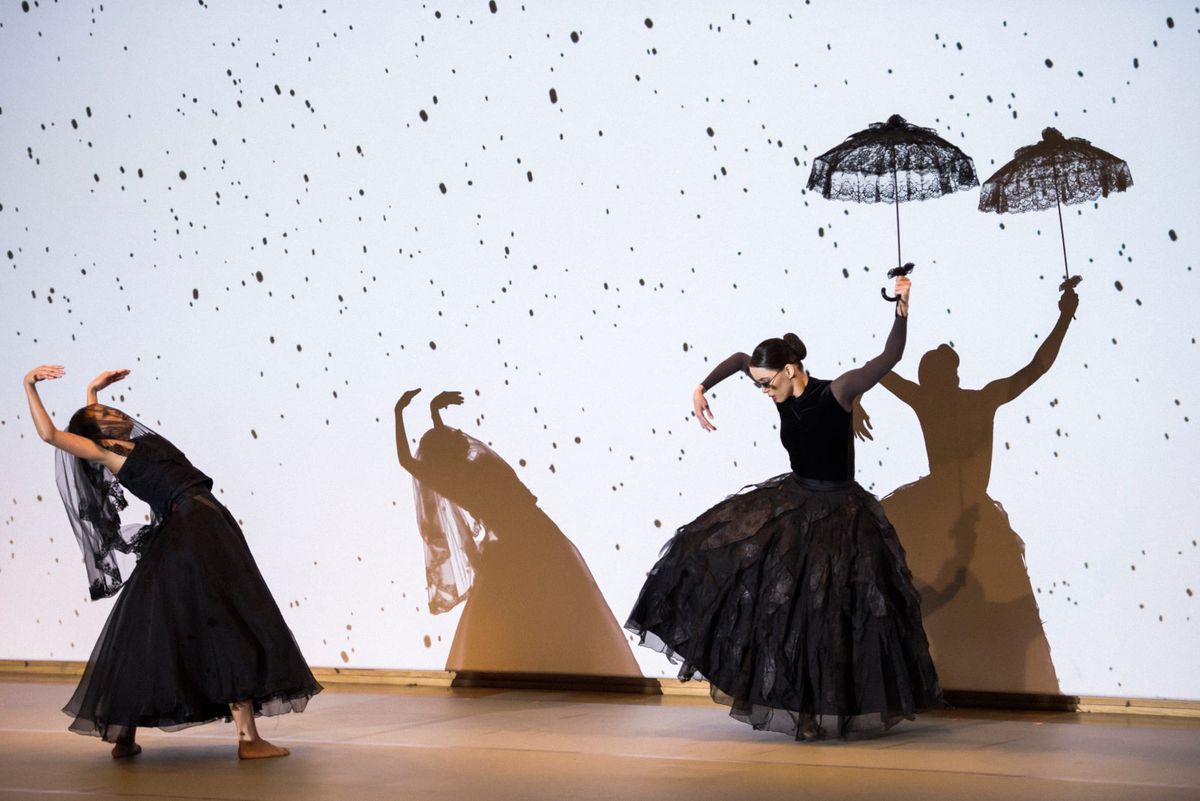
“Silhouettes”
Dana Tai Soon Burgess Dance Company
Nan Tucker McEvoy Auditorium
National Portrait Gallery
Washington, DC
October 30, 2018
Before photography was invented in 1839, silhouettes were pretty trendy. These simple, economical cut-outs of a person’s profile were easily available, so even people belonging to marginalized minority groups were able to get silhouettes made. As a result, those who study these underrated slivers of history are able to recognize America’s diversity. The concept of silhouette features the distinct difference between light and dark, and the National Portrait Gallery’s (NPG) new exhibit, “Black Out: Silhouettes Then and Now,” is based on this simplistic art form, exploring the past versus present usage. All the while, Dana Tai Soon Burgess’s latest work, inspired by the “Black Out” exhibit, investigates the multiple abstract contrasts — good and evil, love and greed, remorse and empathy — occupying a person’s subconscious mind. The topic of silhouette provided a vast opportunity for subjective imagery and symbolism, and Burgess and his company capitalized on this chance to present an elaborate, revealing show.
Dana Tai Soon Burgess Dance Company, a well-established leading modern dance company based in Washington, DC, has been presenting works investigating cultural identity and beauty in diversity for 26 years. Founding Artistic Director and Choreographer Dana Tai Soon Burgess has additionally worked as NPG’s choreographer-in-residence since 2016. Exhibits and artwork on display at the gallery have informed his more recent projects such as “I am Vertical,” which premiered at NPG this past December and was inspired by the museum’s “One Life: Sylvia Plath” exhibit.
Burgess defines himself as a “hyphenated person” due to his mixed ethnic heritage. He relies on this identity and experience growing up in a home full of visual art influences to create vivid, complex images on stage that confront worldly themes including immigration, assimilation and belonging. His newest work, “Silhouettes,” maintains the aesthetic he has worked years to cultivate, with elegant modern lines, effortless execution of complicated partner work and clear, infallible focus. An inherent contrast in Burgess’s choreographic style — the existence of both expressive and detached personalities in his dancers’ stage personas — lended itself quite well to the theme of silhouette. Burgess often combines clear emotive intention with the more traditional indifference characteristic of modern style, giving his work a sense of sophistication backed by underlying emotions that manage to peak through his performers’ elegant facades.
In a post-performance discussion with National Portrait Gallery Director Kim Sajet, Burgess revealed that he approached the idea of silhouette from a psychological perspective, considering the contradictions which make up an individual’s internal landscape and inform their external actions. Burgess evokes this imagery by presenting a man (played by Kelly Moss Southall) with a suitcase symbolizing his psychological baggage. The man’s possessions, including a black lace parasol, a glaring, bright red apple, and a grey teapot and teacup, are each matched which specific characters, each of them portraying different elements of the man’s psyche.
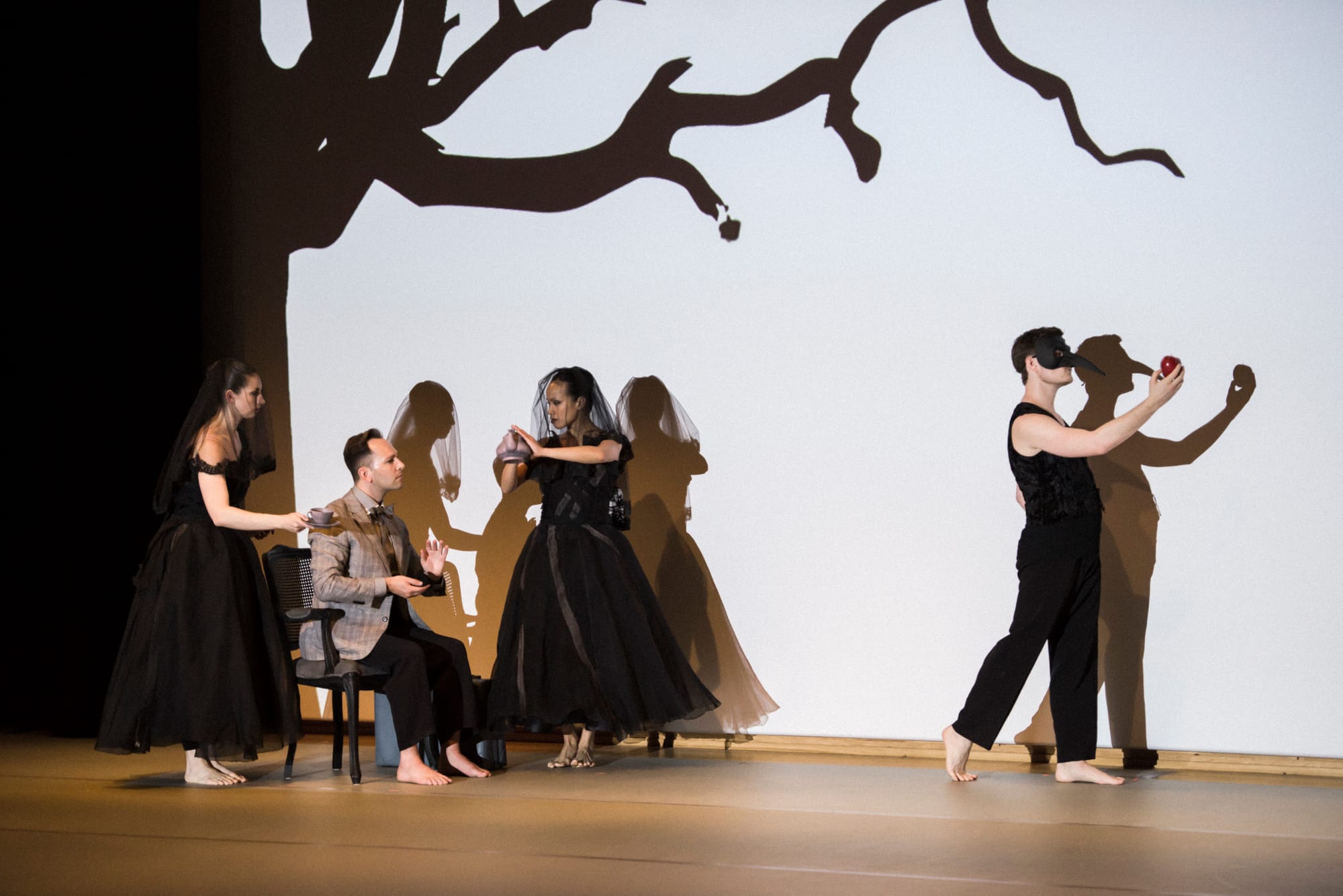
The performance was made up of little vignettes exposing the relationships between various characters. Most of them were directly inspired by historical silhouettes featured in the “Black Out” exhibit, including that of a blind woman named Laura Dewey Bridgman. In "Silhouettes," Christin Arthur brings the persona inspired by Bridgman to life, exuding a beautiful, hesitant poise with soft, delicate port de bras, her arms stretched out ahead of her as she carefully paces across the stage. The other characters included a pair of veiled women (Christine Doyle and Joan Ayap), a male duet involving a chair (Sidney Hampton and Ben Sanders), a bird flirting with temptation (Ryan Carlough) and a soldier sporting a wide, stylized hat (Felipe Oyarzun Moltedo).
Burgess paid close attention to color in the scenic and costume design, and this emphasis on detail contributed significantly to the clarity of the work. The stage, the costume and even the props were monochromatic — all variations of blacks, whites and greys — except for one object: the apple. Unlike everything else in the picture Burgess crafted, the apple was a shiny, unmistakeable crimson color. Burgess’s usage of color explicitly illustrates the layers of consciousness prevalent in “Silhouettes,” grouping characters and objects together and defining their role in relation to Southall’s mental landscape.
“Silhouettes” also relied on a large white backdrop for most of its scenic effects. Projections Designer Kelly Colburn hinted at images, artfully implying their shadowed profiles, from the sprawling branches of an imposing, ominous tree to the soft, intimate flurries of falling snow. In addition to Colburn’s designs, the dancers created their own shadows while moving through space due to the positioning of the light, furthering the psychological idea of a shadow-self. Like so many of the contemporary artists featured in NPG’s “Black Out” exhibit, Burgess took the simple art of silhouette and enhanced its meaning by employing a notably layered and intricate perspective. The exhibit that inspired Burgess's work will run at NPG until early March 2019.
copyright © 2018 by Arielle Ostry



