A Holiday Favorite
“The Nutcracker”
New York City Ballet
David Koch Theater
New York, New York
December 6, 2022
When New York City Ballet first presented George Balanchine’s “The Nutcracker” in 1954, New York Times critic John Martin wasn’t happy. He thought it betrayed Balanchine’s dedication to abstraction, which, he said, had revolutionized ballet. But, as so often happened, Balanchine knew best. He added the full-length narrative work to New York City Ballet’s mostly plotless repertory, and it is still a hit to this day, not to mention a major source of revenue for the company.
With these thoughts in mind, I joined the crowd at Lincoln Center on Tuesday evening for one of the many “Nutcracker” performances, with varied casts, that New York City Ballet offers annually from late November through December. And once again, the ballet showed why it has become as much a part of New York’s festive season as the Rockefeller Center Christmas tree and neighborhood caroling.
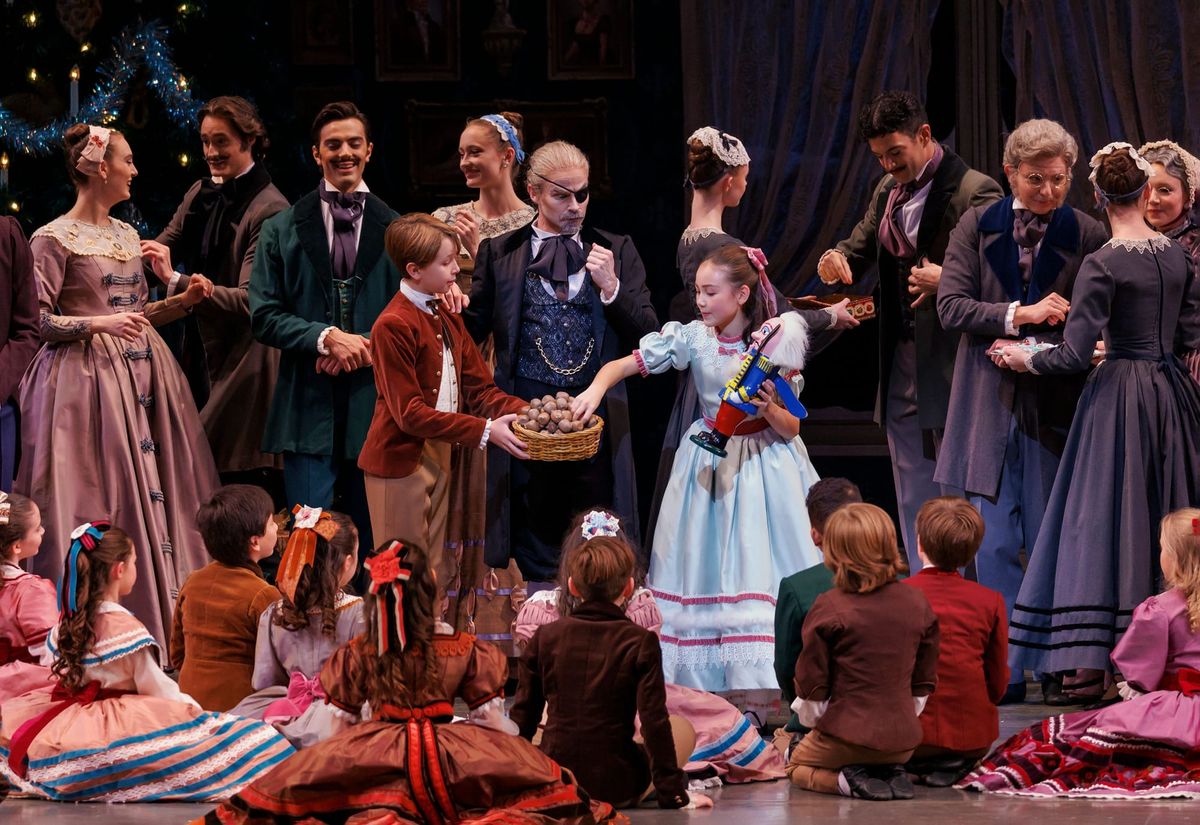
Any analysis of “The Nutcracker” has to begin with the children, at least sixteen of whom appear in the first-act party scene, and many more as mice, tin soldiers, angels and Polichinelles. Each youngster has been drilled to a high level of proficiency, but more than that, each seems to be enjoying every minute of time on stage. At this performance the children were headed by Caroline O’Hagan as Marie, the Stahlbaum’s daughter and heroine of the story, and Titus Landegger as the little Nutcracker Prince. Particularly outstanding was Ethan Schmidt, the littlest boy in the cast, who played Fritz, Marie’s younger brother. This character is often portrayed as a rather bratty child, but Schmidt was a complete charmer, gleeful in his pranks, utterly remorseful every time he was reprimanded, and finally horrified at his jealous temper tantrum, which resulted in his breaking Marie’s Nutcracker doll. He seemed to live each moment as if it were actually happening, convincing, at least one viewer, that he was really a good boy who just needed a little encouragement in the right direction.
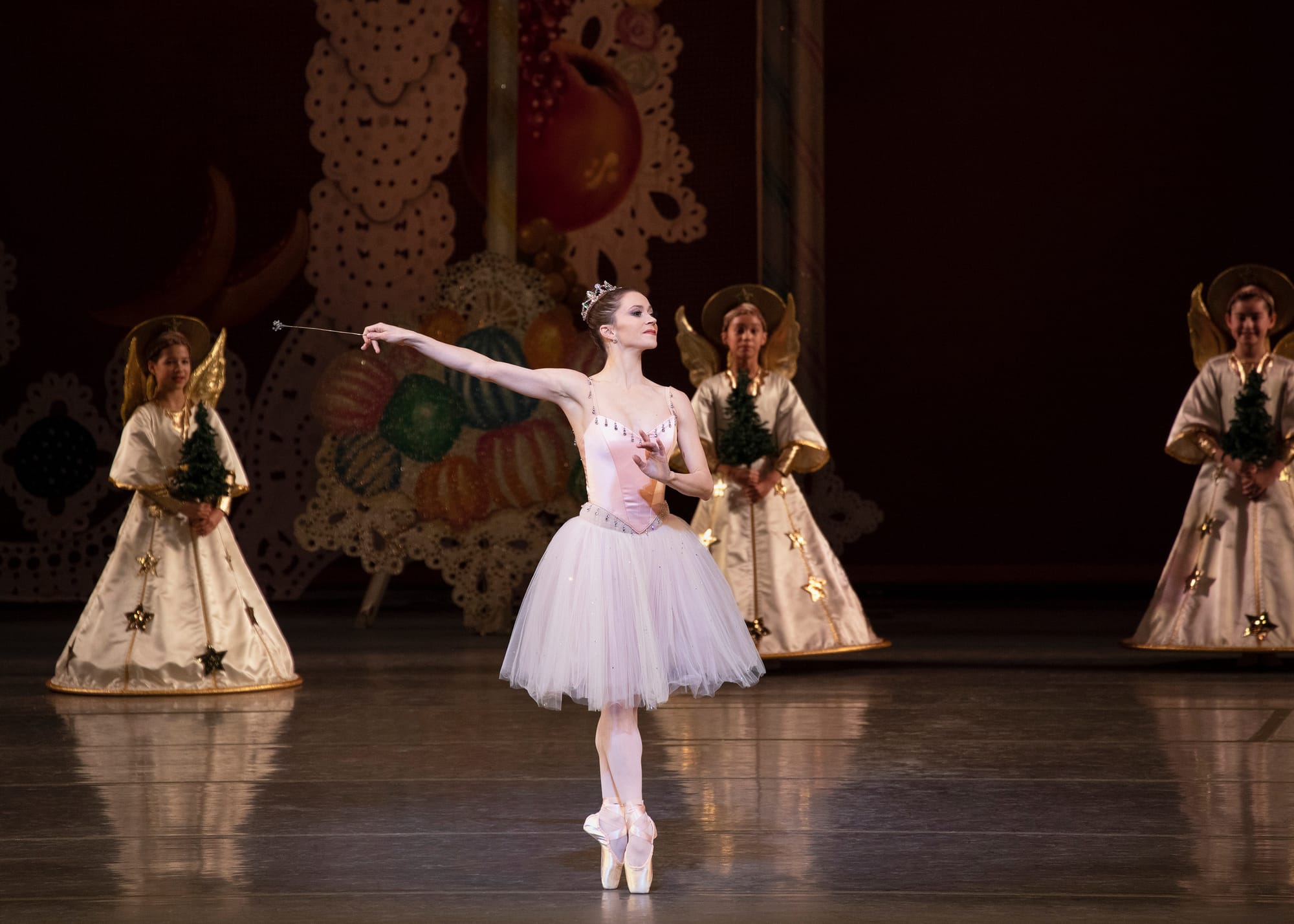
In the ballet’s major adult dancing role, Megan Fairchild was the Sugarplum Fairy, whose kingdom Marie visits and who is in charge of all good things in Konfituerenburg, the Land of Sweets. Fairchild is one of the most joyous NYCB ballerinas, and was most at home in her solo, which is filled with quick changes of direction and sparkling movement. She was joined by Joseph Gordon as her Cavalier for the duet, the dance going smoothly enough, although it isn’t one that suits Fairchild, whose strength lies more in gaiety than grandeur. On the other hand, this pas de deux always seems slightly out of place in “The Nutcracker.” Tchaikovsky gave it dark undertones that contradict the ballet’s pastel delicacy. It always seems to belong to another work, one with a more tragic theme.
Herr Drosselmeier, the uncle who sets Marie’s dream of Konfituerenburg in motion, was the veteran NYCB dancer Sean Suozzi, who is now a guest artist. Usually Drosselmeier is a somewhat forbidding figure, but Suozzi made him less so, while still retaining Drosselmeier’s sense of magical powers.
Outstanding performances among the citizens of Konfituerenburg included KJ Takahashi, a member of the corps, as the lead Candy Cane, who flew through the acrobatic demands of the dance while maintaining a meticulous classical technique, and Mira Nadon as Dewdrop, who led the Waltz of the Flowers with particular dash. But “The Nutcracker” is about more than any one dancer. It is part of the ritual of December holidays in the city, and the fact that New York City Ballet has made it so, is something to celebrate.
copyright © 2022 by Gay Morris



